卷八·第一至三章 序言;第九十度;相见与相闻的星座
卷八开篇劝人仰望天空、洗净灵魂、知命而不惧;随后讲从上升点与月亮数出的第九十度,以及摘自亚伯拉罕之书的相见相闻星座。
BOOK VIII
I.
[1] In this brevity of life, Mavortius, our glory, we must labor at nothing else than this: that, cleansed of the stain of the earthly body, and with all vices, if it can be done, or at least most of them cut away, we may return to God our maker the divinity of the soul uncorrupted and polluted by no contagion of crimes, lest we lose our soul, forgetful of its divine fashioning and entangled in the vicious snares of lusts, as if hurled down a precipice.
[2] For this is what the earthly body works at day by day: that it may always bind its divine spirit, occupied with the depraved pleasures of desires and deceived by alluring solicitation, to its own perishable frailty, so that the soul, sunk and overthrown, may never be able to find the beginnings of its origin, but, always cast into darkness and into the mire, may blush at the origin of its majesty with certain trepidations of concealment.
[3] For we ought to think nothing earthly, especially since we know that God, our fashioner, made us with such a measure of divine craftsmanship that, the form of our body being upright and set apart from every lowliness of abasement, as soon as the sight of our eyes was opened we should see nothing else first but the Sun, the Moon, the stars, and the most beautiful and immortal domicile of them all, namely the world.
[4] For nature so composed the other living creatures that, sunk toward the earth and cast down in a certain perishable lowliness, they should always cling in both mind and body to earthly ways of life; but us she perfected with a great measure of necessity, so that the frailty of the body should claim one thing in us and the divinity of the immortal soul another; namely, that the body, which we seem to have in common with the beasts, should, serving the soul, always be subject to the command of its divinity.
[5] Considering, therefore, the beginnings of our origin, and that our soul is strengthened by the protection of its majesty, we ought so to instruct ourselves that the soul, met by the authority of its own deity through its own self, may always both think and do something worthy of its maker, so that, so instructed and formed, it may find, as it is about to return to its origin, the straight and uncorrupted path of immortality, and may not, with wandering gait and slipping and trembling steps, be rolled back by everlasting errors to the vices of earthly frailty.
翻译点开
BOOK VIII
卷八
I.
第一章
[1] In this brevity of life, Mavortius, our glory, we must labor at nothing else than this: that, cleansed of the stain of the earthly body, and with all vices, if it can be done, or at least most of them cut away, we may return to God our maker the divinity of the soul uncorrupted and polluted by no contagion of crimes, lest we lose our soul, forgetful of its divine fashioning and entangled in the vicious snares of lusts, as if hurled down a precipice.
〔一〕马沃尔提乌斯,我们的光荣,在这短促的人生里,我们所要努力的不是别的,就是这一件:洗净尘世肉身的污点,把一切恶习——倘若能做到——或至少把大部分恶习割除,将灵魂的神性完好无损、不被任何罪行的沾染所玷污地交还给造我们的神,免得我们的灵魂忘了它神圣的造成,缠进情欲邪恶的罗网,好像被抛下悬崖一样。
[2] For this is what the earthly body works at day by day: that it may always bind its divine spirit, occupied with the depraved pleasures of desires and deceived by alluring solicitation, to its own perishable frailty, so that the soul, sunk and overthrown, may never be able to find the beginnings of its origin, but, always cast into darkness and into the mire, may blush at the origin of its majesty with certain trepidations of concealment.
〔二〕因为尘世的肉身日复一日所致力的就是这件事:要把它那神圣的灵——被欲望堕落的享乐占据、被诱人的勾引所欺骗——总是捆在自己会朽坏的脆弱上,使灵魂沉沦倾覆,永远找不到它本源的开端,却总被抛进黑暗与泥淖,带着某种想要躲藏的战栗,为它那尊贵的本源而羞愧。
[3] For we ought to think nothing earthly, especially since we know that God, our fashioner, made us with such a measure of divine craftsmanship that, the form of our body being upright and set apart from every lowliness of abasement, as soon as the sight of our eyes was opened we should see nothing else first but the Sun, the Moon, the stars, and the most beautiful and immortal domicile of them all, namely the world.
〔三〕因为我们不该想任何尘世的事,尤其是我们知道,塑造我们的神以如此分量的神工造了我们:我们身体的形态直立,远离一切卑屈的低下,眼睛的视力一开,我们首先看见的不是别的,正是太阳、月亮、群星,以及它们全体那最美而不朽的居所,即宇宙。
[4] For nature so composed the other living creatures that, sunk toward the earth and cast down in a certain perishable lowliness, they should always cling in both mind and body to earthly ways of life; but us she perfected with a great measure of necessity, so that the frailty of the body should claim one thing in us and the divinity of the immortal soul another; namely, that the body, which we seem to have in common with the beasts, should, serving the soul, always be subject to the command of its divinity.
〔四〕因为自然这样造了其余的生物:它们俯向大地,被抛在某种会朽坏的低下里,在心与身上都总是紧贴着尘世的生活方式;但她以极大分量的必然成全了我们,使身体的脆弱在我们身上要求一样东西,不朽灵魂的神性要求另一样东西;就是说,我们似乎与野兽共有的身体,要服侍灵魂,永远听从它神性的命令。
[5] Considering, therefore, the beginnings of our origin, and that our soul is strengthened by the protection of its majesty, we ought so to instruct ourselves that the soul, met by the authority of its own deity through its own self, may always both think and do something worthy of its maker, so that, so instructed and formed, it may find, as it is about to return to its origin, the straight and uncorrupted path of immortality, and may not, with wandering gait and slipping and trembling steps, be rolled back by everlasting errors to the vices of earthly frailty.
〔五〕所以,想到我们本源的开端,想到我们的灵魂靠它尊贵的护佑而得坚固,我们就该这样教导自己:让灵魂经由它自身,迎着它自己神性的权威,总是思想也总是去做配得上它创造者的事;这样受了教导、得了塑造,当它将要回归本源时,就能找到不朽那条笔直而不朽坏的道路,而不至于以游移的步态、滑跌颤抖的脚步,被永无休止的迷误滚回尘世脆弱的恶习里去。
大意与图解点开
🔎 大意:卷八序言:人生短促,要洗净肉身的污点、割除恶习,把神性的灵魂完好地交还给造我们的神;人身直立,生来就是为了仰望天空。
📖 术语
| 术语 | 英文原词 | 意思 |
|---|---|---|
| 神性 | divinity | 灵魂里属神的部分 |
| 本源 | origin | 灵魂所从来之处 |
| 神工 | divine craftsmanship | 神的造作 |
| 宇宙 | the world | 日月群星的居所 |
| 脆弱 | frailty | 肉身的易朽 |
🧭 图解与讲解
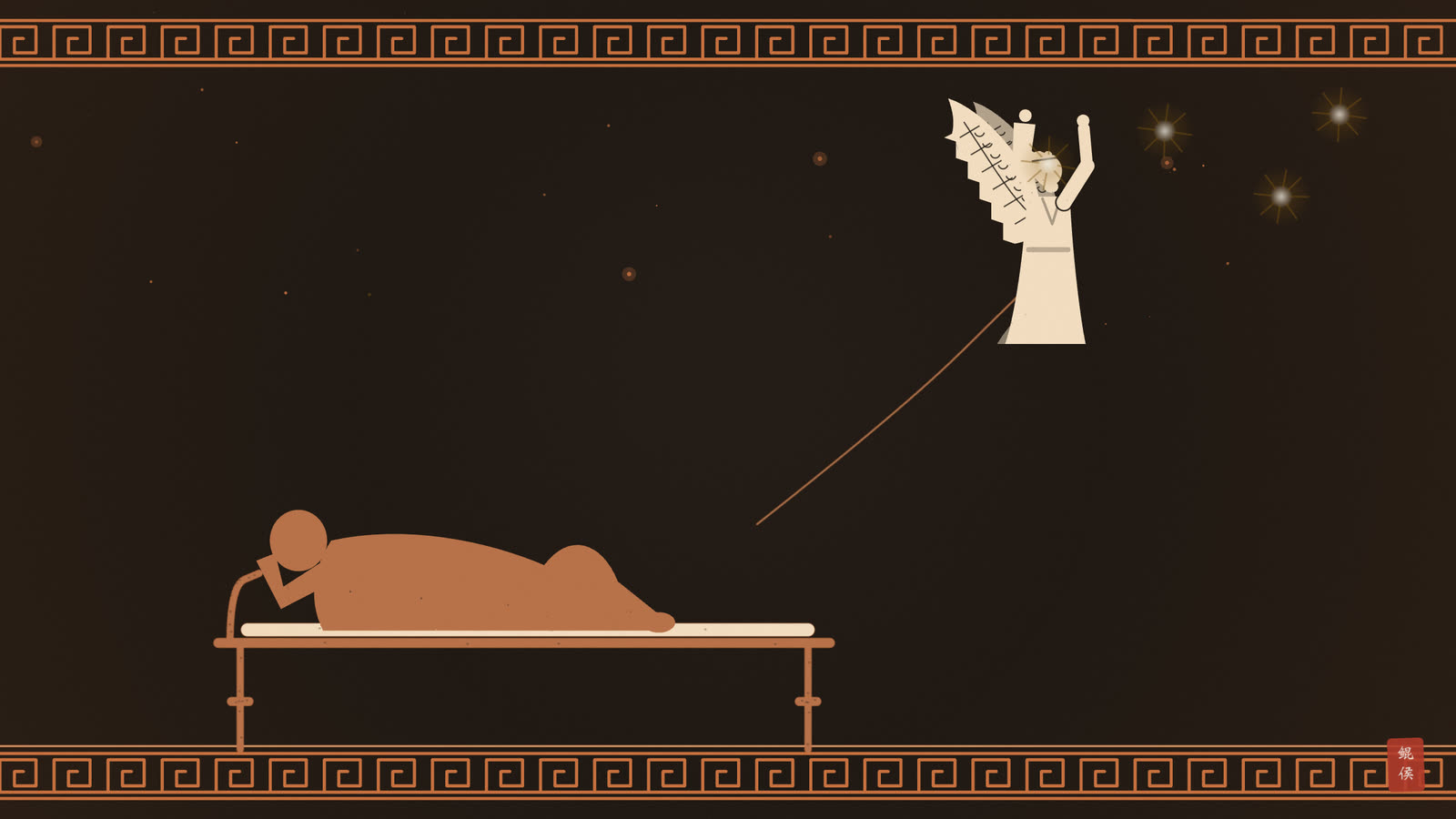
卷八以一篇序言开头,题为「第一章」。与卷一为占星学辩护的序言不同,这里是一篇灵魂论:人生短促,要洗净尘世肉身的污点,割除恶习,把灵魂的神性完好地「交还给造我们的神」(图一)。
〔图〕肉身与灵魂:一个向下,一个向上
〔图〕人身直立,是为了仰望天空
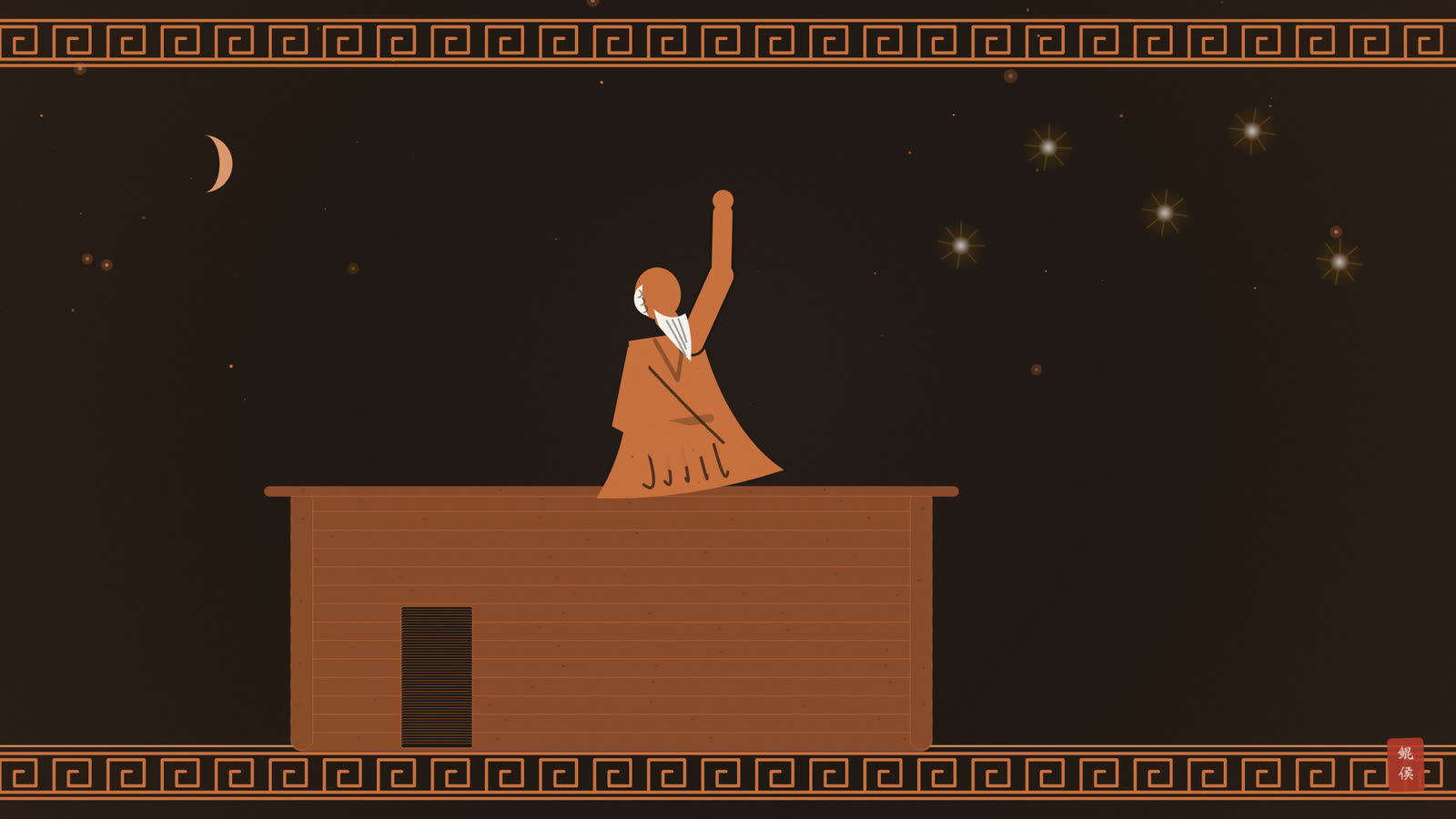
第三、四节有一个古代哲学常见的说法(图二):其余生物俯向大地,人的身体却是直立的,眼睛一睁开,首先看见的就是日月群星与宇宙,可见人生来是为了仰望天空。作者借此引出全卷的主题:天上的星群。
第五节说灵魂若受了这样的教导,回归本源时就能找到「不朽那条笔直的道路」,不被迷误滚回尘世。这与卷一论灵魂来自天上神圣之火的说法前后呼应,也为全书的结束作了铺垫。
📖 术语
| 术语 | 英文原词 | 意思 |
|---|---|---|
| 神性 | divinity | 灵魂里属神的部分 |
| 本源 | origin | 灵魂所从来之处 |
| 神工 | divine craftsmanship | 神的造作 |
| 宇宙 | the world | 日月群星的居所 |
| 脆弱 | frailty | 肉身的易朽 |
🧭 图解与讲解
卷八以一篇序言开头,题为「第一章」。与卷一为占星学辩护的序言不同,这里是一篇灵魂论:人生短促,要洗净尘世肉身的污点,割除恶习,把灵魂的神性完好地「交还给造我们的神」(图一)。
第三、四节有一个古代哲学常见的说法(图二):其余生物俯向大地,人的身体却是直立的,眼睛一睁开,首先看见的就是日月群星与宇宙,可见人生来是为了仰望天空。作者借此引出全卷的主题:天上的星群。
第五节说灵魂若受了这样的教导,回归本源时就能找到「不朽那条笔直的道路」,不被迷误滚回尘世。这与卷一论灵魂来自天上神圣之火的说法前后呼应,也为全书的结束作了铺垫。
[6] Gaze, therefore, Mavortius, our glory, upon the heavens with open eyes, and let your soul always behold this most beautiful fabric of the divine work. For then our mind, formed by the remembrance of its majesty, is freed from the depraved allurements of bodies, and, stripped of the hindrances of mortality, strives with hastening step toward its maker, and at every moment of the hours searches out nothing else but divine things with a shrewd and ever-watchful inquiry.
[7] These teachings, then, will give us some notion, however small, of divine knowledge, and will lead us to the secrets of our origin. For, always occupied with divine discussions, applying our soul to the heavenly powers and initiating it into divine ceremonies, we are separated from all the longings of depraved desires.
[8] And this brings about, above all, that, despising all things that in human affairs are thought to be either evil or prosperous, we return our soul, composed by its natural strength and authority, uncorrupted and undiminished to its origin. For when we have learned of misfortunes to come, we despise, with an upright boldness of mind, the fear of impending evils, because we have learned that they will come, nor do we shudder at the perils of evils that have been announced.
[9] If our soul, formed by the remembrance of its majesty, has prepared itself to receive these things, we are neither seized by the misfortunes of unhappiness nor lifted up by the insignia of rank, since we know that all this has been promised to us by the pronouncement of a decree. Thus, always composed by a steadfast reason, we can be neither crushed by misfortunes nor raised up by the joy of happiness.
[10] What, therefore, I believe remains over from these books, I shall take care to set out. For I have reserved another time for myself to set out the Myriogenesis. Now, at the beginning of this book, we shall say which signs see each other, which hear each other, and which neither see nor hear. For all this will pertain to the interpretation of the barbarian sphere. We shall also state the measures of the degrees. We shall add this as well: which degrees are to be sought in which bodies of the signs, and also what the ninetieth degree effects, which is called the enenecontameris by the Greeks, so that, with all things thus set out, we may more easily grasp the barbarian sphere and the power of the effective licence of the bright stars.
翻译点开
[6] Gaze, therefore, Mavortius, our glory, upon the heavens with open eyes, and let your soul always behold this most beautiful fabric of the divine work. For then our mind, formed by the remembrance of its majesty, is freed from the depraved allurements of bodies, and, stripped of the hindrances of mortality, strives with hastening step toward its maker, and at every moment of the hours searches out nothing else but divine things with a shrewd and ever-watchful inquiry.
〔六〕所以,马沃尔提乌斯,我们的光荣,睁开眼睛凝望天空吧,让你的灵魂总是注视这神工最美的构造。因为那时我们的心灵,由对自身尊贵的记忆所塑造,就从肉体堕落的诱惑中解脱,脱去可朽性的种种阻碍,以急切的脚步奔向它的创造者,在每一时每一刻,以敏锐而永远警醒的探求,所寻求的不是别的,只是神圣的事物。
[7] These teachings, then, will give us some notion, however small, of divine knowledge, and will lead us to the secrets of our origin. For, always occupied with divine discussions, applying our soul to the heavenly powers and initiating it into divine ceremonies, we are separated from all the longings of depraved desires.
〔七〕那么,这些教导会给我们对神圣知识某种哪怕微小的概念,并引我们走向我们本源的奥秘。因为我们总是忙于神圣的讨论,使灵魂贴近天上的诸力,引它进入神圣的仪礼,我们就与堕落欲望的一切渴求分开。
[8] And this brings about, above all, that, despising all things that in human affairs are thought to be either evil or prosperous, we return our soul, composed by its natural strength and authority, uncorrupted and undiminished to its origin. For when we have learned of misfortunes to come, we despise, with an upright boldness of mind, the fear of impending evils, because we have learned that they will come, nor do we shudder at the perils of evils that have been announced.
〔八〕而这首先带来的是:我们蔑视人事中一切被认为或凶或顺的东西,把由其天然的力量与权威所安顿的灵魂,完好无损、毫无减少地交还给它的本源。因为当我们得知将来的不幸,我们就以正直无畏的心,蔑视对临头之祸的恐惧,因为我们已经知道它们会来,对已经预告的凶祸的危险也就不再战栗。
[9] If our soul, formed by the remembrance of its majesty, has prepared itself to receive these things, we are neither seized by the misfortunes of unhappiness nor lifted up by the insignia of rank, since we know that all this has been promised to us by the pronouncement of a decree. Thus, always composed by a steadfast reason, we can be neither crushed by misfortunes nor raised up by the joy of happiness.
〔九〕倘若我们的灵魂由对自身尊贵的记忆所塑造,已经预备好接受这些,我们就既不被不幸的灾难所攫住,也不被官位的徽章所抬高,因为我们知道,这一切都是由一道判决的宣告应许给我们的。这样,我们总是由坚定的理性所安顿,既不会被灾难压垮,也不会被幸福的喜悦抬起。
[10] What, therefore, I believe remains over from these books, I shall take care to set out. For I have reserved another time for myself to set out the Myriogenesis. Now, at the beginning of this book, we shall say which signs see each other, which hear each other, and which neither see nor hear. For all this will pertain to the interpretation of the barbarian sphere. We shall also state the measures of the degrees. We shall add this as well: which degrees are to be sought in which bodies of the signs, and also what the ninetieth degree effects, which is called the enenecontameris by the Greeks, so that, with all things thus set out, we may more easily grasp the barbarian sphere and the power of the effective licence of the bright stars.
〔十〕所以,我认为这几卷书还剩下的,我会留心陈述。因为我给自己留了另一个时间来陈述《万命书》。现在,在本卷的开头,我们要说哪些星座彼此相见,哪些彼此相闻,哪些既不相见也不相闻。因为这一切都与蛮族天球的解释有关。我们也要说明度数的量度。还要加上这一点:在星座身体的哪些部位要找哪些度数,还有第九十度造成什么,希腊人称之为「埃涅内孔塔梅里斯」,好让一切这样陈述之后,我们更容易把握蛮族天球,以及明亮诸星那有效的许可之力。
大意与图解点开
🔎 大意:凝望天空使心灵脱离肉体的诱惑;预先知道将来的不幸,就能不惧不喜,安然处之;本卷将讲相见相闻、第九十度与蛮族天球。
📖 术语
| 术语 | 英文原词 | 意思 |
|---|---|---|
| 构造 | fabric | 天的结构 |
| 仪礼 | ceremonies | 入教的礼仪 |
| 官位的徽章 | insignia of rank | 官职的标志 |
| 《万命书》 | the Myriogenesis | 论每一分的命书 |
| 蛮族天球 | the barbarian sphere | 黄道外的星群 |
🧭 图解与讲解
第六至九节说明仰望天空的用处(图一):心灵脱离肉体的诱惑,去探求神圣的事;更重要的是,预先知道将来的不幸,祸来时就不惧,福来时也不喜,因为一切早由「一道判决的宣告」应许了。这是作者在全书将尽时,为占星之学的用处所作的又一次申说。
〔图〕知命的好处:不惧也不喜
| 本卷将讲的内容(第十节) | 所在 |
|---|---|
| 第九十度(埃涅内孔塔梅里斯) | 第二章 |
| 哪些星座相见、相闻、不见不闻 | 第三章 |
| 度数的量度;星座身体各部位的度数 | 第四章起 |
| 蛮族天球:随各度同升的星群与明亮诸星 | 第五章以下至卷末 |
| 《万命书》 | 留待另一时间 |
第十节预告本卷的内容(表二):相见与相闻的星座、第九十度、度数的量度,最后是「蛮族天球」(the barbarian sphere),即随黄道各度一同升起的黄道外星群。作者又说《万命书》要留待另一时间陈述,与前几卷的说法一致。「埃涅内孔塔梅里斯」是希腊词「第九十度」的音译,本站照英译保留原名并加以说明。
📖 术语
| 术语 | 英文原词 | 意思 |
|---|---|---|
| 构造 | fabric | 天的结构 |
| 仪礼 | ceremonies | 入教的礼仪 |
| 官位的徽章 | insignia of rank | 官职的标志 |
| 《万命书》 | the Myriogenesis | 论每一分的命书 |
| 蛮族天球 | the barbarian sphere | 黄道外的星群 |
🧭 图解与讲解
第六至九节说明仰望天空的用处(图一):心灵脱离肉体的诱惑,去探求神圣的事;更重要的是,预先知道将来的不幸,祸来时就不惧,福来时也不喜,因为一切早由「一道判决的宣告」应许了。这是作者在全书将尽时,为占星之学的用处所作的又一次申说。
| 本卷将讲的内容(第十节) | 所在 |
|---|---|
| 第九十度(埃涅内孔塔梅里斯) | 第二章 |
| 哪些星座相见、相闻、不见不闻 | 第三章 |
| 度数的量度;星座身体各部位的度数 | 第四章起 |
| 蛮族天球:随各度同升的星群与明亮诸星 | 第五章以下至卷末 |
| 《万命书》 | 留待另一时间 |
第十节预告本卷的内容(表二):相见与相闻的星座、第九十度、度数的量度,最后是「蛮族天球」(the barbarian sphere),即随黄道各度一同升起的黄道外星群。作者又说《万命书》要留待另一时间陈述,与前几卷的说法一致。「埃涅内孔塔梅里斯」是希腊词「第九十度」的音译,本站照英译保留原名并加以说明。
II.
On the Ninetieth Degree.
[1] First, then, I shall discuss the enenecontameris, that is, the ninetieth degree. This matter, unknown to most, seems to have been treated lightly by a few; for Petosiris too, as it seems to me, wished to conceal this treatise with a jealous murmur. In all nativities the ninetieth degree must be searched out with shrewd inquiry. For from these degrees are gathered the end of life, death, misfortunes, perils, happinesses, and the whole substance of the nativity.
[2] Setting out, then, from the Ascendant, look for the ninetieth degree through the other signs, and when you have found this degree, see in which sign it is placed, that is, whether it is found in the domicile of a benefic planet or in that of a malefic. See also how the lord of that sign is placed in the nativity; examine carefully, too, how far the benefic planets and how far the malefic ones aspect this degree.
[3] For each of them, observing this degree, brings about everything according to its own nature; and if the malefic planets are alone, they will ruin it; if the benefics, they decree the greatest marks of happiness; if both the benefics and the malefics alike, whatever has been decreed by each is tempered. Ask also in whose dominion and power the degree itself is, that is, in whose terms, and in what place the lord of the degree is placed, and so you will perceive everything from the nature of the planet and from the power of the place. For the mixtures of the planets bring about all things, both evil and prosperous, according to the nature of the sign in which the ninetieth degree has been found.
[4] You will likewise seek this same thing from the Moon, and, setting out from the degree in which the Moon has been found, you will look for the ninetieth degree. For in this degree too you will gather everything by similar reckonings, that is, what kind of sign it is, what kind of degree, who is the lord of the sign and of the degree, in which place or in which signs the lords are placed, and with what aspect the malefics, and with what aspect the benefics, aspect the degree itself.
[5] And if the Moon is waxing, see how far Mars or Saturn aspects this degree, and likewise if she is waning. For they bring about everything according to the power of their nature, if either the malefic planets have aspected the ninetieth degree with a threatening aspect, or the benefics have lifted it up with a favorable testimony. Thus you will find the end of death, thus the order of life, thus the whole substance of the nativity.
翻译点开
II.
第二章
On the Ninetieth Degree.
论第九十度
[1] First, then, I shall discuss the enenecontameris, that is, the ninetieth degree. This matter, unknown to most, seems to have been treated lightly by a few; for Petosiris too, as it seems to me, wished to conceal this treatise with a jealous murmur. In all nativities the ninetieth degree must be searched out with shrewd inquiry. For from these degrees are gathered the end of life, death, misfortunes, perils, happinesses, and the whole substance of the nativity.
〔一〕那么,我先讨论埃涅内孔塔梅里斯,即第九十度。这件事大多数人不知道,少数人似乎也只是轻轻带过;因为在我看来,佩托西里斯也想以嫉妒的低语把这篇论述藏起来。在一切本命盘里,都必须以敏锐的探求找出第九十度。因为从这些度数可以收集寿命的终点、死亡、灾难、危险、幸福,以及本命的全部实质。
[2] Setting out, then, from the Ascendant, look for the ninetieth degree through the other signs, and when you have found this degree, see in which sign it is placed, that is, whether it is found in the domicile of a benefic planet or in that of a malefic. See also how the lord of that sign is placed in the nativity; examine carefully, too, how far the benefic planets and how far the malefic ones aspect this degree.
〔二〕那么,从上升点出发,经过其余的星座去找第九十度;找到这一度之后,看它落在哪个星座,即它是在吉星的庙里,还是在凶星的庙里。也要看那个星座的主星在本命里怎样落定;还要仔细察看吉星照着这一度到什么程度,凶星又照着它到什么程度。
[3] For each of them, observing this degree, brings about everything according to its own nature; and if the malefic planets are alone, they will ruin it; if the benefics, they decree the greatest marks of happiness; if both the benefics and the malefics alike, whatever has been decreed by each is tempered. Ask also in whose dominion and power the degree itself is, that is, in whose terms, and in what place the lord of the degree is placed, and so you will perceive everything from the nature of the planet and from the power of the place. For the mixtures of the planets bring about all things, both evil and prosperous, according to the nature of the sign in which the ninetieth degree has been found.
〔三〕因为它们各自注视着这一度,都按自己的性质造成一切;倘若只有凶星,会毁了它;倘若是吉星,会判定极大的幸福标记;倘若吉星与凶星都有,各自所判定的就会被调和。还要问这一度本身在谁的主权与权力之下,即在谁的界里,这一度的主星落在哪个宫位,这样你就能从行星的性质与宫位的力量看出一切。因为诸星的混合,会按第九十度所在星座的性质,造成一切凶的与顺的事。
[4] You will likewise seek this same thing from the Moon, and, setting out from the degree in which the Moon has been found, you will look for the ninetieth degree. For in this degree too you will gather everything by similar reckonings, that is, what kind of sign it is, what kind of degree, who is the lord of the sign and of the degree, in which place or in which signs the lords are placed, and with what aspect the malefics, and with what aspect the benefics, aspect the degree itself.
〔四〕你也要从月亮求同样的事:从月亮所在的那一度出发,去找第九十度。因为在这一度里,你也要以相似的计算收集一切,即它是什么样的星座、什么样的度数、谁是星座之主与度数之主、这些主星落在哪个宫位或哪些星座,以及凶星以什么相位、吉星以什么相位照着这一度本身。
[5] And if the Moon is waxing, see how far Mars or Saturn aspects this degree, and likewise if she is waning. For they bring about everything according to the power of their nature, if either the malefic planets have aspected the ninetieth degree with a threatening aspect, or the benefics have lifted it up with a favorable testimony. Thus you will find the end of death, thus the order of life, thus the whole substance of the nativity.
〔五〕倘若月亮在盈,看火星或土星照着这一度到什么程度;倘若她在亏,也同样看。因为倘若凶星以带威胁的相位照着第九十度,或吉星以顺遂的见证把它抬起,它们都按自己性质的力量造成一切。这样你会找到死亡的终点,这样找到人生的次序,这样找到本命的全部实质。
大意与图解点开
🔎 大意:从上升点与月亮各数到第九十度,看所在星座与界、其主星落在何处、吉凶星怎样相照,就能知寿终、灾福与本命的全部实质。
📖 术语
| 术语 | 英文原词 | 意思 |
|---|---|---|
| 第九十度 | the ninetieth degree | 自起点数九十度 |
| 埃涅内孔塔梅里斯 | enenecontameris | 希腊语第九十度 |
| 佩托西里斯 | Petosiris | 埃及古占星家 |
| 界 | terms | 各座中分属五星的段 |
| 度数之主 | the lord of the degree | 该度所在界的主星 |
🧭 图解与讲解
第二章论第九十度(the ninetieth degree),希腊语称「埃涅内孔塔梅里斯」。作者说多数人不知,连佩托西里斯也秘而不宣。做法很简单:从上升点所在的度数往后数九十度,看落在哪个星座、哪一界(图一);从月亮所在的度数,也照样数一次。
〔图〕第九十度:从上升点数九十度(示意)
〔图〕第九十度的判读步骤
判读的步骤(图二)与前几卷看诸点相同:这一度在吉星还是凶星的庙里,星座之主与度数之主(即界主)落在哪个宫位,吉星与凶星怎样照着它。只有凶星照着就毁了它,只有吉星就主大福,吉凶都有则互相调和。从这一度可以看出寿终、死亡、灾难与幸福,作者说它包含「本命的全部实质」。
从上升点数九十度,按度数算正好是四分的距离,所以第九十度总与上升点(或月亮)成四分。本章没有讲怎样把它和卷四的寿限之法配合,只给出原则。
📖 术语
| 术语 | 英文原词 | 意思 |
|---|---|---|
| 第九十度 | the ninetieth degree | 自起点数九十度 |
| 埃涅内孔塔梅里斯 | enenecontameris | 希腊语第九十度 |
| 佩托西里斯 | Petosiris | 埃及古占星家 |
| 界 | terms | 各座中分属五星的段 |
| 度数之主 | the lord of the degree | 该度所在界的主星 |
🧭 图解与讲解
第二章论第九十度(the ninetieth degree),希腊语称「埃涅内孔塔梅里斯」。作者说多数人不知,连佩托西里斯也秘而不宣。做法很简单:从上升点所在的度数往后数九十度,看落在哪个星座、哪一界(图一);从月亮所在的度数,也照样数一次。
判读的步骤(图二)与前几卷看诸点相同:这一度在吉星还是凶星的庙里,星座之主与度数之主(即界主)落在哪个宫位,吉星与凶星怎样照着它。只有凶星照着就毁了它,只有吉星就主大福,吉凶都有则互相调和。从这一度可以看出寿终、死亡、灾难与幸福,作者说它包含「本命的全部实质」。
从上升点数九十度,按度数算正好是四分的距离,所以第九十度总与上升点(或月亮)成四分。本章没有讲怎样把它和卷四的寿限之法配合,只给出原则。
III.
On Seeing and Hearing Signs.
[1] Now I shall set out which stars see each other and which hear each other. Aries does not see Leo but hears it. Leo sees Aries but does not hear it. Aries both sees and hears Cancer. Cancer does not see Aries but hears it. Taurus both sees and hears Leo, and likewise Leo Taurus. Gemini sees Virgo and hears it slightly. Virgo sees Gemini slightly but hears it most fully. Cancer both sees and hears Libra. Libra, however, does not see Cancer but hears it. Leo neither hears nor sees Scorpio. Scorpio, however, both hears and sees Leo.
[2] Virgo regards Sagittarius obliquely, but does not hear it willingly. Sagittarius both hears and sees Virgo. Libra both hears and sees Capricorn, and is both heard and seen by Capricorn. Aquarius does not see Scorpio but hears it. In like manner Scorpio too does not see Aquarius but hears it. Sagittarius neither sees nor hears Pisces. Pisces, however, both sees and hears Sagittarius. Pisces does not see Gemini but hears it. Capricorn and Aries neither hear nor see each other. Aquarius and Taurus regard each other obliquely and hear each other.
[3] [probably: the trines begin here — the Aries–Leo pair now at the head of the chapter stood here, with a lost pair for Taurus and Virgo; "Pisces do not see Gemini but hear them" in § 2 belongs just before this, as the last of the squares] [lacuna] Gemini both sees and hears Libra. Likewise Libra both hears and sees Gemini. [probably: a pair for Cancer and Scorpio is lost here] [lacuna] Sagittarius and Leo both hear and see each other. Virgo indeed regards Capricorn, but does not hear it. Likewise Capricorn sees Virgo but does not hear it. Libra sees Aquarius, but is not itself seen by Aquarius; yet they hear each other alike.
[4] Scorpio indeed sees Pisces, but does not hear it. Pisces, however, sees Scorpio, but does not hear it. Sagittarius and Aries are so placed that they can neither see nor hear each other. And also Capricorn and Taurus can neither hear nor see each other. Aquarius and Gemini do indeed see each other, but are wholly separated in hearing. Pisces and Cancer do not indeed see each other, but they hear each other.
[5] We have treated the secrets of this matter for this reason: that you might receive the complete forms of the arrangement, and know how the signs are disposed in the zodiac circle. For these twelve signs are not placed in a fixed order and at a fixed interval, nor are they so set that those which rise in a later place always aspect the preceding or following signs. So, then, that I might show you this not by arguments but by the thing itself, we have published this treatise, excerpted from the books of Abraham, so that our discourse might make known to you in clear interpretations what we have said.
翻译点开
III.
第三章
On Seeing and Hearing Signs.
论相见与相闻的星座
[1] Now I shall set out which stars see each other and which hear each other. Aries does not see Leo but hears it. Leo sees Aries but does not hear it. Aries both sees and hears Cancer. Cancer does not see Aries but hears it. Taurus both sees and hears Leo, and likewise Leo Taurus. Gemini sees Virgo and hears it slightly. Virgo sees Gemini slightly but hears it most fully. Cancer both sees and hears Libra. Libra, however, does not see Cancer but hears it. Leo neither hears nor sees Scorpio. Scorpio, however, both hears and sees Leo.
〔一〕现在我要陈述哪些星彼此相见,哪些彼此相闻。白羊不见狮子,却听见它。狮子看见白羊,却听不见它。白羊对巨蟹既见又闻。巨蟹不见白羊,却听见它。金牛对狮子既见又闻,狮子对金牛也一样。双子看见处女,略略听见它。处女略略看见双子,却极其充分地听见它。巨蟹对天秤既见又闻。天秤却不见巨蟹,只听见它。狮子对天蝎既不闻也不见。天蝎对狮子却既闻又见。
[2] Virgo regards Sagittarius obliquely, but does not hear it willingly. Sagittarius both hears and sees Virgo. Libra both hears and sees Capricorn, and is both heard and seen by Capricorn. Aquarius does not see Scorpio but hears it. In like manner Scorpio too does not see Aquarius but hears it. Sagittarius neither sees nor hears Pisces. Pisces, however, both sees and hears Sagittarius. Pisces does not see Gemini but hears it. Capricorn and Aries neither hear nor see each other. Aquarius and Taurus regard each other obliquely and hear each other.
〔二〕处女斜着眼看射手,却不乐意听它。射手对处女既闻又见。天秤对摩羯既闻又见,也被摩羯既听见又看见。宝瓶不见天蝎,却听见它。同样,天蝎也不见宝瓶,却听见它。射手对双鱼既不见也不闻。双鱼对射手却既见又闻。双鱼不见双子,却听见它。摩羯与白羊彼此既不闻也不见。宝瓶与金牛彼此斜着眼相看,并且彼此相闻。
[3] [probably: the trines begin here — the Aries–Leo pair now at the head of the chapter stood here, with a lost pair for Taurus and Virgo; "Pisces do not see Gemini but hear them" in § 2 belongs just before this, as the last of the squares] [lacuna] Gemini both sees and hears Libra. Likewise Libra both hears and sees Gemini. [probably: a pair for Cancer and Scorpio is lost here] [lacuna] Sagittarius and Leo both hear and see each other. Virgo indeed regards Capricorn, but does not hear it. Likewise Capricorn sees Virgo but does not hear it. Libra sees Aquarius, but is not itself seen by Aquarius; yet they hear each other alike.
〔三〕〔推测:三分各对从这里开始——章首的白羊—狮子一对原在此处,又丢了金牛—处女一对;第二节的「双鱼不见双子而闻之」应移到此前,作四分各对的最后一对〕〔此处原文有缺〕双子对天秤既见又闻。同样,天秤对双子也既闻又见。〔推测:此处缺巨蟹与天蝎一对〕〔此处原文有缺〕射手与狮子彼此既闻又见。处女确实看着摩羯,却不听它。同样,摩羯看见处女,却不听它。天秤看见宝瓶,自己却不被宝瓶看见;但它们彼此同样相闻。
[4] Scorpio indeed sees Pisces, but does not hear it. Pisces, however, sees Scorpio, but does not hear it. Sagittarius and Aries are so placed that they can neither see nor hear each other. And also Capricorn and Taurus can neither hear nor see each other. Aquarius and Gemini do indeed see each other, but are wholly separated in hearing. Pisces and Cancer do not indeed see each other, but they hear each other.
〔四〕天蝎确实看见双鱼,却不听它。双鱼也看见天蝎,却不听它。射手与白羊落得彼此既不能见也不能闻。又,摩羯与金牛彼此既不能闻也不能见。宝瓶与双子确实彼此相见,在听闻上却完全隔绝。双鱼与巨蟹确实彼此不见,却彼此相闻。
[5] We have treated the secrets of this matter for this reason: that you might receive the complete forms of the arrangement, and know how the signs are disposed in the zodiac circle. For these twelve signs are not placed in a fixed order and at a fixed interval, nor are they so set that those which rise in a later place always aspect the preceding or following signs. So, then, that I might show you this not by arguments but by the thing itself, we have published this treatise, excerpted from the books of Abraham, so that our discourse might make known to you in clear interpretations what we have said.
〔五〕我们论述这件事的秘奥,是为了这个缘故:让你领会这一排列的完整形态,知道诸星座在黄道圈上是怎样配置的。因为这十二个星座并不是按固定的次序、固定的间隔排列的,也不是这样安放:在后面升起的,总是照着前面或后面的星座。所以,为了不是用论证、而是用事实本身向你显示这一点,我们发表了这篇论述,它摘自亚伯拉罕的书,好让我们的论述以清楚的解释向你揭示我们所说的。
大意与图解点开
🔎 大意:摘自亚伯拉罕之书:四分与三分的成对星座,有的互见互闻,有的只见不闻、只闻不见,有的单向,有的全然隔绝。
📖 术语
| 术语 | 英文原词 | 意思 |
|---|---|---|
| 相见 | see | 星座彼此看见 |
| 相闻 | hear | 星座彼此听见 |
| 斜着眼看 | regards obliquely | 勉强相看 |
| 亚伯拉罕的书 | the books of Abraham | 托名亚伯拉罕的星书 |
| 黄道圈 | zodiac circle | 十二星座之环 |
🧭 图解与讲解
第三章列出「相见」与「相闻」的星座(表一),作者说摘自亚伯拉罕的书。逐对看下来,章首的白羊—狮子成三分,其后十二对正好是黄道上全部十二对四分(从白羊—巨蟹到双鱼—双子),第三、四节的九对都成三分。三分连白羊—狮子在内现存十对,缺金牛—处女与巨蟹—天蝎。校者的解释是:作者先列四分、后列三分;章首白羊—狮子两句原在第三节第一处缺文的位置,那里还丢了金牛—处女一对;第二处缺的是巨蟹—天蝎。第二节的「双鱼不见双子而闻之」夹在四分中间、次序不对,校者主张挪到第二节末,作四分的最后一对;这只是挪动次序,四分仍是十二对,与三分所缺的两对并不冲突。本站正文不挪动原文次序,只在注里说明。
| 成对的星座 | 甲对乙 | 乙对甲 |
|---|---|---|
| 白羊—狮子 | 羊:不见而闻 | 狮:见而不闻 |
| 白羊—巨蟹 | 羊:既见又闻 | 蟹:不见而闻 |
| 金牛—狮子 | 既见又闻 | 既见又闻 |
| 双子—处女 | 双子:见,略闻 | 处女:略见,极闻 |
| 巨蟹—天秤 | 蟹:既见又闻 | 秤:不见而闻 |
| 狮子—天蝎 | 狮:不闻不见 | 蝎:既闻又见 |
| 处女—射手 | 处女:斜看,不乐意听 | 射手:既闻又见 |
| 天秤—摩羯 | 既闻又见 | 既闻又见 |
| 宝瓶—天蝎 | 不见而闻 | 不见而闻 |
| 射手—双鱼 | 射手:不见不闻 | 双鱼:既见又闻 |
| 双鱼—双子 | 双鱼:不见而闻 | (未说) |
| 摩羯—白羊 | 不闻不见 | 不闻不见 |
| 宝瓶—金牛 | 斜看,相闻 | 斜看,相闻 |
| 双子—天秤 | 既见又闻 | 既闻又见 |
| 射手—狮子 | 既闻又见 | 既闻又见 |
| 处女—摩羯 | 看着,不听 | 看见,不听 |
| 天秤—宝瓶 | 秤:见,相闻 | 瓶:不见,相闻 |
| 天蝎—双鱼 | 见,不听 | 见,不听 |
| 射手—白羊 | 不能见,不能闻 | 不能见,不能闻 |
| 摩羯—金牛 | 不能闻,不能见 | 不能闻,不能见 |
| 宝瓶—双子 | 相见,听闻隔绝 | 相见,听闻隔绝 |
| 双鱼—巨蟹 | 不见,相闻 | 不见,相闻 |
〔图〕以白羊为例:四对关系各不相同
这套关系并不对称(图二):白羊对巨蟹既见又闻,巨蟹对白羊却只闻不见;白羊与狮子成三分,却只闻不见;白羊与射手同是三分,却彼此不见不闻。作者在第五节说,这正显示十二星座「并不是按固定的次序、固定的间隔排列的」,不能单凭相位的几何来推。
第三节的「斜着眼看」「略略听见」之类,是在见与闻之间再分程度,作者没有说明怎样用于判断。他只说这些都与蛮族天球的解释有关,下一章接着讲度数的量度与星座身体的各部位。
📖 术语
| 术语 | 英文原词 | 意思 |
|---|---|---|
| 相见 | see | 星座彼此看见 |
| 相闻 | hear | 星座彼此听见 |
| 斜着眼看 | regards obliquely | 勉强相看 |
| 亚伯拉罕的书 | the books of Abraham | 托名亚伯拉罕的星书 |
| 黄道圈 | zodiac circle | 十二星座之环 |
🧭 图解与讲解
第三章列出「相见」与「相闻」的星座(表一),作者说摘自亚伯拉罕的书。逐对看下来,章首的白羊—狮子成三分,其后十二对正好是黄道上全部十二对四分(从白羊—巨蟹到双鱼—双子),第三、四节的九对都成三分。三分连白羊—狮子在内现存十对,缺金牛—处女与巨蟹—天蝎。校者的解释是:作者先列四分、后列三分;章首白羊—狮子两句原在第三节第一处缺文的位置,那里还丢了金牛—处女一对;第二处缺的是巨蟹—天蝎。第二节的「双鱼不见双子而闻之」夹在四分中间、次序不对,校者主张挪到第二节末,作四分的最后一对;这只是挪动次序,四分仍是十二对,与三分所缺的两对并不冲突。本站正文不挪动原文次序,只在注里说明。
| 成对的星座 | 甲对乙 | 乙对甲 |
|---|---|---|
| 白羊—狮子 | 羊:不见而闻 | 狮:见而不闻 |
| 白羊—巨蟹 | 羊:既见又闻 | 蟹:不见而闻 |
| 金牛—狮子 | 既见又闻 | 既见又闻 |
| 双子—处女 | 双子:见,略闻 | 处女:略见,极闻 |
| 巨蟹—天秤 | 蟹:既见又闻 | 秤:不见而闻 |
| 狮子—天蝎 | 狮:不闻不见 | 蝎:既闻又见 |
| 处女—射手 | 处女:斜看,不乐意听 | 射手:既闻又见 |
| 天秤—摩羯 | 既闻又见 | 既闻又见 |
| 宝瓶—天蝎 | 不见而闻 | 不见而闻 |
| 射手—双鱼 | 射手:不见不闻 | 双鱼:既见又闻 |
| 双鱼—双子 | 双鱼:不见而闻 | (未说) |
| 摩羯—白羊 | 不闻不见 | 不闻不见 |
| 宝瓶—金牛 | 斜看,相闻 | 斜看,相闻 |
| 双子—天秤 | 既见又闻 | 既闻又见 |
| 射手—狮子 | 既闻又见 | 既闻又见 |
| 处女—摩羯 | 看着,不听 | 看见,不听 |
| 天秤—宝瓶 | 秤:见,相闻 | 瓶:不见,相闻 |
| 天蝎—双鱼 | 见,不听 | 见,不听 |
| 射手—白羊 | 不能见,不能闻 | 不能见,不能闻 |
| 摩羯—金牛 | 不能闻,不能见 | 不能闻,不能见 |
| 宝瓶—双子 | 相见,听闻隔绝 | 相见,听闻隔绝 |
| 双鱼—巨蟹 | 不见,相闻 | 不见,相闻 |
这套关系并不对称(图二):白羊对巨蟹既见又闻,巨蟹对白羊却只闻不见;白羊与狮子成三分,却只闻不见;白羊与射手同是三分,却彼此不见不闻。作者在第五节说,这正显示十二星座「并不是按固定的次序、固定的间隔排列的」,不能单凭相位的几何来推。
第三节的「斜着眼看」「略略听见」之类,是在见与闻之间再分程度,作者没有说明怎样用于判断。他只说这些都与蛮族天球的解释有关,下一章接着讲度数的量度与星座身体的各部位。
原文为公有领域古籍;翻译、印象画与图文解读由 AI 辅助生成,鲲侯审校。