卷二·第 92–104 问 有形之数与四则、开方、分数
三角数、平方数、锥数、塔数及其印度名称;计算、乘、除,平方与开方、聋根、立方,跳位、分母与化为同类。
§92. What are the successive triangular numbers?
They are the sums of the successive numbers starting from one, and they are what is called in Indian saṅkalita. For example, one is a triangle potentially, since we have said that all things are in it. The second triangle is the sum of 1 2, that is 3; the third triangle is the sum of 1 2 3, that is 6; and the fourth triangle is the sum of 1 2 3 4, that is 10. From this figure the nature of triangles becomes clear.
§93. What are the successive square numbers?
They are the sums of the successive odd numbers. The first square is one; add 3 to it and the result is 4, the second square, which arises from multiplying 2 by 2. If 5 is added to the 4, the result is 9, the third square, which arises from multiplying 3 by 3. From this figure that becomes clear.
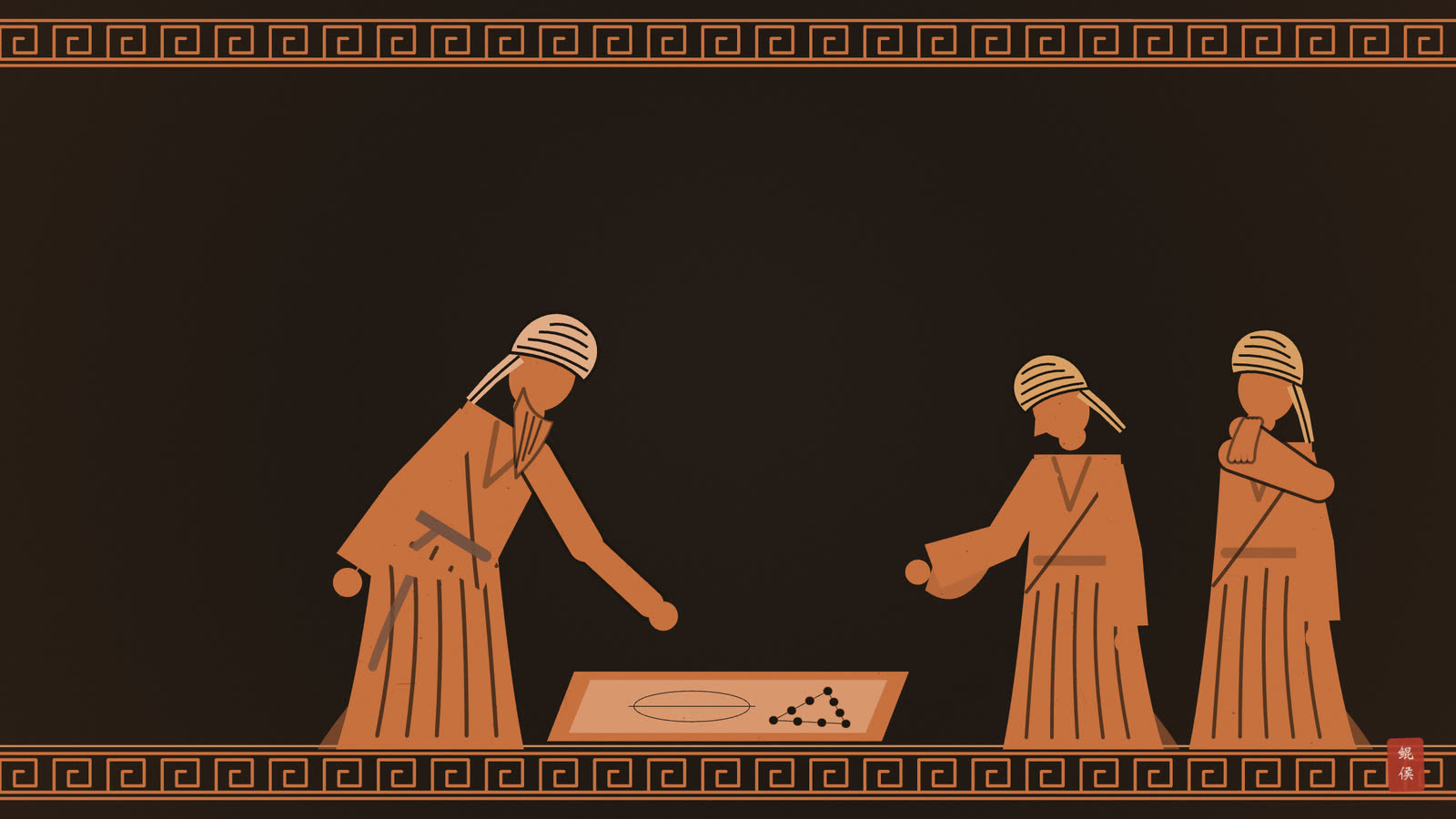
翻译点开
§92. What are the successive triangular numbers?
第九十二问 何谓连续三角数?
They are the sums of the successive numbers starting from one, and they are what is called in Indian saṅkalita. For example, one is a triangle potentially, since we have said that all things are in it. The second triangle is the sum of 1 2, that is 3; the third triangle is the sum of 1 2 3, that is 6; and the fourth triangle is the sum of 1 2 3 4, that is 10. From this figure the nature of triangles becomes clear.
它们是从一开始的连续诸数之和,就是印度话所称的“桑卡利塔”。例如,一在潜能上就是三角形,因为我们说过万物都在它之中。第二个三角形是一与二之和,即三;第三个三角形是一、二、三之和,即六;第四个三角形是一、二、三、四之和,即十。从这个图里,三角形的性质就清楚了。
§93. What are the successive square numbers?
第九十三问 何谓连续平方数?
They are the sums of the successive odd numbers. The first square is one; add 3 to it and the result is 4, the second square, which arises from multiplying 2 by 2. If 5 is added to the 4, the result is 9, the third square, which arises from multiplying 3 by 3. From this figure that becomes clear.
它们是连续诸奇数之和。第一个平方数是一;给它加上三,结果是四,是第二个平方数,由二乘二而来。给四加上五,结果是九,是第三个平方数,由三乘三而来。从这个图里,这一点就清楚了。
大意与图解点开
🔎 大意:从一起连续相加得三角数,印度称桑卡利塔;从一起连续加奇数得平方数。两者都能用圆点排成图形来看。
📖 术语
| 术语 | 英文原词 | 意思 |
|---|---|---|
| 三角数 | triangular numbers | 一加到某数之和 |
| 桑卡利塔 | saṅkalita | 梵语:累加之和 |
| 平方数 | square numbers | 连续奇数之和 |
| 磬折形 | gnomon | 曲尺形的一道 |
🧭 图解与讲解
从这一问起,比鲁尼讲“有形之数”:把数排成圆点,看它们组成什么形状。三角数是从一起连续相加之和:一、三、六、十……,排出来正是一个个三角形(图一,据抄本重画)。他说一“在潜能上”就是三角形,因为上一章第七十二问讲过,一切数都潜在于一之中。
〔图〕从一起连续相加得三角数:一、三、六、十,排出来正是三角形
〔图〕连续奇数相加得平方数:一加三得四,再加五得九,再加七得十六
平方数是从一起连续加奇数:一加三得四,再加五得九,再加七得十六(图二,据抄本重画)。图中每一道曲尺形的折线,几何上称“磬折形”,卷一讲过它;在这里,每道磬折形里的圆点数就是下一个奇数。这一规律今人写作“前若干个奇数之和等于其个数的平方”。
比鲁尼在这里第一次引出印度的名称:三角数,印度话叫“桑卡利塔”(saṅkalita),梵语本义是“累加”。他精通梵语,常在书中把希腊、阿拉伯与印度的说法并列;下一单元的锥数、塔数也各有印度名称。
📖 术语
| 术语 | 英文原词 | 意思 |
|---|---|---|
| 三角数 | triangular numbers | 一加到某数之和 |
| 桑卡利塔 | saṅkalita | 梵语:累加之和 |
| 平方数 | square numbers | 连续奇数之和 |
| 磬折形 | gnomon | 曲尺形的一道 |
🧭 图解与讲解
从这一问起,比鲁尼讲“有形之数”:把数排成圆点,看它们组成什么形状。三角数是从一起连续相加之和:一、三、六、十……,排出来正是一个个三角形(图一,据抄本重画)。他说一“在潜能上”就是三角形,因为上一章第七十二问讲过,一切数都潜在于一之中。
平方数是从一起连续加奇数:一加三得四,再加五得九,再加七得十六(图二,据抄本重画)。图中每一道曲尺形的折线,几何上称“磬折形”,卷一讲过它;在这里,每道磬折形里的圆点数就是下一个奇数。这一规律今人写作“前若干个奇数之和等于其个数的平方”。
比鲁尼在这里第一次引出印度的名称:三角数,印度话叫“桑卡利塔”(saṅkalita),梵语本义是“累加”。他精通梵语,常在书中把希腊、阿拉伯与印度的说法并列;下一单元的锥数、塔数也各有印度名称。
§94. What are cone numbers?
They are the sums of the successive triangles, and are called in Indian shaṅkalita. One is the first cone; the sum of 1 3, that is 4, is the second cone; and the sum of 1 3 6 is the third cone. From this figure they are easily conceived.
§95. What are pyramid numbers?
They are numbers heaped up in the manner of the weights of a balance placed one upon another, the smaller above the greater, so that they are like steps and stairs. When the steps are of equal thickness, the number is the sum of the successive squares, such as 1, then 4, then 9, then 16, and it is called in Indian varga-saṅkalita. When the steps are unequal, it is the sum of the successive cubes, such as 1, then 8, then 27, then 64, and it is called in Indian ghana-saṅkalita. The properties and names of numbers are almost without end, so let us turn to what is put to use.
翻译点开
§94. What are cone numbers?
第九十四问 何谓锥数?
They are the sums of the successive triangles, and are called in Indian shaṅkalita. One is the first cone; the sum of 1 3, that is 4, is the second cone; and the sum of 1 3 6 is the third cone. From this figure they are easily conceived.
它们是连续诸三角数之和,印度话称为“珊卡利塔”。一是第一个锥数;一与三之和,即四,是第二个锥数;一、三、六之和是第三个锥数。从这个图里,很容易想见它们。
§95. What are pyramid numbers?
第九十五问 何谓塔数?
They are numbers heaped up in the manner of the weights of a balance placed one upon another, the smaller above the greater, so that they are like steps and stairs. When the steps are of equal thickness, the number is the sum of the successive squares, such as 1, then 4, then 9, then 16, and it is called in Indian varga-saṅkalita. When the steps are unequal, it is the sum of the successive cubes, such as 1, then 8, then 27, then 64, and it is called in Indian ghana-saṅkalita. The properties and names of numbers are almost without end, so let us turn to what is put to use.
它们是像天平的砝码那样一个叠在另一个上、小的在上大的在下堆起来的数,因而形同台阶与梯级。若各级厚度相等,这个数就是连续诸平方数之和,如一,然后四,然后九,然后十六,印度话称为“瓦尔加桑卡利塔”。若各级厚度不等,就是连续诸立方数之和,如一,然后八,然后二十七,然后六十四,印度话称为“伽那桑卡利塔”。数的性质与名称几乎无穷无尽,所以让我们转向实际用得着的东西。
大意与图解点开
🔎 大意:连续三角数相叠得锥数;像砝码层层叠起的是塔数:各级等厚为平方数之和,不等厚为立方数之和;三者各有印度名称。
📖 术语
| 术语 | 英文原词 | 意思 |
|---|---|---|
| 锥数 | cone numbers | 连续三角数之和 |
| 塔数 | pyramid numbers | 层层叠起之数 |
| 瓦尔加 | varga | 梵语:平方 |
| 伽那 | ghana | 梵语:立方 |
| 砝码 | weights of a balance | 天平上的秤锤 |
🧭 图解与讲解
锥数是连续三角数之和:一,一加三得四,一加三加六得十(图一,左为抄本原图重画,右为拆解)。把三层三角形的圆点像堆炮弹那样一层叠一层,就成了一个三棱锥,所以叫锥数。印度名称“珊卡利塔”与三角数的“桑卡利塔”只差首字母,抄本如此,本站照录。
〔图〕锥数是连续三角数之和:一、三、六三层相叠,得第三个锥数十
| 名称 | 印度名称 | 怎样得来 | 前四项 | 前四项之和 |
|---|---|---|---|---|
| 三角数 | 桑卡利塔 | 连续诸数之和 | 1、2、3、4 | 1、3、6、10(各为一个三角数) |
| 锥数 | 珊卡利塔 | 连续三角数之和 | 1、3、6、10 | 1、4、10、20 |
| 塔数(各级等厚) | 瓦尔加桑卡利塔 | 连续平方数之和 | 1、4、9、16 | 1、5、14、30 |
| 塔数(各级不等厚) | 伽那桑卡利塔 | 连续立方数之和 | 1、8、27、64 | 1、9、36、100 |
塔数像天平的砝码那样层层相叠,小在上、大在下,形同台阶。比鲁尼分两种:各级厚度相等时,每级是一个平方数,总数是连续平方数之和,印度称“瓦尔加桑卡利塔”(varga 意为平方);各级厚度不等时,第几级就厚几,每级成了一个立方数,总数是连续立方数之和,印度称“伽那桑卡利塔”(ghana 意为立方)(表二)。
说到这里,比鲁尼收住:“数的性质与名称几乎无穷无尽”,于是转向实际用得着的运算。对学占星的人而言,这几问是开眼界的;真正每天要用的,是下面讲的乘除、开方与分数,尤其是六十进位分数的运算。
📖 术语
| 术语 | 英文原词 | 意思 |
|---|---|---|
| 锥数 | cone numbers | 连续三角数之和 |
| 塔数 | pyramid numbers | 层层叠起之数 |
| 瓦尔加 | varga | 梵语:平方 |
| 伽那 | ghana | 梵语:立方 |
| 砝码 | weights of a balance | 天平上的秤锤 |
🧭 图解与讲解
锥数是连续三角数之和:一,一加三得四,一加三加六得十(图一,左为抄本原图重画,右为拆解)。把三层三角形的圆点像堆炮弹那样一层叠一层,就成了一个三棱锥,所以叫锥数。印度名称“珊卡利塔”与三角数的“桑卡利塔”只差首字母,抄本如此,本站照录。
| 名称 | 印度名称 | 怎样得来 | 前四项 | 前四项之和 |
|---|---|---|---|---|
| 三角数 | 桑卡利塔 | 连续诸数之和 | 1、2、3、4 | 1、3、6、10(各为一个三角数) |
| 锥数 | 珊卡利塔 | 连续三角数之和 | 1、3、6、10 | 1、4、10、20 |
| 塔数(各级等厚) | 瓦尔加桑卡利塔 | 连续平方数之和 | 1、4、9、16 | 1、5、14、30 |
| 塔数(各级不等厚) | 伽那桑卡利塔 | 连续立方数之和 | 1、8、27、64 | 1、9、36、100 |
塔数像天平的砝码那样层层相叠,小在上、大在下,形同台阶。比鲁尼分两种:各级厚度相等时,每级是一个平方数,总数是连续平方数之和,印度称“瓦尔加桑卡利塔”(varga 意为平方);各级厚度不等时,第几级就厚几,每级成了一个立方数,总数是连续立方数之和,印度称“伽那桑卡利塔”(ghana 意为立方)(表二)。
说到这里,比鲁尼收住:“数的性质与名称几乎无穷无尽”,于是转向实际用得着的运算。对学占星的人而言,这几问是开眼界的;真正每天要用的,是下面讲的乘除、开方与分数,尤其是六十进位分数的运算。
§96. What is calculation?
It is the handling of numbers and their properties in working out what is sought, by the two operations of joining and separating, that is, by additions and subtractions.
§97. What is multiplication?
It is taking one of two numbers as many times as there are units in the other. For example, if we want to multiply 5 by 7, either you take 5 seven times, which makes 35, or you take 7 five times, which also makes 35; for the meaning of our saying '5 by 7' is: how much are 5 seven times, or how much are 7 five times?
§98. What is division?
It is finding the share of one unit of the divisor out of the dividend; this share is called the quotient. For example, we divide 35, the dividend, by 7, the divisor. Let us call the dividend wealth and the divisor men: then the share of a single man of this wealth is 5, and that is the quotient.
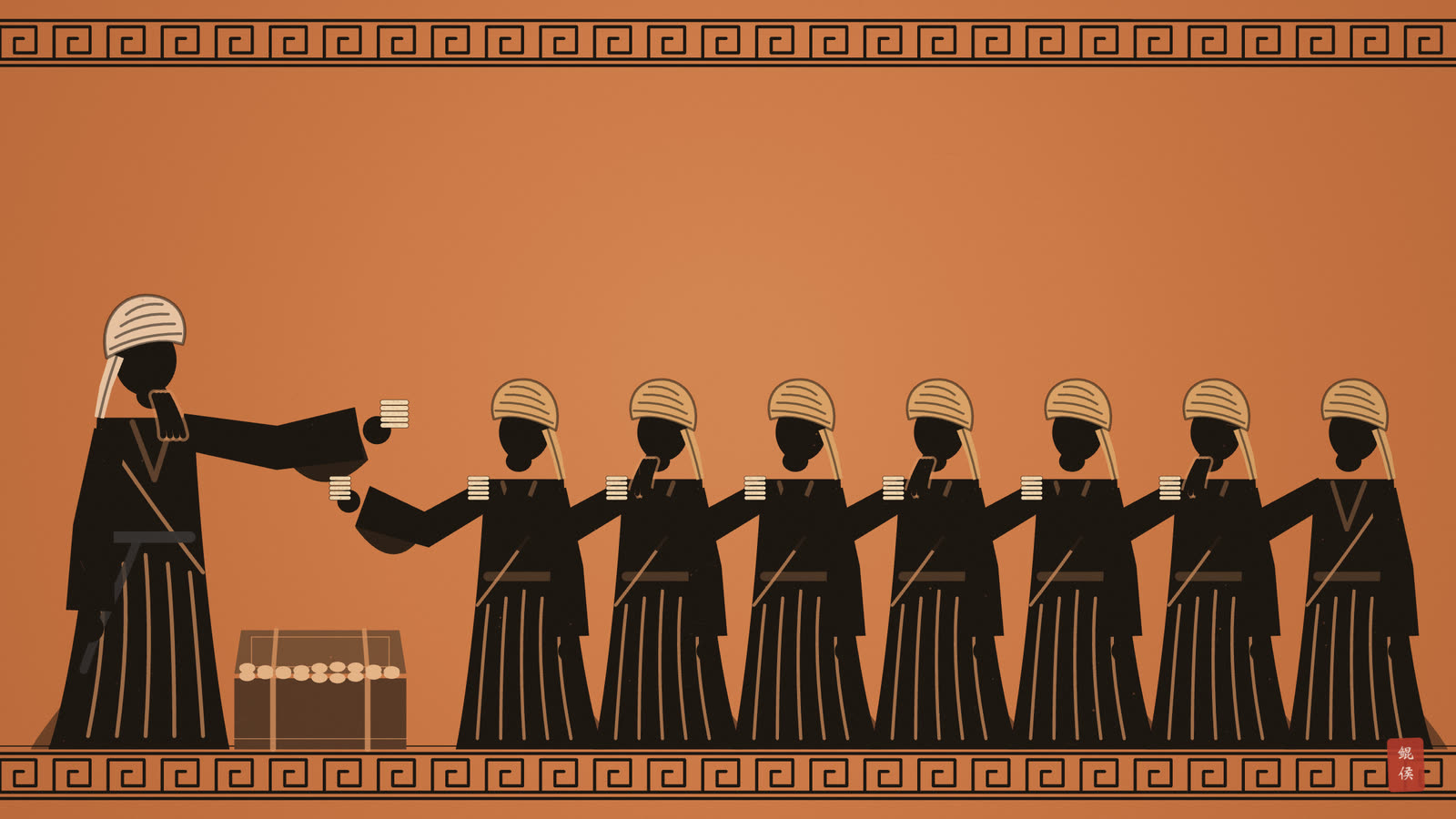
翻译点开
§96. What is calculation?
第九十六问 何谓计算?
It is the handling of numbers and their properties in working out what is sought, by the two operations of joining and separating, that is, by additions and subtractions.
计算就是运用数及其性质来求出所要求的东西,靠的是合与分两种运算,也就是加法与减法。
§97. What is multiplication?
第九十七问 何谓乘?
It is taking one of two numbers as many times as there are units in the other. For example, if we want to multiply 5 by 7, either you take 5 seven times, which makes 35, or you take 7 five times, which also makes 35; for the meaning of our saying '5 by 7' is: how much are 5 seven times, or how much are 7 five times?
乘就是把两数中的一个,按另一个所含单位的数目取那么多次。例如我们要以五乘七:要么你取五七次,得三十五;要么你取七五次,也得三十五;因为我们说“五乘七”的意思就是:五取七次是多少,或七取五次是多少?
§98. What is division?
第九十八问 何谓除?
It is finding the share of one unit of the divisor out of the dividend; this share is called the quotient. For example, we divide 35, the dividend, by 7, the divisor. Let us call the dividend wealth and the divisor men: then the share of a single man of this wealth is 5, and that is the quotient.
除就是求出被除数中分给除数每一个单位的那一份;这一份称为商。例如我们以三十五为被除数,以七为除数来除。且把被除数称为财物,把除数称为人:那么这笔财物中一个人的那一份是五,这就是商。
大意与图解点开
🔎 大意:计算靠合与分,即加与减;乘是把一数按另一数的单位数取若干次,五乘七即七乘五;除是求除数每一单位分得几何。
📖 术语
| 术语 | 英文原词 | 意思 |
|---|---|---|
| 计算 | calculation | 运用数求所求 |
| 被除数 | dividend | 被分的数 |
| 除数 | divisor | 用来分的数 |
| 商 | quotient | 每一单位所得 |
🧭 图解与讲解
第九十六问给“计算”下定义:运用数及其性质求出所求,根本只有两种运算,“合”与“分”,即加与减。乘可以看成反复的加,除可以看成反复的减,所以比鲁尼把加减放在最根本的位置。
〔图〕五取七次与七取五次是同一个三十五:横看是五行七,竖看是七列五
| 运算 | 比鲁尼的定义 | 原书例 |
|---|---|---|
| 计算 | 运用数及其性质求所求,靠合与分(加与减) | — |
| 乘 | 把一数按另一数的单位数取若干次 | 5 取 7 次 = 7 取 5 次 = 35 |
| 除 | 求被除数中分给除数每一单位的那一份 | 35 份财物分给 7 人,每人 5 |
| 商 | 除所得的那一份 | 5 |
乘的定义是把一个数按另一个数所含单位的个数取那么多次。五乘七,可以读成五取七次,也可以读成七取五次,结果都是三十五(图一)。比鲁尼特意点明这两种读法相同,今人称为乘法交换律。
除的定义很生动:把被除数当作一笔财物,把除数当作分财物的人,求每人分得多少,这一份就是商(表二)。三十五份财物分给七人,每人得五。这种“分财”的比喻在阿拉伯算术书中很常见,下一单元的“财”(平方)一词也与之相关。天文占星推算中,求平均每日的运动、按比例分配度数,都要用到这些基本运算。
📖 术语
| 术语 | 英文原词 | 意思 |
|---|---|---|
| 计算 | calculation | 运用数求所求 |
| 被除数 | dividend | 被分的数 |
| 除数 | divisor | 用来分的数 |
| 商 | quotient | 每一单位所得 |
🧭 图解与讲解
第九十六问给“计算”下定义:运用数及其性质求出所求,根本只有两种运算,“合”与“分”,即加与减。乘可以看成反复的加,除可以看成反复的减,所以比鲁尼把加减放在最根本的位置。
| 运算 | 比鲁尼的定义 | 原书例 |
|---|---|---|
| 计算 | 运用数及其性质求所求,靠合与分(加与减) | — |
| 乘 | 把一数按另一数的单位数取若干次 | 5 取 7 次 = 7 取 5 次 = 35 |
| 除 | 求被除数中分给除数每一单位的那一份 | 35 份财物分给 7 人,每人 5 |
| 商 | 除所得的那一份 | 5 |
乘的定义是把一个数按另一个数所含单位的个数取那么多次。五乘七,可以读成五取七次,也可以读成七取五次,结果都是三十五(图一)。比鲁尼特意点明这两种读法相同,今人称为乘法交换律。
除的定义很生动:把被除数当作一笔财物,把除数当作分财物的人,求每人分得多少,这一份就是商(表二)。三十五份财物分给七人,每人得五。这种“分财”的比喻在阿拉伯算术书中很常见,下一单元的“财”(平方)一词也与之相关。天文占星推算中,求平均每日的运动、按比例分配度数,都要用到这些基本运算。
§99. What are squaring and the extraction of roots?
Squaring is multiplying a number by itself, since the product of that is called a māl ('wealth'). For example, if 7 is multiplied by 7, the result is 49, and that is the māl. Root extraction is finding the number from whose multiplication by itself the māl arose, that is, finding the 7 from whose multiplication by itself the 49 arose. This number is called the root, that is, the origin, because the side of the māl is the origin to which it is referred.
§100. What are a rational root and a surd root?
A rational root is one whose true value can be expressed. It is also called expressible, unrestricted and open, such as 3 for 9 and 4 for 16. A surd ('deaf') root is one that cannot be expressed, such as the root of 10: it is impossible for there to be a number which, multiplied by itself, makes 10. It is also called so because it does not answer the one who calls on it seeking it, so that he can find it only by approximation.
§101. What are cubing and the extraction of the cube's side?
Cubing is multiplying a number by itself and the product again by that number, since the result of that is called a cube. For example, if 3 is multiplied by 3 and then by 3, the result is 27, and that is the cube. Extracting the side is finding the number from whose multiplication by itself, and of the product by it, the cube arose, that is, finding the 3 from whose multiplication by 3 twice the 27 arose. This number is called the side of the cube, and sometimes its kaʿb ('cube'). Some people, to be precise, call the cube itself the kaʿb, and so are obliged to call its kaʿb a 'side', to avoid confusion.
§102. What is skipping?
It is passing over one place or several in extracting square and cube roots. In root extraction one says 'it is, it is not, it is', and in extracting the side of a cube 'it is, it is not, it is not'. Sometimes 'plane' is said instead of 'it is', so that the last place given in the order may be known by it [text uncertain].
翻译点开
§99. What are squaring and the extraction of roots?
第九十九问 何谓平方与开方?
Squaring is multiplying a number by itself, since the product of that is called a māl ('wealth'). For example, if 7 is multiplied by 7, the result is 49, and that is the māl. Root extraction is finding the number from whose multiplication by itself the māl arose, that is, finding the 7 from whose multiplication by itself the 49 arose. This number is called the root, that is, the origin, because the side of the māl is the origin to which it is referred.
平方就是一个数自乘,因为自乘之积称为“马勒”(财)。例如七乘七,结果是四十九,这就是财。开方就是求出那个自乘而生出财的数,也就是求出那个自乘而生出四十九的七。这个数称为根,即本原,因为财的边就是它所归属的本原。
§100. What are a rational root and a surd root?
第一百问 何谓有理根与聋根?
A rational root is one whose true value can be expressed. It is also called expressible, unrestricted and open, such as 3 for 9 and 4 for 16. A surd ('deaf') root is one that cannot be expressed, such as the root of 10: it is impossible for there to be a number which, multiplied by itself, makes 10. It is also called so because it does not answer the one who calls on it seeking it, so that he can find it only by approximation.
有理根是其真值能够说得出来的根。它也称为可言的、不受限的、敞开的根,如九的三、十六的四。聋根是说不出来的根,如十的根:不可能有一个数自乘得十。它之所以这样称呼,还因为它不应答呼唤它、寻求它的人,所以那人只能用逼近的办法求得它。
§101. What are cubing and the extraction of the cube's side?
第一百零一问 何谓立方与求立方之边?
Cubing is multiplying a number by itself and the product again by that number, since the result of that is called a cube. For example, if 3 is multiplied by 3 and then by 3, the result is 27, and that is the cube. Extracting the side is finding the number from whose multiplication by itself, and of the product by it, the cube arose, that is, finding the 3 from whose multiplication by 3 twice the 27 arose. This number is called the side of the cube, and sometimes its kaʿb ('cube'). Some people, to be precise, call the cube itself the kaʿb, and so are obliged to call its kaʿb a 'side', to avoid confusion.
立方就是一个数自乘,再以其积乘那个数,因为这样所得的结果称为立方。例如三乘三,再乘三,结果是二十七,这就是立方。求边就是求出那个自乘、再以其积乘它而生出这立方的数,也就是求出以三乘了两次而生出二十七的那个三。这个数称为立方之边,有时也称为它的“卡阿卜”(立方)。有些人为了精确,把立方本身称为卡阿卜,于是为了避免混淆,就不得不把它的卡阿卜称为“边”。
§102. What is skipping?
第一百零二问 何谓跳位?
It is passing over one place or several in extracting square and cube roots. In root extraction one says 'it is, it is not, it is', and in extracting the side of a cube 'it is, it is not, it is not'. Sometimes 'plane' is said instead of 'it is', so that the last place given in the order may be known by it [text uncertain].
跳位就是在开平方与开立方时越过一位或几位。开平方时念作“有,无,有”,开立方时念作“有,无,无”。有时说“面”来代替“有”,好借此知道所给次序中的最后一位〔原文疑有讹误〕。
大意与图解点开
🔎 大意:自乘得“财”,反求所出之数为开方,所得为根;说得出的是有理根,说不出的如十之根为聋根。开立方同理,开方时隔位作记。
📖 术语
| 术语 | 英文原词 | 意思 |
|---|---|---|
| 马勒 | māl | 财,即平方 |
| 根 | root | 自乘生财的数 |
| 聋根 | surd ('deaf') root | 说不出的根 |
| 立方之边 | side of the cube | 即立方根 |
| 跳位 | skipping | 开方时隔位作记 |
🧭 图解与讲解
阿拉伯代数把一个数的平方叫“马勒”,本义是“财”。七自乘得四十九,四十九就是“财”;反过来求出七,叫开方,七称为“根”,即“本原”(表一)。这一对名称在下一章讲代数时是核心术语:“财”是未知数的平方,“根”是未知数本身。
| 名目 | 定义 | 原书例 |
|---|---|---|
| 平方(财) | 一个数自乘 | 7 × 7 = 49 |
| 开平方(求根) | 求自乘生出财的那个数 | 49 的根是 7 |
| 有理根 | 真值说得出 | 9 的根 3,16 的根 4 |
| 聋根 | 说不出,只能逼近 | 10 的根:没有数自乘得 10 |
| 立方 | 自乘再乘一次 | 3 × 3 × 3 = 27 |
| 开立方(求边) | 求生出立方的那个数 | 27 的边是 3 |
| 位(自个位起) | 个 | 十 | 百 | 千 | 万 | 十万 | 百万 |
|---|---|---|---|---|---|---|---|
| 开平方念 | 有 | 无 | 有 | 无 | 有 | 无 | 有 |
| 开立方念 | 有 | 无 | 无 | 有 | 无 | 无 | 有 |
| 例:15129 = 123² | 9 ● | 2 | 1 ● | 5 | 1 ● | ||
| 例:1860867 = 123³ | 7 ● | 6 | 8 | 0 ● | 6 | 8 | 1 ● |
根有两种:说得出的叫有理根,如九的根是三;说不出的叫“聋根”,如十的根,没有一个整数自乘得十,只能逼近。比鲁尼解释“聋”字很风趣:它不应答呼唤它的人。这个名称后来经拉丁文译作 surdus(聋),英文的 surd(不尽根)即源于此。
立方与开立方同理。比鲁尼再次提醒名称混乱:有人把因数叫“卡阿卜”,有人把积叫“卡阿卜”而把因数叫“边”,读书时要分清,这与上一章第九十一问相呼应。阿拉伯数学书里“卡阿卜”一词两用的情形很常见,比鲁尼在入门书里不定一尊,只把两种用法都交代清楚。
跳位是开方时的记位法:从个位起,开平方隔一位作一记(“有,无,有”),开立方隔两位作一记(“有,无,无”),记号有几个,根就有几位(表二,例子是讲解所加)。末句说有时以“面”代替“有”,用意英译与抄本都不甚明白,照英译标为原文疑有讹误。
§103. What is the denominator?
It is the number of parts of the whole unit to which a fraction smaller than it is referred. Such is 3 for a third, for a third is one part of the whole when it is made into 3 parts, and likewise two-thirds are 2 parts of them; and such are 4 for a quarter and 5 for a fifth. The denominator is the smallest number that will serve for this, for 2 is also a fifth of 10, and 3 a fifth of 15; but the larger numbers have no limit, while the smallest is determinate, so it must be the one taken.
§104. What is reduction to one kind?
It is when there are whole numbers and fractions referred to a denominator: the denominator is multiplied by the whole numbers and the result added to the fraction, so that the total becomes of one kind. For example, 3 and a quarter is written as 3 wholes and 1 part of 4 parts of the whole. If we want to reduce it to one kind, we multiply the 3 wholes by the denominator, 4, which makes 12, and add it to the fraction, which makes 13 with 4 under it, that is, 13 quarters. Again, if there are different fractions, they are added together by reduction to one kind, such as two-sevenths and three-fifths. If we want to add them, we multiply denominator by denominator, that is, 7 by 5, which makes 35, the denominator for both together; of it the two-sevenths are 10 and the three-fifths 21, and their sum is 31, which is the total of the two-sevenths and the three-fifths in one kind. Again, if there are sexagesimal fractions, such as are used in astronomy, like minutes and seconds and what lies below them, and we want to reduce them to one kind, we multiply the highest by 60 and add the product to the one that follows it below; then we again multiply the sum by 60 and add the product to the one that follows it below, until we bring them down to the lowest place, so that the whole is in its kind. For example, we have 3 minutes, 4 seconds and 5 thirds, and want to reduce them to one kind. We multiply the 3 minutes by 60, which makes 180; this is added to the 4 seconds, and we multiply the sum by 60, which makes 11040 thirds; we add these to the 5 thirds, which makes 11045 thirds, and that is the whole of what we had, made into thirds.
翻译点开
§103. What is the denominator?
第一百零三问 何谓分母?
It is the number of parts of the whole unit to which a fraction smaller than it is referred. Such is 3 for a third, for a third is one part of the whole when it is made into 3 parts, and likewise two-thirds are 2 parts of them; and such are 4 for a quarter and 5 for a fifth. The denominator is the smallest number that will serve for this, for 2 is also a fifth of 10, and 3 a fifth of 15; but the larger numbers have no limit, while the smallest is determinate, so it must be the one taken.
分母是整一所分成的份数,比整一小的分数就归属于它。如三之于三分之一:因为三分之一是整一被分成三份时的一份,三分之二同样是其中的两份;又如四之于四分之一,五之于五分之一。分母是能胜任此事的最小的数,因为二也是十的五分之一,三也是十五的五分之一;但较大的数没有限度,最小的数却是确定的,所以必须取最小的那个。
§104. What is reduction to one kind?
第一百零四问 何谓化为同类?
It is when there are whole numbers and fractions referred to a denominator: the denominator is multiplied by the whole numbers and the result added to the fraction, so that the total becomes of one kind. For example, 3 and a quarter is written as 3 wholes and 1 part of 4 parts of the whole. If we want to reduce it to one kind, we multiply the 3 wholes by the denominator, 4, which makes 12, and add it to the fraction, which makes 13 with 4 under it, that is, 13 quarters. Again, if there are different fractions, they are added together by reduction to one kind, such as two-sevenths and three-fifths. If we want to add them, we multiply denominator by denominator, that is, 7 by 5, which makes 35, the denominator for both together; of it the two-sevenths are 10 and the three-fifths 21, and their sum is 31, which is the total of the two-sevenths and the three-fifths in one kind. Again, if there are sexagesimal fractions, such as are used in astronomy, like minutes and seconds and what lies below them, and we want to reduce them to one kind, we multiply the highest by 60 and add the product to the one that follows it below; then we again multiply the sum by 60 and add the product to the one that follows it below, until we bring them down to the lowest place, so that the whole is in its kind. For example, we have 3 minutes, 4 seconds and 5 thirds, and want to reduce them to one kind. We multiply the 3 minutes by 60, which makes 180; this is added to the 4 seconds, and we multiply the sum by 60, which makes 11040 thirds; we add these to the 5 thirds, which makes 11045 thirds, and that is the whole of what we had, made into thirds.
当有整数,又有归属于某个分母的分数时,用分母乘整数,再把结果加到分数上,使全部成为同一类,这就是化为同类。例如三又四分之一,写作三个整数与整一的四份中的一份。我们若要把它化为同类,就用分母四乘三个整数,得十二,再把它加到分数上,得十三,下面写四,即十三个四分之一。又如有不同的分数,要通过化为同类把它们相加,如七分之二与五分之三。我们若要把它们相加,就用分母乘分母,即七乘五,得三十五,作为二者共同的分母;其中七分之二是十,五分之三是二十一,其和是三十一,这就是七分之二与五分之三在同一类中的总和。又如有六十进位的分数,如天文学中所用的分、秒及其以下各级,我们要把它们化为同类,就用六十乘最高的一级,把积加到其下紧接的一级;再用六十乘所得之和,把积加到其下紧接的一级,直到把它们降到最低一级,使全部成为同一类。例如我们有三分、四秒、五个三次分,要把它们化为同类。我们用六十乘三分,得一百八十;把它加到四秒上,再用六十乘其和,得一万一千零四十个三次分;把这些加到五个三次分上,得一万一千零四十五个三次分,这就是我们原有的全部,化成了三次分。
大意与图解点开
🔎 大意:分母是整一所分的份数,取最小者;化为同类是把整数与分数、不同分母、六十进位各级都化成同一单位,便于相加。
📖 术语
| 术语 | 英文原词 | 意思 |
|---|---|---|
| 分母 | denominator | 整一所分的份数 |
| 化为同类 | reduction to one kind | 化成同一单位 |
| 六十进位分数 | sexagesimal fractions | 分、秒及以下 |
| 三次分 | thirds | 一秒的六十分之一 |
🧭 图解与讲解
分母,阿拉伯语原词本义是“出处”,即一个分数从哪个整体分出来。比鲁尼说分母要取“能胜任的最小的数”:五分之一也可以写成十分之二、十五分之三,但这样的大数没有尽头,只有最小的五是确定的,所以五分之一的分母取五(表二)。
| 例 | 步骤 | 算式 | 结果 |
|---|---|---|---|
| 三又四分之一 | 一、整数乘分母 | 3 × 4 | 12 |
| 二、加上分子 | 12 + 1 | 13,即 13/4 | |
| 七分之二加五分之三 | 一、分母相乘作共同分母 | 7 × 5 | 35 |
| 二、各化为三十五分之几 | 2/7 = 10/35;3/5 = 21/35 | 10 与 21 | |
| 三、相加 | 10 + 21 | 31/35 | |
| 三分四秒五个三次分 | 一、分乘六十化为秒 | 3 × 60 | 180 秒 |
| 二、加上四秒 | 180 + 4 | 184 秒 | |
| 三、秒乘六十化为三次分 | 184 × 60 | 11040 三次分 | |
| 四、加上五个三次分 | 11040 + 5 | 11045 三次分 |
| 分母的取法 | 说明 |
|---|---|
| 三分之一、三分之二 | 分母是 3:整一分成三份,取其一或其二 |
| 四分之一、五分之一 | 分母各为 4、5 |
| 五分之一为何不以 10 或 15 为分母 | 2/10、3/15 也都是五分之一,但大数无尽,只有最小的 5 是确定的 |
化为同类是做分数运算的前提(表一)。三又四分之一,用分母乘整数再加分子,化为十三个四分之一;七分之二加五分之三,先以七乘五得三十五为共同分母,二者化为三十五分之十与三十五分之二十一,相加得三十五分之三十一。
对天文与占星最要紧的是第三个例子:六十进位的分、秒、三次分。三分四秒五个三次分,先以六十乘三分得一百八十秒,加四秒得一百八十四秒,再乘六十得一万一千零四十个三次分,加五得一万一千零四十五个三次分。星表里查出的度、分、秒,要相乘相除时,都得先这样化成最低一级;算完以后再“升位”还原,那是下一章第一百零五问的内容。
原文为公有领域古籍;翻译、印象画与图文解读由 AI 辅助生成,鲲侯审校。