卷二·第 105–111 问 升位、数位与代数
六十进位的升位与约简,自然阶与十进位值、零号,代数的还原与对消,以及六种方程:比鲁尼算术卷的实用部分。
§105. What is raising a number?
Whenever we get a number of more than 60 in one of the sexagesimal places, we raise it to the place above by dividing by 60, and we go on doing so until we reach the whole units, if that is possible. For example, we have 11045 seconds. No place may hold more than 59, so we divide them by 60, which gives 184 minutes with 5 seconds remaining. Since the minutes are more than 60, we again divide them by 60, which gives 3 whole units with 4 minutes remaining. Whole units, however many, are not raised. So by raising we have obtained 3 units, 4 minutes and 5 seconds.
§106. What is reduction?
It is making two common numbers smaller by dividing each of them by their common measure and putting the quotients in their place. For example, we have 72 out of 360, and the common measure between them is 72. If we divide each of them by it, the first gives 1 and the second 5; 1 out of 5 is as 72 out of 360, so 1 and 5 take their place.
翻译点开
§105. What is raising a number?
第一百零五问 何谓升位?
Whenever we get a number of more than 60 in one of the sexagesimal places, we raise it to the place above by dividing by 60, and we go on doing so until we reach the whole units, if that is possible. For example, we have 11045 seconds. No place may hold more than 59, so we divide them by 60, which gives 184 minutes with 5 seconds remaining. Since the minutes are more than 60, we again divide them by 60, which gives 3 whole units with 4 minutes remaining. Whole units, however many, are not raised. So by raising we have obtained 3 units, 4 minutes and 5 seconds.
每当六十进位的某一位上累积的数超过六十,我们就用六十除它,把它升到上一位;如果可能,就一直这样做,直到升到整数为止。例如我们有一万一千零四十五秒。任何一位上都不许超过五十九,所以我们用六十除它,得一百八十四分,余五秒。因为分仍超过六十,我们再用六十除它,得三个整数,余四分。整数不论多少都不再升位。这样,经过升位,我们得到三个整数、四分、五秒。
§106. What is reduction?
第一百零六问 何谓约简?
It is making two common numbers smaller by dividing each of them by their common measure and putting the quotients in their place. For example, we have 72 out of 360, and the common measure between them is 72. If we divide each of them by it, the first gives 1 and the second 5; 1 out of 5 is as 72 out of 360, so 1 and 5 take their place.
约简就是用两个共度数的公度去除它们各自,以所得之商代替它们,从而使这两个数变小。例如我们有三百六十分之七十二,二者之间的公度是七十二。我们用它除二者,前者得一,后者得五;五分之一如同三百六十分之七十二,所以一与五可以代替它们。
大意与图解点开
🔎 大意:升位是把六十进位某级满六十的部分除以六十进到上一级,直到整数;约简是以公度除两个共度数,用较小的商代替原数。
📖 术语
| 术语 | 英文原词 | 意思 |
|---|---|---|
| 升位 | raising | 满六十进上一级 |
| 整数 | whole units | 六十进位的最高级 |
| 约简 | reduction | 以公度除两数 |
| 公度 | common measure | 共同的量尽之数 |
🧭 图解与讲解
升位是上一章第一百零四问“化为同类”的逆运算(表一)。六十进位里每一级最多只能放五十九,满六十就要除以六十进到上一级:一万一千零四十五秒,除以六十得一百八十四分余五秒;一百八十四分仍超过六十,再除以六十得三个整数余四分。整数一级不论多大都不再升,于是得“三整四分五秒”。
| 步骤 | 算什么 | 算式 | 结果 |
|---|---|---|---|
| 一 | 秒满六十,进为分 | 11045 ÷ 60 | 184 分,余 5 秒 |
| 二 | 分仍超过六十,进为整数 | 184 ÷ 60 | 3 个整数,余 4 分 |
| 三 | 整数不再升位 | — | 3 整 4 分 5 秒 |
| 验算 | 反过来化为同类(上一章第一百零四问) | (3 × 60 + 4) × 60 + 5 | 11045 |
〔图〕约简:以公度七十二除三百六十与七十二,得五分之一
对照上一章:那里三分四秒五个三次分化为一万一千零四十五个三次分;这里同一个数当作秒来升位,得三整四分五秒。两例数字相同,只是各级整体移了一位,正好互相验算。原文说“超过六十”就要升位,紧接着又说“任何一位不许超过五十九”,后一句才是确切的界限:恰满六十也要进位。
约简是用两数的公度去除它们,以较小的商代替(图二)。比鲁尼举的例子很有占星意味:三百六十分之七十二,公度是七十二,约简得五分之一。三百六十正是黄道全周的度数,七十二度就是全周的五分之一。上一章第八十六问讲过共度数与“约后之数”,这里正是它的用处。
📖 术语
| 术语 | 英文原词 | 意思 |
|---|---|---|
| 升位 | raising | 满六十进上一级 |
| 整数 | whole units | 六十进位的最高级 |
| 约简 | reduction | 以公度除两数 |
| 公度 | common measure | 共同的量尽之数 |
🧭 图解与讲解
升位是上一章第一百零四问“化为同类”的逆运算(表一)。六十进位里每一级最多只能放五十九,满六十就要除以六十进到上一级:一万一千零四十五秒,除以六十得一百八十四分余五秒;一百八十四分仍超过六十,再除以六十得三个整数余四分。整数一级不论多大都不再升,于是得“三整四分五秒”。
| 步骤 | 算什么 | 算式 | 结果 |
|---|---|---|---|
| 一 | 秒满六十,进为分 | 11045 ÷ 60 | 184 分,余 5 秒 |
| 二 | 分仍超过六十,进为整数 | 184 ÷ 60 | 3 个整数,余 4 分 |
| 三 | 整数不再升位 | — | 3 整 4 分 5 秒 |
| 验算 | 反过来化为同类(上一章第一百零四问) | (3 × 60 + 4) × 60 + 5 | 11045 |
对照上一章:那里三分四秒五个三次分化为一万一千零四十五个三次分;这里同一个数当作秒来升位,得三整四分五秒。两例数字相同,只是各级整体移了一位,正好互相验算。原文说“超过六十”就要升位,紧接着又说“任何一位不许超过五十九”,后一句才是确切的界限:恰满六十也要进位。
约简是用两数的公度去除它们,以较小的商代替(图二)。比鲁尼举的例子很有占星意味:三百六十分之七十二,公度是七十二,约简得五分之一。三百六十正是黄道全周的度数,七十二度就是全周的五分之一。上一章第八十六问讲过共度数与“约后之数”,这里正是它的用处。
§107. What are the natural orders?
If you set down one and multiply it by some number, and go on multiplying each product by that number, you obtain proportional numbers. The first of them after the one set down is called the root, the second the māl, the third the cube, the fourth the māl-māl, the fifth the māl-cube, the sixth the cube-cube, and the rest are arranged by analogy. The ratio of one to the root is always as that of the root to the māl, of the māl to the cube, of the cube to the māl-māl, of the māl-māl to the māl-cube, and of the māl-cube to the cube-cube. An example of this in two sets of numbers, one obtained by multiplying by 2 and the other by multiplying by 3:
翻译点开
§107. What are the natural orders?
第一百零七问 何谓自然阶?
If you set down one and multiply it by some number, and go on multiplying each product by that number, you obtain proportional numbers. The first of them after the one set down is called the root, the second the māl, the third the cube, the fourth the māl-māl, the fifth the māl-cube, the sixth the cube-cube, and the rest are arranged by analogy. The ratio of one to the root is always as that of the root to the māl, of the māl to the cube, of the cube to the māl-māl, of the māl-māl to the māl-cube, and of the māl-cube to the cube-cube. An example of this in two sets of numbers, one obtained by multiplying by 2 and the other by multiplying by 3:
若你放下一,用某个数乘它,再用同一个数去乘每次所得之积,就得到一串成比例的数。放下的一之后的第一个称为根,第二个称为财,第三个称为立方,第四个称为财财,第五个称为财立方,第六个称为立方立方,其余依此类推。一与根之比,总是如同根与财之比、财与立方之比、立方与财财之比、财财与财立方之比、财立方与立方立方之比。下面以两组数为例,一组由乘二而得,另一组由乘三而得:
大意与图解点开
🔎 大意:从一起不断以同一数相乘,得一串成比例的数,依次称根、财、立方、财财、财立方、立方立方,相邻两阶之比处处相同。
📖 术语
| 术语 | 英文原词 | 意思 |
|---|---|---|
| 自然阶 | the natural orders | 一数的各次乘方 |
| 财财 | māl-māl | 四次方 |
| 财立方 | māl-cube | 五次方 |
| 立方立方 | cube-cube | 六次方 |
| 成比例的数 | proportional numbers | 相邻之比相同 |
🧭 图解与讲解
自然阶就是今天所说的“一个数的各次乘方”。放下一,用同一个数(例如二)连乘下去,得二、四、八、十六、三十二、六十四;用三连乘,得三、九、二十七、八十一、二百四十三、七百二十九(表一,据抄本表重画)。相邻两阶之比处处相同,所以说它们“成比例”。
| 原书表:诸阶之名 | 一 | 根 | 财 | 立方 | 财财 | 财立方 | 立方立方 |
|---|---|---|---|---|---|---|---|
| 乘二(除则取一半) | 1 ١ | 2 ٢ | 4 ٤ | 8 ٨ | 16 ١٦ | 32 ٣٢ | 64 ٦٤ |
| 乘三(除则取三分之一) | 1 ١ | 3 ٣ | 9 ٩ | 27 ٢٧ | 81 ٨١ | 243 ٢٤٣ | 729 ٧٢٩ |
| 阶 | 名称 | 构成 | 乘二之例 | 乘三之例 |
|---|---|---|---|---|
| 第一 | 根 | 数本身 | 2 | 3 |
| 第二 | 财 | 根 × 根 | 4 | 9 |
| 第三 | 立方 | 财 × 根 | 8 | 27 |
| 第四 | 财财 | 财 × 财 | 16 | 81 |
| 第五 | 财立方 | 财 × 立方 | 32 | 243 |
| 第六 | 立方立方 | 立方 × 立方 | 64 | 729 |
各阶的名称很有意思(表二):第一阶是根,第二阶是“财”(平方),第三阶是立方;再往上不另起新名,而是拼合:第四阶“财财”(平方乘平方),第五阶“财立方”(平方乘立方),第六阶“立方立方”。这正是阿拉伯代数为高次方命名的办法,下面第一百一十问起讲方程时,“根”“财”就是两个基本单位。
对照上一章:第九十九问讲“财”与根,第一百零一问讲立方与边,这一问把它们排成一个等比的阶梯。抄本里这张表用印度数码书写,首格的“一”写得像字母,第一行行名也有一个字没加点,都已按上下文读定。
§108. What are the conventional places?
They are the places used in the practice of calculation, and they are one of the kinds of conventional order, since the convention concerning the number assumed for multiplication has settled on 10; so the ratio between the places is tenfold. The first of these places is the units, holding from 1 to 9 and increasing by one; the second the tens, holding from 10 to 90 and increasing by ten each time; the third the hundreds, holding from 100 to 900 and increasing by a hundred; the fourth the thousands, holding from 1000 to 9000. This fourth takes the place of the units, since what follows it is tens of thousands, just as tens follow units, and it differs from the units in name only by being referred to thousands. Whenever a particular number is set in each of these places, one unit of the preceding place is always a tenth of one unit of the following place. If a place is empty of any number, a sign is set in its stead to show that it is empty. We make it a small circle and call it ṣifr ('empty'); the Indians make it a dot. This is the form of numbers in their places, for the sake of instruction. If we want to write it out and express it in words, we say: nine thousand thousand thousand thousand, and eight thousand thousand thousand, and six hundred and seventy-five thousand thousand, and thirty-four thousand, one hundred and two (9008675034102).
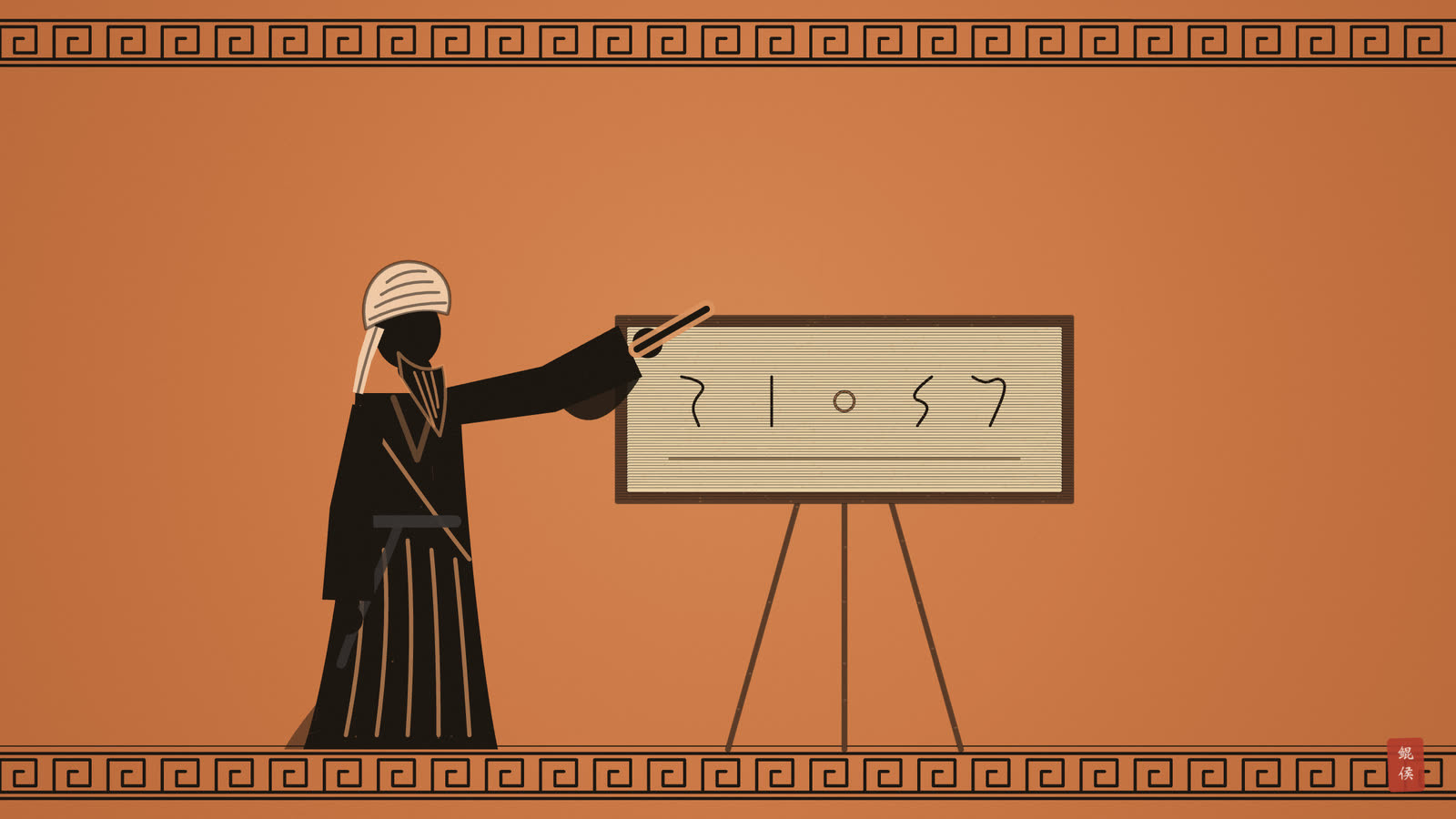
翻译点开
§108. What are the conventional places?
第一百零八问 何谓约定位?
They are the places used in the practice of calculation, and they are one of the kinds of conventional order, since the convention concerning the number assumed for multiplication has settled on 10; so the ratio between the places is tenfold. The first of these places is the units, holding from 1 to 9 and increasing by one; the second the tens, holding from 10 to 90 and increasing by ten each time; the third the hundreds, holding from 100 to 900 and increasing by a hundred; the fourth the thousands, holding from 1000 to 9000. This fourth takes the place of the units, since what follows it is tens of thousands, just as tens follow units, and it differs from the units in name only by being referred to thousands. Whenever a particular number is set in each of these places, one unit of the preceding place is always a tenth of one unit of the following place. If a place is empty of any number, a sign is set in its stead to show that it is empty. We make it a small circle and call it ṣifr ('empty'); the Indians make it a dot. This is the form of numbers in their places, for the sake of instruction. If we want to write it out and express it in words, we say: nine thousand thousand thousand thousand, and eight thousand thousand thousand, and six hundred and seventy-five thousand thousand, and thirty-four thousand, one hundred and two (9008675034102).
约定位就是计算实践中所用的数位,它们是约定次序的一种,因为人们对用来相乘的那个数约定为十,所以各位之间的比是十倍。这些位中,第一是个位,容纳一到九,每次增一;第二是十位,容纳十到九十,每次增十;第三是百位,容纳一百到九百,每次增一百;第四是千位,容纳一千到九千。这第四位又相当于个位,因为它后面是十千,正如个位后面是十位;它与个位在名称上的不同,只在于它归属于千。每一位上放了某个数时,前一位的一个单位总是后一位的一个单位的十分之一。若某一位上空无一数,就在那里放一个记号,表示它是空的。我们把这记号画成一个小圆圈,称为“隋弗尔”,意思是“空”;印度人则把它画成一个点。下面是诸数在各位中的样式,供教学之用。若我们要把它写出来、用话念出来,就说:九千千千千,又八千千千,又六百七十五千千,又三十四千,一百零二(九〇〇八六七五〇三四一〇二)。
大意与图解点开
🔎 大意:计算所用的数位是约定的十进位:个、十、百、千,千之后又如个位重起;空位画小圆圈,称“隋弗尔”,印度人画一点。
📖 术语
| 术语 | 英文原词 | 意思 |
|---|---|---|
| 约定位 | the conventional places | 十进位值的各位 |
| 隋弗尔 | ṣifr | 空,即零 |
| 十千 | tens of thousands | 今称万 |
| 千千 | thousand thousand | 今称百万 |
🧭 图解与讲解
这一问讲十进位值制。比鲁尼说它是“约定的”:人们约定以十为倍率,于是个、十、百、千各位之间都是十倍。到了千位,又像回到个位一样重新数起:千、十千、百千,然后千千……阿拉伯语没有“万”“亿”这样的单字,大数就以“千”层层叠称(表二)。
| 位次 | 原书位名 | 今称 | 抄本数码 | 今写 |
|---|---|---|---|---|
| 13 | 千千千千 | 万亿 | ٩ | 9 |
| 12 | 百千千千 | 千亿 | ○ | 0 |
| 11 | 十千千千 | 百亿 | ○ | 0 |
| 10 | 千千千 | 十亿 | ٨ | 8 |
| 9 | 百千千 | 亿 | ٦ | 6 |
| 8 | 十千千 | 千万 | ٧ | 7 |
| 7 | 千千 | 百万 | ٥ | 5 |
| 6 | 百千 | 十万 | ○ | 0 |
| 5 | 十千 | 万 | ٣ | 3 |
| 4 | 千 | 千 | ٤ | 4 |
| 3 | 百 | 百 | ١ | 1 |
| 2 | 十 | 十 | ○ | 0 |
| 1 | 个 | 个 | ٢ | 2 |
| 原书读法 | 今读 | 各位 |
|---|---|---|
| 九千千千千 | 九万亿 | 9 在第十三位 |
| 又八千千千 | 八十亿 | 8 在第十位(第十一、十二位为空) |
| 又六百七十五千千 | 六亿七千五百万 | 6、7、5 在第九至七位 |
| 又三十四千 | 三万四千 | 3、4 在第五、四位(第六位为空) |
| 一百零二 | 一百零二 | 1、0、2 在第三至一位 |
最要紧的一句是空位的记号:某一位上没有数,就放一个记号表示“空”,阿拉伯人画成小圆圈,称为“隋弗尔”(ṣifr),本义就是“空”;印度人则画成一个点。英文的 cipher 与 zero,都由这个阿拉伯词辗转而来。抄本所附的表(表一,据抄本重画)正是用小圆圈表示空位,与正文所说完全吻合。
比鲁尼举的大数是九〇〇八六七五〇三四一〇二,十三位,中间有四个空位。书中读作“九千千千千,又八千千千,又六百七十五千千,又三十四千,一百零二”,今读九万零八十六亿七千五百零三万四千一百零二。抄本这一句有两处异文,统稿时已按表中数码校定。下一章还要讲以阿拉伯字母记数的“朱马勒”法,与这里的印度数码并行。
§109. What are al-jabr and al-muqābala?
If things of different kinds are equal to one another, they stand like the weights balanced in the two pans of a scale, when its tongues are level and its beam is even. It is clear that if you take some quantity of one of the kinds out of one of the pans, you must take the like of it, in kind and in amount, out of the other pan, so that the balance and the state remain as they were; and likewise, if you put something into one of them, you must put the like into the other. So too, when magnitudes are equal to other magnitudes and on one of the two sides there is an exception and a deficiency, it must be restored by completing it, and the like of it must be added to the other side; this is al-jabr ('restoration'). For example, on one side there are 100 dirhams less 14 dinars, and on the other 13 istārs of iron less 12 dirhams, the two being equal. The restoration here is that you complete the 100 dirhams by removing the exception, which is 14 dinars, and add it to the other side, which then holds 13 istārs of iron and 14 dinars less 12 dirhams. Then you complete this side too by removing the exception, which is 12 dirhams, and add it to the other side; so after restoration 112 dirhams are equal to 13 istārs of iron and 14 dinars. Al-muqābala ('balancing'), after restoration is finished, is that you look at the things of like kind on the two sides, and remove the lesser from one of them and its equal from the other. For example, on one side there are 112 dirhams and on the other 13 istārs of iron and 12 dirhams, the two being equal. Here the like kinds are the dirhams, of which there is a quantity on each side; the lesser is 12, so we drop it, and its like from the other side, and there remain 100 dirhams equal to 13 istārs of iron.
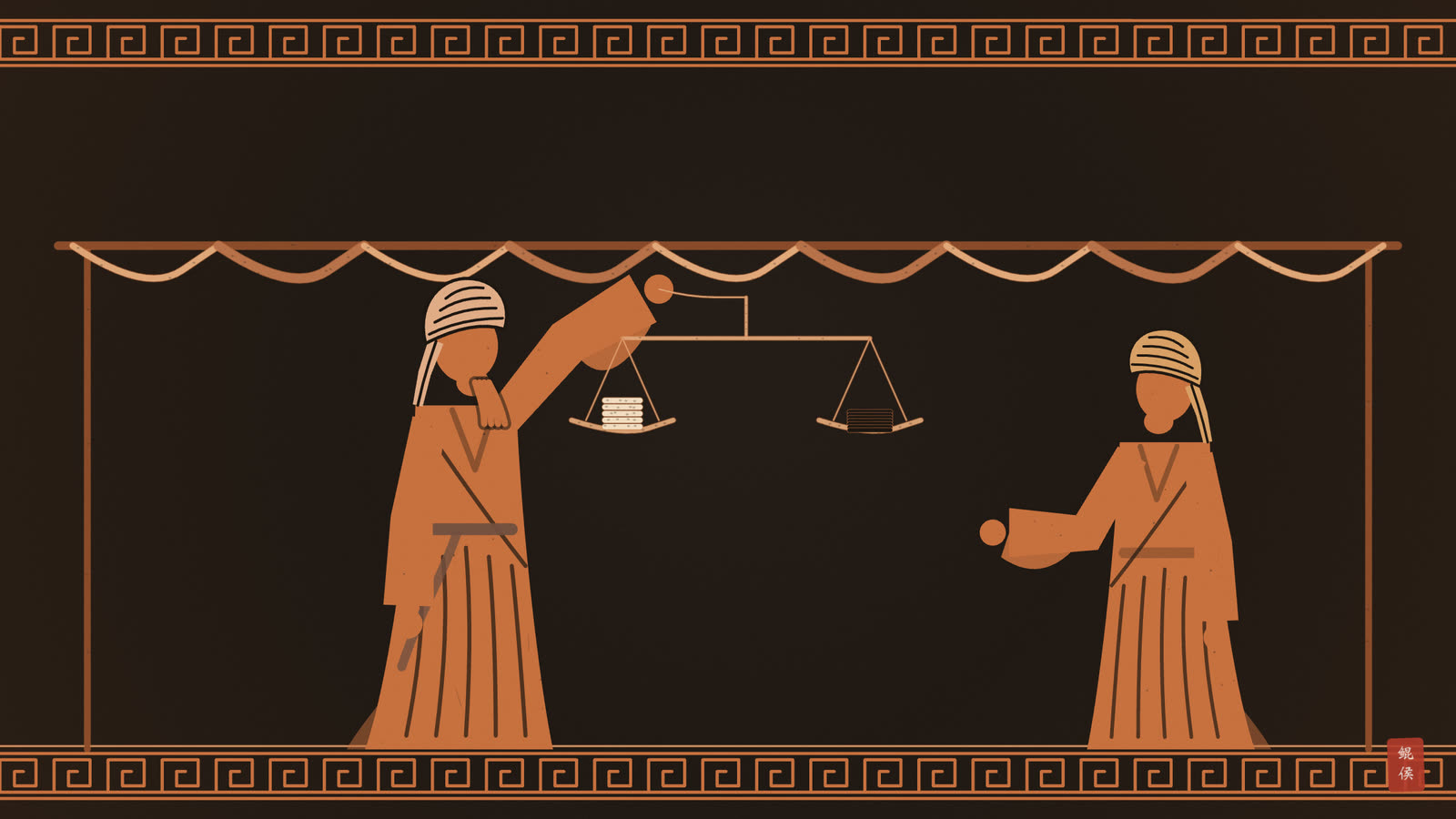
翻译点开
§109. What are al-jabr and al-muqābala?
第一百零九问 何谓“贾卜尔”与“穆卡巴拉”?
If things of different kinds are equal to one another, they stand like the weights balanced in the two pans of a scale, when its tongues are level and its beam is even. It is clear that if you take some quantity of one of the kinds out of one of the pans, you must take the like of it, in kind and in amount, out of the other pan, so that the balance and the state remain as they were; and likewise, if you put something into one of them, you must put the like into the other. So too, when magnitudes are equal to other magnitudes and on one of the two sides there is an exception and a deficiency, it must be restored by completing it, and the like of it must be added to the other side; this is al-jabr ('restoration'). For example, on one side there are 100 dirhams less 14 dinars, and on the other 13 istārs of iron less 12 dirhams, the two being equal. The restoration here is that you complete the 100 dirhams by removing the exception, which is 14 dinars, and add it to the other side, which then holds 13 istārs of iron and 14 dinars less 12 dirhams. Then you complete this side too by removing the exception, which is 12 dirhams, and add it to the other side; so after restoration 112 dirhams are equal to 13 istārs of iron and 14 dinars. Al-muqābala ('balancing'), after restoration is finished, is that you look at the things of like kind on the two sides, and remove the lesser from one of them and its equal from the other. For example, on one side there are 112 dirhams and on the other 13 istārs of iron and 12 dirhams, the two being equal. Here the like kinds are the dirhams, of which there is a quantity on each side; the lesser is 12, so we drop it, and its like from the other side, and there remain 100 dirhams equal to 13 istārs of iron.
若不同种类的东西彼此相等,它们就好比天平两盘中称平的砝码,此时秤舌端正,秤杆平直。显然,若你从一盘中取出某一类的若干,就必须从另一盘中取出种类与数量都相同的东西,天平与原来的状态才能保持不变;同样,若你往其中一盘放进什么,也必须往另一盘放进同样的东西。同理,当一些量等于另一些量,而两边之一带有除去之项与不足时,就必须把它补足以还原,并在另一边加上同样的东西;这就是“贾卜尔”,意思是“还原”。例如,一边是一百迪拉姆减十四第纳尔,另一边是十三伊斯塔尔铁减十二迪拉姆,两边相等。这里的还原,就是你去掉除去之项,即十四第纳尔,把一百迪拉姆补足,再把它加到另一边,于是那一边成为十三伊斯塔尔铁加十四第纳尔减十二迪拉姆。然后你把这一边也补足,去掉除去之项,即十二迪拉姆,再把它加到另一边;于是还原之后,一百一十二迪拉姆等于十三伊斯塔尔铁加十四第纳尔。“穆卡巴拉”,意思是“对消”,是在还原完毕之后,看两边同类的东西,从一边去掉较少的,并从另一边去掉与之相等的。例如,一边是一百一十二迪拉姆,另一边是十三伊斯塔尔铁加十二迪拉姆,两边相等。这里同类的是迪拉姆,两边各有若干;较少的是十二,于是我们去掉它,并从另一边去掉与之相同的,剩下一百迪拉姆等于十三伊斯塔尔铁。
大意与图解点开
🔎 大意:等式如天平:一边补足减项,另一边加上同样的量,叫还原;两边同类之物各去掉较少的那份,叫对消。代数之名即出于此。
📖 术语
| 术语 | 英文原词 | 意思 |
|---|---|---|
| 贾卜尔 | al-jabr ('restoration') | 还原:补足减项 |
| 穆卡巴拉 | al-muqābala ('balancing') | 对消:两边同去 |
| 除去之项 | exception | 式中减去的部分 |
| 伊斯塔尔 | istār | 重量单位名 |
| 第纳尔 | dinar | 金币名 |
🧭 图解与讲解
“代数”在阿拉伯语里叫“贾卜尔与穆卡巴拉”(al-jabr wa-l-muqābala),英文的 algebra 就来自前一个词。比鲁尼用天平来讲:两盘相等时,从一盘取出什么,另一盘也要取出同样的;往一盘放进什么,另一盘也要放进同样的,天平才保持水平。
| 步骤 | 左盘 | 右盘 | 做了什么 |
|---|---|---|---|
| 原式 | 100 迪拉姆 − 14 第纳尔 | 13 伊斯塔尔铁 − 12 迪拉姆 | 两边相等 |
| 还原一 | 100 迪拉姆 | 13 伊斯塔尔铁 + 14 第纳尔 − 12 迪拉姆 | 左边补足 14 第纳尔,右边也加上 |
| 还原二 | 100 + 12 = 112 迪拉姆 | 13 伊斯塔尔铁 + 14 第纳尔 | 右边补足 12 迪拉姆,左边也加上 |
| 对消(另一例) | 112 迪拉姆 | 13 伊斯塔尔铁 + 12 迪拉姆 | 两边都有迪拉姆 |
| 对消后 | 100 迪拉姆 | 13 伊斯塔尔铁 | 两边各去掉较少的 12 迪拉姆 |
〔图〕还原是补足一边的减项、另一边照加;对消是两边同类之物同去较少的一份
“还原”是去掉减项:一边是一百迪拉姆减十四第纳尔,另一边是十三伊斯塔尔铁减十二迪拉姆。先把左边的十四第纳尔补回来,右边也加上十四第纳尔;再把右边的十二迪拉姆补回来,左边也加上十二迪拉姆,于是一百一十二迪拉姆等于十三伊斯塔尔铁加十四第纳尔(表一)。比鲁尼用迪拉姆、第纳尔、铁这些“不同种类的东西”举例,说明这套办法对任何量都适用。
“对消”是还原之后,两边若有同类之物,就各去掉较少的那一份。比鲁尼另举一例:一百一十二迪拉姆等于十三伊斯塔尔铁加十二迪拉姆,两边都去掉十二迪拉姆,剩下一百迪拉姆等于十三伊斯塔尔铁(图二)。今天解方程时“移项”“合并同类项”,正是这两步。
📖 术语
| 术语 | 英文原词 | 意思 |
|---|---|---|
| 贾卜尔 | al-jabr ('restoration') | 还原:补足减项 |
| 穆卡巴拉 | al-muqābala ('balancing') | 对消:两边同去 |
| 除去之项 | exception | 式中减去的部分 |
| 伊斯塔尔 | istār | 重量单位名 |
| 第纳尔 | dinar | 金币名 |
🧭 图解与讲解
“代数”在阿拉伯语里叫“贾卜尔与穆卡巴拉”(al-jabr wa-l-muqābala),英文的 algebra 就来自前一个词。比鲁尼用天平来讲:两盘相等时,从一盘取出什么,另一盘也要取出同样的;往一盘放进什么,另一盘也要放进同样的,天平才保持水平。
| 步骤 | 左盘 | 右盘 | 做了什么 |
|---|---|---|---|
| 原式 | 100 迪拉姆 − 14 第纳尔 | 13 伊斯塔尔铁 − 12 迪拉姆 | 两边相等 |
| 还原一 | 100 迪拉姆 | 13 伊斯塔尔铁 + 14 第纳尔 − 12 迪拉姆 | 左边补足 14 第纳尔,右边也加上 |
| 还原二 | 100 + 12 = 112 迪拉姆 | 13 伊斯塔尔铁 + 14 第纳尔 | 右边补足 12 迪拉姆,左边也加上 |
| 对消(另一例) | 112 迪拉姆 | 13 伊斯塔尔铁 + 12 迪拉姆 | 两边都有迪拉姆 |
| 对消后 | 100 迪拉姆 | 13 伊斯塔尔铁 | 两边各去掉较少的 12 迪拉姆 |
“还原”是去掉减项:一边是一百迪拉姆减十四第纳尔,另一边是十三伊斯塔尔铁减十二迪拉姆。先把左边的十四第纳尔补回来,右边也加上十四第纳尔;再把右边的十二迪拉姆补回来,左边也加上十二迪拉姆,于是一百一十二迪拉姆等于十三伊斯塔尔铁加十四第纳尔(表一)。比鲁尼用迪拉姆、第纳尔、铁这些“不同种类的东西”举例,说明这套办法对任何量都适用。
“对消”是还原之后,两边若有同类之物,就各去掉较少的那一份。比鲁尼另举一例:一百一十二迪拉姆等于十三伊斯塔尔铁加十二迪拉姆,两边都去掉十二迪拉姆,剩下一百迪拉姆等于十三伊斯塔尔铁(图二)。今天解方程时“移项”“合并同类项”,正是这两步。
§110. What are the simple equations?
The art of al-jabr turns on three pillars. The first is absolute number, not related to anything; the second is related number, that is, the root of the māl; the third is related number, that is, the māl of the root. Among them three pairings arise. The first is roots equal to a number, meaning: what māl is it whose root, or some number of its roots, is so much in number? The second is māls equal to a number, meaning: what māl or māls are so much in number? The third is māls equal to roots, meaning: what māl or māls are equal to one of their roots or to several roots?
§111. What are the compound equations?
They arise when you join every two of the simple ones and equate them with the third, which yields three equations, the compound ones. The first is the one equal to number, namely māls and roots equal to a number, meaning: what māl is it which, when you add to it its root or some number of its roots, comes to so much in number? For example, a māl and 10 roots equal 39; this māl is 9 and its root 3. The second compound is the one equal to roots, namely māls and number equal to roots, meaning: what māl is it which, when you add to it so much in number, is equal to its root or to some number of its roots? This second compound sometimes has two forms, that is, the question admits two answers. For example, a māl and 30 in number equal 13 roots: this māl is either 100, with root 10, or 9, with root 3, so it admits both forms together. The third compound is the one equal to the māl, namely roots and number equal to a māl, meaning: what māl is it that is equal to a number when that number is added to its root or to some number of its roots? For example, 6 in number and 5 roots equal a māl; this māl is 36 and its root 6 [corrected: MS has '10 roots'].
翻译点开
§110. What are the simple equations?
第一百一十问 何谓单纯方程?
The art of al-jabr turns on three pillars. The first is absolute number, not related to anything; the second is related number, that is, the root of the māl; the third is related number, that is, the māl of the root. Among them three pairings arise. The first is roots equal to a number, meaning: what māl is it whose root, or some number of its roots, is so much in number? The second is māls equal to a number, meaning: what māl or māls are so much in number? The third is māls equal to roots, meaning: what māl or māls are equal to one of their roots or to several roots?
代数之术以三根柱石为转轴:第一是纯数,不与任何东西相关;第二是相关之数,即财的根;第三是相关之数,即根的财。三者之间生出三种配对。第一种是根等于数,意思是:是哪一个财,它的根,或它的若干个根,等于这么多的数?第二种是财等于数,意思是:是哪一个或哪几个财,等于这么多的数?第三种是财等于根,意思是:是哪一个或哪几个财,等于它的一个根或若干个根?
§111. What are the compound equations?
第一百一十一问 何谓复合方程?
They arise when you join every two of the simple ones and equate them with the third, which yields three equations, the compound ones. The first is the one equal to number, namely māls and roots equal to a number, meaning: what māl is it which, when you add to it its root or some number of its roots, comes to so much in number? For example, a māl and 10 roots equal 39; this māl is 9 and its root 3. The second compound is the one equal to roots, namely māls and number equal to roots, meaning: what māl is it which, when you add to it so much in number, is equal to its root or to some number of its roots? This second compound sometimes has two forms, that is, the question admits two answers. For example, a māl and 30 in number equal 13 roots: this māl is either 100, with root 10, or 9, with root 3, so it admits both forms together. The third compound is the one equal to the māl, namely roots and number equal to a māl, meaning: what māl is it that is equal to a number when that number is added to its root or to some number of its roots? For example, 6 in number and 5 roots equal a māl; this māl is 36 and its root 6 [corrected: MS has '10 roots'].
把单纯方程每两种合在一起,使之等于第三种,就生出三种方程,即复合方程。第一种是等于数的那一种,即财与根等于数,意思是:是哪一个财,你给它加上它的根或若干个根,就等于这么多的数?例如一个财加十个根等于三十九;这个财是九,它的根是三。第二种复合方程是等于根的那一种,即财与数等于根,意思是:是哪一个财,你给它加上这么多的数,就等于它的根或它的若干个根?这第二种复合方程有时有两种形态,也就是说,这个问题容许两个答案。例如一个财加三十个数等于十三个根:这个财或是一百,根为十;或是九,根为三,所以它同时容许两种形态。第三种复合方程是等于财的那一种,即根与数等于财,意思是:是哪一个财,等于把一个数加到它的根或它的若干个根上所得?例如六个数加五个根等于一个财;这个财是三十六,它的根是六〔抄本作“十个根”,据算改正〕。
大意与图解点开
🔎 大意:代数有纯数、根、财三根柱石,两两相等成三种单纯方程;两种合起来等于第三种成三种复合方程,第二种可有两个答案。
📖 术语
| 术语 | 英文原词 | 意思 |
|---|---|---|
| 纯数 | absolute number | 不与他物相关的数 |
| 相关之数 | related number | 根或财 |
| 单纯方程 | simple equations | 两项相等 |
| 复合方程 | compound equations | 两项之和等于第三项 |
🧭 图解与讲解
阿拉伯代数只有三种“东西”:纯数(常数)、根(未知数本身)、财(根的平方)。比鲁尼称它们为“三根柱石”。三者两两相等,得三种单纯方程:根等于数、财等于数、财等于根(表一前三行)。这一体系与九世纪花拉子米(al-Khwārizmī)的代数书一致。
| 方程 | 今写 | 原书例 | 解 | |
|---|---|---|---|---|
| 单纯一 | 根等于数 | bx = c | — | — |
| 单纯二 | 财等于数 | ax² = c | — | — |
| 单纯三 | 财等于根 | ax² = bx | — | — |
| 复合一 | 财与根等于数 | x² + bx = c | 一财加十根等于三十九 | 财 9,根 3 |
| 复合二 | 财与数等于根 | x² + c = bx | 一财加三十等于十三根 | 财 100、根 10,或财 9、根 3 |
| 复合三 | 根与数等于财 | bx + c = x² | 六加五根等于一财 | 财 36,根 6 |
| 验算 | 代入 | 左边 | 右边 | 是否相等 |
|---|---|---|---|---|
| 复合一 | 财 9,根 3 | 9 + 10 × 3 = 39 | 39 | 相等 |
| 复合二(其一) | 财 100,根 10 | 100 + 30 = 130 | 13 × 10 = 130 | 相等 |
| 复合二(其二) | 财 9,根 3 | 9 + 30 = 39 | 13 × 3 = 39 | 相等 |
| 复合三 | 财 36,根 6 | 6 + 5 × 6 = 36 | 36 | 相等 |
| 抄本原作“十根” | 财 36,根 6 | 6 + 10 × 6 = 66 | 36 | 不等,故据算改为五根 |
把两种合起来等于第三种,得三种复合方程(表一后三行)。第一种“财与根等于数”,原书例一个财加十个根等于三十九,答案财为九、根为三;这个例子正是花拉子米代数书开篇的名题。第二种“财与数等于根”可以有两个答案:一个财加三十等于十三个根,财可以是一百(根十),也可以是九(根三),两者都对(表二)。
第三种“根与数等于财”,例题六加五个根等于一个财,答案财三十六、根六。抄本这里写作“十个根”,代入一算,六加六十得六十六,不等于三十六,所以统稿时据算改为“五个根”(表二末行)。那时还没有负数与零作为方程的解,所以方程都写成各项为正的样子,分为这六种。
代数与占星有什么关系?天文表的编算、行星位置的插值、由已知弧求未知弧,都离不开这类求未知数的运算。比鲁尼把算术卷讲到代数,下一章还要讲“物”(未知数)的乘法、“第纳尔算法”“双误算法”与字母记数,然后才进入卷三天文。
原文为公有领域古籍;翻译、印象画与图文解读由 AI 辅助生成,鲲侯审校。