卷一·第 63–73 问 球、球面诸圆与“一”
几何卷收尾:球与五种正多面体,球面上的大圆小圆、极与轴、相似弧与扇形图;末两问转入算术,先讲“一”与六十进位。
§63. What is a sphere?
It is a round body enclosed by a single surface that is not plane. Inside it is a point, its centre, such that all the straight lines drawn from that point to the surface enclosing it are equal. The generation of a sphere can be pictured as the revolution of a circle about its diameter, which stays fixed, until the circle returns to its first position.
§64. How many figures can a sphere enclose?
Of figures with equal sides and angles, all of one kind, five only, which by way of likeness are assigned to the four elements and to the heavens. Of figures composed of different kinds, they are almost without limit and beyond counting. Of the five primary figures, the first is the cube, with six square faces, which is called earthy. The second has twenty faces, equilateral triangles, and is the watery one. The third has eight faces, likewise triangles, and is the airy one. The fourth, the caltrop-shaped, has four triangular faces, and is the fiery one. The fifth has twelve pentagonal faces.
翻译点开
§63. What is a sphere?
第六十三问 何谓球?
It is a round body enclosed by a single surface that is not plane. Inside it is a point, its centre, such that all the straight lines drawn from that point to the surface enclosing it are equal. The generation of a sphere can be pictured as the revolution of a circle about its diameter, which stays fixed, until the circle returns to its first position.
球是由单独一个不是平面的面所包围的圆形立体。它里面有一点,就是球心,从这一点向包围它的面所引的一切直线都相等。球的生成可以设想为一个圆绕着自己固定不动的直径旋转,直到这个圆回到最初的位置。
§64. How many figures can a sphere enclose?
第六十四问 球能包住几种形体?
Of figures with equal sides and angles, all of one kind, five only, which by way of likeness are assigned to the four elements and to the heavens. Of figures composed of different kinds, they are almost without limit and beyond counting. Of the five primary figures, the first is the cube, with six square faces, which is called earthy. The second has twenty faces, equilateral triangles, and is the watery one. The third has eight faces, likewise triangles, and is the airy one. The fourth, the caltrop-shaped, has four triangular faces, and is the fiery one. The fifth has twelve pentagonal faces.
各边各角都相等、又全属同一类的形体,只有五种,人们按相似之理把它们分配给四元素与天。不同种类拼合而成的形体,那就几乎没有限度,数也数不清。五种基本形体中,第一是立方体,有六个正方形的面,称为属土的;第二有二十个面,都是等边三角形,是属水的;第三有八个面,同样是三角形,是属气的;第四是形如铁蒺藜的,有四个三角形的面,是属火的;第五有十二个五边形的面。
大意与图解点开
🔎 大意:球是一个曲面所围、处处距球心相等的立体,可由圆绕直径旋转而成;与球相配的正多面体只有五种,配给四元素与天。
📖 术语
| 术语 | 英文原词 | 意思 |
|---|---|---|
| 球 | sphere | 一个曲面围成的圆体 |
| 球心 | centre | 到球面处处等距 |
| 立方体 | cube | 六个正方形的面 |
| 铁蒺藜形 | caltrop-shaped | 即正四面体 |
| 四元素 | the four elements | 土、水、气、火 |
🧭 图解与讲解
第六十三至七十一问是几何卷的最后一段,主题从平面图形转到球。比鲁尼先给球下定义:由一个不是平面的面所包围的立体,里面有一点(球心),从它到球面的直线处处相等;又说球可以设想为一个圆绕自己固定的直径转一周而成(图二)。用旋转来生成立体,是希腊几何书里常见的定义法。
| 次序 | 形体 | 面数与面形 | 所配 |
|---|---|---|---|
| 第一 | 立方体 | 六个正方形 | 土 |
| 第二 | 二十面体 | 二十个等边三角形 | 水 |
| 第三 | 八面体 | 八个三角形 | 气 |
| 第四 | 铁蒺藜形(四面体) | 四个三角形 | 火 |
| 第五 | 十二面体 | 十二个五边形 | 原文未明言(前文说配“天”) |
〔图〕圆绕固定的直径转一周,就扫出一个球
第六十四问讲球能包住哪些多面体,即顶点都能落在同一个球面上的立体(原文 تحيط 的主语是球,不是说球被形体包住):各边各角都相等、各面属同一类的立体只有五种(表一)。比鲁尼说人们“按相似之理”把它们配给四元素与天:立方体属土,二十面体属水,八面体属气,形如铁蒺藜的四面体属火。原文第五种只说“有十二个五边形的面”,没有明说配什么,但上文既说配“四元素与天”,剩下的十二面体自然归天。这一配法源出柏拉图《蒂迈欧篇》,比鲁尼特别说是“按相似之理”,把它当作比喻来讲。
对学占星的人来说,球是一切的底子:古人把天看作一个大球,恒星与日月五星都在球面上运行,地居球心。下面几问讲的大圆、小圆、极、轴、运动带,就是先把天球上的赤道、黄道、回归线这些圈抽象成几何概念讲清楚,到卷三天文才一一落到天上。
📖 术语
| 术语 | 英文原词 | 意思 |
|---|---|---|
| 球 | sphere | 一个曲面围成的圆体 |
| 球心 | centre | 到球面处处等距 |
| 立方体 | cube | 六个正方形的面 |
| 铁蒺藜形 | caltrop-shaped | 即正四面体 |
| 四元素 | the four elements | 土、水、气、火 |
🧭 图解与讲解
第六十三至七十一问是几何卷的最后一段,主题从平面图形转到球。比鲁尼先给球下定义:由一个不是平面的面所包围的立体,里面有一点(球心),从它到球面的直线处处相等;又说球可以设想为一个圆绕自己固定的直径转一周而成(图二)。用旋转来生成立体,是希腊几何书里常见的定义法。
| 次序 | 形体 | 面数与面形 | 所配 |
|---|---|---|---|
| 第一 | 立方体 | 六个正方形 | 土 |
| 第二 | 二十面体 | 二十个等边三角形 | 水 |
| 第三 | 八面体 | 八个三角形 | 气 |
| 第四 | 铁蒺藜形(四面体) | 四个三角形 | 火 |
| 第五 | 十二面体 | 十二个五边形 | 原文未明言(前文说配“天”) |
第六十四问讲球能包住哪些多面体,即顶点都能落在同一个球面上的立体(原文 تحيط 的主语是球,不是说球被形体包住):各边各角都相等、各面属同一类的立体只有五种(表一)。比鲁尼说人们“按相似之理”把它们配给四元素与天:立方体属土,二十面体属水,八面体属气,形如铁蒺藜的四面体属火。原文第五种只说“有十二个五边形的面”,没有明说配什么,但上文既说配“四元素与天”,剩下的十二面体自然归天。这一配法源出柏拉图《蒂迈欧篇》,比鲁尼特别说是“按相似之理”,把它当作比喻来讲。
对学占星的人来说,球是一切的底子:古人把天看作一个大球,恒星与日月五星都在球面上运行,地居球心。下面几问讲的大圆、小圆、极、轴、运动带,就是先把天球上的赤道、黄道、回归线这些圈抽象成几何概念讲清楚,到卷三天文才一一落到天上。
§65. What are great and small circles?
This is said only of circles on the surface of a sphere. A great circle on it is one whose plane passes through the centre of the sphere and so divides it into two halves; it has two poles, one on each side of it, from which it is equally distant. Just as circles in plane surfaces are drawn about their centres at the distance of their half-diameter, so great circles on the surface of a sphere are drawn about their poles at the distance of the side of the square inscribed in them.
Small circles are those whose planes do not pass through the centre of the sphere and which divide it into two unequal parts; likewise they are unequally distant from the two poles lying on either side of them. The size of the great circles is one and the same, since it is the greatest possible on the surface of the sphere; the small circles fall short of the size of the great circle and differ among themselves, growing ever smaller.
§66. What are the properties of these circles?
Because the great circles on a sphere are equal in size and each bisects the sphere, they necessarily cut one another, since for them to be parallel or to keep apart is altogether impossible; and each of them cuts the other into two halves at two opposite points. Whenever a great circle passes through the pole of another, it stands on it at right angles; and whenever a great circle passes through the pole of a great circle, that circle in turn passes through the pole of the first. The area of the plane of a great circle is a quarter of the area of the surface of the sphere; therefore, if its diameter is multiplied by its circumference, the result is the area of the surface of the sphere.
The small circles on a sphere, because they fall short of the size of the great circle and keep growing smaller, can be parallel to one another and to the great circles, and can be cut into two halves or into two unequal parts. Each of the small circles is drawn on the surface of the sphere not at the distance of the side of its square, as with the great circle; rather their sizes differ.
翻译点开
§65. What are great and small circles?
第六十五问 何谓大圆与小圆?
This is said only of circles on the surface of a sphere. A great circle on it is one whose plane passes through the centre of the sphere and so divides it into two halves; it has two poles, one on each side of it, from which it is equally distant. Just as circles in plane surfaces are drawn about their centres at the distance of their half-diameter, so great circles on the surface of a sphere are drawn about their poles at the distance of the side of the square inscribed in them.
这只就球面上的圆而言。球面上的大圆,是其平面穿过球心、因而把球分成两半的圆;它有两个极,两侧各一,它到两极的距离相等。正如平面上的圆以圆心为中心、以半径为距离画出,球面上的大圆则以它的极为中心、以它的内接正方形的边长为距离画出。
Small circles are those whose planes do not pass through the centre of the sphere and which divide it into two unequal parts; likewise they are unequally distant from the two poles lying on either side of them. The size of the great circles is one and the same, since it is the greatest possible on the surface of the sphere; the small circles fall short of the size of the great circle and differ among themselves, growing ever smaller.
小圆是其平面不穿过球心、把球分成不等的两部分的圆;它到两侧两极的距离也不相等。大圆的大小都是同一个,因为那已是球面上所能有的最大的圆;小圆都不及大圆之大,彼此大小也不同,越来越小。
§66. What are the properties of these circles?
第六十六问 这些圆有什么性质?
Because the great circles on a sphere are equal in size and each bisects the sphere, they necessarily cut one another, since for them to be parallel or to keep apart is altogether impossible; and each of them cuts the other into two halves at two opposite points. Whenever a great circle passes through the pole of another, it stands on it at right angles; and whenever a great circle passes through the pole of a great circle, that circle in turn passes through the pole of the first. The area of the plane of a great circle is a quarter of the area of the surface of the sphere; therefore, if its diameter is multiplied by its circumference, the result is the area of the surface of the sphere.
因为球面上的大圆大小相等,又各把球平分,所以它们必定彼此相交,要它们平行或彼此分开是完全不可能的;而且每一个都在相对的两点上把另一个分成两半。一个大圆只要穿过另一个大圆的极,就与它成直角;而一个大圆穿过另一个大圆的极时,那个大圆也反过来穿过前者的极。大圆平面的面积是球面面积的四分之一;所以用它的直径乘它的周长,所得就是球面的面积。
The small circles on a sphere, because they fall short of the size of the great circle and keep growing smaller, can be parallel to one another and to the great circles, and can be cut into two halves or into two unequal parts. Each of the small circles is drawn on the surface of the sphere not at the distance of the side of its square, as with the great circle; rather their sizes differ.
球面上的小圆,因为不及大圆之大而且越来越小,所以彼此可以平行,也可以与大圆平行;它们可以被分成两半,也可以被分成不等的两部分。每个小圆在球面上画出时,并不像大圆那样以其正方形的边长为距离,它们的大小各不相同。
大意与图解点开
🔎 大意:平面过球心的是大圆,大小如一,任两个必相交且互相平分;不过球心的是小圆,大小不一,可彼此平行。大圆面积是球面的四分之一。
📖 术语
| 术语 | 英文原词 | 意思 |
|---|---|---|
| 大圆 | great circle | 平面过球心的圆 |
| 小圆 | small circle | 平面不过球心的圆 |
| 极 | pole | 球面上的“圆心” |
| 内接正方形 | square inscribed | 四顶点都在圆上 |
| 周长 | circumference | 圆周的长 |
🧭 图解与讲解
大圆、小圆只就球面上的圆说。平面穿过球心、把球平分的是大圆;不过球心、把球分成一大一小的是小圆(图一)。比鲁尼补了一个巧妙的说法:平面上画圆,以圆心为中心、半径为距;球面上画大圆,圆规脚放在它的极上,张开的距离是这个大圆内接正方形的一边,因为从极到大圆上任一点,恰好隔着一个直角的弧,所对的弦正是内接正方形的边。
〔图〕大圆的平面穿过球心,把球平分;小圆不过球心,大小不一,可彼此平行
| 大圆 | 小圆 | |
|---|---|---|
| 平面 | 穿过球心 | 不过球心 |
| 分球 | 分成相等的两半 | 分成不等的两部分 |
| 到两侧之极 | 距离相等 | 距离不等 |
| 大小 | 都一样,是球面上最大的圆 | 都比大圆小,彼此不同 |
| 彼此关系 | 必相交,且在相对两点互相平分 | 可以彼此平行,也可与大圆平行 |
| 画法 | 以极为心,以内接正方形边长为距 | 距离随圆而异 |
| 面积 | 大圆面积 × 4 = 球面积,即直径 × 周长 | — |
第六十六问列出大圆的性质(表二):任意两个大圆必定相交,而且在相对的两点互相平分;一个大圆若过另一个的极,就与它成直角,而且两者互过对方的极。面积方面,大圆平面是球面的四分之一,所以直径乘周长即得球面积。小圆则不同,可以彼此平行,也可以与大圆平行,被大圆所截时可以分成两半,也可以分成不等的两部分。
这些性质在天文里处处用得上。赤道与黄道都是天球上的大圆,所以必定相交于相对的两点,各把对方平分,这两点就是春分点与秋分点;过赤道两极的大圆必与赤道成直角。回归线与各星每日所走的圈都是小圆,彼此平行。比鲁尼后面在天文卷与星盘卷要用到的,正是这里先备下的道理。
📖 术语
| 术语 | 英文原词 | 意思 |
|---|---|---|
| 大圆 | great circle | 平面过球心的圆 |
| 小圆 | small circle | 平面不过球心的圆 |
| 极 | pole | 球面上的“圆心” |
| 内接正方形 | square inscribed | 四顶点都在圆上 |
| 周长 | circumference | 圆周的长 |
🧭 图解与讲解
大圆、小圆只就球面上的圆说。平面穿过球心、把球平分的是大圆;不过球心、把球分成一大一小的是小圆(图一)。比鲁尼补了一个巧妙的说法:平面上画圆,以圆心为中心、半径为距;球面上画大圆,圆规脚放在它的极上,张开的距离是这个大圆内接正方形的一边,因为从极到大圆上任一点,恰好隔着一个直角的弧,所对的弦正是内接正方形的边。
| 大圆 | 小圆 | |
|---|---|---|
| 平面 | 穿过球心 | 不过球心 |
| 分球 | 分成相等的两半 | 分成不等的两部分 |
| 到两侧之极 | 距离相等 | 距离不等 |
| 大小 | 都一样,是球面上最大的圆 | 都比大圆小,彼此不同 |
| 彼此关系 | 必相交,且在相对两点互相平分 | 可以彼此平行,也可与大圆平行 |
| 画法 | 以极为心,以内接正方形边长为距 | 距离随圆而异 |
| 面积 | 大圆面积 × 4 = 球面积,即直径 × 周长 | — |
第六十六问列出大圆的性质(表二):任意两个大圆必定相交,而且在相对的两点互相平分;一个大圆若过另一个的极,就与它成直角,而且两者互过对方的极。面积方面,大圆平面是球面的四分之一,所以直径乘周长即得球面积。小圆则不同,可以彼此平行,也可以与大圆平行,被大圆所截时可以分成两半,也可以分成不等的两部分。
这些性质在天文里处处用得上。赤道与黄道都是天球上的大圆,所以必定相交于相对的两点,各把对方平分,这两点就是春分点与秋分点;过赤道两极的大圆必与赤道成直角。回归线与各星每日所走的圈都是小圆,彼此平行。比鲁尼后面在天文卷与星盘卷要用到的,正是这里先备下的道理。
§67. What are a pole and an axis?
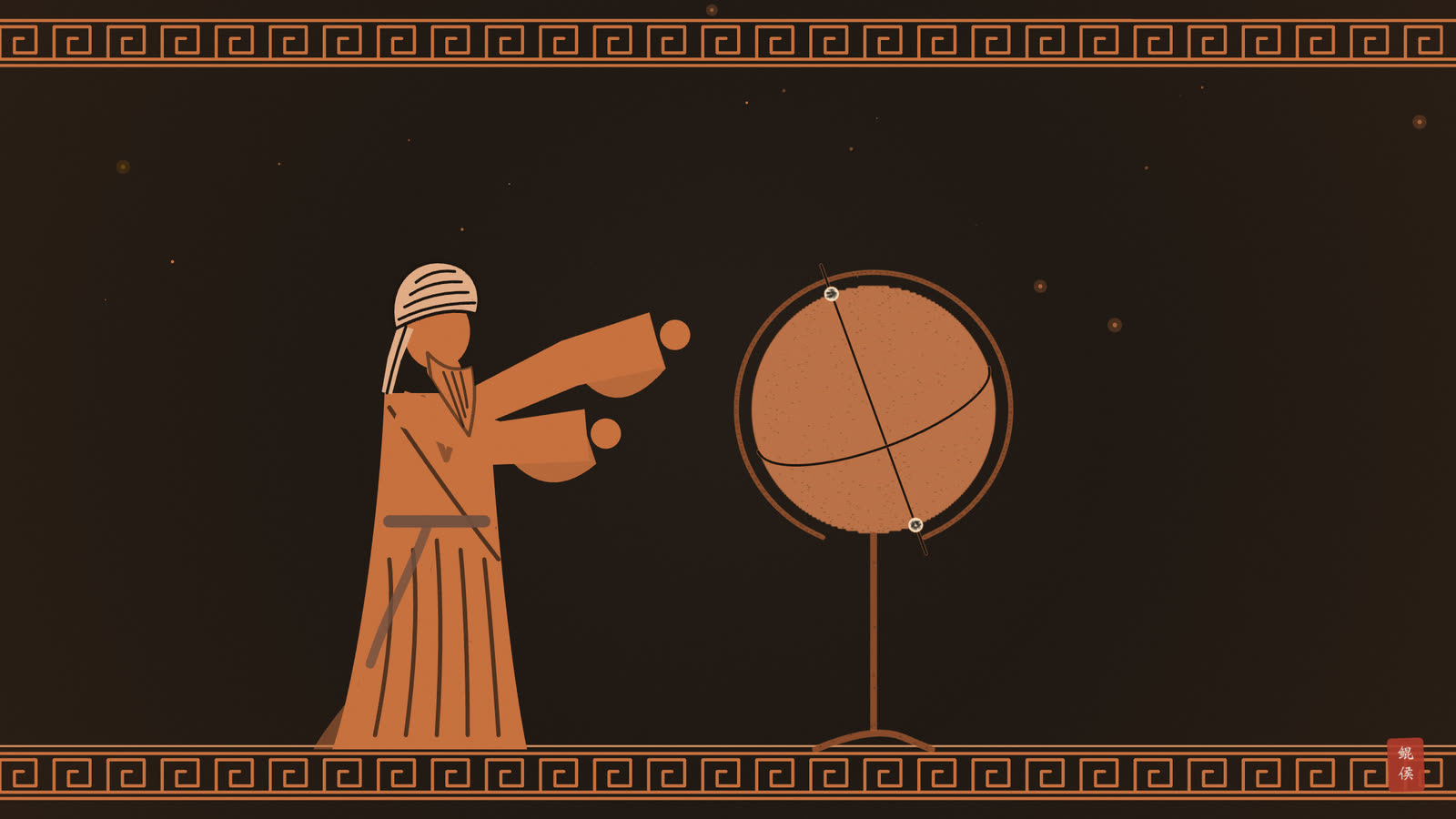
A pole is either the pole of a circle with respect to its drawing, taking the place of the centre, which has already been mentioned; or else it is a pole of the circle with respect to motion. For when a sphere moves in its place and revolves about itself, two opposite points on it must remain at rest, as on a turner's spindle, and the line joining the two points is also at rest while the sphere turns; it is called the axis.
§68. What is the belt of motion?
It is the great circle lying midway between the two poles of motion, and for that reason it is called a belt. It revolves upon itself, and its plane traces out nothing but itself, whereas all the other great circles then trace out either the whole sphere or segments of it resembling the hoop of a tambourine.
§69. What are the orbits?
They are the parallel small circles on a sphere.
翻译点开
§67. What are a pole and an axis?
第六十七问 何谓极与轴?
A pole is either the pole of a circle with respect to its drawing, taking the place of the centre, which has already been mentioned; or else it is a pole of the circle with respect to motion. For when a sphere moves in its place and revolves about itself, two opposite points on it must remain at rest, as on a turner's spindle, and the line joining the two points is also at rest while the sphere turns; it is called the axis.
极,或者是就画圆而言的圆之极,它占着圆心的位置,前面已经讲过;或者是就运动而言的圆之极。因为一个球在自己的位置上运动、绕自身旋转时,球上必定有相对的两点保持静止,就像旋工车床上的转轴那样;连接这两点的线在球转动时也静止不动,这条线称为轴。
§68. What is the belt of motion?
第六十八问 何谓运动带?
It is the great circle lying midway between the two poles of motion, and for that reason it is called a belt. It revolves upon itself, and its plane traces out nothing but itself, whereas all the other great circles then trace out either the whole sphere or segments of it resembling the hoop of a tambourine.
它是位于两个运动之极正中间的大圆,因此称为“带”。它在自身上旋转,它的平面除了自身之外什么也画不出;而其余一切大圆这时所画出的,要么是整个球,要么是球的若干段,形状像手鼓的鼓圈。
§69. What are the orbits?
第六十九问 何谓轨道?
They are the parallel small circles on a sphere.
就是球面上彼此平行的小圆。
大意与图解点开
🔎 大意:球绕自身旋转时有相对两点不动,叫运动之极,连线为轴;两极正中的大圆是运动带,转动时只扫过自身;与之平行的小圆叫轨道。
📖 术语
| 术语 | 英文原词 | 意思 |
|---|---|---|
| 运动之极 | pole with respect to motion | 自转时不动的点 |
| 轴 | axis | 两极的连线 |
| 运动带 | belt of motion | 两极正中的大圆 |
| 轨道 | orbits | 彼此平行的小圆 |
| 手鼓的鼓圈 | hoop of a tambourine | 喻球面上一段环带 |
🧭 图解与讲解
第六十七问分出两种“极”:一种是画圆的极,前文已讲,作用如同圆心;另一种是运动的极。一个球在原位自转时,必有相对的两点不动,好比旋工车床上夹住木料的转轴;连接两点的线也不动,就是轴(图一)。
〔图〕球自转时两极不动、连成轴;两极正中的大圆是运动带,与之平行的小圆是轨道
| 本节术语 | 几何上的意思 | 搬到天上(第一运动,每日东升西落) |
|---|---|---|
| 运动之极 | 球自转时不动的两点 | 天北极、天南极 |
| 轴 | 两极的连线,转时不动 | 天轴 |
| 运动带 | 两极正中的大圆,只在原位打转 | 赤道 |
| 轨道 | 与运动带平行的小圆 | 各星每日所走的圈 |
| 其余大圆 | 转时扫过全球或一段环带 | 如黄道、地平随天转动 |
两极正中的大圆叫“运动带”。球转时,它只在自己的位置上打转,扫不出新的面;别的大圆转起来,若过两极就扫过整个球,若斜交就扫出一段像手鼓鼓圈的环带。与运动带平行的小圆称为“轨道”,球上每一点随球转动时,都沿着自己所在的那条轨道走。
把这一套搬到天上(表二):天每日自东向西转一周,轴就是天轴,两极就是天北极与天南极,运动带就是赤道,每颗星每日都沿一条与赤道平行的小圆走一圈。行星自西向东的第二种运动另有一对极,它的运动带就是黄道,阿拉伯语正称黄道为“诸宫之带”(minṭaqat al-burūj)。占星里算星的上升与中天、算宫位,都要先分清这两套极与带。
📖 术语
| 术语 | 英文原词 | 意思 |
|---|---|---|
| 运动之极 | pole with respect to motion | 自转时不动的点 |
| 轴 | axis | 两极的连线 |
| 运动带 | belt of motion | 两极正中的大圆 |
| 轨道 | orbits | 彼此平行的小圆 |
| 手鼓的鼓圈 | hoop of a tambourine | 喻球面上一段环带 |
🧭 图解与讲解
第六十七问分出两种“极”:一种是画圆的极,前文已讲,作用如同圆心;另一种是运动的极。一个球在原位自转时,必有相对的两点不动,好比旋工车床上夹住木料的转轴;连接两点的线也不动,就是轴(图一)。
| 本节术语 | 几何上的意思 | 搬到天上(第一运动,每日东升西落) |
|---|---|---|
| 运动之极 | 球自转时不动的两点 | 天北极、天南极 |
| 轴 | 两极的连线,转时不动 | 天轴 |
| 运动带 | 两极正中的大圆,只在原位打转 | 赤道 |
| 轨道 | 与运动带平行的小圆 | 各星每日所走的圈 |
| 其余大圆 | 转时扫过全球或一段环带 | 如黄道、地平随天转动 |
两极正中的大圆叫“运动带”。球转时,它只在自己的位置上打转,扫不出新的面;别的大圆转起来,若过两极就扫过整个球,若斜交就扫出一段像手鼓鼓圈的环带。与运动带平行的小圆称为“轨道”,球上每一点随球转动时,都沿着自己所在的那条轨道走。
把这一套搬到天上(表二):天每日自东向西转一周,轴就是天轴,两极就是天北极与天南极,运动带就是赤道,每颗星每日都沿一条与赤道平行的小圆走一圈。行星自西向东的第二种运动另有一对极,它的运动带就是黄道,阿拉伯语正称黄道为“诸宫之带”(minṭaqat al-burūj)。占星里算星的上升与中天、算宫位,都要先分清这两套极与带。
§70. What are similar arcs?
On plane surfaces, they are the arcs of circles that lie between two straight lines drawn from the circles' centre to the circumference of the greatest of them. On the surface of a sphere, they are the parts of the parallel circles that lie between two great circles intersecting at the pole of those parallels. Similar arcs are either all of small circles, or one of them only is of a great circle. They are called similar because their ratio to their circles is one and the same, whether on the sphere or on the plane.
§71. What is the sector figure?
It is what arises from the intersection of four great circles, each two of which meet at one point. It resembles what you get by joining the fingertips of the two middle fingers and laying the fingertips of the two forefingers on the middle joints of the middle fingers. Since the propositions of geometry are applied, especially in astronomical calculation, through arithmetic, we shall first give an account of numbers.
翻译点开
§70. What are similar arcs?
第七十问 何谓相似弧?
On plane surfaces, they are the arcs of circles that lie between two straight lines drawn from the circles' centre to the circumference of the greatest of them. On the surface of a sphere, they are the parts of the parallel circles that lie between two great circles intersecting at the pole of those parallels. Similar arcs are either all of small circles, or one of them only is of a great circle. They are called similar because their ratio to their circles is one and the same, whether on the sphere or on the plane.
在平面上,相似弧是:从诸圆的圆心向其中最大一圆的圆周引两条直线,夹在这两条直线之间的各圆之弧。在球面上,相似弧是:两个相交于某组平行圆之极的大圆,夹在它们之间的那些平行圆的各段。相似弧要么全是小圆的弧,要么其中只有一段是大圆的弧。它们之所以称为相似,是因为它们与各自所属之圆的比是同一个,无论在球面上还是在平面上都是如此。
§71. What is the sector figure?
第七十一问 何谓扇形图?
It is what arises from the intersection of four great circles, each two of which meet at one point. It resembles what you get by joining the fingertips of the two middle fingers and laying the fingertips of the two forefingers on the middle joints of the middle fingers. Since the propositions of geometry are applied, especially in astronomical calculation, through arithmetic, we shall first give an account of numbers.
它是由四个大圆相交而成的图形,其中每两个交于一点。它就像这样得来的样子:把两手中指的指尖对接,再把两个食指的指尖搭在两个中指的中间关节上。因为几何的命题,尤其在天文计算中,要借算术来应用,所以我们先来讲讲数。
大意与图解点开
🔎 大意:同一圆心的两条直线、或过同一极的两个大圆所截各弧,与本圆之比相同,叫相似弧;四个大圆两两相交成扇形图。
📖 术语
| 术语 | 英文原词 | 意思 |
|---|---|---|
| 相似弧 | similar arcs | 与本圆之比相同的弧 |
| 平行圆 | parallel circles | 同极而彼此平行的圆 |
| 扇形图 | the sector figure | 四大圆两两相交之图 |
| 中间关节 | middle joints | 手指的第二节 |
🧭 图解与讲解
相似弧有平面与球面两种(图一,据抄本两图重画)。平面上:几个同心圆,从圆心引两条直线,夹在中间的各段弧就是相似弧,长短不同,但各占本圆的份数相同。球面上:两个大圆在一组平行圆共同的极相交,夹在它们之间的各平行圆之段就是相似弧。一组平行圆里至多只有一个是大圆(在天上就是赤道),所以原文说“要么全是小圆之弧,要么只有一段是大圆之弧”。
〔图〕同一圆心的两条半径、或过同一极的两个大圆所截下的各弧,与本圆之比相同,称为相似弧
〔图〕扇形图是四个大圆两两相交而成的图形,天文计算靠它由已知弧求未知弧
这一概念在天文上极要紧:两个过天极的大圆之间,赤道上的那段弧与任一星的每日轨道上的那段弧,度数相同。所以一颗星沿自己的小圆转过多少,可以拿赤道上的度数来量;占星里计算星的上升时间、换算时刻,都靠这一层道理。
扇形图(图二,据抄本重画)是四个大圆两两相交而成的图形。比鲁尼用手指比划:两手中指指尖相对成尖拱,两食指指尖搭在中指的中间关节上,便是这个形状。这就是希腊人墨涅劳斯(Menelaus)《球面论》里那个著名的图形,借它可由已知的几段弧求出未知的弧;伊斯兰天文学家长期用它由黄经求赤纬、求上升时间。
本问末句是全卷的过渡:几何命题在天文计算中要靠算术来落实,所以先讲数。因此下面第七十二、七十三问虽仍编在几何卷末,讲的已是“一”与六十进位的分数;下一章起正式进入卷二《算术》。
📖 术语
| 术语 | 英文原词 | 意思 |
|---|---|---|
| 相似弧 | similar arcs | 与本圆之比相同的弧 |
| 平行圆 | parallel circles | 同极而彼此平行的圆 |
| 扇形图 | the sector figure | 四大圆两两相交之图 |
| 中间关节 | middle joints | 手指的第二节 |
🧭 图解与讲解
相似弧有平面与球面两种(图一,据抄本两图重画)。平面上:几个同心圆,从圆心引两条直线,夹在中间的各段弧就是相似弧,长短不同,但各占本圆的份数相同。球面上:两个大圆在一组平行圆共同的极相交,夹在它们之间的各平行圆之段就是相似弧。一组平行圆里至多只有一个是大圆(在天上就是赤道),所以原文说“要么全是小圆之弧,要么只有一段是大圆之弧”。
这一概念在天文上极要紧:两个过天极的大圆之间,赤道上的那段弧与任一星的每日轨道上的那段弧,度数相同。所以一颗星沿自己的小圆转过多少,可以拿赤道上的度数来量;占星里计算星的上升时间、换算时刻,都靠这一层道理。
扇形图(图二,据抄本重画)是四个大圆两两相交而成的图形。比鲁尼用手指比划:两手中指指尖相对成尖拱,两食指指尖搭在中指的中间关节上,便是这个形状。这就是希腊人墨涅劳斯(Menelaus)《球面论》里那个著名的图形,借它可由已知的几段弧求出未知的弧;伊斯兰天文学家长期用它由黄经求赤纬、求上升时间。
本问末句是全卷的过渡:几何命题在天文计算中要靠算术来落实,所以先讲数。因此下面第七十二、七十三问虽仍编在几何卷末,讲的已是“一”与六十进位的分数;下一章起正式进入卷二《算术》。
§72. What is one?
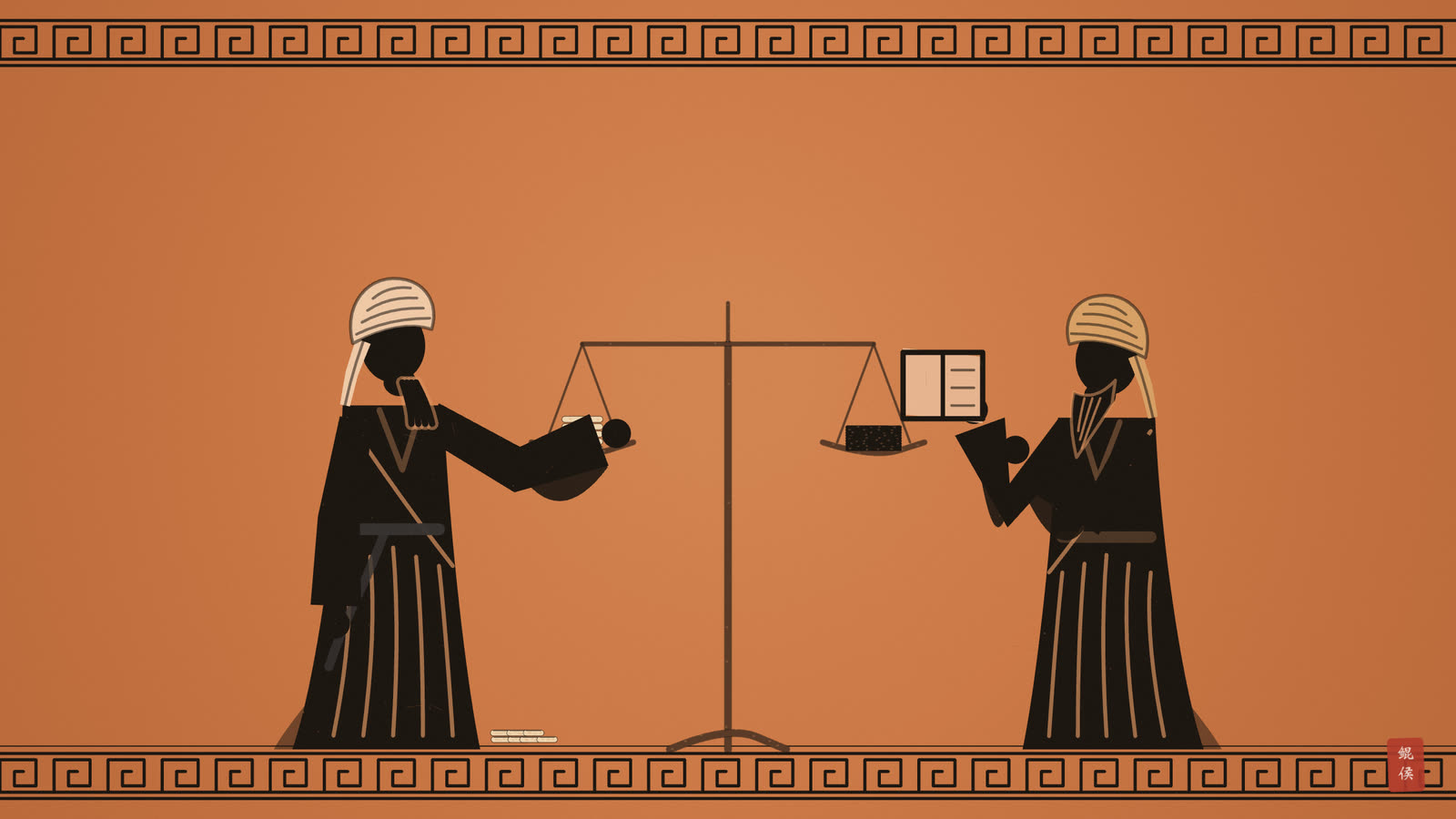
It is that which is marked by unity. It is the perfect, which neither increases nor decreases, nor changes at all from its state by multiplication or division. Potentially it is all numbers, and in it are all their attributes. By this property the conventional one in counted things is in the same state: it stands between the numbers that arise from its accumulation and the parts that grow ever smaller beneath it, like a balanced mean. It does not change when multiplied by its like or divided by its like, as numbers change, which increase by multiplication and decrease by division; nor as parts change, which decrease by multiplication and increase by division. One stays in its state between the two.
§73. How is one divided, and into how many parts?
The true one is indivisible. The one used in sensible things is one by convention, whether it is a weight, a measure of capacity, a measure of length, or an imagined magnitude. It is impossible for the true one to admit division or to be multiplied by being divided. But the one whose unity is agreed by convention is divided, in the art of astrology, into 60 parts finer than the first; with them these units are the degrees, and they accordingly called the parts minutes ('fine ones'). This follows the custom of dividing the dirham into 60 fals and the jarīb into 60 ʿashīr. Then they divided those minutes into 60 seconds, that is, 'second time', and the second into 60 thirds, and the third into 60 fourths, and so on to the fifths, sixths, sevenths, eighths, ninths, tenths and the names of successive numbers beyond, which by nature have no end, unless the calculator chooses to stop at one of them.
翻译点开
§72. What is one?
第七十二问 何谓一?
It is that which is marked by unity. It is the perfect, which neither increases nor decreases, nor changes at all from its state by multiplication or division. Potentially it is all numbers, and in it are all their attributes. By this property the conventional one in counted things is in the same state: it stands between the numbers that arise from its accumulation and the parts that grow ever smaller beneath it, like a balanced mean. It does not change when multiplied by its like or divided by its like, as numbers change, which increase by multiplication and decrease by division; nor as parts change, which decrease by multiplication and increase by division. One stays in its state between the two.
一就是以单一为标记的东西。它是完满的,不增也不减,乘与除都丝毫改变不了它的状态。在潜能上它就是一切数,一切数的属性都在它之中。凭着这一性质,计数之物中约定的一也处于同样的状态:它站在由它累积而生的诸数与在它之下越分越小的诸分之间,如同一个平衡的中项。它乘以同类或除以同类都不改变,不像诸数那样乘则增、除则减,也不像诸分那样乘则减、除则增。一总是在两者之间保持它的状态。
§73. How is one divided, and into how many parts?
第七十三问 一如何分,分成几份?
The true one is indivisible. The one used in sensible things is one by convention, whether it is a weight, a measure of capacity, a measure of length, or an imagined magnitude. It is impossible for the true one to admit division or to be multiplied by being divided. But the one whose unity is agreed by convention is divided, in the art of astrology, into 60 parts finer than the first; with them these units are the degrees, and they accordingly called the parts minutes ('fine ones'). This follows the custom of dividing the dirham into 60 fals and the jarīb into 60 ʿashīr. Then they divided those minutes into 60 seconds, that is, 'second time', and the second into 60 thirds, and the third into 60 fourths, and so on to the fifths, sixths, sevenths, eighths, ninths, tenths and the names of successive numbers beyond, which by nature have no end, unless the calculator chooses to stop at one of them.
真正的一不可分。用于可感之物的一是约定的一,不论它是一个重量、一个容量、一个长度,还是一个设想出来的量。真正的一不可能接受分割,也不可能因被分而变多。但这个约定为一的单位,在占星之术里被分为六十份比它更细的部分:与这些部分相对,这些单位就是度,于是人们把这些部分称为“分”,意思是“细小者”。这是沿袭了把一个迪拉姆分为六十个法尔斯、把一个贾里布分为六十个阿希尔的习惯。然后他们又把那些分各分为六十秒,“秒”的意思是“第二回”;又把一秒分为六十个三次分,一个三次分分为六十个四次分,如此下去,直到五次分、六次分、七次分、八次分、九次分、十次分,以及其后以连续诸数命名的各级,它们按本性没有尽头,除非计算者自己选定在其中某一级停下。
大意与图解点开
🔎 大意:真正的一不可分,在潜能上是一切数,居于诸数与诸分之间;约定的一可分:占星把一度分为六十分,一分分为六十秒,依此下推。
📖 术语
| 术语 | 英文原词 | 意思 |
|---|---|---|
| 约定的一 | the conventional one | 人为定下的单位 |
| 分 | minutes | 一度的六十分之一 |
| 秒 | seconds | 一分的六十分之一 |
| 迪拉姆 | dirham | 银币名 |
| 贾里布 | jarīb | 计量单位名 |
🧭 图解与讲解
第七十二问讲“一”。比鲁尼沿用希腊算术家的看法:一不算数,而是数的本原,一切数在潜能上都在它之中。他特别点出一的平衡性(图一):诸数乘则增、除则减;诸分乘则减、除则增;唯有一,自乘自除都不变,像天平居中的支点。下一章第七十四问就据此说“一被排除在数之外”。
〔图〕一居于诸数与诸分之间,乘除都不改变它,如天平的中项
| 级 | 名称的本义 | 等于上一级的 | 合一度的 |
|---|---|---|---|
| 度 | 约定的一 | — | 1 |
| 分 | 细小者 | 1/60 度 | 1/60 |
| 秒 | 第二回 | 1/60 分 | 1/3600 |
| 三次分 | 第三回 | 1/60 秒 | 1/216000 |
| 四次分 …… 十次分 | 依次命名 | 各为上一级的 1/60 | 无尽,算到哪级由人定 |
第七十三问分出“真正的一”与“约定的一”。真正的一不可分;但一个迪拉姆、一度、一尺这类约定的单位却可以分。占星家把一度分为六十分,一分分为六十秒,再往下三次分、四次分,按本性可以无穷分下去(表二)。比鲁尼说这是沿袭把一个迪拉姆分为六十个法尔斯、一个贾里布分为六十个阿希尔的习惯,可见六十进位在当时的钱币与量器里本已常见。
这一问对占星最为直接:星盘上每个位置都写成“某星座某度某分”,推运与算宫位时还要算到秒乃至更细。阿拉伯语“分”本义是“细小者”,“秒”本义是“第二回”;拉丁文后来也照这两层意思称作“第一回细分”“第二回细分”,今日英文的 minute 与 second 即由此而来。后面第一百零四、一百零五问还要讲这些六十进位的分如何化同与升位。
📖 术语
| 术语 | 英文原词 | 意思 |
|---|---|---|
| 约定的一 | the conventional one | 人为定下的单位 |
| 分 | minutes | 一度的六十分之一 |
| 秒 | seconds | 一分的六十分之一 |
| 迪拉姆 | dirham | 银币名 |
| 贾里布 | jarīb | 计量单位名 |
🧭 图解与讲解
第七十二问讲“一”。比鲁尼沿用希腊算术家的看法:一不算数,而是数的本原,一切数在潜能上都在它之中。他特别点出一的平衡性(图一):诸数乘则增、除则减;诸分乘则减、除则增;唯有一,自乘自除都不变,像天平居中的支点。下一章第七十四问就据此说“一被排除在数之外”。
| 级 | 名称的本义 | 等于上一级的 | 合一度的 |
|---|---|---|---|
| 度 | 约定的一 | — | 1 |
| 分 | 细小者 | 1/60 度 | 1/60 |
| 秒 | 第二回 | 1/60 分 | 1/3600 |
| 三次分 | 第三回 | 1/60 秒 | 1/216000 |
| 四次分 …… 十次分 | 依次命名 | 各为上一级的 1/60 | 无尽,算到哪级由人定 |
第七十三问分出“真正的一”与“约定的一”。真正的一不可分;但一个迪拉姆、一度、一尺这类约定的单位却可以分。占星家把一度分为六十分,一分分为六十秒,再往下三次分、四次分,按本性可以无穷分下去(表二)。比鲁尼说这是沿袭把一个迪拉姆分为六十个法尔斯、一个贾里布分为六十个阿希尔的习惯,可见六十进位在当时的钱币与量器里本已常见。
这一问对占星最为直接:星盘上每个位置都写成“某星座某度某分”,推运与算宫位时还要算到秒乃至更细。阿拉伯语“分”本义是“细小者”,“秒”本义是“第二回”;拉丁文后来也照这两层意思称作“第一回细分”“第二回细分”,今日英文的 minute 与 second 即由此而来。后面第一百零四、一百零五问还要讲这些六十进位的分如何化同与升位。
原文为公有领域古籍;翻译、印象画与图文解读由 AI 辅助生成,鲲侯审校。