卷三·第 163–164 问 恒星的阿拉伯名与二十八月站
阿拉伯游牧人给恒星起的名字与他们自己的星像,如横跨五宫的大狮子;再从春分起逐一描述月亮的二十八个月站。
§163. Are these fixed stars known by other names?
Every nation, and especially the nomads among them, has names for them according to the likenesses they see in them. The best known among the people of our time are the names of the Arabs, and we shall mention the best known of them. In the Lesser Bear, at the tip of its tail, is a bright star of the third magnitude which they call al-Jady (the Kid); it stands in for the pole, because in our time it is the nearest of the bright stars to it, and it is used for determining the qibla, because to the senses it does not move from its place. The Farqadān are of the second and third magnitude, on the fore part of the Lesser Bear. Between its tail and some faint stars beside it there forms an elliptical figure, which some call the Fish and others the Hole of the Millstone (fās al-raḥā), because they believe that the pole is in its middle. All the stars of the Lesser Bear are called Banāt Naʿsh al-Ṣughrā (the Lesser Daughters of the Bier), for the seven bright stars of the Greater Bear are called Banāt Naʿsh al-Kubrā (the Greater Daughters of the Bier), and the northern pole is ascribed to them, so that one says 'the pole of Banāt Naʿsh'. The Bier is the four lying in the shape of a quadrilateral, and the Daughters are the three on the tail: the one at its tip, the farthest from the bier, is called al-Qāʾid (the Leader); the one in the middle of the tail is called al-ʿAnāq, and next to it is a very small star called al-Suhā, by which, small as it is, eyesight is tested; and the one at the root of the tail they call al-Jawn. Beneath Banāt Naʿsh, on the legs of the Greater Bear, are small stars in pairs called Qafazāt al-Ẓibāʾ (the Leaps of the Gazelles), being likened to the prints of their hoofs; and in front of Banāt Naʿsh, among the stars of the Bear, is something like a semicircle called al-Ḥawḍ (the Basin). The four on the head of the Dragon are called al-ʿAwāʾidh, and in its backbone, lying between them and the Farqadān, are two bright stars called al-Dhiʾbān (the Two Wolves) and al-ʿAwhaqān. The one on the left foot of Cepheus is called al-Rāʿī (the Shepherd), his dog is between his feet, and those on his hands are al-Shāʾ (the Sheep). The one outside the figure of al-ʿAwwāʾ, a bright star facing Banāt Naʿsh, is al-Simāk al-Rāmiḥ (the Lance-bearing Simāk), beneath which are two stars of the figure of the Kneeler; it is called Simāk for its height and loftiness. Opposite it, towards the south, is another bright star, al-Simāk al-Aʿzal (the Unarmed Simāk), since it stands alone, with no star near it to be its weapon. Al-Simāk is also known as the Guardian of the North. The stars on the chest and upper arms of the Kneeler are called al-Nasaq al-Shāmī (the Syrian Row), while the Yemeni Row is formed of those on the fore half of the Serpent of the Serpent-Charmer, and what lies between them is al-Rawḍa (the Meadow). The bright star in Lūrā is called al-Nasr al-Wāqiʿ (the Falling Vulture), because its wings are folded; they are two stars with it, like the stones of a cooking-hearth. The Falling Vulture together with the Heart of the Scorpion is called al-Harārān. Those on the wing and breast of the Hen are called al-Fawāris (the Horsemen), and the one on its tail al-Ridf (the Pillion-Rider), because it rides behind the Horsemen. The bright star on the throne of the Lady of the Chair is called al-Kaff al-Khaḍīb (the Dyed Hand), one of the two hands of the Pleiades, and Barshāwush faces it as its wrist; the Dyed Hand is also called Sanām al-Nāqa (the Camel's Hump), because the Arabs form a she-camel out of the stars of the Lady of the Chair and others. The bright star on the shoulder of the Holder of the Reins is called al-ʿAyyūq, the one after it al-ʿAnz (the She-Goat), and the two beneath it al-Jadyān (the Two Kids); and for this reason they called al-ʿAyyūq ʿAnnāz (the Goatherd). Those on the breast and wings of the Eagle are al-Nasr al-Ṭāʾir (the Flying Vulture), because its wings are spread. The Dolphin is called Ṣalīb al-Ṭāʾir (the Cross of the Flying One). The four bright stars on the body of the Greater Horse are called al-Dalw (the Bucket), and between them and the Fish lies Baldat al-Thaʿlab (the Fox's Patch). The Arabs formed out of some stars of Andromeda and others a fish other than the Fish which is the figure of the twelfth sign. Two stars of the Triangle are called al-Anīsān. The Arabs did not imagine the figures of the twelve signs, and no trace of them is found among them except in scraps: their calling the horns of the Ram al-Naṭḥ and al-Nāṭiḥ (the Butting and the Butter) shows that they took it as a ram, and likewise they knew the Scorpion as the Greeks did. Then they gave the name of the Lion to what lies above its figure, taken from several other figures: they made the Crab its nose; the heads of the Twins and the Preceding Dog its two forearms; from the figure of the Lion its eyes, its forehead, its withers and its mane (zubra); al-Ṣarfa its tail; and the two Simāks its legs; so that it took up nearly five signs. They set up the Pleiades as the palms of a figure with two hands, one of them the Dyed Hand we have mentioned, whose dyed fingers are a star in front of it [text uncertain]; and if you go from it towards the Pleiades, the stars between them serve as the wrist, the elbow, the shoulder and the upper back. The other hand is al-Kaff al-Jadhmāʾ (the Cut-off Hand), formed of the stars of the head of Qayṭus; at its thumb, coming from the Pleiades, is a row of stars; and it is called jadhmāʾ because it is shorter than the Dyed Hand. They called al-Dabarān al-Fanīq, likening it to a great stallion camel, and those around it al-Qilāṣ, likening them to young she-camels; and its two Dogs are two small stars close together in the gap called al-Ḍayqa (the Narrow Place), which lies between the Pleiades and al-Dabarān. They called the heads of the Twins the Outstretched Forearm, and the two stars of the Preceding Dog, namely al-Shiʿrā al-Shāmiyya (the Syrian Shiʿrā) with its Mirzam, its Folded Forearm. Those on the body of Qayṭus are al-Naʿāmāt (the Ostriches); the bright star on its tail, together with the mouth of the Southern Fish, are al-Ḍifdaʿān (the Two Frogs). The Giant is called al-Jawzāʾ, and his belt al-Niẓām (the String) and al-Jawāzī; some stars of the River are his Footstool and some stars of the Hare his Throne. The mouth of the Greater Dog, which is the dog of the Giant, is al-Shiʿrā al-Yamāniyya (the Yemeni Shiʿrā) and al-ʿAbūr (the One Who Crossed), because it crossed the Milky Way towards Suhayl, while the Syrian one stayed behind, weeping, and was therefore called al-Ghumayṣāʾ (the Bleary-Eyed). Among the stars of the Greater Dog are two stars which they called Muḥlifān and Muḥnithān (the Two that Provoke Oaths and the Two that Make Oaths False), because one who does not know Suhayl takes them for it at their rising. They called stars on the neck of the Hydra al-Fard (the Solitary); the stars of the Raven al-Khibāʾ (the Tent) and the Throne of al-Simāk; the stars of the Wine-Jar and those on the body of the Hydra al-Sharāsīf (the Rib-Ends), among which are [illegible] and her young; the stars of Qanṭūris and the Beast are called al-Shamārīkh (the Date-Stalks); and the Southern Crown al-Qubba (the Dome), while some called it Udḥiyy al-Naʿām, that is, the place of the ostrich's eggs. Besides these there are names of stars which we have not given, either because of disagreement about them or because we have not heard them in a reliable form.
翻译点开
§163. Are these fixed stars known by other names?
第一百六十三问 这些恒星还有别的名字吗?
Every nation, and especially the nomads among them, has names for them according to the likenesses they see in them. The best known among the people of our time are the names of the Arabs, and we shall mention the best known of them. In the Lesser Bear, at the tip of its tail, is a bright star of the third magnitude which they call al-Jady (the Kid); it stands in for the pole, because in our time it is the nearest of the bright stars to it, and it is used for determining the qibla, because to the senses it does not move from its place. The Farqadān are of the second and third magnitude, on the fore part of the Lesser Bear. Between its tail and some faint stars beside it there forms an elliptical figure, which some call the Fish and others the Hole of the Millstone (fās al-raḥā), because they believe that the pole is in its middle. All the stars of the Lesser Bear are called Banāt Naʿsh al-Ṣughrā (the Lesser Daughters of the Bier), for the seven bright stars of the Greater Bear are called Banāt Naʿsh al-Kubrā (the Greater Daughters of the Bier), and the northern pole is ascribed to them, so that one says 'the pole of Banāt Naʿsh'. The Bier is the four lying in the shape of a quadrilateral, and the Daughters are the three on the tail: the one at its tip, the farthest from the bier, is called al-Qāʾid (the Leader); the one in the middle of the tail is called al-ʿAnāq, and next to it is a very small star called al-Suhā, by which, small as it is, eyesight is tested; and the one at the root of the tail they call al-Jawn. Beneath Banāt Naʿsh, on the legs of the Greater Bear, are small stars in pairs called Qafazāt al-Ẓibāʾ (the Leaps of the Gazelles), being likened to the prints of their hoofs; and in front of Banāt Naʿsh, among the stars of the Bear, is something like a semicircle called al-Ḥawḍ (the Basin). The four on the head of the Dragon are called al-ʿAwāʾidh, and in its backbone, lying between them and the Farqadān, are two bright stars called al-Dhiʾbān (the Two Wolves) and al-ʿAwhaqān. The one on the left foot of Cepheus is called al-Rāʿī (the Shepherd), his dog is between his feet, and those on his hands are al-Shāʾ (the Sheep). The one outside the figure of al-ʿAwwāʾ, a bright star facing Banāt Naʿsh, is al-Simāk al-Rāmiḥ (the Lance-bearing Simāk), beneath which are two stars of the figure of the Kneeler; it is called Simāk for its height and loftiness. Opposite it, towards the south, is another bright star, al-Simāk al-Aʿzal (the Unarmed Simāk), since it stands alone, with no star near it to be its weapon. Al-Simāk is also known as the Guardian of the North. The stars on the chest and upper arms of the Kneeler are called al-Nasaq al-Shāmī (the Syrian Row), while the Yemeni Row is formed of those on the fore half of the Serpent of the Serpent-Charmer, and what lies between them is al-Rawḍa (the Meadow). The bright star in Lūrā is called al-Nasr al-Wāqiʿ (the Falling Vulture), because its wings are folded; they are two stars with it, like the stones of a cooking-hearth. The Falling Vulture together with the Heart of the Scorpion is called al-Harārān. Those on the wing and breast of the Hen are called al-Fawāris (the Horsemen), and the one on its tail al-Ridf (the Pillion-Rider), because it rides behind the Horsemen. The bright star on the throne of the Lady of the Chair is called al-Kaff al-Khaḍīb (the Dyed Hand), one of the two hands of the Pleiades, and Barshāwush faces it as its wrist; the Dyed Hand is also called Sanām al-Nāqa (the Camel's Hump), because the Arabs form a she-camel out of the stars of the Lady of the Chair and others. The bright star on the shoulder of the Holder of the Reins is called al-ʿAyyūq, the one after it al-ʿAnz (the She-Goat), and the two beneath it al-Jadyān (the Two Kids); and for this reason they called al-ʿAyyūq ʿAnnāz (the Goatherd). Those on the breast and wings of the Eagle are al-Nasr al-Ṭāʾir (the Flying Vulture), because its wings are spread. The Dolphin is called Ṣalīb al-Ṭāʾir (the Cross of the Flying One). The four bright stars on the body of the Greater Horse are called al-Dalw (the Bucket), and between them and the Fish lies Baldat al-Thaʿlab (the Fox's Patch). The Arabs formed out of some stars of Andromeda and others a fish other than the Fish which is the figure of the twelfth sign. Two stars of the Triangle are called al-Anīsān. The Arabs did not imagine the figures of the twelve signs, and no trace of them is found among them except in scraps: their calling the horns of the Ram al-Naṭḥ and al-Nāṭiḥ (the Butting and the Butter) shows that they took it as a ram, and likewise they knew the Scorpion as the Greeks did. Then they gave the name of the Lion to what lies above its figure, taken from several other figures: they made the Crab its nose; the heads of the Twins and the Preceding Dog its two forearms; from the figure of the Lion its eyes, its forehead, its withers and its mane (zubra); al-Ṣarfa its tail; and the two Simāks its legs; so that it took up nearly five signs. They set up the Pleiades as the palms of a figure with two hands, one of them the Dyed Hand we have mentioned, whose dyed fingers are a star in front of it [text uncertain]; and if you go from it towards the Pleiades, the stars between them serve as the wrist, the elbow, the shoulder and the upper back. The other hand is al-Kaff al-Jadhmāʾ (the Cut-off Hand), formed of the stars of the head of Qayṭus; at its thumb, coming from the Pleiades, is a row of stars; and it is called jadhmāʾ because it is shorter than the Dyed Hand. They called al-Dabarān al-Fanīq, likening it to a great stallion camel, and those around it al-Qilāṣ, likening them to young she-camels; and its two Dogs are two small stars close together in the gap called al-Ḍayqa (the Narrow Place), which lies between the Pleiades and al-Dabarān. They called the heads of the Twins the Outstretched Forearm, and the two stars of the Preceding Dog, namely al-Shiʿrā al-Shāmiyya (the Syrian Shiʿrā) with its Mirzam, its Folded Forearm. Those on the body of Qayṭus are al-Naʿāmāt (the Ostriches); the bright star on its tail, together with the mouth of the Southern Fish, are al-Ḍifdaʿān (the Two Frogs). The Giant is called al-Jawzāʾ, and his belt al-Niẓām (the String) and al-Jawāzī; some stars of the River are his Footstool and some stars of the Hare his Throne. The mouth of the Greater Dog, which is the dog of the Giant, is al-Shiʿrā al-Yamāniyya (the Yemeni Shiʿrā) and al-ʿAbūr (the One Who Crossed), because it crossed the Milky Way towards Suhayl, while the Syrian one stayed behind, weeping, and was therefore called al-Ghumayṣāʾ (the Bleary-Eyed). Among the stars of the Greater Dog are two stars which they called Muḥlifān and Muḥnithān (the Two that Provoke Oaths and the Two that Make Oaths False), because one who does not know Suhayl takes them for it at their rising. They called stars on the neck of the Hydra al-Fard (the Solitary); the stars of the Raven al-Khibāʾ (the Tent) and the Throne of al-Simāk; the stars of the Wine-Jar and those on the body of the Hydra al-Sharāsīf (the Rib-Ends), among which are [illegible] and her young; the stars of Qanṭūris and the Beast are called al-Shamārīkh (the Date-Stalks); and the Southern Crown al-Qubba (the Dome), while some called it Udḥiyy al-Naʿām, that is, the place of the ostrich's eggs. Besides these there are names of stars which we have not given, either because of disagreement about them or because we have not heard them in a reliable form.
每个民族,尤其是其中的游牧之民,都按他们在诸星中看出的相似之形给它们起名。我们这个时代人们最熟知的是阿拉伯人的名称,我们就举其中最著名的。在小熊的尾端有一颗三等亮星,他们称之为“杰迪”(山羊羔);它代替极点,因为在我们这个时代,它是诸亮星中离极点最近的;人们用它来定朝拜的方向,因为在感官看来它不离其位。“法尔卡丹”是二等与三等的星,在小熊的前部。在它的尾巴与旁边几颗暗星之间形成一个椭圆的图形,有人称之为“鱼”,有人称之为“磨眼”,因为他们以为极点就在它的中间。小熊的所有星都称为“小棺架之女”,因为大熊的七颗亮星称为“大棺架之女”,北极就归于它们,所以人们说“棺架之女之极”。“棺架”是排成四边形的四颗,“女儿”是尾上的三颗:尾端那颗、离棺架最远的,称为“领头者”;尾中间那颗称为“阿纳格”,它旁边有一颗很小的星,称为“苏哈”,它虽小,人们却用它来试目力;尾根那颗他们称为“焦恩”。在棺架之女的下面、大熊的腿上,有成对的小星,称为“羚羊之跃”,被比作羚羊的蹄印;在棺架之女的前面、大熊的星中,有个像半圆的东西,称为“水池”。天龙头上的四颗称为“阿瓦伊兹”,在它的脊上、位于它们与法尔卡丹之间的两颗亮星,称为“双狼”与“奥哈坎”。仙王左脚上的那颗称为“牧人”,他的狗在他两脚之间,他手上的那些是“羊群”。在阿瓦图形之外、对着棺架之女的一颗亮星,是“持矛的西马克”,它下面有跪者图形中的两颗星;它被称为“西马克”是因为它高而崇。在它的对面、偏向南方,另有一颗亮星,是“无械的西马克”,因为它孤零零的,旁边没有一颗星可以作它的兵器。西马克又称为“北方的守护者”。跪者胸上和上臂上的星称为“叙利亚之列”,而“也门之列”由弄蛇人之蛇前半身上的星构成,两者之间的是“草地”。鲁拉中的那颗亮星称为“落鹫”,因为它的双翅收拢;有两颗星与它在一起,像灶台的支石。落鹫与天蝎之心合称“哈拉兰”。母鸡翅上和胸上的星称为“骑手”,它尾上那颗称为“后座者”,因为它骑在骑手后面。坐椅之妇宝座上的那颗亮星称为“染色之手”,是昴星团的两只手之一,巴尔沙乌什对着它,作它的手腕;染色之手又称为“母驼之峰”,因为阿拉伯人用坐椅之妇等处的星构成一头母驼。执缰者肩上的那颗亮星称为“阿尤格”,它后面那颗称为“母山羊”,它下面的两颗称为“双羔”;因此他们称阿尤格为“牧山羊者”。鹰胸上和翅上的星是“飞鹫”,因为它双翅展开。海豚称为“飞者之十字”。大马身体上的四颗亮星称为“水桶”,在它们与鱼之间是“狐狸之地”。阿拉伯人用仙女的一些星和别的星构成一条鱼,不同于作为第十二星座图形的那条鱼。三角中的两颗星称为“阿尼桑”。阿拉伯人没有想象出十二星座的图形,在他们那里找不到它们的痕迹,只有零星的片断:他们把白羊的双角称为“抵者”与“抵触者”,表明他们把它看成一只公羊;同样,他们对天蝎的认识也与希腊人相同。然后,他们把狮子之名给了它图形上方、取自另外几个图形的星群:以巨蟹为它的鼻子;以双子的头和前犬为它的两只前臂;从狮子的图形中取它的眼睛、额头、肩背和鬃毛(祖卜拉);以“萨尔法”为它的尾巴;以两颗西马克为它的腿;于是它占了将近五个星座。他们把昴星团当作一个有两只手的图形的手掌,其中一只就是我们提到的染色之手,它染了色的手指是它前面的一颗星〔原文疑有讹误〕;你若从它走向昴星团,两者之间的星就充当手腕、手肘、肩膀和上背。另一只手是“断手”,由盖图斯头上的星构成;从昴星团过来,在它的拇指处有一行星;它被称为“断手”,是因为它比染色之手短。他们把“代伯兰”称为“种驼”,比作一头高大的公驼,把它周围的星称为“幼驼”,比作年轻的母驼;它的两只狗是两颗靠得很近的小星,在昴星团与代伯兰之间那个称为“窄处”的空隙里。他们把双子的头称为“伸展之臂”,把前犬的两颗星,即“叙利亚的希拉”和它的“米尔赞”,称为它的“收拢之臂”。盖图斯身体上的星是“鸵鸟群”;它尾上的亮星与南鱼的嘴合称“双蛙”。巨人被称为“焦扎”,他的腰带称为“串珠”和“焦瓦齐”;河的一些星是他的脚凳,兔的一些星是他的宝座。大犬的嘴——大犬是巨人的狗——是“也门的希拉”,也叫“渡者”,因为它越过银河去找“苏海勒”,而叙利亚的那颗留在后面哭泣,所以被称为“泪眼者”。大犬的星中有两颗星,他们称为“令人发誓的二星”与“令人背誓的二星”,因为不认识苏海勒的人,在它们升起时会把它们当成苏海勒。他们把长蛇颈上的星称为“孤星”;乌鸦的星称为“帐篷”,又称“西马克的宝座”;酒瓮的星和长蛇身上的星称为“肋端”,其中有〔抄本此处字迹难辨〕和她的孩子们;甘图里斯和兽的星称为“枣梗”;南冕称为“穹顶”,也有人称它为“鸵鸟窝”,即鸵鸟下蛋之处。除此以外还有一些星名,我们没有列出,或因说法不一,或因我们没有从可靠的来源听到。
大意与图解点开
🔎 大意:阿拉伯游牧人按所见之形给恒星起名,如杰迪、棺架之女、两西马克、两鹫、两希拉;不画黄道十二像,却拼出横跨五宫的大狮子。
📖 术语
| 术语 | 英文原词 | 意思 |
|---|---|---|
| 杰迪 | al-Jady | 山羊羔,近极的亮星 |
| 棺架之女 | Banāt Naʿsh | 大熊七亮星之称 |
| 苏哈 | al-Suhā | 极小之星,用以试目力 |
| 西马克 | al-Simāk | 持矛、无械两亮星 |
| 苏海勒 | Suhayl | 南天亮星 |
🧭 图解与讲解
第一百六十三问转入阿拉伯星名。比鲁尼说,各民族,尤其是游牧之民,都照自己在星空里看出的形象起名;他那个时代最通行的是阿拉伯名,于是举最著名的一批(表一)。这些名字多半出自沙漠生活:山羊羔、羊群与牧人、母驼与种驼、鸵鸟、羚羊的蹄印、水池、水桶、帐篷、灶台的支石。
| 阿拉伯名 | 意思或来由 | 在书中的星像 | 今称(讲解所加) |
|---|---|---|---|
| 杰迪 | 山羊羔;代替极点,用以定朝拜方向 | 小熊尾端 | 北极星 |
| 法尔卡丹 | 二等与三等两星 | 小熊前部 | 小熊座两亮星 |
| 大棺架之女 | 四星为棺架,尾三星为女儿 | 大熊七亮星 | 北斗七星 |
| 苏哈 | 极小,用以试目力 | 大熊尾中星旁 | 辅星 |
| 持矛的西马克 | 高而崇,又称北方守护者 | 阿瓦像外 | 大角 |
| 无械的西马克 | 孤零零无星作兵器 | 处女的手 | 角宿一 |
| 落鹫 | 双翅收拢 | 鲁拉 | 织女星 |
| 飞鹫 | 双翅展开 | 鹰的胸与翅 | 牛郎星(河鼓二) |
| 阿尤格 | 又称牧山羊者 | 执缰者的肩 | 五车二 |
| 代伯兰 | 又称种驼 | 金牛的眼 | 毕宿五 |
| 也门的希拉 | 又称渡者,越银河去找苏海勒 | 大犬的嘴 | 天狼星 |
| 叙利亚的希拉 | 留在后面哭泣,称泪眼者 | 前犬 | 南河三 |
| 苏海勒 | 南天亮星,常被误认 | (书中未系星像) | 老人星 |
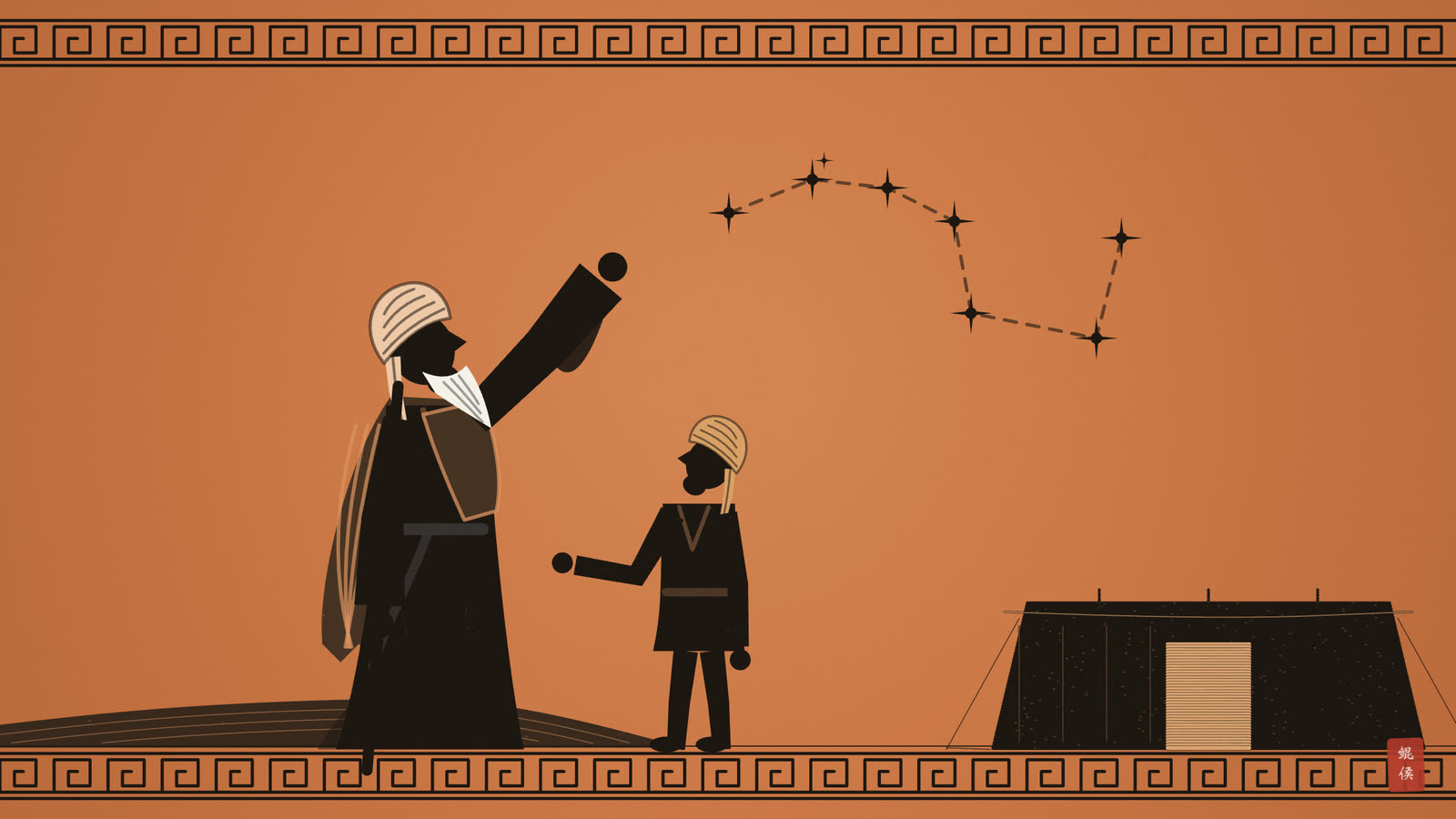
〔图〕阿拉伯人不画黄道十二像,却把几处星群拼成一头横跨近五宫的大狮子
几则说明很有意思。小熊尾端的“杰迪”在当时最近天极,人们拿它代替极点,又用它来定朝拜(礼拜方向)的方位,因为肉眼看它不动。大熊七亮星叫“大棺架之女”:四颗是棺架,尾上三颗是跟在后面的女儿;尾中那颗旁边的小星“苏哈”,人们用来试目力。天狼星叫“也门的希拉”,传说它越过银河去找南天的苏海勒,叙利亚的那颗(南河三)留在后面哭泣,所以叫“泪眼者”;大犬里还有两颗星,不认识苏海勒的人在它们升起时会误认,所以叫“令人发誓的”与“令人背誓的”。
比鲁尼特别指出:阿拉伯人原本没有黄道十二像的图形,只在白羊(双角称“抵者”“抵触者”)与天蝎上与希腊人大体一致。他们自己的“狮子”大得多(图二):巨蟹作鼻子,双子之头与前犬作前臂,希腊狮子像的星作眼、额、肩背、鬃,萨尔法作尾,两颗西马克作腿,一头狮子占了将近五个星座。昴星团则是一个两手形象的手掌,一只是仙后座的“染色之手”,一只是鲸鱼头上的“断手”。
原文有两处难点照英译保留:“染色的手指是它前面的一颗星”一句,抄本两种读法都不通顺,标〔原文疑有讹误〕;长蛇与酒瓮的“肋端”之中某星的名字,抄本字迹难辨。这些阿拉伯星名后来大量传入拉丁文,成为今天许多星名的来源;下一问的二十八月站也多以它们命名。表一末栏的今称为本站所加,只列公认无疑的几颗。
📖 术语
| 术语 | 英文原词 | 意思 |
|---|---|---|
| 杰迪 | al-Jady | 山羊羔,近极的亮星 |
| 棺架之女 | Banāt Naʿsh | 大熊七亮星之称 |
| 苏哈 | al-Suhā | 极小之星,用以试目力 |
| 西马克 | al-Simāk | 持矛、无械两亮星 |
| 苏海勒 | Suhayl | 南天亮星 |
🧭 图解与讲解
第一百六十三问转入阿拉伯星名。比鲁尼说,各民族,尤其是游牧之民,都照自己在星空里看出的形象起名;他那个时代最通行的是阿拉伯名,于是举最著名的一批(表一)。这些名字多半出自沙漠生活:山羊羔、羊群与牧人、母驼与种驼、鸵鸟、羚羊的蹄印、水池、水桶、帐篷、灶台的支石。
| 阿拉伯名 | 意思或来由 | 在书中的星像 | 今称(讲解所加) |
|---|---|---|---|
| 杰迪 | 山羊羔;代替极点,用以定朝拜方向 | 小熊尾端 | 北极星 |
| 法尔卡丹 | 二等与三等两星 | 小熊前部 | 小熊座两亮星 |
| 大棺架之女 | 四星为棺架,尾三星为女儿 | 大熊七亮星 | 北斗七星 |
| 苏哈 | 极小,用以试目力 | 大熊尾中星旁 | 辅星 |
| 持矛的西马克 | 高而崇,又称北方守护者 | 阿瓦像外 | 大角 |
| 无械的西马克 | 孤零零无星作兵器 | 处女的手 | 角宿一 |
| 落鹫 | 双翅收拢 | 鲁拉 | 织女星 |
| 飞鹫 | 双翅展开 | 鹰的胸与翅 | 牛郎星(河鼓二) |
| 阿尤格 | 又称牧山羊者 | 执缰者的肩 | 五车二 |
| 代伯兰 | 又称种驼 | 金牛的眼 | 毕宿五 |
| 也门的希拉 | 又称渡者,越银河去找苏海勒 | 大犬的嘴 | 天狼星 |
| 叙利亚的希拉 | 留在后面哭泣,称泪眼者 | 前犬 | 南河三 |
| 苏海勒 | 南天亮星,常被误认 | (书中未系星像) | 老人星 |
几则说明很有意思。小熊尾端的“杰迪”在当时最近天极,人们拿它代替极点,又用它来定朝拜(礼拜方向)的方位,因为肉眼看它不动。大熊七亮星叫“大棺架之女”:四颗是棺架,尾上三颗是跟在后面的女儿;尾中那颗旁边的小星“苏哈”,人们用来试目力。天狼星叫“也门的希拉”,传说它越过银河去找南天的苏海勒,叙利亚的那颗(南河三)留在后面哭泣,所以叫“泪眼者”;大犬里还有两颗星,不认识苏海勒的人在它们升起时会误认,所以叫“令人发誓的”与“令人背誓的”。
比鲁尼特别指出:阿拉伯人原本没有黄道十二像的图形,只在白羊(双角称“抵者”“抵触者”)与天蝎上与希腊人大体一致。他们自己的“狮子”大得多(图二):巨蟹作鼻子,双子之头与前犬作前臂,希腊狮子像的星作眼、额、肩背、鬃,萨尔法作尾,两颗西马克作腿,一头狮子占了将近五个星座。昴星团则是一个两手形象的手掌,一只是仙后座的“染色之手”,一只是鲸鱼头上的“断手”。
原文有两处难点照英译保留:“染色的手指是它前面的一颗星”一句,抄本两种读法都不通顺,标〔原文疑有讹误〕;长蛇与酒瓮的“肋端”之中某星的名字,抄本字迹难辨。这些阿拉伯星名后来大量传入拉丁文,成为今天许多星名的来源;下一问的二十八月站也多以它们命名。表一末栏的今称为本站所加,只列公认无疑的几颗。
§164. What are the mansions of the Moon?
The zodiac has been divided into twelve equal parts, each of which is called a sign; and it has also been divided according to the Moon's course in each day, so that it is as if every night it alights at a station (manzil). Their number among the Indians is twenty-seven and among the Arabs twenty-eight, and they have been named after fixed stars, just as the signs were marked by their figures. The first of the mansions, from the vernal beginning, is al-Sharaṭān, two bright stars lying across between north and south, about a fathom apart to the eye; and with the more southerly of the two is a third star. Al-Sharaṭān are on the horns of the Ram, and for this reason the mansion is called al-Naṭḥ (the Butting). The second mansion is al-Buṭayn, three faint stars in the shape of a triangle; it is the rump of the Ram, and it is called buṭayn ('little belly'), as a diminutive, by comparison with Baṭn al-Ḥūt (the Belly of the Fish). The third mansion is al-Thurayyā (the Pleiades), six stars close together like a bunch of grapes; it is the hump of the Bull. The common people, and the poets among them especially, think they are seven, and they are not right. Al-Thurayyā alone is specially called by the name al-Najm (the Star). The fourth mansion is al-Dabarān, a red, bright star on the eastern eye of the Bull; the head of the Bull is shaped like a cup whose mouth is towards the north; and al-Dabarān is called the Follower of al-Najm, that is, of the Pleiades. The fifth mansion is al-Haqʿa, three small stars like the stones of a cooking-hearth, on the head of the Giant; because they are close together and small, Ptolemy made them a single nebulous star. The sixth mansion is al-Hanʿa, two stars, one of them small and the other a little brighter, on the feet of the Twins. The seventh mansion is al-Dhirāʿ (the Forearm), by which they mean the forearm of the Lion according to the Arabs, namely the outstretched one, for the folded one is al-Shiʿrā al-Shāmiyya with its Mirzam, a mirzam being any star paired with another, bright one; and the Forearm which is a mansion of the Moon is two bright stars, as far apart as al-Sharaṭān, on the heads of the Twins. The eighth mansion is al-Nathra, that is, the nose of the Lion and the place where it breathes in: two faint stars of the figure of the Crab, which are the nostrils of the Lion, between which is a nebulous smudge on the breast of the Crab, sometimes called the Lion's uvula. The two stars we have mentioned are known among the common people of the Greeks as the Asses, and the nebula between them is the Manger. The ninth mansion is al-Ṭarf, by which they mean the eye of the Lion: two bright stars, about a cubit apart to the eye, belonging to the figure of the Lion and to those outside it. The tenth mansion is al-Jabha, that is, the forehead of the Lion: four shining stars in a curve, the brightest and most southerly of which is the Heart of the Lion, the Royal Star. The eleventh mansion is al-Zubra, on the withers of the Lion according to them: two stars about a cubit apart to the eye, on the hindquarters of the Lion; they are also called al-Kharātān. The twelfth mansion is al-Ṣarfa, a bright star at the tip of the Lion's tail; among the Arabs it is on its tail, and the Braid, which is a cluster of small stars, is as it were at the tip of its tail, and for this reason they called it its hulb, which is the hairs at the tip of the tail. The thirteenth mansion is al-ʿAwwāʾ, four stars on the breast and wing of the Virgin, bent in the shape of the letter lām; the Arabs claim that they are dogs barking behind the Lion. The fourteenth mansion is al-Simāk, which is the Unarmed one of the two Simāks; the Arabs claim that they are the legs of the Lion. Among the Greeks, however, al-Aʿzal is on the hand of the Virgin, and the translators have agreed in calling it al-Sunbula (the Ear of Corn); whereas the Sunbula after which the sixth sign is popularly named is the Braid, which faces it. The fifteenth mansion is al-Ghafr, two faint stars, whose name is derived from concealment; they are on the train of the Virgin. The sixteenth mansion is al-Zubānā, by which they mean the two claws of the Scorpion: two stars lying across, a spear's length apart, on the two pans of the Balance. The seventeenth mansion is al-Iklīl (the Crown), three shining stars in a curve lying across between north and south, on the forehead of the Scorpion. The eighteenth mansion is al-Qalb, that is, the Heart of the Scorpion, a red, flickering star which the astrologers call of the nature of Mars; one star precedes it and another follows it, and the line joining the three is curved. The nineteenth mansion is al-Shawla, the sting of the Scorpion after the vertebrae of its tail, raised up: two shining stars close together, about a span apart to the eye. The twentieth mansion is al-Naʿāʾim, four stars in a quadrilateral, on the bow and arrow of the Archer and the leg of his horse; the Arabs likened them to ostriches that have gone down to the river, which is the Milky Way, to drink, and near them are four others, which are the ostriches coming back from drinking. The twenty-first mansion is al-Balda, a patch of sky behind the back of the Archer with no star in it, and for this reason it is called the Desert and the Gap; sometimes stars of the Archer's locks run round it, and these they called al-Qilāda (the Necklace). The twenty-second mansion is Saʿd al-Dhābiḥ, two stars lying across, not bright, less than a cubit apart, on the horn of the Kid; near them is a third, which the Arabs claimed is the sheep of Saʿd which he is slaughtering. The twenty-third mansion is Saʿd Bulaʿ, two stars on the left hand of the Water-Pourer, between which is a third, the one swallowed. The twenty-fourth mansion is Saʿd al-Suʿūd, three small stars lying across between north and south, from the tip of the tail of the Kid and the shoulder of the Water-Pourer. The twenty-fifth mansion is Saʿd al-Akhbiya, four stars on the right hand of the Water-Pourer, likened to the foot of a duck: the middle one is the Saʿd and the rest are its tents. These are not the only Suʿūd; among the Arabs they are many, and lie outside the mansions of the Moon. The twenty-sixth mansion is al-Fargh al-Awwal (the First Spout). The twenty-seventh mansion is al-Fargh al-Thānī (the Second Spout); they are sometimes called the Fore and the Hind. Each of them is two shining stars about a spear's length apart, and together they are on the body of the winged horse. They are also called al-ʿArquwa al-ʿUlyā and al-ʿArquwa al-Suflā (the Upper and the Lower Cross-Bar of the Bucket), because the Arabs likened the stars of these two mansions to a bucket, and by it the eleventh sign is known. The twenty-eighth mansion is Baṭn al-Ḥūt (the Belly of the Fish), a bright star on the head of the Chained Woman; around it, out of small stars stretched in a curve, the figure of a fish is composed, in whose belly this star lies; and on account of its size al-Buṭayn, mentioned above after al-Sharaṭān, was made a diminutive. Some call this mansion al-Rishāʾ (the Rope), likening those curved stars to a rope tied to the bucket mentioned.
翻译点开
§164. What are the mansions of the Moon?
第一百六十四问 何谓月站?
The zodiac has been divided into twelve equal parts, each of which is called a sign; and it has also been divided according to the Moon's course in each day, so that it is as if every night it alights at a station (manzil). Their number among the Indians is twenty-seven and among the Arabs twenty-eight, and they have been named after fixed stars, just as the signs were marked by their figures. The first of the mansions, from the vernal beginning, is al-Sharaṭān, two bright stars lying across between north and south, about a fathom apart to the eye; and with the more southerly of the two is a third star. Al-Sharaṭān are on the horns of the Ram, and for this reason the mansion is called al-Naṭḥ (the Butting). The second mansion is al-Buṭayn, three faint stars in the shape of a triangle; it is the rump of the Ram, and it is called buṭayn ('little belly'), as a diminutive, by comparison with Baṭn al-Ḥūt (the Belly of the Fish). The third mansion is al-Thurayyā (the Pleiades), six stars close together like a bunch of grapes; it is the hump of the Bull. The common people, and the poets among them especially, think they are seven, and they are not right. Al-Thurayyā alone is specially called by the name al-Najm (the Star). The fourth mansion is al-Dabarān, a red, bright star on the eastern eye of the Bull; the head of the Bull is shaped like a cup whose mouth is towards the north; and al-Dabarān is called the Follower of al-Najm, that is, of the Pleiades. The fifth mansion is al-Haqʿa, three small stars like the stones of a cooking-hearth, on the head of the Giant; because they are close together and small, Ptolemy made them a single nebulous star. The sixth mansion is al-Hanʿa, two stars, one of them small and the other a little brighter, on the feet of the Twins. The seventh mansion is al-Dhirāʿ (the Forearm), by which they mean the forearm of the Lion according to the Arabs, namely the outstretched one, for the folded one is al-Shiʿrā al-Shāmiyya with its Mirzam, a mirzam being any star paired with another, bright one; and the Forearm which is a mansion of the Moon is two bright stars, as far apart as al-Sharaṭān, on the heads of the Twins. The eighth mansion is al-Nathra, that is, the nose of the Lion and the place where it breathes in: two faint stars of the figure of the Crab, which are the nostrils of the Lion, between which is a nebulous smudge on the breast of the Crab, sometimes called the Lion's uvula. The two stars we have mentioned are known among the common people of the Greeks as the Asses, and the nebula between them is the Manger. The ninth mansion is al-Ṭarf, by which they mean the eye of the Lion: two bright stars, about a cubit apart to the eye, belonging to the figure of the Lion and to those outside it. The tenth mansion is al-Jabha, that is, the forehead of the Lion: four shining stars in a curve, the brightest and most southerly of which is the Heart of the Lion, the Royal Star. The eleventh mansion is al-Zubra, on the withers of the Lion according to them: two stars about a cubit apart to the eye, on the hindquarters of the Lion; they are also called al-Kharātān. The twelfth mansion is al-Ṣarfa, a bright star at the tip of the Lion's tail; among the Arabs it is on its tail, and the Braid, which is a cluster of small stars, is as it were at the tip of its tail, and for this reason they called it its hulb, which is the hairs at the tip of the tail. The thirteenth mansion is al-ʿAwwāʾ, four stars on the breast and wing of the Virgin, bent in the shape of the letter lām; the Arabs claim that they are dogs barking behind the Lion. The fourteenth mansion is al-Simāk, which is the Unarmed one of the two Simāks; the Arabs claim that they are the legs of the Lion. Among the Greeks, however, al-Aʿzal is on the hand of the Virgin, and the translators have agreed in calling it al-Sunbula (the Ear of Corn); whereas the Sunbula after which the sixth sign is popularly named is the Braid, which faces it. The fifteenth mansion is al-Ghafr, two faint stars, whose name is derived from concealment; they are on the train of the Virgin. The sixteenth mansion is al-Zubānā, by which they mean the two claws of the Scorpion: two stars lying across, a spear's length apart, on the two pans of the Balance. The seventeenth mansion is al-Iklīl (the Crown), three shining stars in a curve lying across between north and south, on the forehead of the Scorpion. The eighteenth mansion is al-Qalb, that is, the Heart of the Scorpion, a red, flickering star which the astrologers call of the nature of Mars; one star precedes it and another follows it, and the line joining the three is curved. The nineteenth mansion is al-Shawla, the sting of the Scorpion after the vertebrae of its tail, raised up: two shining stars close together, about a span apart to the eye. The twentieth mansion is al-Naʿāʾim, four stars in a quadrilateral, on the bow and arrow of the Archer and the leg of his horse; the Arabs likened them to ostriches that have gone down to the river, which is the Milky Way, to drink, and near them are four others, which are the ostriches coming back from drinking. The twenty-first mansion is al-Balda, a patch of sky behind the back of the Archer with no star in it, and for this reason it is called the Desert and the Gap; sometimes stars of the Archer's locks run round it, and these they called al-Qilāda (the Necklace). The twenty-second mansion is Saʿd al-Dhābiḥ, two stars lying across, not bright, less than a cubit apart, on the horn of the Kid; near them is a third, which the Arabs claimed is the sheep of Saʿd which he is slaughtering. The twenty-third mansion is Saʿd Bulaʿ, two stars on the left hand of the Water-Pourer, between which is a third, the one swallowed. The twenty-fourth mansion is Saʿd al-Suʿūd, three small stars lying across between north and south, from the tip of the tail of the Kid and the shoulder of the Water-Pourer. The twenty-fifth mansion is Saʿd al-Akhbiya, four stars on the right hand of the Water-Pourer, likened to the foot of a duck: the middle one is the Saʿd and the rest are its tents. These are not the only Suʿūd; among the Arabs they are many, and lie outside the mansions of the Moon. The twenty-sixth mansion is al-Fargh al-Awwal (the First Spout). The twenty-seventh mansion is al-Fargh al-Thānī (the Second Spout); they are sometimes called the Fore and the Hind. Each of them is two shining stars about a spear's length apart, and together they are on the body of the winged horse. They are also called al-ʿArquwa al-ʿUlyā and al-ʿArquwa al-Suflā (the Upper and the Lower Cross-Bar of the Bucket), because the Arabs likened the stars of these two mansions to a bucket, and by it the eleventh sign is known. The twenty-eighth mansion is Baṭn al-Ḥūt (the Belly of the Fish), a bright star on the head of the Chained Woman; around it, out of small stars stretched in a curve, the figure of a fish is composed, in whose belly this star lies; and on account of its size al-Buṭayn, mentioned above after al-Sharaṭān, was made a diminutive. Some call this mansion al-Rishāʾ (the Rope), likening those curved stars to a rope tied to the bucket mentioned.
黄道已被分为十二等份,每一份称为一个星座;它又按月亮每天的行程被划分,好像月亮每夜都在一个驿站歇宿一样。月站的数目,在印度人那里是二十七,在阿拉伯人那里是二十八;它们以恒星命名,正如诸星座以它们的图形来标记一样。从春分起算,第一个月站是“谢拉坦”,两颗亮星,南北横陈,看上去相距约一庹;两颗中偏南的那颗旁边另有第三颗星。谢拉坦在白羊的角上,因此这个月站又称“抵触”。第二个月站是“布泰因”,三颗暗星,排成三角形;它是白羊的臀部,称为“布泰因”(“小腹”),这是相对“巴特恩·胡特”(鱼腹)而言的指小之称。第三个月站是“苏莱雅”(昴星团),六颗星紧挨着,像一串葡萄;它是金牛的背峰。一般人,尤其是其中的诗人,以为它们是七颗,这并不对。唯独苏莱雅被特称为“星”。第四个月站是“代伯兰”,一颗红色的亮星,在金牛东边的眼睛上;金牛的头形状像一只杯,杯口朝北;代伯兰又被称为“星之追随者”,即昴星团的追随者。第五个月站是“哈格阿”,三颗小星,像灶台的支石,在巨人的头上;因为它们挨得近又小,托勒密把它们算作一颗云状星。第六个月站是“汉阿”,两颗星,一颗小,另一颗稍亮,在双子的脚上。第七个月站是“齐拉阿”(臂),他们指的是按阿拉伯人所说的狮子的前臂,即伸展的那一只,因为收拢的那一只是叙利亚的希拉和它的米尔赞——“米尔赞”指任何与另一颗亮星配对的星;作为月站的那只臂,是两颗亮星,相距与谢拉坦相仿,在双子的头上。第八个月站是“纳斯拉”,即狮子的鼻子和它吸气之处:两颗暗星,属于巨蟹的图形,是狮子的两个鼻孔,两者之间在巨蟹胸上有一团云状的斑,有时称为“狮子的小舌”。我们提到的这两颗星,在希腊的一般人中称为“驴”,两者之间的云斑则是“马槽”。第九个月站是“塔尔夫”,他们指的是狮子的眼睛:两颗亮星,看上去相距约一肘,属于狮子的图形及其像外之星。第十个月站是“杰卜哈”,即狮子的额头:四颗明亮的星,排成弧形,其中最亮、最偏南的是狮子之心,即“王星”。第十一个月站是“祖卜拉”,按他们的说法在狮子的肩背上:两颗星,看上去相距约一肘,在狮子的后半身;它们又称为“哈拉坦”。第十二个月站是“萨尔法”,狮子尾梢上的一颗亮星;在阿拉伯人那里它在狮子的尾巴上,而“发辫”——一簇小星——好像在它的尾梢,因此他们称发辫为狮子的“胡勒卜”,即尾梢上的毛。第十三个月站是“阿瓦”,四颗星,在处女的胸上和翅上,弯成字母“拉姆”的形状;阿拉伯人说它们是在狮子后面吠叫的狗。第十四个月站是“西马克”,即两颗西马克中无械的那一颗;阿拉伯人说两颗西马克是狮子的腿。可是在希腊人那里,无械者在处女的手上,翻译家们一致称之为“麦穗”;而第六星座俗称“麦穗”所依据的那个麦穗,却是与它相对的发辫。第十五个月站是“加弗尔”,两颗暗星,名字取自“遮掩”之意;它们在处女的裙裾上。第十六个月站是“祖巴纳”,他们指的是天蝎的两只螯:两颗星横陈,相距一矛之长,在天秤的两个秤盘上。第十七个月站是“伊克利勒”(冠),三颗明亮的星排成弧形,南北横陈,在天蝎的额上。第十八个月站是“盖勒卜”,即天蝎之心,一颗红色闪烁的星,占星家称它具有火星的性质;一颗星在它前面,另一颗在它后面,连接三者的线是弯曲的。第十九个月站是“绍拉”,即天蝎在尾椎之后翘起的尾钩:两颗明亮的星挨在一起,看上去相距约一拃。第二十个月站是“纳阿伊姆”,四颗星排成四边形,在射手的弓、箭和他那匹马的腿上;阿拉伯人把它们比作下到河边——即银河——去饮水的鸵鸟,它们附近另有四颗,是饮完水回来的鸵鸟。第二十一个月站是“拜勒达”,射手背后一片没有星的天区,因此称为“荒野”与“空隙”;有时射手发绺上的星环绕着它,这些星他们称为“项链”。第二十二个月站是“萨阿德·扎比赫”,两颗星横陈,不亮,相距不到一肘,在摩羯的角上;它们附近有第三颗,阿拉伯人说那是萨阿德正在宰的羊。第二十三个月站是“萨阿德·布拉阿”,两颗星在倾水者的左手上,两者之间有第三颗,就是被吞下的那颗。第二十四个月站是“萨阿德·苏乌德”,三颗小星,南北横陈,取自摩羯的尾梢与倾水者的肩。第二十五个月站是“萨阿德·阿赫比亚”,四颗星在倾水者的右手上,被比作鸭掌:中间那颗是“萨阿德”,其余是它的帐篷。这些并不是仅有的“萨阿德”;在阿拉伯人那里它们有很多,都在月站之外。第二十六个月站是“法尔格·阿瓦勒”(第一水口)。第二十七个月站是“法尔格·萨尼”(第二水口);它们有时又称为“前水口”与“后水口”。两者各是两颗明亮的星,相距约一矛之长,合起来在有翼之马的身上。它们又称为“上横梁”与“下横梁”,因为阿拉伯人把这两个月站的星比作一只水桶,第十一星座正是以它闻名的。第二十八个月站是“巴特恩·胡特”(鱼腹),被锁之女头上的一颗亮星;在它周围,由弯成弧形伸展的小星构成一条鱼的形状,这颗星就在鱼腹之中;正因为它大,前面在谢拉坦之后提到的布泰因才用了指小之称。有人称这个月站为“绳”,把那些弯曲的星比作系在前面所说水桶上的绳子。
大意与图解点开
🔎 大意:黄道又按月亮每日行程分站,印度二十七、阿拉伯二十八;自春分的谢拉坦起,逐站说明星数、形状、所在星像与名义,至鱼腹为止。
📖 术语
| 术语 | 英文原词 | 意思 |
|---|---|---|
| 月站 | mansions of the Moon | 月亮每夜所宿之处 |
| 苏莱雅 | al-Thurayyā | 昴星团,特称“星” |
| 王星 | the Royal Star | 狮子之心 |
| 萨阿德 | Saʿd | 多个月站名的首字 |
| 米尔赞 | mirzam | 与亮星配对的星 |
🧭 图解与讲解
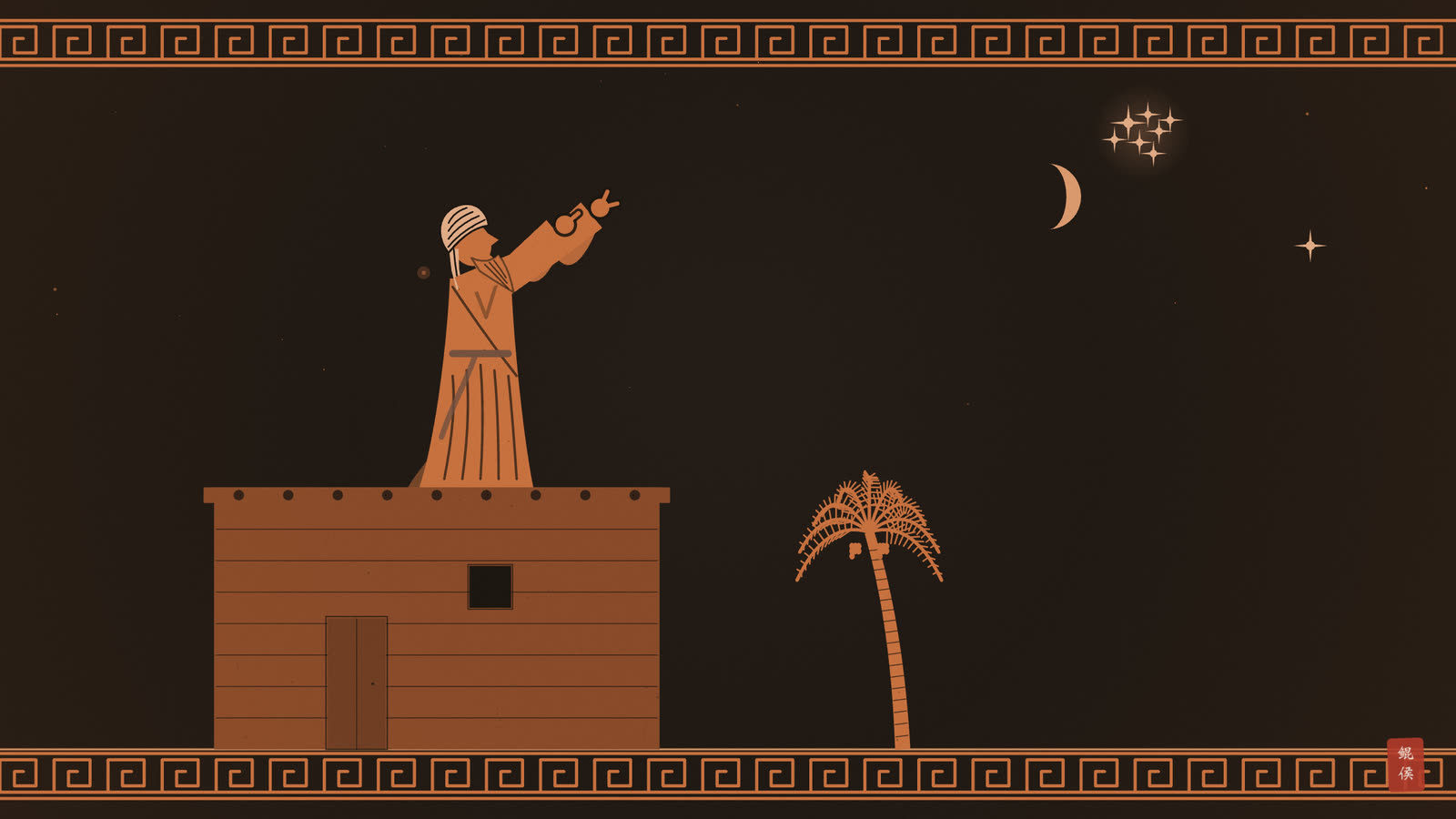
第一百六十四问讲月站(图一)。黄道除了按十二等份分成星座,还按月亮一天的行程来分:月亮约二十七天多绕黄道一周,好像每夜在一个驿站歇宿,所以叫“月站”(manzil,驿站)。印度人分二十七,阿拉伯人分二十八。月站都以恒星命名,正像星座以图形标记一样。按二十八等分,每站约十二度五十一分。
〔图〕黄道又按月亮每日行程分成二十八个月站,从春分点的谢拉坦起,到鱼腹为止
| 序 | 月站 | 意思或别名 | 星与形状 | 所在(希腊星像) |
|---|---|---|---|---|
| 一 | 谢拉坦 | 又称“抵触” | 两亮星南北横陈,相距约一庹 | 白羊的角上 |
| 二 | 布泰因 | 小腹 | 三颗暗星成三角 | 白羊的臀部 |
| 三 | 苏莱雅 | 昴星团,特称“星” | 六星紧挨如一串葡萄 | 金牛的背峰 |
| 四 | 代伯兰 | 星之追随者 | 一颗红色亮星 | 金牛东边的眼 |
| 五 | 哈格阿 | — | 三小星如灶石;托勒密作一颗云状星 | 巨人的头 |
| 六 | 汉阿 | — | 两星,一小一稍亮 | 双子的脚 |
| 七 | 齐拉阿 | 臂(狮子伸展的前臂) | 两亮星,相距如谢拉坦 | 双子的头 |
| 八 | 纳斯拉 | 狮子的鼻 | 两暗星夹一团云斑;希腊俗称驴与马槽 | 巨蟹 |
| 九 | 塔尔夫 | 狮子的眼 | 两亮星,相距约一肘 | 狮子及其像外 |
| 十 | 杰卜哈 | 狮子的额 | 四星成弧,最亮者为狮子之心(王星) | 狮子 |
| 十一 | 祖卜拉 | 狮子的肩背;又称哈拉坦 | 两星,相距约一肘 | 狮子的后半身 |
| 十二 | 萨尔法 | — | 一颗亮星;其后的发辫称为尾毛 | 狮子的尾梢 |
| 十三 | 阿瓦 | 在狮后吠叫的狗 | 四星弯如字母“拉姆” | 处女的胸与翅 |
| 十四 | 西马克 | 无械的西马克;希腊译名“麦穗” | 一颗亮星 | 处女的手 |
| 十五 | 加弗尔 | 取“遮掩”之意 | 两颗暗星 | 处女的裙裾 |
| 十六 | 祖巴纳 | 天蝎的两螯 | 两星横陈,相距一矛 | 天秤的两个秤盘 |
| 十七 | 伊克利勒 | 冠 | 三颗亮星成弧,南北横陈 | 天蝎的额 |
| 十八 | 盖勒卜 | 天蝎之心 | 一颗红色闪烁的星,具火星之性 | 天蝎 |
| 十九 | 绍拉 | 天蝎翘起的尾钩 | 两颗亮星,相距约一拃 | 天蝎的尾 |
| 二十 | 纳阿伊姆 | 下河饮水的鸵鸟 | 四星成四边形 | 射手的弓箭与马腿 |
| 二十一 | 拜勒达 | 荒野、空隙 | 一片无星之天;周围的星称项链 | 射手背后 |
| 二十二 | 萨阿德·扎比赫 | 宰牲的萨阿德 | 两星横陈,旁有一星是所宰之羊 | 摩羯的角 |
| 二十三 | 萨阿德·布拉阿 | 吞下的萨阿德 | 两星,中间一星是被吞者 | 倾水者的左手 |
| 二十四 | 萨阿德·苏乌德 | 吉中之吉 | 三小星南北横陈 | 摩羯尾梢与倾水者肩 |
| 二十五 | 萨阿德·阿赫比亚 | 帐篷的萨阿德 | 四星如鸭掌,中星为萨阿德 | 倾水者的右手 |
| 二十六 | 法尔格·阿瓦勒 | 第一水口;又称前水口、上横梁 | 两颗亮星,相距一矛 | 有翼之马的身上 |
| 二十七 | 法尔格·萨尼 | 第二水口;又称后水口、下横梁 | 两颗亮星,相距一矛 | 有翼之马的身上 |
| 二十八 | 巴特恩·胡特 | 鱼腹;又称“绳” | 一颗亮星,周围小星成鱼形 | 被锁之女的头 |
比鲁尼从春分点起逐站描述(表二):每站几颗星、排成什么形状、看上去相距多远(一庹、一肘、一矛、一拃,都是用身体与兵器比量的目测),落在希腊哪个星像的哪个部位,以及阿拉伯名字的来由。许多名字连着上一问讲的阿拉伯星像:第七至第十四站(臂、鼻、眼、额、鬃、尾、腿)正是那头横跨近五宫的大狮子的各部分;第二十六、二十七站与第二十八站的“绳”,合成一只带绳的水桶,第十一星座的俗名“水桶”由此而来。
其中也有比鲁尼的考辨:昴星团一般人和诗人都说七颗,他说是六颗;第五站哈格阿的三颗小星,托勒密合作一颗云状星;第十四站无械的西马克,希腊人放在处女的手上,翻译家称之为“麦穗”,而处女宫俗名“麦穗”所指的麦穗其实是对面的发辫。第十八站天蝎之心,他点明占星家说它具有火星之性,这是本章少数直接涉及占星的地方。
月站在阿拉伯占星里用处很广:后世择日以月亮所在的月站定宜忌,天气占也与月站的出没相连。本书下一章第一百六十五问起,接着讲怎样认出这些月站、什么叫月站的“升起”,以及与之相关的雨候(anwāʾ)之说。印度的二十七宿与中国的二十八宿,比鲁尼在此只提印度一家,本站不另作比附。
📖 术语
| 术语 | 英文原词 | 意思 |
|---|---|---|
| 月站 | mansions of the Moon | 月亮每夜所宿之处 |
| 苏莱雅 | al-Thurayyā | 昴星团,特称“星” |
| 王星 | the Royal Star | 狮子之心 |
| 萨阿德 | Saʿd | 多个月站名的首字 |
| 米尔赞 | mirzam | 与亮星配对的星 |
🧭 图解与讲解
第一百六十四问讲月站(图一)。黄道除了按十二等份分成星座,还按月亮一天的行程来分:月亮约二十七天多绕黄道一周,好像每夜在一个驿站歇宿,所以叫“月站”(manzil,驿站)。印度人分二十七,阿拉伯人分二十八。月站都以恒星命名,正像星座以图形标记一样。按二十八等分,每站约十二度五十一分。
| 序 | 月站 | 意思或别名 | 星与形状 | 所在(希腊星像) |
|---|---|---|---|---|
| 一 | 谢拉坦 | 又称“抵触” | 两亮星南北横陈,相距约一庹 | 白羊的角上 |
| 二 | 布泰因 | 小腹 | 三颗暗星成三角 | 白羊的臀部 |
| 三 | 苏莱雅 | 昴星团,特称“星” | 六星紧挨如一串葡萄 | 金牛的背峰 |
| 四 | 代伯兰 | 星之追随者 | 一颗红色亮星 | 金牛东边的眼 |
| 五 | 哈格阿 | — | 三小星如灶石;托勒密作一颗云状星 | 巨人的头 |
| 六 | 汉阿 | — | 两星,一小一稍亮 | 双子的脚 |
| 七 | 齐拉阿 | 臂(狮子伸展的前臂) | 两亮星,相距如谢拉坦 | 双子的头 |
| 八 | 纳斯拉 | 狮子的鼻 | 两暗星夹一团云斑;希腊俗称驴与马槽 | 巨蟹 |
| 九 | 塔尔夫 | 狮子的眼 | 两亮星,相距约一肘 | 狮子及其像外 |
| 十 | 杰卜哈 | 狮子的额 | 四星成弧,最亮者为狮子之心(王星) | 狮子 |
| 十一 | 祖卜拉 | 狮子的肩背;又称哈拉坦 | 两星,相距约一肘 | 狮子的后半身 |
| 十二 | 萨尔法 | — | 一颗亮星;其后的发辫称为尾毛 | 狮子的尾梢 |
| 十三 | 阿瓦 | 在狮后吠叫的狗 | 四星弯如字母“拉姆” | 处女的胸与翅 |
| 十四 | 西马克 | 无械的西马克;希腊译名“麦穗” | 一颗亮星 | 处女的手 |
| 十五 | 加弗尔 | 取“遮掩”之意 | 两颗暗星 | 处女的裙裾 |
| 十六 | 祖巴纳 | 天蝎的两螯 | 两星横陈,相距一矛 | 天秤的两个秤盘 |
| 十七 | 伊克利勒 | 冠 | 三颗亮星成弧,南北横陈 | 天蝎的额 |
| 十八 | 盖勒卜 | 天蝎之心 | 一颗红色闪烁的星,具火星之性 | 天蝎 |
| 十九 | 绍拉 | 天蝎翘起的尾钩 | 两颗亮星,相距约一拃 | 天蝎的尾 |
| 二十 | 纳阿伊姆 | 下河饮水的鸵鸟 | 四星成四边形 | 射手的弓箭与马腿 |
| 二十一 | 拜勒达 | 荒野、空隙 | 一片无星之天;周围的星称项链 | 射手背后 |
| 二十二 | 萨阿德·扎比赫 | 宰牲的萨阿德 | 两星横陈,旁有一星是所宰之羊 | 摩羯的角 |
| 二十三 | 萨阿德·布拉阿 | 吞下的萨阿德 | 两星,中间一星是被吞者 | 倾水者的左手 |
| 二十四 | 萨阿德·苏乌德 | 吉中之吉 | 三小星南北横陈 | 摩羯尾梢与倾水者肩 |
| 二十五 | 萨阿德·阿赫比亚 | 帐篷的萨阿德 | 四星如鸭掌,中星为萨阿德 | 倾水者的右手 |
| 二十六 | 法尔格·阿瓦勒 | 第一水口;又称前水口、上横梁 | 两颗亮星,相距一矛 | 有翼之马的身上 |
| 二十七 | 法尔格·萨尼 | 第二水口;又称后水口、下横梁 | 两颗亮星,相距一矛 | 有翼之马的身上 |
| 二十八 | 巴特恩·胡特 | 鱼腹;又称“绳” | 一颗亮星,周围小星成鱼形 | 被锁之女的头 |
比鲁尼从春分点起逐站描述(表二):每站几颗星、排成什么形状、看上去相距多远(一庹、一肘、一矛、一拃,都是用身体与兵器比量的目测),落在希腊哪个星像的哪个部位,以及阿拉伯名字的来由。许多名字连着上一问讲的阿拉伯星像:第七至第十四站(臂、鼻、眼、额、鬃、尾、腿)正是那头横跨近五宫的大狮子的各部分;第二十六、二十七站与第二十八站的“绳”,合成一只带绳的水桶,第十一星座的俗名“水桶”由此而来。
其中也有比鲁尼的考辨:昴星团一般人和诗人都说七颗,他说是六颗;第五站哈格阿的三颗小星,托勒密合作一颗云状星;第十四站无械的西马克,希腊人放在处女的手上,翻译家称之为“麦穗”,而处女宫俗名“麦穗”所指的麦穗其实是对面的发辫。第十八站天蝎之心,他点明占星家说它具有火星之性,这是本章少数直接涉及占星的地方。
月站在阿拉伯占星里用处很广:后世择日以月亮所在的月站定宜忌,天气占也与月站的出没相连。本书下一章第一百六十五问起,接着讲怎样认出这些月站、什么叫月站的“升起”,以及与之相关的雨候(anwāʾ)之说。印度的二十七宿与中国的二十八宿,比鲁尼在此只提印度一家,本站不另作比附。
原文为公有领域古籍;翻译、印象画与图文解读由 AI 辅助生成,鲲侯审校。