卷三·第 153–157 问 焦伤、月相与恒星的星等
行星与日相合而焦伤;月亮一月之中的盈亏与得名;月光借自太阳之理;恒星千零二十二颗分为六等。
§153. What is combustion?
Combustion is the conjunction of the planets with the Sun. It is so called because the Sun is likened to fire, and the disappearance of the planets from sight in its light to burning and vanishing away. This combustion occurs generally to all the wandering planets in the middle of their direct motion, on the circuit of the epicycle; but the upper differs from the lower in the middle of retrogradation, at the perigee of the epicycle, for the lower planet is combust there too, while the upper is not combust there, but is in opposition to the Sun.
翻译点开
§153. What is combustion?
第一百五十三问 何谓焦伤?
Combustion is the conjunction of the planets with the Sun. It is so called because the Sun is likened to fire, and the disappearance of the planets from sight in its light to burning and vanishing away. This combustion occurs generally to all the wandering planets in the middle of their direct motion, on the circuit of the epicycle; but the upper differs from the lower in the middle of retrogradation, at the perigee of the epicycle, for the lower planet is combust there too, while the upper is not combust there, but is in opposition to the Sun.
焦伤就是诸行星与太阳会合。它之所以这样称呼,是因为太阳被比作火,而诸行星在它的光芒中从视野里隐没,被比作焚烧与消亡。这种焦伤一般地发生在所有游星顺行的中途,在本轮的轮周上;但在逆行的中途、在本轮的近地点上,上行星与下行星就不一样了:下行星在那里也焦伤,上行星在那里却不焦伤,而是与太阳对冲。
大意与图解点开
🔎 大意:焦伤是行星与太阳会合、隐没于日光,取火烧之喻;五星顺行之中都会焦伤,逆行之中下行星也焦伤,上行星则与日对冲。
📖 术语
| 术语 | 英文原词 | 意思 |
|---|---|---|
| 焦伤 | combustion | 行星与日会合而隐没 |
| 会合 | conjunction | 与太阳同处一方 |
| 近地点 | perigee | 本轮离地最近处 |
| 对冲 | opposition | 与太阳相隔半圈 |
🧭 图解与讲解
第一百五十三问紧接上一章的上下行星而来。“焦伤”在阿拉伯语里本义是燃烧:太阳被比作火,行星走进它的光芒、从视野里消失,就像被火烧掉一样。比鲁尼给的定义很干脆:焦伤就是行星与太阳会合。
〔图〕行星与日会合就是焦伤;上行星逆行之中与日对冲,不焦伤
| 顺行之中(本轮远地的一侧) | 逆行之中(本轮近地点) | |
|---|---|---|
| 下行星(金星、水星) | 焦伤 | 也焦伤 |
| 上行星(土星、木星、火星) | 焦伤 | 不焦伤,与太阳对冲 |
所有五颗游星,在顺行的中途(本轮离地远的一侧)都会与太阳会合而焦伤。分别在逆行的中途(本轮的近地点):下行星金星、水星这时正在太阳与我们之间,又一次与太阳会合,所以也焦伤;上行星土、木、火这时却正与太阳对冲,日落时东升,整夜可见,自然谈不上焦伤(图一、表二)。这正是上一章第一百五十二问所讲上下行星之别的直接推论。
焦伤在占星判断里是行星最受损的状态之一,后世西方占星把它与“在太阳光束之下”等情形分得更细。比鲁尼在天文卷里只讲它的天文含义:何时发生、为何得名,至于焦伤对吉凶的影响,要到卷八占星部分才讲。下一问把同样的道理用到月亮上:月亮与太阳会合也是一种焦伤。
📖 术语
| 术语 | 英文原词 | 意思 |
|---|---|---|
| 焦伤 | combustion | 行星与日会合而隐没 |
| 会合 | conjunction | 与太阳同处一方 |
| 近地点 | perigee | 本轮离地最近处 |
| 对冲 | opposition | 与太阳相隔半圈 |
🧭 图解与讲解
第一百五十三问紧接上一章的上下行星而来。“焦伤”在阿拉伯语里本义是燃烧:太阳被比作火,行星走进它的光芒、从视野里消失,就像被火烧掉一样。比鲁尼给的定义很干脆:焦伤就是行星与太阳会合。
| 顺行之中(本轮远地的一侧) | 逆行之中(本轮近地点) | |
|---|---|---|
| 下行星(金星、水星) | 焦伤 | 也焦伤 |
| 上行星(土星、木星、火星) | 焦伤 | 不焦伤,与太阳对冲 |
所有五颗游星,在顺行的中途(本轮离地远的一侧)都会与太阳会合而焦伤。分别在逆行的中途(本轮的近地点):下行星金星、水星这时正在太阳与我们之间,又一次与太阳会合,所以也焦伤;上行星土、木、火这时却正与太阳对冲,日落时东升,整夜可见,自然谈不上焦伤(图一、表二)。这正是上一章第一百五十二问所讲上下行星之别的直接推论。
焦伤在占星判断里是行星最受损的状态之一,后世西方占星把它与“在太阳光束之下”等情形分得更细。比鲁尼在天文卷里只讲它的天文含义:何时发生、为何得名,至于焦伤对吉凶的影响,要到卷八占星部分才讲。下一问把同样的道理用到月亮上:月亮与太阳会合也是一种焦伤。
§154. How is this in the case of the Moon?
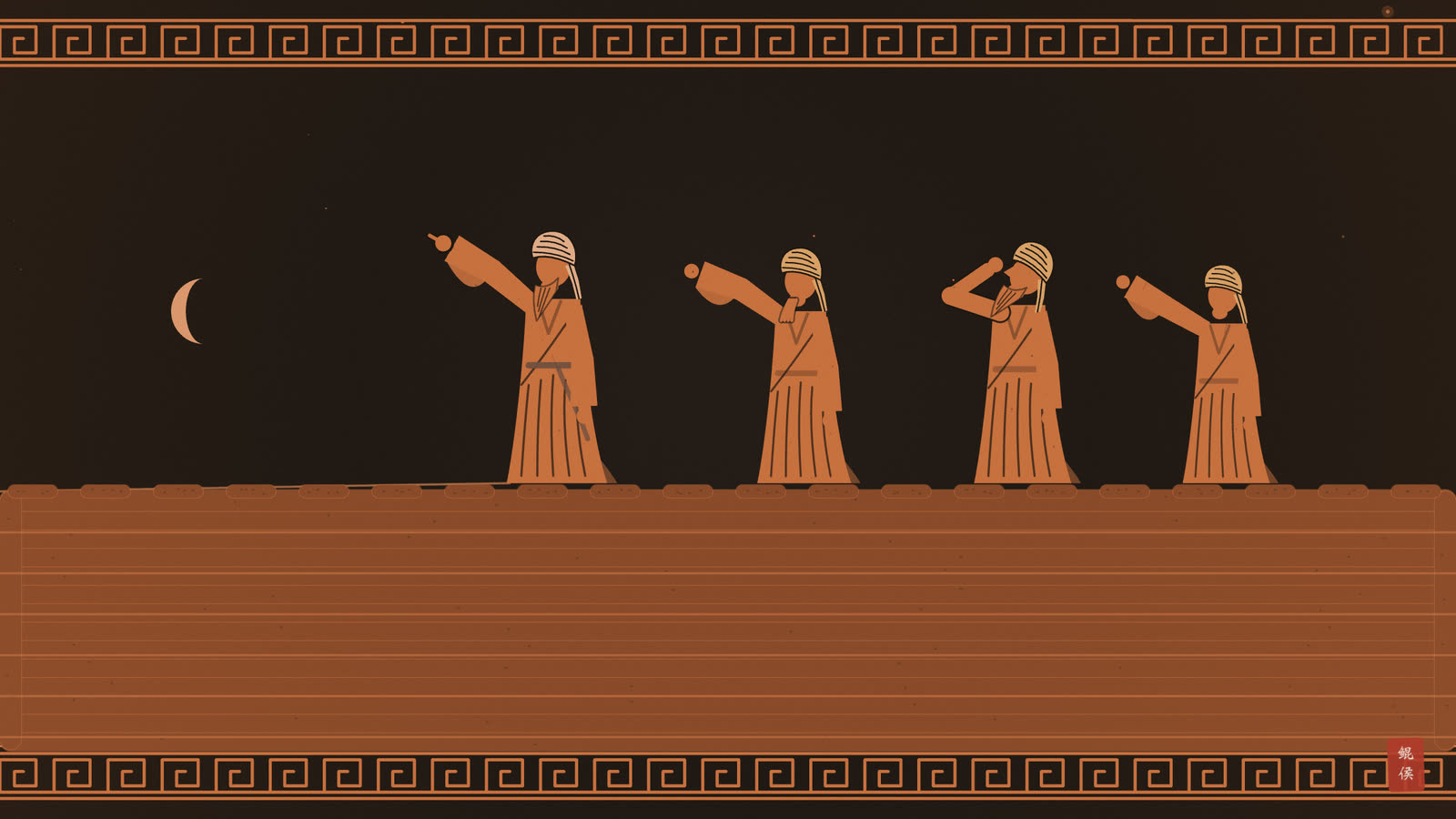
The new Moon is sighted in the evenings at the beginning of the month, and is seen as a slender crescent in the west. Every night its distance from the Sun keeps increasing and the light in its body grows, until at the beginning of the seventh night of the month it reaches the midpoint between east and west; then the light covers half of what is seen of it, in the shape of a semicircle. After that the light exceeds the darkness in it until the fourteenth night, on which it becomes complete as a full moon and rises at sunset, the distance between them being half the circuit. When the Moon's distance exceeds that, it diminishes on the other side, and the light begins to be notched and to decrease, until light and darkness are again equal in its body on the twenty-second night; after that the darkness exceeds the light, until it returns to the shape of the first thin crescent, in the east in the mornings. In all these states its light is on the side facing the Sun. Then it is concealed by the rays of the Sun, and for this reason the period of its concealment is called sirār (concealment), and also muḥāq (effacement), from the effacement of the light in it, until it returns to the shape of the crescent in the west in the evening. It comes together with the Sun in the middle of this period, and this is called conjunction without qualification; Ptolemy in the book of the Almagest calls it 'joining' (ittiṣāl), just as by custom and convention it is described as conjunction (muqārana) and as combustion. As a matter of reasoning, this coming together is the Moon's conjunction with the Sun and its combustion by it. Likewise its full moon is called opposition without qualification, and 'fullness'.
翻译点开
§154. How is this in the case of the Moon?
第一百五十四问 月亮的情形又如何?
The new Moon is sighted in the evenings at the beginning of the month, and is seen as a slender crescent in the west. Every night its distance from the Sun keeps increasing and the light in its body grows, until at the beginning of the seventh night of the month it reaches the midpoint between east and west; then the light covers half of what is seen of it, in the shape of a semicircle. After that the light exceeds the darkness in it until the fourteenth night, on which it becomes complete as a full moon and rises at sunset, the distance between them being half the circuit. When the Moon's distance exceeds that, it diminishes on the other side, and the light begins to be notched and to decrease, until light and darkness are again equal in its body on the twenty-second night; after that the darkness exceeds the light, until it returns to the shape of the first thin crescent, in the east in the mornings. In all these states its light is on the side facing the Sun. Then it is concealed by the rays of the Sun, and for this reason the period of its concealment is called sirār (concealment), and also muḥāq (effacement), from the effacement of the light in it, until it returns to the shape of the crescent in the west in the evening. It comes together with the Sun in the middle of this period, and this is called conjunction without qualification; Ptolemy in the book of the Almagest calls it 'joining' (ittiṣāl), just as by custom and convention it is described as conjunction (muqārana) and as combustion. As a matter of reasoning, this coming together is the Moon's conjunction with the Sun and its combustion by it. Likewise its full moon is called opposition without qualification, and 'fullness'.
新月在月初的傍晚被望见,在西方呈一弯细细的月牙。每一夜它离太阳的距离都在增大,它体上的光也随之增长,直到月中第七夜之初,它到达东西之间的正中;这时光覆盖了所见部分的一半,呈半圆形。此后它体上的光胜过暗,直到第十四夜,它圆满成为满月,在日落时升起,两者相距半个圆周。月亮的距离超过这一点后,它就从另一侧减损,光开始缺损、减少,直到第二十二夜它体上的光与暗再次相等;此后暗胜过光,直到它回到最初那弯细月牙的样子,清晨出现在东方。在所有这些状态中,它的光都在朝向太阳的一侧。然后它被太阳的光芒遮掩,因此它隐藏的这段时间被称为“西拉尔”(隐藏),也称为“穆哈格”(抹去),取光在它身上被抹去之意,直到它又回到傍晚西方的月牙之形。它在这段时间的正中与太阳相会,这就是不加限定所说的“会合”;托勒密在《天文学大成》一书中称之为“相接”,正如按习惯与约定,人们也把它说成“相合”与“焦伤”。按道理说,这一相会就是月亮与太阳相合并被它焦伤。同样,它的满月被称为不加限定所说的“对冲”,也称为“满”。
大意与图解点开
🔎 大意:新月昏见于西,第七夜半圆,第十四夜满月,第二十二夜又成半圆,终成晨见于东的残月;隐没之期正中与日会合,即月之焦伤。
📖 术语
| 术语 | 英文原词 | 意思 |
|---|---|---|
| 新月 | new Moon | 月初昏见的月牙 |
| 满月 | full moon | 第十四夜,日落时升 |
| 西拉尔 | sirār | 意为隐藏,月隐之期 |
| 穆哈格 | muḥāq | 意为抹去,光尽之时 |
| 《天文学大成》 | the Almagest | 托勒密的天文巨著 |
🧭 图解与讲解
第一百五十四问描写一个月里月亮的样子(图一)。月初傍晚,一弯细月牙见于西方;此后每晚离太阳更远、亮面更大,第七夜之初到天空东西之间的正中,成为半圆;第十四夜满月,日落时从东方升起,与太阳隔着半个圆周;过了这一点便从另一侧亏缺,第二十二夜又成半圆,最后变回细月牙,清晨见于东方。比鲁尼特意点出:不论哪一形,亮的一边总朝着太阳。
〔图〕月亮一月之中,离日越远亮面越大,过望之后又渐亏尽
| 时刻 | 书中所举的名称 | 说明 |
|---|---|---|
| 与日会合 | 会合(不加限定) | 通常所说的“合” |
| 相接 | 托勒密《天文学大成》的说法 | |
| 相合、焦伤 | 习惯与约定的说法;按理即月被日焦伤 | |
| 隐没之期 | 西拉尔(隐藏)、穆哈格(抹去) | 会合在这段时间的正中 |
| 满月 | 对冲(不加限定)、满 | 与日相隔半圈 |
此后月亮隐入太阳的光芒,这段隐没的日子阿拉伯人叫“西拉尔”(sirār,隐藏),也叫“穆哈格”(muḥāq,抹去)。在这段时间的正中,月亮与太阳相会,这就是不加限定所说的“会合”。比鲁尼列出各家叫法(表二):托勒密《天文学大成》叫“相接”,习惯上又叫“相合”和“焦伤”;他说按道理讲,这确实就是月亮与太阳相合并被它焦伤,与上一问论行星的焦伤一脉相承。满月则叫“对冲”或“满”。
这些名称对占星很实用。会合与满月(朔与望)是推算日月食、择日、判断月相吉凶的基准;后面卷五天象、卷六历法要讲阿拉伯人以新月初见定月首,卷八占星又常问“生前的会合或满月在何处”。这里先把名称与天象一一对上。
📖 术语
| 术语 | 英文原词 | 意思 |
|---|---|---|
| 新月 | new Moon | 月初昏见的月牙 |
| 满月 | full moon | 第十四夜,日落时升 |
| 西拉尔 | sirār | 意为隐藏,月隐之期 |
| 穆哈格 | muḥāq | 意为抹去,光尽之时 |
| 《天文学大成》 | the Almagest | 托勒密的天文巨著 |
🧭 图解与讲解
第一百五十四问描写一个月里月亮的样子(图一)。月初傍晚,一弯细月牙见于西方;此后每晚离太阳更远、亮面更大,第七夜之初到天空东西之间的正中,成为半圆;第十四夜满月,日落时从东方升起,与太阳隔着半个圆周;过了这一点便从另一侧亏缺,第二十二夜又成半圆,最后变回细月牙,清晨见于东方。比鲁尼特意点出:不论哪一形,亮的一边总朝着太阳。
| 时刻 | 书中所举的名称 | 说明 |
|---|---|---|
| 与日会合 | 会合(不加限定) | 通常所说的“合” |
| 相接 | 托勒密《天文学大成》的说法 | |
| 相合、焦伤 | 习惯与约定的说法;按理即月被日焦伤 | |
| 隐没之期 | 西拉尔(隐藏)、穆哈格(抹去) | 会合在这段时间的正中 |
| 满月 | 对冲(不加限定)、满 | 与日相隔半圈 |
此后月亮隐入太阳的光芒,这段隐没的日子阿拉伯人叫“西拉尔”(sirār,隐藏),也叫“穆哈格”(muḥāq,抹去)。在这段时间的正中,月亮与太阳相会,这就是不加限定所说的“会合”。比鲁尼列出各家叫法(表二):托勒密《天文学大成》叫“相接”,习惯上又叫“相合”和“焦伤”;他说按道理讲,这确实就是月亮与太阳相合并被它焦伤,与上一问论行星的焦伤一脉相承。满月则叫“对冲”或“满”。
这些名称对占星很实用。会合与满月(朔与望)是推算日月食、择日、判断月相吉凶的基准;后面卷五天象、卷六历法要讲阿拉伯人以新月初见定月首,卷八占星又常问“生前的会合或满月在何处”。这里先把名称与天象一一对上。
§155. How does the Moon's light increase and decrease?
The body of the Moon is spherical in shape and not luminous. The light that is seen in it falls on it only from the Sun, as it is seen on the earth, the mountains, the walls and similar dense things through which sight does not pass. When the Moon is with the Sun, it lies between it and us, because it is below it; the Sun's light falls on the side facing it, which we do not see, and our sight reaches only the other side, which faces us. So we cannot distinguish the Moon from the azure of the sky because of the predominance of the rays, and for this reason it is hidden from us. It remains so until, when it has moved some distance from the Sun, part of the lit side begins to come into the side facing us and to be seen, until it becomes a portion that the light of the twilight may not overpower; it is then seen as a crescent. For the rays falling on it end, because of its sphericity, at the circumference of a circle, and what is seen of it likewise ends at the circumference of a circle; so the part of the lit side that enters into the seen side, and is shared by the two circles, is bounded like a slice of a melon, a segment; and this requires the intersection of circles on the surface of the sphere. Then this shared, entering part increases until it equals the dark part; that time is called the first quarter, because what lies between the Sun and the Moon is a quarter of a circle, and the equality of light and darkness in it is evident. At opposition, when there is half a circle between them, the half on which our sight falls is the very same half on which the light falls: the Sun's rays and sight have met on one and the same part of the Moon's body, and the light is seen in its fullness. This is its figure.
翻译点开
§155. How does the Moon's light increase and decrease?
第一百五十五问 月亮的光怎样增减?
The body of the Moon is spherical in shape and not luminous. The light that is seen in it falls on it only from the Sun, as it is seen on the earth, the mountains, the walls and similar dense things through which sight does not pass. When the Moon is with the Sun, it lies between it and us, because it is below it; the Sun's light falls on the side facing it, which we do not see, and our sight reaches only the other side, which faces us. So we cannot distinguish the Moon from the azure of the sky because of the predominance of the rays, and for this reason it is hidden from us. It remains so until, when it has moved some distance from the Sun, part of the lit side begins to come into the side facing us and to be seen, until it becomes a portion that the light of the twilight may not overpower; it is then seen as a crescent. For the rays falling on it end, because of its sphericity, at the circumference of a circle, and what is seen of it likewise ends at the circumference of a circle; so the part of the lit side that enters into the seen side, and is shared by the two circles, is bounded like a slice of a melon, a segment; and this requires the intersection of circles on the surface of the sphere. Then this shared, entering part increases until it equals the dark part; that time is called the first quarter, because what lies between the Sun and the Moon is a quarter of a circle, and the equality of light and darkness in it is evident. At opposition, when there is half a circle between them, the half on which our sight falls is the very same half on which the light falls: the Sun's rays and sight have met on one and the same part of the Moon's body, and the light is seen in its fullness. This is its figure.
月亮的体是球形的,本身不发光。在它身上看到的光,全是从太阳落到它上面的,就像在大地、山岭、墙壁以及类似的、视线穿不过去的密实之物上看到的那样。月亮与太阳在一起时,它位于太阳与我们之间,因为它在太阳之下;太阳的光落在朝向太阳的那一面,那一面我们看不见,我们的视线只到达朝向我们的另一面。所以由于光芒的压倒之势,我们无法把月亮从天空的蔚蓝中分辨出来,它因此对我们隐而不见。它一直这样,直到离开太阳一段距离,受光那一面的一部分开始进入朝向我们的那一面而被看见,直到成为暮光压不住的一份;这时它就被看成月牙。因为落在它上面的光芒,由于它是球形,止于一个圆的圆周;它被看见的部分,同样止于一个圆的圆周;所以受光面进入可见面、为两个圆所共有的那一部分,边界像甜瓜的一瓣,是一个弧形的片;而这需要球面上的圆彼此相交。然后这共有的、进入的部分逐渐增大,直到等于暗的部分;这时称为上弦,因为太阳与月亮之间相隔四分之一圆,月中光与暗的相等也显而易见。到了对冲,两者相隔半个圆,我们的视线所落的那一半,正是光所落的那一半:太阳的光芒与视线在月体的同一部分上相遇,于是光被看得圆满。这是它的图。
大意与图解点开
🔎 大意:月亮是不发光的球,光全借自太阳;受光的半球与朝我们的半球相交,重叠的瓜瓣形部分就是我们看到的亮面,随日月相隔而增减。
📖 术语
| 术语 | 英文原词 | 意思 |
|---|---|---|
| 上弦 | first quarter | 日月相隔四分之一圆 |
| 暮光 | twilight | 日落后的余光 |
| 受光面 | the lit side | 朝日的半球 |
| 可见面 | the seen side | 朝我们的半球 |
🧭 图解与讲解
第一百五十五问说明盈亏的道理。月亮是个球,本身不发光,它的亮全是太阳照上去的,跟阳光照在地面、山岭、墙上一样。会合时,月亮在太阳之下、正夹在太阳与我们之间,亮的一面背着我们,暗的一面朝着我们,再加上日光太强,我们根本分辨不出它。
〔图〕月亮朝日的一半总是亮的,我们看到亮面多少,取决于它离太阳几分之一圈
〔图〕看到的亮面=受光的半球与朝我们的半球重叠的部分
比鲁尼用两个圆来讲(图二):太阳照亮的是月球的一半,边界是一个圆;我们看得见的也是月球的一半,边界是另一个圆。两个半球重叠的部分,才是我们看到的亮面,它的边界由两个圆在球面上相交而成,形状像甜瓜的一瓣。日月相隔越远,重叠越多:相隔四分之一圆时亮暗各半,叫上弦;相隔半圆即对冲时,两个半球完全重合,月亮全亮。
图一据抄本的月相图重画:太阳在上,地居中,月亮绕地一周。抄本图里有一行题记,说原图本来如此画,正确的画法应是每个月亮都一半受光;本站照题记的意思,让轨道上的每个月亮都朝日一半发亮,再在圈外画出从地上看到的月形。这里用的“球面上的圆相交”,正是卷一第六十五至七十一问讲过的大圆、小圆之学。
📖 术语
| 术语 | 英文原词 | 意思 |
|---|---|---|
| 上弦 | first quarter | 日月相隔四分之一圆 |
| 暮光 | twilight | 日落后的余光 |
| 受光面 | the lit side | 朝日的半球 |
| 可见面 | the seen side | 朝我们的半球 |
🧭 图解与讲解
第一百五十五问说明盈亏的道理。月亮是个球,本身不发光,它的亮全是太阳照上去的,跟阳光照在地面、山岭、墙上一样。会合时,月亮在太阳之下、正夹在太阳与我们之间,亮的一面背着我们,暗的一面朝着我们,再加上日光太强,我们根本分辨不出它。
比鲁尼用两个圆来讲(图二):太阳照亮的是月球的一半,边界是一个圆;我们看得见的也是月球的一半,边界是另一个圆。两个半球重叠的部分,才是我们看到的亮面,它的边界由两个圆在球面上相交而成,形状像甜瓜的一瓣。日月相隔越远,重叠越多:相隔四分之一圆时亮暗各半,叫上弦;相隔半圆即对冲时,两个半球完全重合,月亮全亮。
图一据抄本的月相图重画:太阳在上,地居中,月亮绕地一周。抄本图里有一行题记,说原图本来如此画,正确的画法应是每个月亮都一半受光;本站照题记的意思,让轨道上的每个月亮都朝日一半发亮,再在圈外画出从地上看到的月形。这里用的“球面上的圆相交”,正是卷一第六十五至七十一问讲过的大圆、小圆之学。
§156. Why, among the planets, is the Moon alone characterized by the increase and decrease of its light?
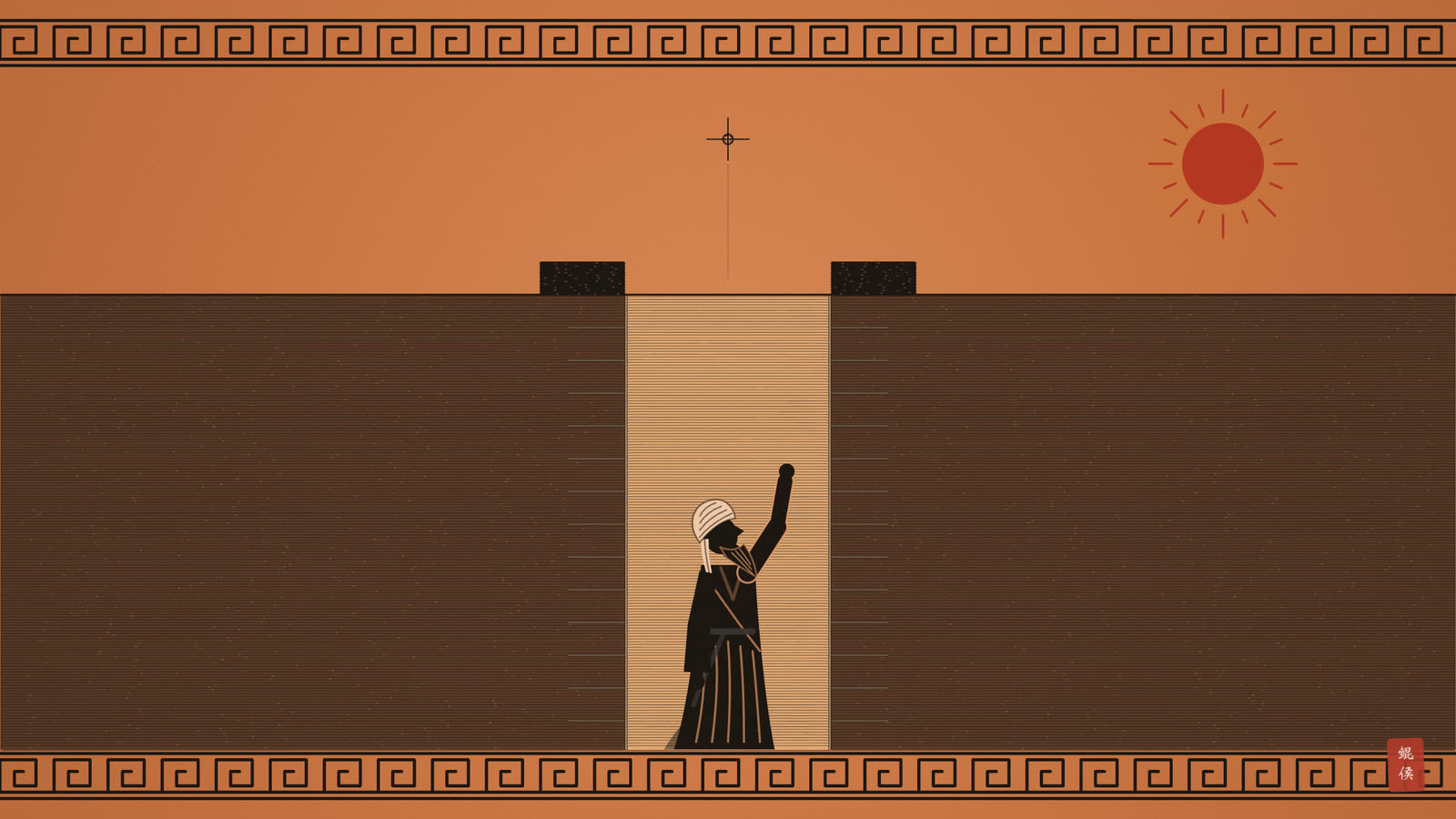
Those who study nature have disagreed about the lights of the stars, whether they are their own or acquired from the Sun by the falling of its rays. Some held that the Sun alone has light and that all the stars are not luminous, reasoning from the dependence of the motions of the planets on the motions of the Sun, and so they made their lights follow it too. Others held that all the stars are luminous except the Moon, which alone is dull and without light. This is the nearer of the two views to the truth, even though it is not so compelling as to remove the disagreement. That is because the stars are luminous in their existence, and their disappearance under the rays is like their disappearance in the daytime, when the light dazzles our eyes and they are thereby too weary to perceive them. For one who looks from the bottom of a deep well, when a star happens to pass over his zenith in the daytime, sees it, because the darkness preserves his sight and strengthens it; for black gathers sight and strengthens it, while white disperses it and weakens it. Now the upper planets, whether luminous or not luminous in themselves, are in any case always seen in one and the same state, just as the Moon, if it were above the Sun, would escape the notching of its light and would always be seen full. The question lies with Venus and Mercury: if they were not luminous, a difference in the amount of light would be seen between their state at their greatest elongation from the Sun and their state when they are near disappearing, since they are below the Sun; and this is not perceptible in them. So the reason why the Moon alone shows varying shapes of light is the dullness of its colour and its lack of light, together with its being below the Sun.
翻译点开
§156. Why, among the planets, is the Moon alone characterized by the increase and decrease of its light?
第一百五十六问 诸星之中,为何唯独月亮有光的增减?
Those who study nature have disagreed about the lights of the stars, whether they are their own or acquired from the Sun by the falling of its rays. Some held that the Sun alone has light and that all the stars are not luminous, reasoning from the dependence of the motions of the planets on the motions of the Sun, and so they made their lights follow it too. Others held that all the stars are luminous except the Moon, which alone is dull and without light. This is the nearer of the two views to the truth, even though it is not so compelling as to remove the disagreement. That is because the stars are luminous in their existence, and their disappearance under the rays is like their disappearance in the daytime, when the light dazzles our eyes and they are thereby too weary to perceive them. For one who looks from the bottom of a deep well, when a star happens to pass over his zenith in the daytime, sees it, because the darkness preserves his sight and strengthens it; for black gathers sight and strengthens it, while white disperses it and weakens it. Now the upper planets, whether luminous or not luminous in themselves, are in any case always seen in one and the same state, just as the Moon, if it were above the Sun, would escape the notching of its light and would always be seen full. The question lies with Venus and Mercury: if they were not luminous, a difference in the amount of light would be seen between their state at their greatest elongation from the Sun and their state when they are near disappearing, since they are below the Sun; and this is not perceptible in them. So the reason why the Moon alone shows varying shapes of light is the dullness of its colour and its lack of light, together with its being below the Sun.
研究自然的人对诸星的光有过争论:它们的光是自身的,还是由太阳的光芒落在上面而从太阳得来的。有些人认为只有太阳有光,所有的星都不发光,他们的理由是诸行星的运动依从太阳的运动,于是让诸星的光也依从于它。另一些人则认为所有的星都发光,只有月亮例外,唯独它暗淡无光。这是两种说法中较接近真相的一种,尽管它还没有有力到足以消除争论的地步。这是因为诸星在其存在上就是发光的,它们在日光下隐没,就像它们在白天隐没一样:那时光使我们的眼睛目眩,眼睛因此疲乏而察觉不到它们。凡从一口深井的井底仰望的人,当白天有一颗星恰好经过他的天顶时,他就能看见它,因为黑暗护住他的视力、使之增强;因为黑色聚拢视力、使之增强,而白色则使视力分散、变弱。至于上行星,不论它们本身发光与否,在任何情形下总是以同一种状态被看见,正如月亮若在太阳之上,就能免于光的缺损,总被看成满月一样。问题在于金星与水星:如果它们不发光,那么它们离太阳最远时的状态与它们将要隐没时的状态之间,就会看出光量的差别,因为它们在太阳之下;而在它们身上察觉不到这种差别。所以,唯独月亮呈现出光的不同形状,原因在于它颜色暗淡、不发光,再加上它在太阳之下。
大意与图解点开
🔎 大意:一说唯日有光,一说众星自有光而独月无光,后说近真:上行星在日之上总是满面,金水在日之下却不见盈亏,可见自身发光。
📖 术语
| 术语 | 英文原词 | 意思 |
|---|---|---|
| 研究自然的人 | those who study nature | 自然学者 |
| 目眩 | dazzles | 强光使眼睛看不清 |
| 天顶 | zenith | 头顶正上方 |
| 暗淡 | dullness | 颜色暗而不发光 |
🧭 图解与讲解
第一百五十六问问:既然别的星也绕着转,为何只有月亮有盈亏?比鲁尼先摆出两派自然学者的争论(图一):一派说只有太阳发光,其余的星都借太阳的光,理由是行星的运动处处依从太阳;另一派说众星都自己发光,只有月亮暗淡无光。他判断后一说较近真相,但也承认还没有强到能平息争论。
〔图〕两说之中,“众星自有光、独月无光”较近真
| 星 | 位置 | 若不发光会怎样 | 实际所见 |
|---|---|---|---|
| 上行星 | 在太阳之上 | 总朝我们满面受光,看不出差别 | 总是同一状态,判不出 |
| 金星、水星 | 在太阳之下 | 离日最远与将隐没时,亮度应有不同 | 察觉不到差别,故自身发光 |
| 月亮 | 在太阳之下 | 形状随离日远近而盈亏 | 确有盈亏,故不发光 |
他先解释为什么自身发光的星会在日光下看不见:那就像白天看不见星星一样,是强光让眼睛目眩疲乏。证据是深井:白天从深井底往上看,若有星正过天顶,就能看见,因为四周的黑暗护住了视力。他还补了一条视觉之理:黑色聚拢视力、使之增强,白色使之分散、变弱。
关键的推理在表二。上行星在太阳之上,太阳从背后照它,它朝我们的总是受光的一面,所以不论它自己发不发光,看起来都一样,判断不出;就像月亮若在太阳之上,也会总是满月。金星、水星在太阳之下,若它们不发光,就该像月亮一样,离日最远时与将隐没时亮面大小不同;可是看不出这种差别,可见它们自身发光。由此回到答案:月亮独有盈亏,是因为它本身暗淡无光,又在太阳之下。
这一问是比鲁尼常用的论证方式:先列各家之说,再用观测与推理定取舍,不轻下断语。对占星而言,“日月为二光,五星各有其光”的看法,也正是后面论各星性质与力量时的前提。
📖 术语
| 术语 | 英文原词 | 意思 |
|---|---|---|
| 研究自然的人 | those who study nature | 自然学者 |
| 目眩 | dazzles | 强光使眼睛看不清 |
| 天顶 | zenith | 头顶正上方 |
| 暗淡 | dullness | 颜色暗而不发光 |
🧭 图解与讲解
第一百五十六问问:既然别的星也绕着转,为何只有月亮有盈亏?比鲁尼先摆出两派自然学者的争论(图一):一派说只有太阳发光,其余的星都借太阳的光,理由是行星的运动处处依从太阳;另一派说众星都自己发光,只有月亮暗淡无光。他判断后一说较近真相,但也承认还没有强到能平息争论。
| 星 | 位置 | 若不发光会怎样 | 实际所见 |
|---|---|---|---|
| 上行星 | 在太阳之上 | 总朝我们满面受光,看不出差别 | 总是同一状态,判不出 |
| 金星、水星 | 在太阳之下 | 离日最远与将隐没时,亮度应有不同 | 察觉不到差别,故自身发光 |
| 月亮 | 在太阳之下 | 形状随离日远近而盈亏 | 确有盈亏,故不发光 |
他先解释为什么自身发光的星会在日光下看不见:那就像白天看不见星星一样,是强光让眼睛目眩疲乏。证据是深井:白天从深井底往上看,若有星正过天顶,就能看见,因为四周的黑暗护住了视力。他还补了一条视觉之理:黑色聚拢视力、使之增强,白色使之分散、变弱。
关键的推理在表二。上行星在太阳之上,太阳从背后照它,它朝我们的总是受光的一面,所以不论它自己发不发光,看起来都一样,判断不出;就像月亮若在太阳之上,也会总是满月。金星、水星在太阳之下,若它们不发光,就该像月亮一样,离日最远时与将隐没时亮面大小不同;可是看不出这种差别,可见它们自身发光。由此回到答案:月亮独有盈亏,是因为它本身暗淡无光,又在太阳之下。
这一问是比鲁尼常用的论证方式:先列各家之说,再用观测与推理定取舍,不轻下断语。对占星而言,“日月为二光,五星各有其光”的看法,也正是后面论各星性质与力量时的前提。
§157. How many fixed stars are there?
The fixed stars in the sky are so many that they defeat the counter. But those who took pains to determine their positions in longitude in the signs, and the amounts of their latitudes north and south of the zodiac, finding them of different sizes to view and to the eye, ranked them in successive grades which they called magnitudes and greatnesses. The greatest are 15 stars, counted as of the first greatness or magnitude; the practitioners of judgements sometimes express this by 'honour' (sharaf), saying 'of the first honour' instead of what others say, 'of the first magnitude'. Then those somewhat smaller than these, in the second magnitude, are 45 stars; in the third magnitude 208 stars; in the fourth magnitude 474 stars; in the fifth magnitude 217 stars; and in the sixth magnitude 58 stars. In this magnitude are those which Ptolemy called obscure, which are nine, besides three not counted, which together are called the Lock and the Braid. What is smaller than the sixth magnitude is what sight can hardly fix on by itself; and if it perceives it, fixing and observing it is difficult. Beyond that there are in the sky five stars of the kind of the Milky Way, nebulous, like pieces of cloud and smudges; and with these the number of the observed stars is completed at 1022 stars.
翻译点开
§157. How many fixed stars are there?
第一百五十七问 恒星有多少颗?
The fixed stars in the sky are so many that they defeat the counter. But those who took pains to determine their positions in longitude in the signs, and the amounts of their latitudes north and south of the zodiac, finding them of different sizes to view and to the eye, ranked them in successive grades which they called magnitudes and greatnesses. The greatest are 15 stars, counted as of the first greatness or magnitude; the practitioners of judgements sometimes express this by 'honour' (sharaf), saying 'of the first honour' instead of what others say, 'of the first magnitude'. Then those somewhat smaller than these, in the second magnitude, are 45 stars; in the third magnitude 208 stars; in the fourth magnitude 474 stars; in the fifth magnitude 217 stars; and in the sixth magnitude 58 stars. In this magnitude are those which Ptolemy called obscure, which are nine, besides three not counted, which together are called the Lock and the Braid. What is smaller than the sixth magnitude is what sight can hardly fix on by itself; and if it perceives it, fixing and observing it is difficult. Beyond that there are in the sky five stars of the kind of the Milky Way, nebulous, like pieces of cloud and smudges; and with these the number of the observed stars is completed at 1022 stars.
天上的恒星多到让计数的人无能为力。但那些费心确定它们在诸星座中的经度位置、以及它们在黄道以北和以南的纬度大小的人,看到它们在视觉上、在眼中大小各异,就把它们排成相继的等级,称为“星等”与“大小”。最大的有十五颗,算作第一等大或第一星等;断事之家有时用“尊位”来表达这一点,说“第一尊位”,代替别人所说的“第一星等”。其次是比这些稍小的,在第二等的有四十五颗;第三等的有二百零八颗;第四等的有四百七十四颗;第五等的有二百一十七颗;第六等的有五十八颗。在这一等里,有托勒密称为“暗星”的,共九颗,此外还有不计入的三颗,合起来称为“发绺”与“发辫”。比第六等更小的,是视力几乎无法单独看定的;即便察觉到了,要看定它、观测它也很困难。此外天上还有五颗属于银河一类的星,是云状的,像一片片云和污斑;连同这些,观测到的星数就凑足一千零二十二颗。
大意与图解点开
🔎 大意:恒星多不胜数,测其经纬者按视大小分六等:十五、四十五、二百零八、四百七十四、二百一十七、五十八,加云状五颗共千零二十二。
📖 术语
| 术语 | 英文原词 | 意思 |
|---|---|---|
| 星等 | magnitude | 按视大小分的等级 |
| 尊位 | honour (sharaf) | 占星家对星等的叫法 |
| 暗星 | obscure | 托勒密列的九颗暗星 |
| 发绺 | the Lock | 三颗不计入的星 |
| 云状星 | nebulous | 如云片污斑的星 |
🧭 图解与讲解
第一百五十七问转入恒星。天上恒星数不过来,但测过它们经纬度的天文家(下文提到托勒密所谓的暗星,可知指的是托勒密一系的星表)把能看定的星按视大小分成六等(图一)。第一等十五颗,第二等四十五颗,第三等二百零八颗,第四等四百七十四颗,第五等二百一十七颗,第六等五十八颗,再加五颗云状星,共一千零二十二颗。比第六等更暗的,肉眼难以看定,不入星表。
〔图〕恒星按大小分六等,四等最多;连云状星共一千零二十二颗
| 等级 | 星数 | 说明 |
|---|---|---|
| 第一等 | 15 | 占星家或称“第一尊位” |
| 第二等 | 45 | |
| 第三等 | 208 | |
| 第四等 | 474 | 抄本此数有两读,裁定取 474 |
| 第五等 | 217 | |
| 第六等 | 58 | 内含托勒密所谓暗星 9 颗 |
| 云状星 | 5 | 如云片、污斑,属银河一类 |
| 合计 | 1022 | 另有“发绺与发辫”3 颗不计 |
这几个数正好相加成总数(表二)。其中第四等的数,抄本此处有两种读法,一作四百七十,一作四百七十四;本站的裁定取四百七十四,理由是只有这样十五、四十五、二百零八、四百七十四、二百一十七、五十八、五相加才得一千零二十二,也与下一章第一百六十二问分区合计的四等之数(照算改正后)相合。
第六等里包括托勒密称为“暗星”的九颗;另有三颗不计入总数,合称“发绺”与“发辫”,下一章讲星像时会再提到。比鲁尼还记下一个用语:占星家有时不说“第一星等”而说“第一尊位”。“尊位”一词在占星里另有专义(行星的旺位也用这个词),读到时要分清语境。
星等对占星有直接的用处:亮星(尤其是第一、二等)与行星或宫位同度时,后世占星家认为影响显著,所以星表要记下星等。下一章就逐一列出四十八个星像与每像所含的星数。
📖 术语
| 术语 | 英文原词 | 意思 |
|---|---|---|
| 星等 | magnitude | 按视大小分的等级 |
| 尊位 | honour (sharaf) | 占星家对星等的叫法 |
| 暗星 | obscure | 托勒密列的九颗暗星 |
| 发绺 | the Lock | 三颗不计入的星 |
| 云状星 | nebulous | 如云片污斑的星 |
🧭 图解与讲解
第一百五十七问转入恒星。天上恒星数不过来,但测过它们经纬度的天文家(下文提到托勒密所谓的暗星,可知指的是托勒密一系的星表)把能看定的星按视大小分成六等(图一)。第一等十五颗,第二等四十五颗,第三等二百零八颗,第四等四百七十四颗,第五等二百一十七颗,第六等五十八颗,再加五颗云状星,共一千零二十二颗。比第六等更暗的,肉眼难以看定,不入星表。
| 等级 | 星数 | 说明 |
|---|---|---|
| 第一等 | 15 | 占星家或称“第一尊位” |
| 第二等 | 45 | |
| 第三等 | 208 | |
| 第四等 | 474 | 抄本此数有两读,裁定取 474 |
| 第五等 | 217 | |
| 第六等 | 58 | 内含托勒密所谓暗星 9 颗 |
| 云状星 | 5 | 如云片、污斑,属银河一类 |
| 合计 | 1022 | 另有“发绺与发辫”3 颗不计 |
这几个数正好相加成总数(表二)。其中第四等的数,抄本此处有两种读法,一作四百七十,一作四百七十四;本站的裁定取四百七十四,理由是只有这样十五、四十五、二百零八、四百七十四、二百一十七、五十八、五相加才得一千零二十二,也与下一章第一百六十二问分区合计的四等之数(照算改正后)相合。
第六等里包括托勒密称为“暗星”的九颗;另有三颗不计入总数,合称“发绺”与“发辫”,下一章讲星像时会再提到。比鲁尼还记下一个用语:占星家有时不说“第一星等”而说“第一尊位”。“尊位”一词在占星里另有专义(行星的旺位也用这个词),读到时要分清语境。
星等对占星有直接的用处:亮星(尤其是第一、二等)与行星或宫位同度时,后世占星家认为影响显著,所以星表要记下星等。下一章就逐一列出四十八个星像与每像所含的星数。
原文为公有领域古籍;翻译、印象画与图文解读由 AI 辅助生成,鲲侯审校。