卷三·第 145–152 问 圆径、星座、赤纬与黄纬、本轮与上下行星
圆径的份数,星座如瓜瓣,赤纬与黄纬,诸星最大纬度,游星的本轮、留与逆行,以及上下行星与太阳的往来。
§145. Into how many parts are the diameters of circles divided?
The ancients thought that the circuit was exactly three times the diameter, until Archimedes and others like him showed that it exceeds three times by an amount close to one seventh of the diameter. So if the circuit is 360 parts, the diameter is 114 parts and 6/11 of a part, according to what we have related from Archimedes. Because of this fraction, and because its ratio is reckoned inexact, being like a surd root, the practitioners of the art left it aside and used for the diameter whatever number they wished, by preference and for their purpose, since their aim in it was nothing but the ratio of the chords to one another. The number Ptolemy chose is 120 parts, and the one used in the zījes of the Sindhind that we have is 5 parts [sic].
§146. What are the signs?
If the zodiac is divided into twelve equal parts, starting from the vernal equinoctial point, and great circles are drawn through the points of division, six circles whose halves intersect at the poles of the zodiac, the sphere becomes like a melon of twelve slices, each of which is a sign. Its length is the part of the belt that lies in it, which is 30 degrees; its breadth is what lies between the belt and each of its two poles, the northern and the southern, which is a quarter of a circle, 90 parts, so that its breadth is 90 parts towards the north and 90 parts towards the south.
This is a figure of it for half of the sphere, for only half of a sphere can be drawn on a plane.
翻译点开
§145. Into how many parts are the diameters of circles divided?
第一百四十五问 圆的直径分为多少份?
The ancients thought that the circuit was exactly three times the diameter, until Archimedes and others like him showed that it exceeds three times by an amount close to one seventh of the diameter. So if the circuit is 360 parts, the diameter is 114 parts and 6/11 of a part, according to what we have related from Archimedes. Because of this fraction, and because its ratio is reckoned inexact, being like a surd root, the practitioners of the art left it aside and used for the diameter whatever number they wished, by preference and for their purpose, since their aim in it was nothing but the ratio of the chords to one another. The number Ptolemy chose is 120 parts, and the one used in the zījes of the Sindhind that we have is 5 parts [sic].
古人以为圆周恰好是直径的三倍,直到阿基米德及与他同类的人证明:圆周比三倍还多出一些,所多之数接近直径的七分之一。所以,若圆周是三百六十份,照我们从阿基米德那里转述的,直径就是一百一十四又十一分之六份。由于这个分数,又由于人们认为这一比例并不精确,如同聋根一样,这门技艺的从业者便把它搁在一边,按自己的偏好与用途给直径取任意的数,因为他们在这里所求的,不过是诸弦彼此之间的比例。托勒密所选的数是一百二十份,而我们手头《信德欣德》诸历表所用的是五份〔原书如此〕。
§146. What are the signs?
第一百四十六问 何谓星座?
If the zodiac is divided into twelve equal parts, starting from the vernal equinoctial point, and great circles are drawn through the points of division, six circles whose halves intersect at the poles of the zodiac, the sphere becomes like a melon of twelve slices, each of which is a sign. Its length is the part of the belt that lies in it, which is 30 degrees; its breadth is what lies between the belt and each of its two poles, the northern and the southern, which is a quarter of a circle, 90 parts, so that its breadth is 90 parts towards the north and 90 parts towards the south.
如果把黄道从春分点起分成十二等份,过各个分点作大圆——共六个大圆,它们的半圈都相交于黄道的两极——天球就像一只分成十二瓣的甜瓜,每一瓣就是一个星座。星座的长,是它所包含的那一段黄道带,即三十度;它的宽,是黄道带到它北、南两极之间的距离,即四分之一圆,九十份;所以它的宽向北九十份、向南九十份。
This is a figure of it for half of the sphere, for only half of a sphere can be drawn on a plane.
这是它的图,只画了天球的一半,因为在平面上只能画出半个球。
大意与图解点开
🔎 大意:圆周约为径的三又七分之一倍,各家径数随用而定:托勒密取一百二十;六个过黄道两极的大圆把天球切成十二瓣,即十二星座。
📖 术语
| 术语 | 英文原词 | 意思 |
|---|---|---|
| 聋根 | surd root | 开不尽的根 |
| 诸弦 | chords | 弧所对的直线 |
| 《信德欣德》 | Sindhind | 源于印度的天文历表 |
| 星座 | sign | 黄道十二等分之一 |
| 甜瓜 | melon | 喻天球分为十二瓣 |
🧭 图解与讲解
卷三天文讲到这里,前面已备好天球上的诸圈。第一百四十五问回到圆本身:圆周与直径之比。古人以为恰是三倍,阿基米德证明多出约直径的七分之一,即三又七分之一倍;圆周若作三百六十份,直径便是一百一十四又十一分之六份(表一)。这个数带着零头,又不精确,比鲁尼把它比作卷二讲过的“聋根”(开不尽的根)。
| 出处 | 圆周 | 直径 | 说明 |
|---|---|---|---|
| 古人 | 三倍于径 | — | 以为恰好三倍 |
| 阿基米德 | 三又七分之一倍于径 | 114 又 6/11 份(周 360 份) | 分数不尽,如聋根 |
| 托勒密 | 360 份 | 120 份 | 取整,便于算弦 |
| 《信德欣德》历表 | 360 份 | 5 份〔原书如此〕 | 抄本数字疑误 |
〔图〕过黄道两极的六个大圆把天球切成十二瓣,每一瓣就是一个星座
于是天文家干脆不追究,直径要取几份全凭方便,因为他们要的只是各弦之间的比例:托勒密取一百二十份,弦表里的数都是这个尺度上的长短。比鲁尼又说他手头的《信德欣德》(Sindhind,源出印度、经阿拉伯人改编的天文历表)用五份,英译照录并加〔原书如此〕。本站的裁定记录说明了理由:五份与上下文不类,花剌子米一系的信德欣德表正弦半径为一百五十(直径三百),抄本此数疑有误,但原数已无从确定,只好照录。
第一百四十六问定义星座(图二)。从春分点起把黄道分成十二等份,过分点作六个大圆,它们都过黄道两极,把天球切成十二瓣,像一只甜瓜。每一瓣的长是黄道上的三十度,宽却从黄道一直伸到两极,南北各九十份。这就是说,星座不是黄道上一条窄带,而是从极到极的一整瓣天:一颗星离黄道再远,只要落在这一瓣里,就算在这个星座之内。
这一点对占星最要紧。星盘上说某星“在白羊某度”,量的是它在黄道方向上的位置,不管它偏北偏南多少;下一问讲的黄纬与第一百四十八问“星在黄纬上的度”,正是把这层意思说透。原文第五行提到抄本附了一张半球图,比鲁尼特意说明平面上只能画半个球;本站据其意重画全球示意,并在图注里注明。
📖 术语
| 术语 | 英文原词 | 意思 |
|---|---|---|
| 聋根 | surd root | 开不尽的根 |
| 诸弦 | chords | 弧所对的直线 |
| 《信德欣德》 | Sindhind | 源于印度的天文历表 |
| 星座 | sign | 黄道十二等分之一 |
| 甜瓜 | melon | 喻天球分为十二瓣 |
🧭 图解与讲解
卷三天文讲到这里,前面已备好天球上的诸圈。第一百四十五问回到圆本身:圆周与直径之比。古人以为恰是三倍,阿基米德证明多出约直径的七分之一,即三又七分之一倍;圆周若作三百六十份,直径便是一百一十四又十一分之六份(表一)。这个数带着零头,又不精确,比鲁尼把它比作卷二讲过的“聋根”(开不尽的根)。
| 出处 | 圆周 | 直径 | 说明 |
|---|---|---|---|
| 古人 | 三倍于径 | — | 以为恰好三倍 |
| 阿基米德 | 三又七分之一倍于径 | 114 又 6/11 份(周 360 份) | 分数不尽,如聋根 |
| 托勒密 | 360 份 | 120 份 | 取整,便于算弦 |
| 《信德欣德》历表 | 360 份 | 5 份〔原书如此〕 | 抄本数字疑误 |
于是天文家干脆不追究,直径要取几份全凭方便,因为他们要的只是各弦之间的比例:托勒密取一百二十份,弦表里的数都是这个尺度上的长短。比鲁尼又说他手头的《信德欣德》(Sindhind,源出印度、经阿拉伯人改编的天文历表)用五份,英译照录并加〔原书如此〕。本站的裁定记录说明了理由:五份与上下文不类,花剌子米一系的信德欣德表正弦半径为一百五十(直径三百),抄本此数疑有误,但原数已无从确定,只好照录。
第一百四十六问定义星座(图二)。从春分点起把黄道分成十二等份,过分点作六个大圆,它们都过黄道两极,把天球切成十二瓣,像一只甜瓜。每一瓣的长是黄道上的三十度,宽却从黄道一直伸到两极,南北各九十份。这就是说,星座不是黄道上一条窄带,而是从极到极的一整瓣天:一颗星离黄道再远,只要落在这一瓣里,就算在这个星座之内。
这一点对占星最要紧。星盘上说某星“在白羊某度”,量的是它在黄道方向上的位置,不管它偏北偏南多少;下一问讲的黄纬与第一百四十八问“星在黄纬上的度”,正是把这层意思说透。原文第五行提到抄本附了一张半球图,比鲁尼特意说明平面上只能画半个球;本站据其意重画全球示意,并在图注里注明。
§147. What are declination and the latitude of a star?
Declination is the distance from the equator towards the north or the south, measured on the circle passing through its poles; latitude is the distance from the zodiac in either of the two directions, measured on the circle passing through the poles of the zodiac. Whenever declination is mentioned without qualification, it belongs to the Sun and to the degrees of the signs, since the Sun does not leave them; when it is attributed to the Moon or to one of the planets or the fixed stars, it is qualified by mention of it. Latitude, however, belongs only to the Moon and the stars; it is never mentioned without qualification, but is always qualified by the name of the one to whom it belongs. Since the equator and the zodiac are distinct, a star may happen to be north of both or south of both, or north of one and south of the other; and it may happen to be distant from one of them and not from the other, so that it has declination without latitude, or latitude without declination. This is a figure of it.
§148. What is the degree of a star in latitude?
It is the degree at which the circle on which the latitude of the stars is measured intersects the zodiac.
翻译点开
§147. What are declination and the latitude of a star?
第一百四十七问 何谓赤纬,何谓星的黄纬?
Declination is the distance from the equator towards the north or the south, measured on the circle passing through its poles; latitude is the distance from the zodiac in either of the two directions, measured on the circle passing through the poles of the zodiac. Whenever declination is mentioned without qualification, it belongs to the Sun and to the degrees of the signs, since the Sun does not leave them; when it is attributed to the Moon or to one of the planets or the fixed stars, it is qualified by mention of it. Latitude, however, belongs only to the Moon and the stars; it is never mentioned without qualification, but is always qualified by the name of the one to whom it belongs. Since the equator and the zodiac are distinct, a star may happen to be north of both or south of both, or north of one and south of the other; and it may happen to be distant from one of them and not from the other, so that it has declination without latitude, or latitude without declination. This is a figure of it.
赤纬是从赤道向北或向南的距离,在过赤道两极的圆上量取;黄纬是从黄道向两方之一的距离,在过黄道两极的圆上量取。凡不加限定地说“赤纬”,它属于太阳与黄道各度,因为太阳不离开黄道;若把它归于月亮、某颗行星或恒星,就要提到所属者加以限定。黄纬却只属于月亮与诸星,从不不加限定地提起,总要带上它所属者的名字。由于赤道与黄道是两个不同的圈,一颗星可能在两者之北,或在两者之南,或在其一之北、另一之南;也可能离其中一个有距离、离另一个却没有,于是有赤纬而无黄纬,或有黄纬而无赤纬。这是它的图。
§148. What is the degree of a star in latitude?
第一百四十八问 何谓星在黄纬上的度?
It is the degree at which the circle on which the latitude of the stars is measured intersects the zodiac.
就是量取诸星黄纬的那个圆与黄道相交之处的度数。
大意与图解点开
🔎 大意:赤纬从赤道量,单说时指太阳与黄道各度;黄纬从黄道量,必带星名。星过黄道两极之圈与黄道的交点,就是它在黄纬上的度。
📖 术语
| 术语 | 英文原词 | 意思 |
|---|---|---|
| 赤纬 | declination | 离赤道的南北距离 |
| 黄纬 | latitude | 离黄道的南北距离 |
| 赤道 | equator | 天球上的赤道圈 |
| 黄纬上的度 | degree in latitude | 星投到黄道上的度数 |
🧭 图解与讲解
卷三前文已讲赤道与黄道是两个大圆,相交于春分、秋分两点。第一百四十七问由此分出两套“纬”(图一):从赤道向南北量的叫赤纬,量的时候沿着过赤道两极的圆;从黄道向南北量的叫黄纬,沿着过黄道两极的圆。两圈既然不重合,同一颗星的两种纬度一般不等,表二列出了比鲁尼所说的几种情形。
〔图〕赤纬从赤道量、过赤道两极;黄纬从黄道量、过黄道两极;两者各成一套
| 情形 | 对赤道 | 对黄道 | 例 |
|---|---|---|---|
| 两者之北 | 北赤纬 | 北黄纬 | 星在两圈的北方 |
| 两者之南 | 南赤纬 | 南黄纬 | 星在两圈的南方 |
| 一北一南 | 北(或南) | 南(或北) | 星夹在两圈之间 |
| 有赤纬无黄纬 | 有 | 无 | 星正在黄道上而不在两分点 |
| 有黄纬无赤纬 | 无 | 有 | 星正在赤道上而不在两分点 |
比鲁尼还交代了说话的习惯:单说“赤纬”,指太阳与黄道各度的赤纬,因为太阳永远走在黄道上,黄道上每一度离赤道多远是定的;说月亮、行星、恒星的赤纬,就要点名。黄纬则只属于月亮和诸星,太阳没有黄纬,所以提黄纬必说是谁的。这样的用语分寸,读后面各卷时要记住。
第一百四十八问只有一句,却是占星的根本:过黄道两极、穿过某星的那个圆,与黄道相交的那一点的度数,就是这颗星“在黄纬上的度”,也就是它的黄经位置(图一的黄点)。上一问说星座是从极到极的一瓣,这里就说明了怎样把一颗偏离黄道的星归到某一瓣的某一度上。星盘与历表里一切“某星在某座某度”,都是这样量出来的。
抄本在这里画的是一个空圆,圆里写着下一问的正文,旁边有小字似说原图如此;本站按正文意思补画了一张天球示意。赤纬关系到星在地平上的高低与出没,后面讲天球斜升、昼夜长短与星盘时都要用到;黄纬关系到行星能否被看见、日月能否交食,下文讲交点时还会再谈。
📖 术语
| 术语 | 英文原词 | 意思 |
|---|---|---|
| 赤纬 | declination | 离赤道的南北距离 |
| 黄纬 | latitude | 离黄道的南北距离 |
| 赤道 | equator | 天球上的赤道圈 |
| 黄纬上的度 | degree in latitude | 星投到黄道上的度数 |
🧭 图解与讲解
卷三前文已讲赤道与黄道是两个大圆,相交于春分、秋分两点。第一百四十七问由此分出两套“纬”(图一):从赤道向南北量的叫赤纬,量的时候沿着过赤道两极的圆;从黄道向南北量的叫黄纬,沿着过黄道两极的圆。两圈既然不重合,同一颗星的两种纬度一般不等,表二列出了比鲁尼所说的几种情形。
| 情形 | 对赤道 | 对黄道 | 例 |
|---|---|---|---|
| 两者之北 | 北赤纬 | 北黄纬 | 星在两圈的北方 |
| 两者之南 | 南赤纬 | 南黄纬 | 星在两圈的南方 |
| 一北一南 | 北(或南) | 南(或北) | 星夹在两圈之间 |
| 有赤纬无黄纬 | 有 | 无 | 星正在黄道上而不在两分点 |
| 有黄纬无赤纬 | 无 | 有 | 星正在赤道上而不在两分点 |
比鲁尼还交代了说话的习惯:单说“赤纬”,指太阳与黄道各度的赤纬,因为太阳永远走在黄道上,黄道上每一度离赤道多远是定的;说月亮、行星、恒星的赤纬,就要点名。黄纬则只属于月亮和诸星,太阳没有黄纬,所以提黄纬必说是谁的。这样的用语分寸,读后面各卷时要记住。
第一百四十八问只有一句,却是占星的根本:过黄道两极、穿过某星的那个圆,与黄道相交的那一点的度数,就是这颗星“在黄纬上的度”,也就是它的黄经位置(图一的黄点)。上一问说星座是从极到极的一瓣,这里就说明了怎样把一颗偏离黄道的星归到某一瓣的某一度上。星盘与历表里一切“某星在某座某度”,都是这样量出来的。
抄本在这里画的是一个空圆,圆里写着下一问的正文,旁边有小字似说原图如此;本站按正文意思补画了一张天球示意。赤纬关系到星在地平上的高低与出没,后面讲天球斜升、昼夜长短与星盘时都要用到;黄纬关系到行星能否被看见、日月能否交食,下文讲交点时还会再谈。
§149. What are the greatest latitudes of the planets, and their greatest declinations?
For the Sun it is the inclination of the zodiac, whose amount, as we have found it by observation, is 23;35 parts; it is called the greatest declination. If a planet's latitude is added to it, the extreme of its declination results. In this table are the extreme latitudes and declinations of the planets. The latitudes of the fixed stars are known and do not change. When one of them falls on one of the two solstitial points, the sum of its latitude and the greatest declination of the zodiac is its declination, in the direction of the declination, if the direction of the declination and that of the latitude are the same; if their directions differ, its declination is the difference between its latitude and the greatest declination, in the direction of the greater. If the star is not on one of the solstitial points, its declination follows no single rule, and calculation is needed to find it.
翻译点开
§149. What are the greatest latitudes of the planets, and their greatest declinations?
第一百四十九问 诸行星的最大黄纬与最大赤纬各是多少?
For the Sun it is the inclination of the zodiac, whose amount, as we have found it by observation, is 23;35 parts; it is called the greatest declination. If a planet's latitude is added to it, the extreme of its declination results. In this table are the extreme latitudes and declinations of the planets. The latitudes of the fixed stars are known and do not change. When one of them falls on one of the two solstitial points, the sum of its latitude and the greatest declination of the zodiac is its declination, in the direction of the declination, if the direction of the declination and that of the latitude are the same; if their directions differ, its declination is the difference between its latitude and the greatest declination, in the direction of the greater. If the star is not on one of the solstitial points, its declination follows no single rule, and calculation is needed to find it.
太阳的是黄道的倾斜,其大小照我们观测所得,是二十三度三十五分,称为最大赤纬。把某颗行星的黄纬加上去,就得出它赤纬的极限。诸行星的极限黄纬与赤纬都在这张表里。恒星的黄纬是已知的,并且不变。当其中一颗恰好落在两个至点之一上时,如果赤纬的方向与黄纬的方向相同,它的黄纬与黄道最大赤纬之和就是它的赤纬,方向随赤纬;如果两者方向不同,它的赤纬就是它的黄纬与最大赤纬之差,方向随较大的一方。如果这颗星不在两个至点之一上,它的赤纬就没有单一的规则,须经计算才能求得。
大意与图解点开
🔎 大意:黄道倾斜即太阳最大赤纬,比鲁尼实测二十三度三十五分;行星最大赤纬等于它加上最大黄纬;恒星只在至点上可径直加减。
📖 术语
| 术语 | 英文原词 | 意思 |
|---|---|---|
| 黄道的倾斜 | inclination of the zodiac | 黄道与赤道的交角 |
| 最大赤纬 | greatest declination | 二十三度三十五分 |
| 至点 | solstitial points | 夏至点与冬至点 |
| 极限 | extreme | 赤纬能到的最远处 |
🧭 图解与讲解
黄道与赤道的交角,就是太阳一年中离赤道最远的距离,即最大赤纬。比鲁尼说这是“我们观测所得”的二十三度三十五分。古来各家所测互有出入,托勒密所用的值大些;比鲁尼特意标明出于自己的观测,可见这个数在当时是要实测的。
| 行星 | 北纬极大 | 南纬极大 | 北赤纬极大 | 南赤纬极大 |
|---|---|---|---|---|
| 太阳 | 0°00′ | 0°00′ | 23°35′ | 23°35′ |
| 月亮 | 5°00′ | 5°00′ | 28°35′ | 28°35′ |
| 土星 | 3°02′ | 3°05′ | 26°37′ | 26°40′ |
| 木星 | 2°05′ | 2°08′ | 25°40′ | 25°43′ |
| 火星 | 4°21′ | 7°07′ | 27°56′ | 30°42′ |
| 金星 | 6°20′ | 6°20′ | 29°56′ | 29°56′ |
| 水星 | 4°05′ | 4°05′ | 27°40′ | 27°40′ |
〔图〕恒星在至点上:纬与赤纬同向相加,异向相减,随大者
行星有黄纬,可以偏离黄道南北,所以它们的赤纬可以比太阳更大:黄纬最大时正好又在至点附近,赤纬就是两者相加。表一据抄本重画,各行都合这个规则:月亮黄纬五度,赤纬到二十八度三十五分;火星南纬七度七分,南赤纬到三十度四十二分,是诸星中最远的。表中金星一行,纬度两格作六度二十分,赤纬却作二十九度五十六分,比相加之数多一分,抄本如此;木星南纬的分格有改笔,复核时按同行赤纬定为八分。
恒星的黄纬古来认为不变。比鲁尼给了一个只在至点上成立的捷径(图二):恒星若正落在夏至点或冬至点上,黄纬方向与赤纬方向相同就相加,相反就相减、随较大者定方向。原因是在至点上,过黄道两极的圆与过赤道两极的圆恰好是同一个圆,两种纬度都在这一个圆上量,可以直接加减;离开至点,两圈分开,就得用卷一讲过的球面三角去算。
这张表与这条规则,为占星家判断一颗星在某地能升多高、是否终年不没提供了数据;后面卷四地理讲各地纬度、卷七星盘讲诸星出没时,都要拿赤纬来用。
📖 术语
| 术语 | 英文原词 | 意思 |
|---|---|---|
| 黄道的倾斜 | inclination of the zodiac | 黄道与赤道的交角 |
| 最大赤纬 | greatest declination | 二十三度三十五分 |
| 至点 | solstitial points | 夏至点与冬至点 |
| 极限 | extreme | 赤纬能到的最远处 |
🧭 图解与讲解
黄道与赤道的交角,就是太阳一年中离赤道最远的距离,即最大赤纬。比鲁尼说这是“我们观测所得”的二十三度三十五分。古来各家所测互有出入,托勒密所用的值大些;比鲁尼特意标明出于自己的观测,可见这个数在当时是要实测的。
| 行星 | 北纬极大 | 南纬极大 | 北赤纬极大 | 南赤纬极大 |
|---|---|---|---|---|
| 太阳 | 0°00′ | 0°00′ | 23°35′ | 23°35′ |
| 月亮 | 5°00′ | 5°00′ | 28°35′ | 28°35′ |
| 土星 | 3°02′ | 3°05′ | 26°37′ | 26°40′ |
| 木星 | 2°05′ | 2°08′ | 25°40′ | 25°43′ |
| 火星 | 4°21′ | 7°07′ | 27°56′ | 30°42′ |
| 金星 | 6°20′ | 6°20′ | 29°56′ | 29°56′ |
| 水星 | 4°05′ | 4°05′ | 27°40′ | 27°40′ |
行星有黄纬,可以偏离黄道南北,所以它们的赤纬可以比太阳更大:黄纬最大时正好又在至点附近,赤纬就是两者相加。表一据抄本重画,各行都合这个规则:月亮黄纬五度,赤纬到二十八度三十五分;火星南纬七度七分,南赤纬到三十度四十二分,是诸星中最远的。表中金星一行,纬度两格作六度二十分,赤纬却作二十九度五十六分,比相加之数多一分,抄本如此;木星南纬的分格有改笔,复核时按同行赤纬定为八分。
恒星的黄纬古来认为不变。比鲁尼给了一个只在至点上成立的捷径(图二):恒星若正落在夏至点或冬至点上,黄纬方向与赤纬方向相同就相加,相反就相减、随较大者定方向。原因是在至点上,过黄道两极的圆与过赤道两极的圆恰好是同一个圆,两种纬度都在这一个圆上量,可以直接加减;离开至点,两圈分开,就得用卷一讲过的球面三角去算。
这张表与这条规则,为占星家判断一颗星在某地能升多高、是否终年不没提供了数据;后面卷四地理讲各地纬度、卷七星盘讲诸星出没时,都要拿赤纬来用。
§150. What are the wandering planets?
They are Saturn, Jupiter, Mars, Venus and Mercury. They are called wandering (mutaḥayyira, 'perplexed') because at times they turn back from the course of their eastward motion and follow the westward one. These are their characteristics.
§151. What is the cause of the wandering planets: how do they abandon their motion and turn back from their direction?
They have small orbs, not surrounding the earth, called epicycles, and these are [illegible] above them; the wandering planets revolve on their circumference. When a planet is in the upper part of the epicycle, its motion is towards the east and in the order of the signs; and when it comes into its lower part, its motion is towards the west, although in itself it completes its revolution and keeps to the circle in its motion. But the epicycles also move with the eastward motion, so that in the upper part two motions combine towards the east, the motion of the planet and the motion of the epicycle, and the planet is seen swift in its direct motion. In the lower part the two motions differ: that of the epicycle is towards the east, and by it the planet is carried in that direction, while that of the planet itself is, as seen, towards the west. If the latter is less than the motion of the epicycle, it is a diminution of its course, and the planet is therefore slow; and if it is greater, the excess between them is retrogradation; for when two equal motions go, one of them towards the east and the other towards the west, they cancel each other out. So if the excess belongs to the westward one, it is retrogradation; and if they are equal, the planet stays in its place and no motion is seen in it. This happens at the beginning and at the end of retrogradation, and the planet is then called stationary for retrogradation and stationary for direct motion. This is its figure.
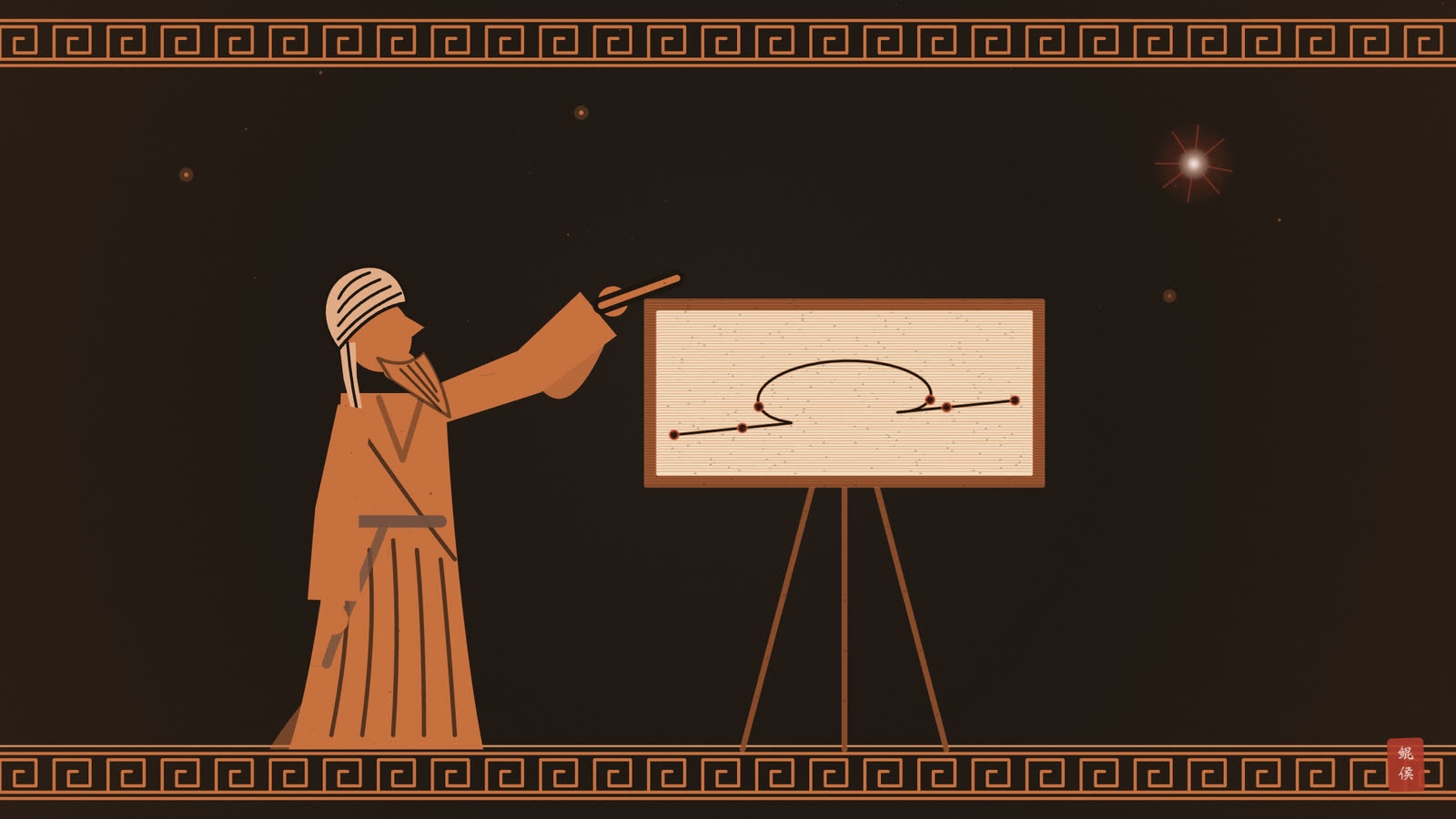
翻译点开
§150. What are the wandering planets?
第一百五十问 何谓游星?
They are Saturn, Jupiter, Mars, Venus and Mercury. They are called wandering (mutaḥayyira, 'perplexed') because at times they turn back from the course of their eastward motion and follow the westward one. These are their characteristics.
就是土星、木星、火星、金星与水星。它们被称为“游移者”(原义为“困惑者”),是因为它们有时从东行的路线折回,转而顺着西行的方向走。以上是它们的特征。
§151. What is the cause of the wandering planets: how do they abandon their motion and turn back from their direction?
第一百五十一问 游星的成因是什么:它们怎样放下自己的运动,从原来的方向折回?
They have small orbs, not surrounding the earth, called epicycles, and these are [illegible] above them; the wandering planets revolve on their circumference. When a planet is in the upper part of the epicycle, its motion is towards the east and in the order of the signs; and when it comes into its lower part, its motion is towards the west, although in itself it completes its revolution and keeps to the circle in its motion. But the epicycles also move with the eastward motion, so that in the upper part two motions combine towards the east, the motion of the planet and the motion of the epicycle, and the planet is seen swift in its direct motion. In the lower part the two motions differ: that of the epicycle is towards the east, and by it the planet is carried in that direction, while that of the planet itself is, as seen, towards the west. If the latter is less than the motion of the epicycle, it is a diminution of its course, and the planet is therefore slow; and if it is greater, the excess between them is retrogradation; for when two equal motions go, one of them towards the east and the other towards the west, they cancel each other out. So if the excess belongs to the westward one, it is retrogradation; and if they are equal, the planet stays in its place and no motion is seen in it. This happens at the beginning and at the end of retrogradation, and the planet is then called stationary for retrogradation and stationary for direct motion. This is its figure.
它们有小的天轮,不包围大地,称为本轮,这些本轮〔抄本此处字迹难辨〕在它们之上;游星就在本轮的圆周上运转。行星在本轮的上部时,它的运动向东、顺着星座的次序;来到本轮的下部时,它的运动向西——虽然它本身仍在完成自己的周转,守着圆周而行。但本轮自身也随着东行的运动而动,所以在上部有两个向东的运动合在一起,即行星的运动与本轮的运动,行星就显得顺行很快。在下部两个运动却不同向:本轮的运动向东,行星被它带着朝那个方向走;而行星自身的运动,看上去是向西的。如果后者小于本轮的运动,那就是它行程的减损,行星因此显得迟缓;如果后者更大,两者之差就是逆行;因为两个相等的运动一向东、一向西时,就会互相抵消。所以,多出来的若属于西行的那一个,就是逆行;若两者相等,行星就停在原处,看不出它有任何运动。这发生在逆行的开头与末尾,行星这时被称为“留而将逆”与“留而将顺”。这是它的图。
大意与图解点开
🔎 大意:土木火金水五星会折回西行,故称游移;它们在本轮上运转,上部两动同向而快,下部西行胜过本轮东行即逆行,相等即留。
📖 术语
| 术语 | 英文原词 | 意思 |
|---|---|---|
| 游星 | wandering planets | 五星,会逆行 |
| 本轮 | epicycle | 行星所骑的小轮 |
| 逆行 | retrogradation | 看似向西倒走 |
| 留而将逆 | stationary for retrogradation | 逆行开头的停留 |
| 留而将顺 | stationary for direct motion | 逆行末尾的停留 |
🧭 图解与讲解
第一百五十问点出五颗“游星”:土、木、火、金、水。阿拉伯语称之为 mutaḥayyira,本义是“困惑者”,像迷了路的人走着走着又折回来:它们平常随星座的次序东行,有时却倒过来西行。日月从不逆行,所以不在其列。原文末句“以上是它们的特征”,抄本此处当附有各星的符号或说明。
〔图〕行星在本轮上部顺行而快,在下部被本轮东带、自身西行,西行占上风时就逆行
〔图〕本轮下部:自身西行与本轮东行相较,定出迟缓、留或逆行
第一百五十一问给出原因:本轮(图一)。每颗游星都骑在一个不包围大地的小轮上,小轮的中心又随一个大圈东行。行星在本轮上部(离地远的一侧)时,自身运转与本轮东行同向,两动相加,看起来顺行而快;转到下部(近地的一侧)时,自身运转在我们看来是向西的,与本轮东行相抵。
相抵的结果有三种(图二):西行小于东行,只是走得慢;两者相等,行星看上去停在原处,这就是“留”;西行胜过东行,差数便是逆行。所以每次逆行前后各有一次留:开头一次叫“留而将逆”,末尾一次叫“留而将顺”,即一般所说的第一次留与第二次留。抄本原图把两个留点画在本轮近地一侧的上下,与这一推理正合。
这套本轮之说出自托勒密的天文体系,比鲁尼在这里只取其大意。对占星来说,顺行、留、逆行是判断行星力量的基本状态:后面卷八讲行星的强弱时,逆行与留都是要逐项考虑的条件,读懂这里的道理,就明白逆行不是行星真的倒走,而是两种运动合在一起给我们看到的样子。
📖 术语
| 术语 | 英文原词 | 意思 |
|---|---|---|
| 游星 | wandering planets | 五星,会逆行 |
| 本轮 | epicycle | 行星所骑的小轮 |
| 逆行 | retrogradation | 看似向西倒走 |
| 留而将逆 | stationary for retrogradation | 逆行开头的停留 |
| 留而将顺 | stationary for direct motion | 逆行末尾的停留 |
🧭 图解与讲解
第一百五十问点出五颗“游星”:土、木、火、金、水。阿拉伯语称之为 mutaḥayyira,本义是“困惑者”,像迷了路的人走着走着又折回来:它们平常随星座的次序东行,有时却倒过来西行。日月从不逆行,所以不在其列。原文末句“以上是它们的特征”,抄本此处当附有各星的符号或说明。
第一百五十一问给出原因:本轮(图一)。每颗游星都骑在一个不包围大地的小轮上,小轮的中心又随一个大圈东行。行星在本轮上部(离地远的一侧)时,自身运转与本轮东行同向,两动相加,看起来顺行而快;转到下部(近地的一侧)时,自身运转在我们看来是向西的,与本轮东行相抵。
相抵的结果有三种(图二):西行小于东行,只是走得慢;两者相等,行星看上去停在原处,这就是“留”;西行胜过东行,差数便是逆行。所以每次逆行前后各有一次留:开头一次叫“留而将逆”,末尾一次叫“留而将顺”,即一般所说的第一次留与第二次留。抄本原图把两个留点画在本轮近地一侧的上下,与这一推理正合。
这套本轮之说出自托勒密的天文体系,比鲁尼在这里只取其大意。对占星来说,顺行、留、逆行是判断行星力量的基本状态:后面卷八讲行星的强弱时,逆行与留都是要逐项考虑的条件,读懂这里的道理,就明白逆行不是行星真的倒走,而是两种运动合在一起给我们看到的样子。
§152. Which of the planets are the upper ones and which the lower?
The upper are Saturn, Jupiter and Mars, and the lower Venus, Mercury and the Moon; but the Moon is not one of the wandering planets. This lowness and highness are measured with respect to the Sun. It is said that they were named with respect to the Sun because it is like the middle jewel of a necklace, and the states of all of them, and especially of the Moon and of the retrogradation of the wandering planets, go back to it. The difference between the upper and the lower is that each of the two lower wandering planets has a fixed distance from the Sun which it does not exceed, in the west and in the east. When it outruns the Sun in its course, it lags behind it in the west, so that it is seen in the west in the evenings; and its visibility keeps growing stronger as its distance from the Sun increases, until it reaches the fixed limit of its greatest distance. Then it slows down, its speed diminishes, and it turns back, drawing near to the Sun. When the diminution of its course reaches the point of standing still, it is called stationary for retrogradation, and after this station it retrogrades, its speed increasing in its retrogradation until it is hidden by the rays of the Sun; this is the evening disappearance. Then, retrograding, it passes the Sun to the other side, becomes slow in its retrogradation, and precedes the Sun in rising; and it is seen once it has moved away from it and come out from under its rays, which is the morning appearance. Its slowness keeps increasing until it reaches the point of standing still a second time, and it is then called stationary for direct motion, and after this station it goes direct. When it has reached the fixed limit of its greatest distance from the Sun, it turns back in its direct motion, drawing near to the Sun, until it is hidden by its rays; this is the morning disappearance. Then it catches up with the Sun, passes it, and appears in the west in the evenings as before, having returned to the original order of its states. As for each of the upper planets, its distance from the Sun has no limit, because the Sun is faster than it, and so passes it and gets ahead of it, moving away from it, until the planet comes out from under its rays and is seen in the mornings in the east; this is its eastern appearance (tashrīq). Then the distance between them keeps increasing, while the planet is direct in its course, until at sunrise it is in a position where, if the Sun were there, it would be the time between the noon and the afternoon prayers; then it becomes stationary for retrogradation, and then it retrogrades. The distance between it and the Sun increases every day until, in the middle of its retrogradation, it comes into opposition with it, which is the greatest distance on the sphere; it then rises in the east at sunset, like the full moon on the fourteenth night of the month. After that the distance between them begins to diminish, until at sunset the planet is in a position where, if the Sun were in its place, it would be the forenoon (ḍuḥā); and that is the time of its station for direct motion. When it goes direct, the Sun keeps drawing near to it until it is on the point of disappearing in its rays on the western side, and that is its western disappearance (taghrīb). The difference between the lower and the upper planet is that the lower moves away from the Sun only by a limited distance, less than a sixth of the circle, is hidden in the middle of its retrogradation, and has a disappearance and an appearance both in the east and in the west; while the upper moves away from the Sun by every distance on the sphere and is in opposition to it in the middle of its retrogradation, so that it is not hidden then, and it has on the eastern side nothing but appearance and on the western side nothing but disappearance.
翻译点开
§152. Which of the planets are the upper ones and which the lower?
第一百五十二问 哪些行星是上行星,哪些是下行星?
The upper are Saturn, Jupiter and Mars, and the lower Venus, Mercury and the Moon; but the Moon is not one of the wandering planets. This lowness and highness are measured with respect to the Sun. It is said that they were named with respect to the Sun because it is like the middle jewel of a necklace, and the states of all of them, and especially of the Moon and of the retrogradation of the wandering planets, go back to it. The difference between the upper and the lower is that each of the two lower wandering planets has a fixed distance from the Sun which it does not exceed, in the west and in the east. When it outruns the Sun in its course, it lags behind it in the west, so that it is seen in the west in the evenings; and its visibility keeps growing stronger as its distance from the Sun increases, until it reaches the fixed limit of its greatest distance. Then it slows down, its speed diminishes, and it turns back, drawing near to the Sun. When the diminution of its course reaches the point of standing still, it is called stationary for retrogradation, and after this station it retrogrades, its speed increasing in its retrogradation until it is hidden by the rays of the Sun; this is the evening disappearance. Then, retrograding, it passes the Sun to the other side, becomes slow in its retrogradation, and precedes the Sun in rising; and it is seen once it has moved away from it and come out from under its rays, which is the morning appearance. Its slowness keeps increasing until it reaches the point of standing still a second time, and it is then called stationary for direct motion, and after this station it goes direct. When it has reached the fixed limit of its greatest distance from the Sun, it turns back in its direct motion, drawing near to the Sun, until it is hidden by its rays; this is the morning disappearance. Then it catches up with the Sun, passes it, and appears in the west in the evenings as before, having returned to the original order of its states. As for each of the upper planets, its distance from the Sun has no limit, because the Sun is faster than it, and so passes it and gets ahead of it, moving away from it, until the planet comes out from under its rays and is seen in the mornings in the east; this is its eastern appearance (tashrīq). Then the distance between them keeps increasing, while the planet is direct in its course, until at sunrise it is in a position where, if the Sun were there, it would be the time between the noon and the afternoon prayers; then it becomes stationary for retrogradation, and then it retrogrades. The distance between it and the Sun increases every day until, in the middle of its retrogradation, it comes into opposition with it, which is the greatest distance on the sphere; it then rises in the east at sunset, like the full moon on the fourteenth night of the month. After that the distance between them begins to diminish, until at sunset the planet is in a position where, if the Sun were in its place, it would be the forenoon (ḍuḥā); and that is the time of its station for direct motion. When it goes direct, the Sun keeps drawing near to it until it is on the point of disappearing in its rays on the western side, and that is its western disappearance (taghrīb). The difference between the lower and the upper planet is that the lower moves away from the Sun only by a limited distance, less than a sixth of the circle, is hidden in the middle of its retrogradation, and has a disappearance and an appearance both in the east and in the west; while the upper moves away from the Sun by every distance on the sphere and is in opposition to it in the middle of its retrogradation, so that it is not hidden then, and it has on the eastern side nothing but appearance and on the western side nothing but disappearance.
上行星是土星、木星与火星,下行星是金星、水星与月亮,但月亮不在游星之列。这一低一高是以太阳为准来量的。据说它们之所以以太阳为准来命名,是因为太阳如同项链正中的那颗宝石,诸星的种种状态,尤其是月亮的状态和游星的逆行,都归结到它身上。上行星与下行星的分别在于:两颗下行的游星,在西边与东边各有一个离太阳的固定距离,不会超过。当它在行程上跑到太阳前面时,就在西方落在太阳之后,于是傍晚见于西方;随着它离太阳越来越远,它的显现也越来越强,直到抵达它最大距离的固定界限。然后它放慢,速度减小,折回来向太阳靠近。当它行程的减损到了停住的地步,就称为留而将逆;这次留之后它便逆行,逆行中速度越来越大,直到被太阳的光芒遮没,这就是傍晚的隐没。然后它一面逆行,一面越过太阳到了另一边,逆行变慢,并且先于太阳升起;离开太阳一段、从它的光芒下出来后,就能被看见,这就是清晨的显现。它的迟缓越来越甚,直到第二次到了停住的地步,这时称为留而将顺;这次留之后它便顺行。到达离太阳最大距离的固定界限时,它在顺行中折回,向太阳靠近,直到被它的光芒遮没,这就是清晨的隐没。然后它追上太阳,越过它,又像先前那样傍晚出现在西方,回到它种种状态最初的次序。至于每一颗上行星,它离太阳的距离没有界限,因为太阳比它快,于是越过它、走到它前面、离它而去,直到这颗行星从太阳光芒下出来,清晨见于东方,这就是它的东出。此后两者的距离一直增大,行星则在行程上顺行,直到日出时它所在的位置,若太阳在那里,正是正午礼拜与午后礼拜之间的时刻;这时它成为留而将逆,接着便逆行。它与太阳的距离一天天增大,直到在逆行的中途与太阳对冲,这是天球上最大的距离;这时它在日落时从东方升起,就像月中第十四夜的满月。此后两者的距离开始缩小,直到日落时行星所在的位置,若太阳在它那里,正是上午的杜哈时;那就是它留而将顺的时候。它顺行时,太阳一直向它靠近,直到它将要在西边隐没于太阳的光芒之中,这就是它的西入。下行星与上行星的分别在于:下行星离太阳只有有限的距离,不到圆周的六分之一,在逆行的中途被遮没,在东方与西方都既有隐没也有显现;而上行星离太阳可以有天球上的任何距离,在逆行的中途与太阳对冲,所以那时不被遮没,并且它在东边只有显现,在西边只有隐没。
大意与图解点开
🔎 大意:土木火在日之上,金水月在日之下;金水离日有限,逆行之中隐于日光,东西皆有出没;上行星可与日对冲,东出西入。
📖 术语
| 术语 | 英文原词 | 意思 |
|---|---|---|
| 上行星 | upper planets | 土星、木星、火星 |
| 下行星 | lower planets | 金星、水星、月亮 |
| 东出 | eastern appearance | 清晨首见于东方 |
| 西入 | western disappearance | 黄昏隐没于西方 |
| 对冲 | opposition | 与太阳相隔半圈 |
🧭 图解与讲解
第一百五十二问以太阳为界,把七星分成两组:太阳之上是土、木、火,之下是金、水、月。比鲁尼引了一个比喻:太阳像项链正中的那颗宝石,诸星的状态都与它相连,尤其是月亮的盈亏和五星的逆行。这正是占星里“迦勒底次序”(土、木、火、日、金、水、月)的排法,太阳恰居其中。
〔图〕下行星绕着太阳来回:昏见、留、逆行、晨见、再留、顺行
| 下行星(金星、水星) | 上行星(土星、木星、火星) | |
|---|---|---|
| 离太阳 | 有固定界限,不到圆周六分之一 | 没有界限,可到任何距离 |
| 谁追谁 | 行星时而超前、时而落后于太阳 | 太阳较快,追上并越过行星 |
| 逆行之中 | 在太阳与我们之间,被光芒遮没 | 与太阳对冲,日落时东升,不被遮没 |
| 出没 | 东、西两方都有显现与隐没 | 东方只有显现(东出),西方只有隐没(西入) |
| 留而将逆时 | 离日到最大距离后减速 | 日出时在正午与午后礼拜之间的位置 |
| 留而将顺时 | 晨见之后第二次停住 | 日落时在上午杜哈时的位置 |
下行星的一个周期(图一):金星或水星跑到太阳前面,就黄昏见于西方,越离越远,到了离日最远的界限便折回,减速到留,接着逆行,被太阳光芒吞没(昏没);逆行中越过太阳到另一边,出来后清晨先于太阳升起(晨见),再一次留,转为顺行,到最远界限又折回,晨没,追上并越过太阳,重新昏见于西方。整个过程,它始终在太阳左右摆动,离开不到圆周的六分之一。
上行星则不同(表二):太阳比它快,追上它、越过它;行星从光芒下出来,清晨首见于东方,称为东出。距离继续拉开,留,逆行;逆行到一半,正好与太阳相隔半圈,日落时它从东方升起,像十四夜的满月。此后距离缩小,再留,顺行,直到黄昏没入西方太阳的光芒,称为西入。比鲁尼用伊斯兰的礼拜时刻来定两次留的位置,是给当时的读者一个看得见的尺度。
这些状态正是占星判断里常用的条件:东出与西入,晨星与昏星,留与逆行,近日焦伤。下一章第一百五十三问紧接着讲“焦伤”,即行星与太阳相合而隐没;本问所说下行星在逆行之中被遮没、上行星在逆行之中与日对冲,就是那里分别论焦伤的根据。
📖 术语
| 术语 | 英文原词 | 意思 |
|---|---|---|
| 上行星 | upper planets | 土星、木星、火星 |
| 下行星 | lower planets | 金星、水星、月亮 |
| 东出 | eastern appearance | 清晨首见于东方 |
| 西入 | western disappearance | 黄昏隐没于西方 |
| 对冲 | opposition | 与太阳相隔半圈 |
🧭 图解与讲解
第一百五十二问以太阳为界,把七星分成两组:太阳之上是土、木、火,之下是金、水、月。比鲁尼引了一个比喻:太阳像项链正中的那颗宝石,诸星的状态都与它相连,尤其是月亮的盈亏和五星的逆行。这正是占星里“迦勒底次序”(土、木、火、日、金、水、月)的排法,太阳恰居其中。
| 下行星(金星、水星) | 上行星(土星、木星、火星) | |
|---|---|---|
| 离太阳 | 有固定界限,不到圆周六分之一 | 没有界限,可到任何距离 |
| 谁追谁 | 行星时而超前、时而落后于太阳 | 太阳较快,追上并越过行星 |
| 逆行之中 | 在太阳与我们之间,被光芒遮没 | 与太阳对冲,日落时东升,不被遮没 |
| 出没 | 东、西两方都有显现与隐没 | 东方只有显现(东出),西方只有隐没(西入) |
| 留而将逆时 | 离日到最大距离后减速 | 日出时在正午与午后礼拜之间的位置 |
| 留而将顺时 | 晨见之后第二次停住 | 日落时在上午杜哈时的位置 |
下行星的一个周期(图一):金星或水星跑到太阳前面,就黄昏见于西方,越离越远,到了离日最远的界限便折回,减速到留,接着逆行,被太阳光芒吞没(昏没);逆行中越过太阳到另一边,出来后清晨先于太阳升起(晨见),再一次留,转为顺行,到最远界限又折回,晨没,追上并越过太阳,重新昏见于西方。整个过程,它始终在太阳左右摆动,离开不到圆周的六分之一。
上行星则不同(表二):太阳比它快,追上它、越过它;行星从光芒下出来,清晨首见于东方,称为东出。距离继续拉开,留,逆行;逆行到一半,正好与太阳相隔半圈,日落时它从东方升起,像十四夜的满月。此后距离缩小,再留,顺行,直到黄昏没入西方太阳的光芒,称为西入。比鲁尼用伊斯兰的礼拜时刻来定两次留的位置,是给当时的读者一个看得见的尺度。
这些状态正是占星判断里常用的条件:东出与西入,晨星与昏星,留与逆行,近日焦伤。下一章第一百五十三问紧接着讲“焦伤”,即行星与太阳相合而隐没;本问所说下行星在逆行之中被遮没、上行星在逆行之中与日对冲,就是那里分别论焦伤的根据。
原文为公有领域古籍;翻译、印象画与图文解读由 AI 辅助生成,鲲侯审校。