卷三·第 128–134 问 地平、子午、四方与昼夜
感官地平与真地平,子午圈平分昼弧,四方与四风,立杆画圆定子午线,日、昼、夜与晨昏之光,各家一日的起点。
§128. What is the horizon?
Nearly half of the vault of the sky is always seen, and it is like a dome erected over the earth; its edge, where it meets the earth, forms a circle round the observer, and whatever is above it is visible to him. This circle is the horizon, and it is of two kinds, the sensible and the true. The sensible horizon is the circumference we have mentioned on the face of the earth; this horizon does not truly bisect the sphere, but makes the segment above it smaller than the one that is hidden and not seen. The true horizon is the boundary of the plane passing through the centre of the earth parallel to the plane of the sensible horizon. The difference between the two is an amount that becomes imperceptible when the sphere is large and grows when the sphere is small; and the true horizon truly bisects the sphere of the world.
§129. What is the meridian?
The daytime of every point in the orb is what it describes from its rising to its setting, and this is called the arc of daytime. Therefore the circle that passes through the zenith and bisects the daytime of all points is the meridian. Every point, from its rising, keeps ascending towards it and mounting up until it reaches it, and from there it begins to descend and sink towards its setting.
翻译点开
§128. What is the horizon?
第一百二十八问 何谓地平?
Nearly half of the vault of the sky is always seen, and it is like a dome erected over the earth; its edge, where it meets the earth, forms a circle round the observer, and whatever is above it is visible to him. This circle is the horizon, and it is of two kinds, the sensible and the true. The sensible horizon is the circumference we have mentioned on the face of the earth; this horizon does not truly bisect the sphere, but makes the segment above it smaller than the one that is hidden and not seen. The true horizon is the boundary of the plane passing through the centre of the earth parallel to the plane of the sensible horizon. The difference between the two is an amount that becomes imperceptible when the sphere is large and grows when the sphere is small; and the true horizon truly bisects the sphere of the world.
天穹差不多总有一半是看得见的,它像一座立在大地上的圆顶;它的边缘与大地相接之处,在观测者周围形成一个圆,凡在它上方的东西,他都看得见。这个圆就是地平,它有两种:感官地平与真地平。感官地平就是我们所说的地面上的那一圈;这个地平并不真正平分天球,而是使它上方的部分小于隐而不见的部分。真地平是穿过地心、与感官地平的平面平行的那个平面的边界。二者之差是这样一个量:天球大时它小到察觉不出,天球小时它就变大;而真地平真正把世界之球平分。
§129. What is the meridian?
第一百二十九问 何谓子午圈?
The daytime of every point in the orb is what it describes from its rising to its setting, and this is called the arc of daytime. Therefore the circle that passes through the zenith and bisects the daytime of all points is the meridian. Every point, from its rising, keeps ascending towards it and mounting up until it reaches it, and from there it begins to descend and sink towards its setting.
天上每一点的昼,就是它从升起到落下所画出的部分,这称为昼弧。因此,穿过天顶、平分一切点之昼弧的那个圆,就是子午圈。每一点从升起时起,一直向它上升、攀高,直到抵达它;从那里开始,又向它的落下之处下降、沉落。
大意与图解点开
🔎 大意:地平是天穹与大地相接的圆:感官地平过观测者,所见略少于一半;真地平过地心,平分天球。子午圈过天顶,平分诸点的昼弧。
📖 术语
| 术语 | 英文原词 | 意思 |
|---|---|---|
| 感官地平 | the sensible horizon | 过观测者的地平 |
| 真地平 | the true horizon | 过地心的地平 |
| 昼弧 | the arc of daytime | 从升到落所画之弧 |
| 子午圈 | the meridian | 过天顶平分昼弧 |
| 天顶 | the zenith | 头顶正上方 |
🧭 图解与讲解
天穹像一座扣在大地上的圆顶,它的边缘在观测者四周围成一圈,这就是地平。比鲁尼分出两种(图一):感官地平是眼睛实际看到的那一圈,它过观测者,所以看见的部分略少于一半;真地平是过地心、与之平行的平面,真正把天球平分。天球极大而地极小,两者之差小到察觉不出,所以天文推算一律用真地平。
〔图〕感官地平过观测者,真地平过地心,两者平行;天球极大,二者之差小到察觉不出
〔图〕子午圈过天顶,把每一点从升起到落下的昼弧平分为二,星到此处升到最高
子午圈的定义很巧:每一点从升起到落下画出一段弧,称为昼弧;过天顶、把一切昼弧平分的那个大圆就是子午圈(图二)。星从东方升起后一路攀高,到子午圈升到最高,过此便向西下降。阿拉伯语称子午圈为“正午之圈”,因为太阳到此就是正午。
地平与子午圈是宫位制的两根骨架。黄道与东方地平相交之点是上升点,即第一宫的起点;黄道与子午圈的上半相交之点是中天,即第十宫的起点;与之相对的是下降点与天底。占星盘上的四个角,就是这两个圆与黄道的四个交点。
📖 术语
| 术语 | 英文原词 | 意思 |
|---|---|---|
| 感官地平 | the sensible horizon | 过观测者的地平 |
| 真地平 | the true horizon | 过地心的地平 |
| 昼弧 | the arc of daytime | 从升到落所画之弧 |
| 子午圈 | the meridian | 过天顶平分昼弧 |
| 天顶 | the zenith | 头顶正上方 |
🧭 图解与讲解
天穹像一座扣在大地上的圆顶,它的边缘在观测者四周围成一圈,这就是地平。比鲁尼分出两种(图一):感官地平是眼睛实际看到的那一圈,它过观测者,所以看见的部分略少于一半;真地平是过地心、与之平行的平面,真正把天球平分。天球极大而地极小,两者之差小到察觉不出,所以天文推算一律用真地平。
子午圈的定义很巧:每一点从升起到落下画出一段弧,称为昼弧;过天顶、把一切昼弧平分的那个大圆就是子午圈(图二)。星从东方升起后一路攀高,到子午圈升到最高,过此便向西下降。阿拉伯语称子午圈为“正午之圈”,因为太阳到此就是正午。
地平与子午圈是宫位制的两根骨架。黄道与东方地平相交之点是上升点,即第一宫的起点;黄道与子午圈的上半相交之点是中天,即第十宫的起点;与之相对的是下降点与天底。占星盘上的四个角,就是这两个圆与黄道的四个交点。
§130. What are the quarters of the world?
They are the sources of the four well-known winds. The ṣabā blows from the east; the ṣabā is also called qabūl, because it meets the face of the Kaʿba. The dabūr blows from the west, and it comes from behind (dubur) the Kaʿba. The shamāl blows from the direction of the pole; it is on the left of one who faces the east, and so this direction is called north (shamāl); it is also known as garbyā, which is a Syriac name. The janūb blows from the side opposite the pole; it is on the right of one who faces the east, and for this reason this direction is called south (janūb), and taymnā in Syriac. The names of the directions intermediate between these four are not well known, and a wind blowing from any of them is called nakbāʾ.
翻译点开
§130. What are the quarters of the world?
第一百三十问 何谓世界四方?
They are the sources of the four well-known winds. The ṣabā blows from the east; the ṣabā is also called qabūl, because it meets the face of the Kaʿba. The dabūr blows from the west, and it comes from behind (dubur) the Kaʿba. The shamāl blows from the direction of the pole; it is on the left of one who faces the east, and so this direction is called north (shamāl); it is also known as garbyā, which is a Syriac name. The janūb blows from the side opposite the pole; it is on the right of one who faces the east, and for this reason this direction is called south (janūb), and taymnā in Syriac. The names of the directions intermediate between these four are not well known, and a wind blowing from any of them is called nakbāʾ.
它们是四种著名的风的来源。萨巴风从东方吹来;萨巴风又叫“盖布勒”,因为它迎着克尔白的正面。达布尔风从西方吹来,它来自克尔白的背后(杜布尔)。沙马勒风从天极的方向吹来;它在面向东方的人的左手边,所以这个方向被称为北(沙马勒);它又被称为“加尔比亚”,这是一个叙利亚语名称。贾努布风从与天极相对的一侧吹来;它在面向东方的人的右手边,因此这个方向被称为南(贾努布),叙利亚语称“泰姆纳”。这四方之间诸方向的名称不大为人所知,从其中任何一个方向吹来的风都称为“奈克巴”。
大意与图解点开
🔎 大意:四方是四风的来源:萨巴风自东,达布尔风自西,沙马勒风自北极方向,贾努布风自南;四隅之风统称奈克巴。
📖 术语
| 术语 | 英文原词 | 意思 |
|---|---|---|
| 萨巴风 | ṣabā | 东风,又名盖布勒 |
| 达布尔风 | dabūr | 西风 |
| 沙马勒风 | shamāl | 北风 |
| 贾努布风 | janūb | 南风 |
| 奈克巴 | nakbāʾ | 四隅之风 |
🧭 图解与讲解
比鲁尼不用抽象的东西南北来定义四方,而是用四种风:萨巴风自东,达布尔风自西,沙马勒风自天极一方,贾努布风自相对的一方(图一)。这是阿拉伯半岛的老传统,方向的名称本来就从风名而来。东风又叫“盖布勒”,意为“迎面的”,因为它迎着克尔白的正面;西风“达布尔”与“背后”(杜布尔)同根。
〔图〕四方以四风命名:萨巴风自东,达布尔风自西,沙马勒风自北,贾努布风自南
| 方向 | 风名 | 名称由来 | 叙利亚语名 |
|---|---|---|---|
| 东 | 萨巴(又名盖布勒) | 迎着克尔白的正面 | — |
| 西 | 达布尔 | 来自克尔白的背后(杜布尔) | — |
| 北 | 沙马勒 | 面东时在左手;北即以此得名 | 加尔比亚 |
| 南 | 贾努布 | 面东时在右手;南即以此得名 | 泰姆纳 |
| 四隅 | 奈克巴 | 四隅方向本身名称不通行 | — |
南北的命名是以面向东方为准:北在左手,南在右手。阿拉伯语 shimāl 本义就是“左”,与北风之名同形;南方的叙利亚名“泰姆纳”也与“右手”同根。比鲁尼又列出北、南的叙利亚语名称,一问之中阿拉伯语、叙利亚语并举(表二)。
图一依抄本惯例把南画在上方、东画在左方,下一单元重画的抄本图也是如此。占星盘上,上升点在东、中天在南,所以古代星盘常把南放在上方;这与今日地图北在上的习惯不同,读古图时要先认清方位。
📖 术语
| 术语 | 英文原词 | 意思 |
|---|---|---|
| 萨巴风 | ṣabā | 东风,又名盖布勒 |
| 达布尔风 | dabūr | 西风 |
| 沙马勒风 | shamāl | 北风 |
| 贾努布风 | janūb | 南风 |
| 奈克巴 | nakbāʾ | 四隅之风 |
🧭 图解与讲解
比鲁尼不用抽象的东西南北来定义四方,而是用四种风:萨巴风自东,达布尔风自西,沙马勒风自天极一方,贾努布风自相对的一方(图一)。这是阿拉伯半岛的老传统,方向的名称本来就从风名而来。东风又叫“盖布勒”,意为“迎面的”,因为它迎着克尔白的正面;西风“达布尔”与“背后”(杜布尔)同根。
| 方向 | 风名 | 名称由来 | 叙利亚语名 |
|---|---|---|---|
| 东 | 萨巴(又名盖布勒) | 迎着克尔白的正面 | — |
| 西 | 达布尔 | 来自克尔白的背后(杜布尔) | — |
| 北 | 沙马勒 | 面东时在左手;北即以此得名 | 加尔比亚 |
| 南 | 贾努布 | 面东时在右手;南即以此得名 | 泰姆纳 |
| 四隅 | 奈克巴 | 四隅方向本身名称不通行 | — |
南北的命名是以面向东方为准:北在左手,南在右手。阿拉伯语 shimāl 本义就是“左”,与北风之名同形;南方的叙利亚名“泰姆纳”也与“右手”同根。比鲁尼又列出北、南的叙利亚语名称,一问之中阿拉伯语、叙利亚语并举(表二)。
图一依抄本惯例把南画在上方、东画在左方,下一单元重画的抄本图也是如此。占星盘上,上升点在东、中天在南,所以古代星盘常把南放在上方;这与今日地图北在上的习惯不同,读古图时要先认清方位。
§131. How are these directions found?
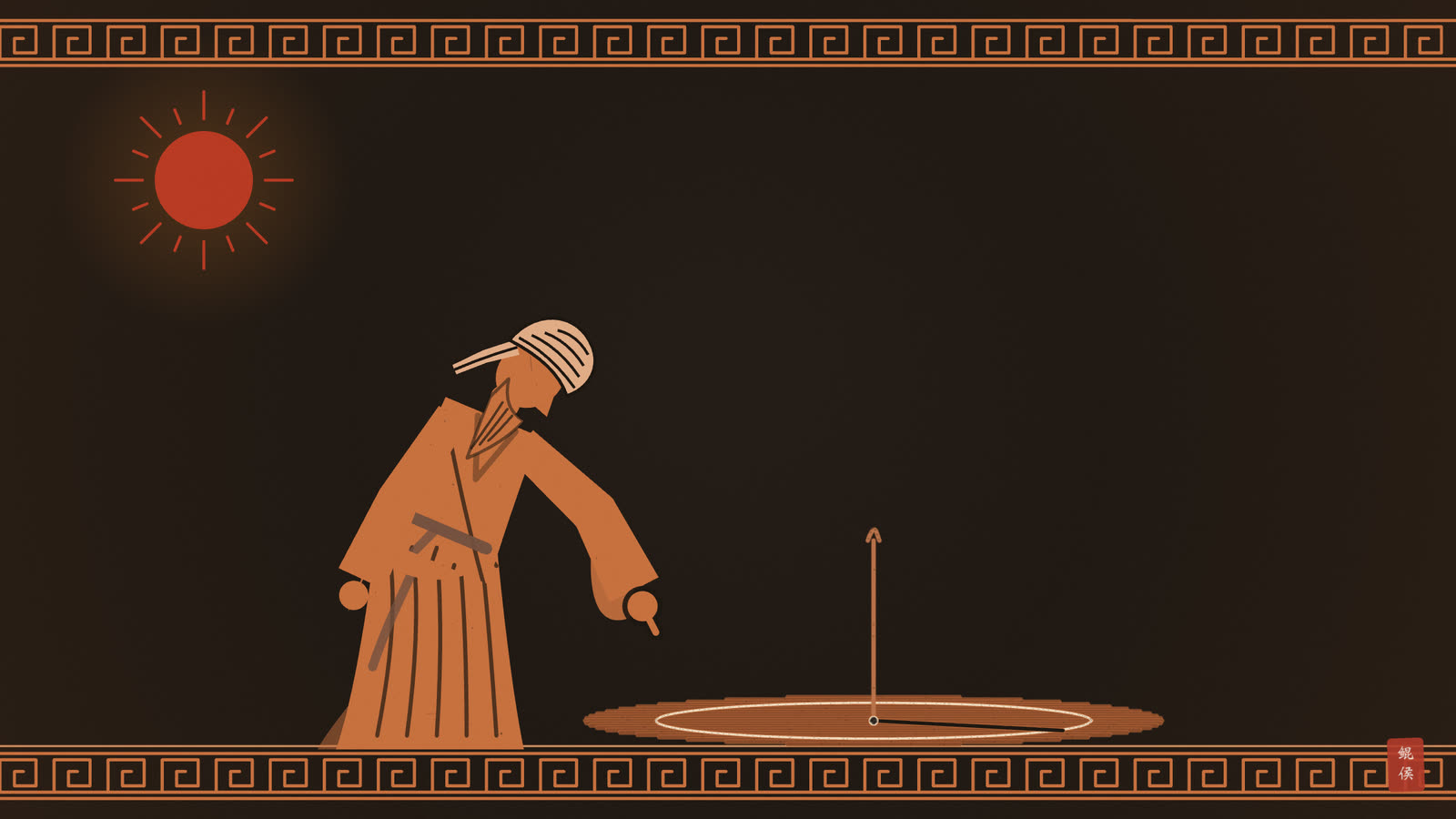
Level the ground as well as you can, until it is such that, if water were poured on it, it would flow equally to all sides without running towards any one of them because it is lower. When the face of the ground has been levelled in this way, draw on it a circle with whatever radius you like, and set up at its centre an upright rod with a sharpened tip, whose length is equal to half the opening of the compasses with which you drew the circle. Take pains that it stands perpendicular on the ground, by bringing the plumb-line from its tip down to the centre of the circle. Then watch its shadow in the first half of the day, while the shadow stretches towards the west and shortens until it enters this circle, and mark on the circumference the place where the shadow enters it. Then watch it again in the latter half of the day, when the shadow begins to lengthen and leaves the circle, and again mark on the circumference the place where it leaves it. Then join the marks of entry and exit with a line, or with a ruler, bisect this joining line, and draw through its midpoint and through the centre of the circle a straight line: this is the meridian line. Write 'north' at its end towards the pole and 'south' at its other end. The circle has now been divided by this line into two halves, one eastern, from which rising takes place, and the other western, in which setting takes place. Then bisect one of these two halves, and draw from the point of division through the centre of the circle a straight line: this is the line of east and west, and write these two names at its ends. This line is sometimes called the equinoctial line, and the meridian line the line of declining (zawāl). The circle is divided by the two lines into quarters, so that each quarter has a name compounded of the names of two directions: the one between east and south is called south-east, the one between south and west south-west, the one between west and north is called north-west, and the one between east and north north-east.
This is a figure of it.
翻译点开
§131. How are these directions found?
第一百三十一问 如何找出这些方向?
Level the ground as well as you can, until it is such that, if water were poured on it, it would flow equally to all sides without running towards any one of them because it is lower. When the face of the ground has been levelled in this way, draw on it a circle with whatever radius you like, and set up at its centre an upright rod with a sharpened tip, whose length is equal to half the opening of the compasses with which you drew the circle. Take pains that it stands perpendicular on the ground, by bringing the plumb-line from its tip down to the centre of the circle. Then watch its shadow in the first half of the day, while the shadow stretches towards the west and shortens until it enters this circle, and mark on the circumference the place where the shadow enters it. Then watch it again in the latter half of the day, when the shadow begins to lengthen and leaves the circle, and again mark on the circumference the place where it leaves it. Then join the marks of entry and exit with a line, or with a ruler, bisect this joining line, and draw through its midpoint and through the centre of the circle a straight line: this is the meridian line. Write 'north' at its end towards the pole and 'south' at its other end. The circle has now been divided by this line into two halves, one eastern, from which rising takes place, and the other western, in which setting takes place. Then bisect one of these two halves, and draw from the point of division through the centre of the circle a straight line: this is the line of east and west, and write these two names at its ends. This line is sometimes called the equinoctial line, and the meridian line the line of declining (zawāl). The circle is divided by the two lines into quarters, so that each quarter has a name compounded of the names of two directions: the one between east and south is called south-east, the one between south and west south-west, the one between west and north is called north-west, and the one between east and north north-east.
尽你所能把地面整平,直到它成为这样:若在上面倒水,水会均匀地流向四面,不会因为某一边较低而偏流向那一边。地面这样整平之后,在上面以任意半径画一个圆,在圆心竖一根尖头的直杆,杆长等于你画圆所用圆规张开距离的一半。要用心使它垂直立在地上,办法是让铅垂线从杆尖垂到圆心。然后在上半天观察它的影子:影子伸向西方、逐渐缩短,直到进入这个圆,就在圆周上标出影子进入之处。再在下半天观察它:影子开始变长、离开这个圆时,再在圆周上标出它离开之处。然后用一条线或一把直尺把进、出两个标记连起来,把这条连线平分,再通过它的中点和圆心画一条直线:这就是子午线。在它朝向天极的一端写上“北”,另一端写上“南”。这时这个圆已被这条线分成两半,一半在东,升起由此发生,另一半在西,落下在其中发生。然后把这两半之一平分,从分点穿过圆心画一条直线:这就是东西线,在它两端写上这两个名称。这条线有时被称为分点线,而子午线被称为日斜线(扎瓦勒)。圆被这两条线分成四个象限,每个象限的名称都由两个方向的名称合成:东与南之间的称为东南,南与西之间的称为西南,西与北之间的称为西北,东与北之间的称为东北。
This is a figure of it.
这是它的图形。
大意与图解点开
🔎 大意:整平地面,画圆立杆;记下上午影子入圆、下午出圆两处,连线取中点,过中点与圆心作子午线,再作垂线得东西线,分四隅。
📖 术语
| 术语 | 英文原词 | 意思 |
|---|---|---|
| 铅垂线 | plumb-line | 验杆是否垂直 |
| 子午线 | the meridian line | 南北向的直线 |
| 东西线 | the line of east and west | 又称分点线 |
| 扎瓦勒 | zawāl | 日过中天西斜 |
| 象限 | quarter | 圆的四分之一 |
🧭 图解与讲解
这一问是一套野外可做的测量法,后世称为“印度圆”(图一,据抄本图重画)。整平地面、画圆、在圆心立一根垂直的杆,上午杆影由长变短,影尖进入圆周时做个记号;下午影子由短变长,影尖离开圆周时再做个记号。同一天里,影长相等的两个时刻对正午左右对称,所以两点的连线是东西向,它的中垂线就是南北向的子午线(表二)。
〔图〕影子上午入圆、下午出圆,两点连线的中垂线就是子午线;再作其垂线得东西线,分出四方四隅
| 步骤 | 做什么 | 为什么 |
|---|---|---|
| 一 | 整平地面,倒水不偏流 | 杆影才不因地面倾斜而走样 |
| 二 | 画圆,圆心立杆,杆长为半径之半 | 影子早晚都会越过圆周 |
| 三 | 以铅垂线校正杆身 | 杆必须垂直于地面 |
| 四 | 上午记影子入圆之点,下午记出圆之点 | 两点影长相等,对子午线左右对称 |
| 五 | 连两点,取中点,过中点与圆心画线 | 这条线就是子午线(南北线) |
| 六 | 平分东半圆,过分点与圆心画线 | 得东西线,与子午线成直角 |
| 七 | 两线分圆为四,四隅以相邻两方合称 | 东南、西南、西北、东北 |
比鲁尼交代得十分细致:水倒在地上不偏流,才算平;杆长取画圆时圆规张开距离的一半,保证影子早晚都会越过圆周;用铅垂线从杆尖垂到圆心,校正杆身。定出子午线后,平分东半圆得东西线,又叫“分点线”,因为春分、秋分时太阳正从东西线两端升落;子午线又叫“日斜线”,太阳过此便开始西斜。
这套方法对占星有直接的用处:要观测天体过中天、校正时刻、安放日晷与星盘,都要先知道子午线在哪里。天文台安放仪器,也从这一步开始。抄本左边的小圆标出四隅之名,但字的位置与四方不相配,图一已按正文改排。
📖 术语
| 术语 | 英文原词 | 意思 |
|---|---|---|
| 铅垂线 | plumb-line | 验杆是否垂直 |
| 子午线 | the meridian line | 南北向的直线 |
| 东西线 | the line of east and west | 又称分点线 |
| 扎瓦勒 | zawāl | 日过中天西斜 |
| 象限 | quarter | 圆的四分之一 |
🧭 图解与讲解
这一问是一套野外可做的测量法,后世称为“印度圆”(图一,据抄本图重画)。整平地面、画圆、在圆心立一根垂直的杆,上午杆影由长变短,影尖进入圆周时做个记号;下午影子由短变长,影尖离开圆周时再做个记号。同一天里,影长相等的两个时刻对正午左右对称,所以两点的连线是东西向,它的中垂线就是南北向的子午线(表二)。
| 步骤 | 做什么 | 为什么 |
|---|---|---|
| 一 | 整平地面,倒水不偏流 | 杆影才不因地面倾斜而走样 |
| 二 | 画圆,圆心立杆,杆长为半径之半 | 影子早晚都会越过圆周 |
| 三 | 以铅垂线校正杆身 | 杆必须垂直于地面 |
| 四 | 上午记影子入圆之点,下午记出圆之点 | 两点影长相等,对子午线左右对称 |
| 五 | 连两点,取中点,过中点与圆心画线 | 这条线就是子午线(南北线) |
| 六 | 平分东半圆,过分点与圆心画线 | 得东西线,与子午线成直角 |
| 七 | 两线分圆为四,四隅以相邻两方合称 | 东南、西南、西北、东北 |
比鲁尼交代得十分细致:水倒在地上不偏流,才算平;杆长取画圆时圆规张开距离的一半,保证影子早晚都会越过圆周;用铅垂线从杆尖垂到圆心,校正杆身。定出子午线后,平分东半圆得东西线,又叫“分点线”,因为春分、秋分时太阳正从东西线两端升落;子午线又叫“日斜线”,太阳过此便开始西斜。
这套方法对占星有直接的用处:要观测天体过中天、校正时刻、安放日晷与星盘,都要先知道子午线在哪里。天文台安放仪器,也从这一步开始。抄本左边的小圆标出四隅之名,但字的位置与四方不相配,图一已按正文改排。
§132. What are the day, the daytime and the night?
The day is the period between the Sun's leaving the half of a great circle fixed in position, by the first motion, and its return to that same half, which is upon the completion of the revolution; the most evident of these circles are the horizon and the meridian. The daytime is the period during which the Sun is visible above the earth, and the night the period during which it is hidden beneath the earth. The name 'day' is sometimes applied to the daytime; therefore, when the first sense is intended, one says for precision 'the day with its night'. There is no star or point in the orb that does not have its day, daytime and night, but these are always attributed to it when mentioned; when they are mentioned without qualification, they are those of the Sun.
§133. What are the dawn and the twilight?
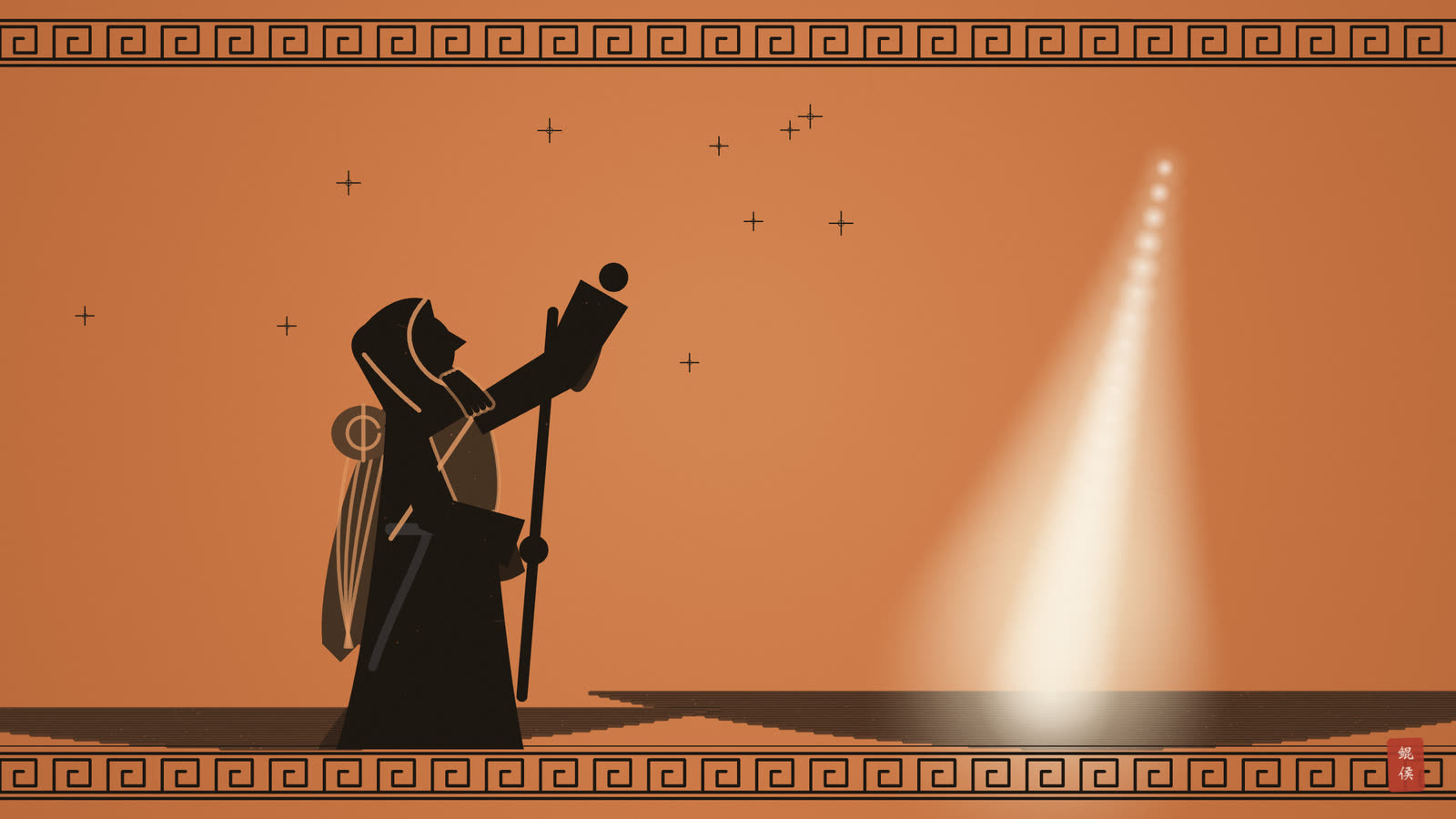
Night, in truth, is the being of a thing in the darkness of the earth's shadow. When the Sun, while hidden, draws near to us, what surrounds the shadow is lit by its light: this is the dawn in the east, a vanguard going before the Sun, and the twilight in the west, the rearguard of its rays behind it. In the east, after the last part of the night, there rises an elongated whiteness, narrow at the top, called the false dawn, since it has no force in religious law; it is likened to the wolf's tail for its length, thinness and uprightness. It lasts for a while, and then the dawn follows it, lying across it and spread along the horizon; the rules of fasting and prayer depend on this. After it the horizon reddens, as the Sun draws near and its light shines on the turbid vapours close to the earth, and the rising follows. At its setting the state of things is the reverse of this order: the horizon remains red after sunset, then the redness disappears and the whiteness remains, which is the counterpart of the dawn; by it and by the redness the times of the two evening prayers are determined. When this transverse whiteness has disappeared, the elongated upright one, the counterpart of the false dawn, remains for part of the night. The Indians call the dawn and the twilight in their language sandhi, and count them as belonging neither to the night nor to the daytime; and some of them recognize no interval between the two, and make sandhi the two moments at which the centre of the Sun is on the horizon.
翻译点开
§132. What are the day, the daytime and the night?
第一百三十二问 何谓日、昼、夜?
The day is the period between the Sun's leaving the half of a great circle fixed in position, by the first motion, and its return to that same half, which is upon the completion of the revolution; the most evident of these circles are the horizon and the meridian. The daytime is the period during which the Sun is visible above the earth, and the night the period during which it is hidden beneath the earth. The name 'day' is sometimes applied to the daytime; therefore, when the first sense is intended, one says for precision 'the day with its night'. There is no star or point in the orb that does not have its day, daytime and night, but these are always attributed to it when mentioned; when they are mentioned without qualification, they are those of the Sun.
日是太阳因第一运动离开某个位置固定的大圆的一半、再回到同一半的那段时间,这时旋转正好完成一周;这些圆中最明显的是地平与子午圈。昼是太阳在地上可见的那段时间,夜是它隐没在地下的那段时间。“日”这个名称有时也用来指昼;所以当要表达第一种意思时,为求精确,就说“连同其夜的日”。天上没有哪颗星、哪一点没有它自己的日、昼和夜,但提到时总要把它们归属于那颗星或那一点;不加限定而提到时,指的就是太阳的。
§133. What are the dawn and the twilight?
第一百三十三问 何谓晨光与暮光?
Night, in truth, is the being of a thing in the darkness of the earth's shadow. When the Sun, while hidden, draws near to us, what surrounds the shadow is lit by its light: this is the dawn in the east, a vanguard going before the Sun, and the twilight in the west, the rearguard of its rays behind it. In the east, after the last part of the night, there rises an elongated whiteness, narrow at the top, called the false dawn, since it has no force in religious law; it is likened to the wolf's tail for its length, thinness and uprightness. It lasts for a while, and then the dawn follows it, lying across it and spread along the horizon; the rules of fasting and prayer depend on this. After it the horizon reddens, as the Sun draws near and its light shines on the turbid vapours close to the earth, and the rising follows. At its setting the state of things is the reverse of this order: the horizon remains red after sunset, then the redness disappears and the whiteness remains, which is the counterpart of the dawn; by it and by the redness the times of the two evening prayers are determined. When this transverse whiteness has disappeared, the elongated upright one, the counterpart of the false dawn, remains for part of the night. The Indians call the dawn and the twilight in their language sandhi, and count them as belonging neither to the night nor to the daytime; and some of them recognize no interval between the two, and make sandhi the two moments at which the centre of the Sun is on the horizon.
夜其实就是一物处在地影的黑暗之中。当隐没的太阳接近我们时,地影周围的部分被它的光照亮:在东方,这就是晨光,是走在太阳前面的先锋;在西方就是暮光,是它的光线在它后面的后卫。在东方,夜的最后一段之后,升起一道上窄的长条白光,称为假晨光,因为它在教法上没有效力;因为它又长又细又直立,人们把它比作狼尾。它持续一段时间,然后晨光跟着出现,横卧在它上面,沿地平铺开;斋戒与礼拜的规定以此为准。此后地平变红,因为太阳接近了,它的光照在贴近地面的浑浊水汽上,然后日出随之而来。日落时,情形的次序与此相反:日落后地平仍红,然后红色消失,白色留下,它与晨光相对应;由它和那红色,定出两次晚间礼拜的时间。这道横的白光消失后,那道直立的长条白光——与假晨光相对应——还会在夜里留存一段时间。印度人用他们的语言称晨光与暮光为“散提”,认为它们既不属于夜,也不属于昼;他们中有些人不承认两者之间有任何间隔,而把“散提”当作太阳中心在地平上的两个时刻。
大意与图解点开
🔎 大意:日是太阳随第一运动转一周的时间,昼是日在地上、夜是日在地下,夜即处于地影中;日出前先有假晨光、晨光、红光,日落后相反。
📖 术语
| 术语 | 英文原词 | 意思 |
|---|---|---|
| 连同其夜的日 | the day with its night | 一整天 |
| 地影 | the earth's shadow | 夜即处于其中 |
| 假晨光 | the false dawn | 直立的长条白光 |
| 暮光 | the twilight | 日落后的余光 |
| 散提 | sandhi | 印度:晨昏之交 |
🧭 图解与讲解
第一百三十二问把三个常被混用的词分清(表一):“日”是太阳随第一运动转一整周的时间,从地平或子午圈的某一半出发、再回到同一半;“昼”是太阳在地上的时间;“夜”是太阳在地下的时间。日常说“日”常指白天,所以要表达一整天时,比鲁尼说要说“连同其夜的日”。他还提醒:每颗星都有自己的昼与夜,即它在地平上与地平下的时间,只是不加说明时指太阳。
| 名称 | 定义 | 备注 |
|---|---|---|
| 日 | 太阳随第一运动离开地平或子午圈的某一半,再回到同一半 | 一整周;为求精确称“连同其夜的日” |
| 昼 | 太阳在地上可见的时间 | “日”有时也指昼 |
| 夜 | 太阳隐没在地下的时间 | 其实就是处在地影之中 |
| 他星的日、昼、夜 | 天上每一点都有 | 提到时须注明是哪颗星;不注明即指太阳 |
〔图〕晨与昏次序相反:假晨光、晨光、红光、日出,日落后倒过来
第一百三十三问讲晨昏之光(图二)。比鲁尼先给夜下了一个物理的定义:夜就是处在地影之中。太阳在地平下接近时,地影四周先被照亮。黎明前东方先升起一道直立的长条白光,形如狼尾,称“假晨光”,教法上不算数;随后横铺地平的才是真晨光,斋戒与礼拜都以它为准;再后地平发红,太阳升起。黄昏的次序正好倒过来。
他又并列印度人的说法:晨光与暮光称为“散提”(sandhi),本义是“连接处”,不属昼也不属夜;也有人只把太阳中心正在地平上的两个时刻叫作散提。伊斯兰的礼拜时刻与印度的晨昏之交放在一起比较,是比鲁尼一贯的写法。占星里的“昼生盘、夜生盘”之分,正取决于太阳在地平上还是地平下。
📖 术语
| 术语 | 英文原词 | 意思 |
|---|---|---|
| 连同其夜的日 | the day with its night | 一整天 |
| 地影 | the earth's shadow | 夜即处于其中 |
| 假晨光 | the false dawn | 直立的长条白光 |
| 暮光 | the twilight | 日落后的余光 |
| 散提 | sandhi | 印度:晨昏之交 |
🧭 图解与讲解
第一百三十二问把三个常被混用的词分清(表一):“日”是太阳随第一运动转一整周的时间,从地平或子午圈的某一半出发、再回到同一半;“昼”是太阳在地上的时间;“夜”是太阳在地下的时间。日常说“日”常指白天,所以要表达一整天时,比鲁尼说要说“连同其夜的日”。他还提醒:每颗星都有自己的昼与夜,即它在地平上与地平下的时间,只是不加说明时指太阳。
| 名称 | 定义 | 备注 |
|---|---|---|
| 日 | 太阳随第一运动离开地平或子午圈的某一半,再回到同一半 | 一整周;为求精确称“连同其夜的日” |
| 昼 | 太阳在地上可见的时间 | “日”有时也指昼 |
| 夜 | 太阳隐没在地下的时间 | 其实就是处在地影之中 |
| 他星的日、昼、夜 | 天上每一点都有 | 提到时须注明是哪颗星;不注明即指太阳 |
第一百三十三问讲晨昏之光(图二)。比鲁尼先给夜下了一个物理的定义:夜就是处在地影之中。太阳在地平下接近时,地影四周先被照亮。黎明前东方先升起一道直立的长条白光,形如狼尾,称“假晨光”,教法上不算数;随后横铺地平的才是真晨光,斋戒与礼拜都以它为准;再后地平发红,太阳升起。黄昏的次序正好倒过来。
他又并列印度人的说法:晨光与暮光称为“散提”(sandhi),本义是“连接处”,不属昼也不属夜;也有人只把太阳中心正在地平上的两个时刻叫作散提。伊斯兰的礼拜时刻与印度的晨昏之交放在一起比较,是比鲁尼一贯的写法。占星里的“昼生盘、夜生盘”之分,正取决于太阳在地平上还是地平下。
§134. What is the beginning of the day, the daytime and the night?
The day may be begun from any moment one wishes, but the Sun's arrival at the horizon and at the meridian is evident, so these are the most fitting points from which to open the day with its night. The astronomers prefer the meridian to the horizon, because it is easier to determine in some of their operations: some of them take the half of this circle that belongs to the daytime, and some its other half, which belongs to the night, and few of them begin the day at the horizon. Those other than the astronomers take the horizon for it, because rising from it and setting in it are more evident to the eye than the meridian. Of these, those who put the night before the daytime, namely the People of the Book and the Muslims, begin the day at sunset, and the other communities begin it at sunrise, because they put the daytime before the night. There is no disagreement among them that the beginning of the night is sunset. The beginning of the daytime is by nature sunrise, and all nations other than the Muslims agree on it; but the jurists, in the branches of the law, begin it at daybreak, following the custom of the People of the Book in this time and their usage in it; and in the matter of fasting its obligation is suspended upon it [text uncertain]. With us the duration of the fast is the whole daytime together with a portion of the night joined to its beginning and bounded at its start by the dawn.
翻译点开
§134. What is the beginning of the day, the daytime and the night?
第一百三十四问 日、昼、夜从何时开始?
The day may be begun from any moment one wishes, but the Sun's arrival at the horizon and at the meridian is evident, so these are the most fitting points from which to open the day with its night. The astronomers prefer the meridian to the horizon, because it is easier to determine in some of their operations: some of them take the half of this circle that belongs to the daytime, and some its other half, which belongs to the night, and few of them begin the day at the horizon. Those other than the astronomers take the horizon for it, because rising from it and setting in it are more evident to the eye than the meridian. Of these, those who put the night before the daytime, namely the People of the Book and the Muslims, begin the day at sunset, and the other communities begin it at sunrise, because they put the daytime before the night. There is no disagreement among them that the beginning of the night is sunset. The beginning of the daytime is by nature sunrise, and all nations other than the Muslims agree on it; but the jurists, in the branches of the law, begin it at daybreak, following the custom of the People of the Book in this time and their usage in it; and in the matter of fasting its obligation is suspended upon it [text uncertain]. With us the duration of the fast is the whole daytime together with a portion of the night joined to its beginning and bounded at its start by the dawn.
日可以从任何你想要的时刻算起,但太阳到达地平与到达子午圈是明显的,所以这两处最适合作为开始“连同其夜的日”的起点。天文家宁取子午圈而不取地平,因为在他们的某些运算中它更容易确定:他们有的取这个圆属于昼的那一半,有的取它属于夜的另一半,很少有人从地平开始算日。天文家以外的人则取地平,因为从它升起、在它落下,比子午圈更容易为眼睛所见。他们当中,把夜放在昼前面的,即有经之人与穆斯林,从日落开始算日;其他各族则从日出开始,因为他们把昼放在夜前面。他们之间对夜始于日落并无分歧。昼的开始按其本性是日出,穆斯林以外的各民族都同意这一点;但教法学家在教法的细则里把昼的开始定在破晓,在这一时刻上沿袭有经之人的习惯和他们的用法;在斋戒一事上,斋戒的义务也以它为准〔原文疑有讹误〕。在我们这里,斋戒的时长是整个昼,再加上连在它开头、以晨光为起点的那一段夜。
大意与图解点开
🔎 大意:一日可从任一时刻算起,但以地平、子午圈最便:天文家取子午圈,有经之人与穆斯林自日落起,他族自日出起;教法以破晓为昼之始。
📖 术语
| 术语 | 英文原词 | 意思 |
|---|---|---|
| 天文家 | the astronomers | 取子午圈起算 |
| 有经之人 | the People of the Book | 犹太人与基督徒 |
| 教法学家 | the jurists | 以破晓为昼之始 |
| 破晓 | daybreak | 晨光初现 |
🧭 图解与讲解
一天从什么时候算起,本是约定(表一)。比鲁尼说最自然的起点是太阳到地平或到子午圈的时刻。天文家多取子午圈,因为运算中容易确定,其中有的从正午起算,有的从子夜起算;一般人则取地平,因为日出日落肉眼易见。托勒密的天文表就是从正午起算日子的。
| 谁 | 一日从何处起算 | 理由 |
|---|---|---|
| 天文家(多数) | 子午圈:有的取正午,有的取子夜 | 运算中更容易确定 |
| 天文家(少数) | 地平 | — |
| 有经之人与穆斯林 | 日落 | 把夜放在昼前面 |
| 其他各族 | 日出 | 把昼放在夜前面 |
| 教法学家(论昼) | 破晓 | 沿袭有经之人的用法;斋戒以此为准 |
〔图〕斋戒的时长:整个昼,再加上昼前以晨光为起点的一段夜
取地平的人又分两派:把夜放在昼前面的有经之人与穆斯林,一天从日落开始;其他各民族把昼放在夜前面,一天从日出开始。各家都同意夜始于日落。至于昼的开始,本来是日出,但教法学家把它定在破晓,所以斋戒的时长是整个白昼再加上黎明前的一段(图二)。这一句抄本文字不全,英译加了存疑标记。
这个问题对占星很实际:推算本命盘、择日、查行星表时,必须知道表中的“日”从哪一刻算起,否则会差出半天。下一章再讲时辰的两种算法,以及赤道、黄道等天球上的大圆。
📖 术语
| 术语 | 英文原词 | 意思 |
|---|---|---|
| 天文家 | the astronomers | 取子午圈起算 |
| 有经之人 | the People of the Book | 犹太人与基督徒 |
| 教法学家 | the jurists | 以破晓为昼之始 |
| 破晓 | daybreak | 晨光初现 |
🧭 图解与讲解
一天从什么时候算起,本是约定(表一)。比鲁尼说最自然的起点是太阳到地平或到子午圈的时刻。天文家多取子午圈,因为运算中容易确定,其中有的从正午起算,有的从子夜起算;一般人则取地平,因为日出日落肉眼易见。托勒密的天文表就是从正午起算日子的。
| 谁 | 一日从何处起算 | 理由 |
|---|---|---|
| 天文家(多数) | 子午圈:有的取正午,有的取子夜 | 运算中更容易确定 |
| 天文家(少数) | 地平 | — |
| 有经之人与穆斯林 | 日落 | 把夜放在昼前面 |
| 其他各族 | 日出 | 把昼放在夜前面 |
| 教法学家(论昼) | 破晓 | 沿袭有经之人的用法;斋戒以此为准 |
取地平的人又分两派:把夜放在昼前面的有经之人与穆斯林,一天从日落开始;其他各民族把昼放在夜前面,一天从日出开始。各家都同意夜始于日落。至于昼的开始,本来是日出,但教法学家把它定在破晓,所以斋戒的时长是整个白昼再加上黎明前的一段(图二)。这一句抄本文字不全,英译加了存疑标记。
这个问题对占星很实际:推算本命盘、择日、查行星表时,必须知道表中的“日”从哪一刻算起,否则会差出半天。下一章再讲时辰的两种算法,以及赤道、黄道等天球上的大圆。
原文为公有领域古籍;翻译、印象画与图文解读由 AI 辅助生成,鲲侯审校。