卷三·第 120–127 问 诸天层层与两种运动
天文卷开篇:天是什么、几重,第九重天之争,月下四元素成球,恒星与行星,以及东升西落与逆向东行两种运动。
BOOK III. ASTRONOMY
§120. What is the orb?
It is a spherical body moving in its place, containing within it things that do not by their nature move as it moves; and we are at its centre. It is called falak ('orb') because of its roundness and its motion, likening it to the whorl (falka) of a spindle. Among the philosophers its name is ether.
翻译点开
BOOK III. ASTRONOMY
卷三 天文
§120. What is the orb?
第一百二十问 何谓“天”?
It is a spherical body moving in its place, containing within it things that do not by their nature move as it moves; and we are at its centre. It is called falak ('orb') because of its roundness and its motion, likening it to the whorl (falka) of a spindle. Among the philosophers its name is ether.
它是一个在自己的位置上运动的球形物体,里面包含着一些按其本性不随它一同运动的东西;而我们就在它的中心。它被称为“法拉克”(天),是因为它圆而且转动,人们把它比作纺锤上的纺轮(法勒卡)。在哲学家那里,它的名字是以太。
大意与图解点开
🔎 大意:天是在原位转动的球体,内含本性不随它转的东西,我们居其中心;名法拉克,取纺轮之圆转,哲学家称之为以太。
📖 术语
| 术语 | 英文原词 | 意思 |
|---|---|---|
| 天 | the orb (falak) | 在原位转动的球体 |
| 纺轮 | whorl (falka) | 纺锤上的小圆轮 |
| 以太 | ether | 哲学家对天的称呼 |
🧭 图解与讲解
卷三天文由此开始。比鲁尼开宗明义:天(falak)是一个在原位转动的球体,我们就在它的中心。“在自己的位置上运动”是说它只转不移,像轮子绕轴转而不离开原处;“里面包含着本性不随它运动的东西”,指的是月亮天以下的四元素,下文第一百二十四问细讲。
〔图〕“天”这个名字取自纺轮的圆与转:在原位转动,我们居其中心
| 要点 | 原文所说 | 用意 |
|---|---|---|
| 形状 | 球形物体 | 后面一切圆、极、轴都在这个球上 |
| 运动 | 在自己的位置上运动 | 只转不移,所以中心不变 |
| 内容 | 包含本性不随它运动的东西 | 月下的四元素,见第一百二十四问 |
| 我们 | 就在它的中心 | 地居天心,是一切观测的立足点 |
他解释名字的来历:阿拉伯语 falak 与纺锤上的纺轮 falka 同出一源,取其圆而转动(图一)。又说哲学家称它为“以太”,这是希腊自然哲学的说法:天由不同于四元素的第五种物质构成,只做圆周运动。比鲁尼一句话里并列了阿拉伯语的词源与希腊哲学的名称。
对学占星的人来说,这一问定下了全部天文与占星的视角:地在中心,天绕地转。上升、中天、宫位,都是从地心(实际上是从观测者所在之地)看出去的天球上的位置。卷一几何讲过的球、大圆、极、轴,从这里起都要落到天上。
📖 术语
| 术语 | 英文原词 | 意思 |
|---|---|---|
| 天 | the orb (falak) | 在原位转动的球体 |
| 纺轮 | whorl (falka) | 纺锤上的小圆轮 |
| 以太 | ether | 哲学家对天的称呼 |
🧭 图解与讲解
卷三天文由此开始。比鲁尼开宗明义:天(falak)是一个在原位转动的球体,我们就在它的中心。“在自己的位置上运动”是说它只转不移,像轮子绕轴转而不离开原处;“里面包含着本性不随它运动的东西”,指的是月亮天以下的四元素,下文第一百二十四问细讲。
| 要点 | 原文所说 | 用意 |
|---|---|---|
| 形状 | 球形物体 | 后面一切圆、极、轴都在这个球上 |
| 运动 | 在自己的位置上运动 | 只转不移,所以中心不变 |
| 内容 | 包含本性不随它运动的东西 | 月下的四元素,见第一百二十四问 |
| 我们 | 就在它的中心 | 地居天心,是一切观测的立足点 |
他解释名字的来历:阿拉伯语 falak 与纺锤上的纺轮 falka 同出一源,取其圆而转动(图一)。又说哲学家称它为“以太”,这是希腊自然哲学的说法:天由不同于四元素的第五种物质构成,只做圆周运动。比鲁尼一句话里并列了阿拉伯语的词源与希腊哲学的名称。
对学占星的人来说,这一问定下了全部天文与占星的视角:地在中心,天绕地转。上升、中天、宫位,都是从地心(实际上是从观测者所在之地)看出去的天球上的位置。卷一几何讲过的球、大圆、极、轴,从这里起都要落到天上。
§121. Is it one, or more?
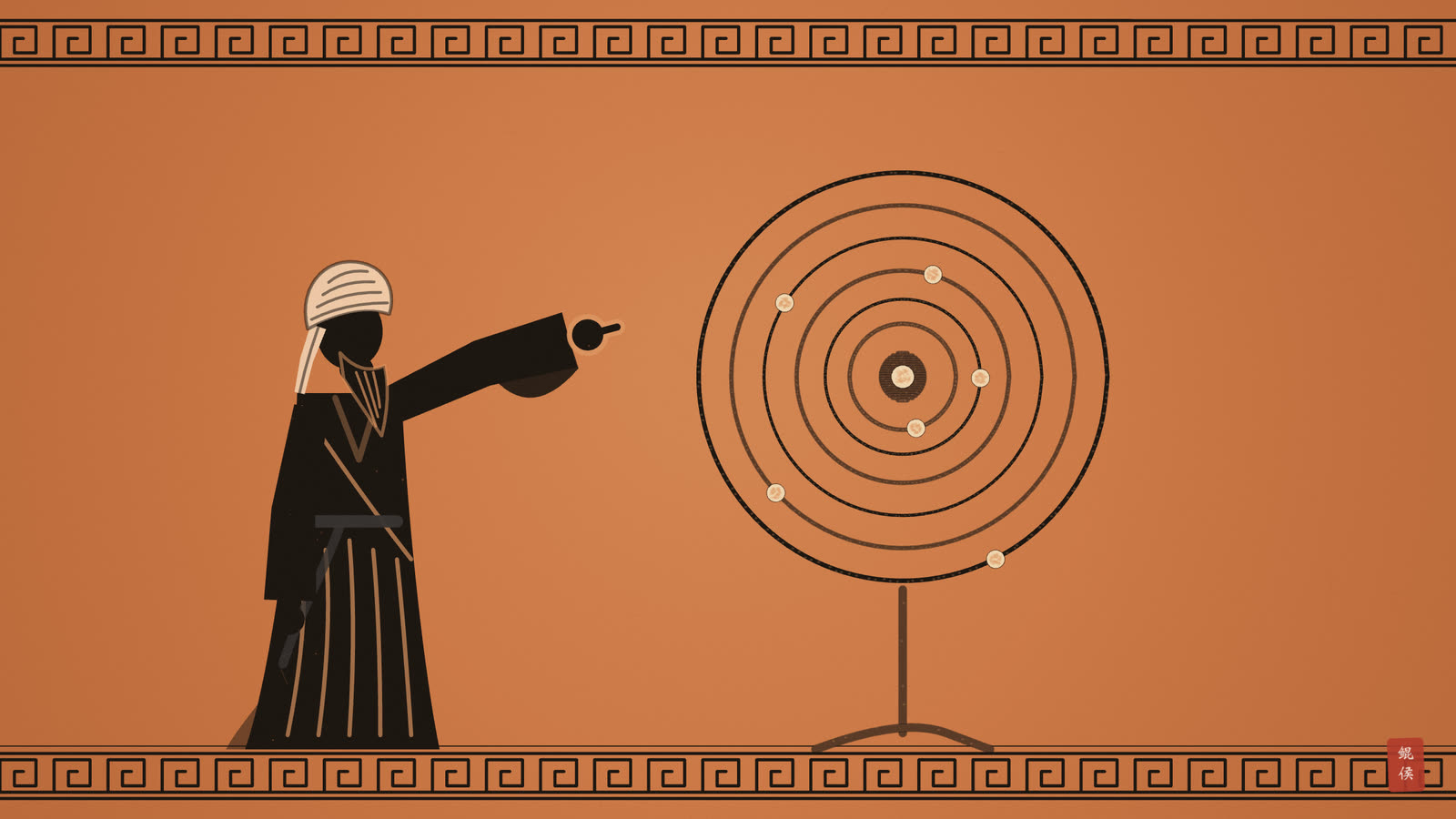
The orbs are 8 spheres enclosed one within another, like the layers of an onion. The smallest of them, nearest to the centre, is the one in which the Moon swims; she alone ascends and descends within its thickness. Each sphere has a certain thickness in depth, so that its planet may have through it two distances, a farthest and a nearest. The second sphere, above it, is Mercury's; the third Venus'; the fourth the Sun's; the fifth Mars'; the sixth Jupiter's; and the seventh Saturn's. These are the spheres of the 7 wandering planets. Above them is the sphere of the stars known as fixed. This is its figure:
§122. What lies beyond the eighth orb?
Some people hold that beyond it there is a ninth orb at rest, the one the Indians call in their language brahmāṇḍa, that is, the egg of Brahmā; for the first mover must not be in motion, and so they made it at rest. But it must not be a body either, as the demonstrations make plain, so calling it an orb is an error. Some of the ancients place beyond it an infinite void, and some an infinite body. According to Aristotle there is beyond the limit of bodies neither body nor void.
翻译点开
§121. Is it one, or more?
第一百二十一问 天是一个,还是不止一个?
The orbs are 8 spheres enclosed one within another, like the layers of an onion. The smallest of them, nearest to the centre, is the one in which the Moon swims; she alone ascends and descends within its thickness. Each sphere has a certain thickness in depth, so that its planet may have through it two distances, a farthest and a nearest. The second sphere, above it, is Mercury's; the third Venus'; the fourth the Sun's; the fifth Mars'; the sixth Jupiter's; and the seventh Saturn's. These are the spheres of the 7 wandering planets. Above them is the sphere of the stars known as fixed. This is its figure:
诸天是八个球层,一个包在另一个里面,像洋葱的层层。其中最小、离中心最近的,是月亮在其中游动的那一层;只有月亮在这一层的厚度之内升降。每一个球层在深度上都有一定的厚度,使其中的行星在它里面能有两种距离,一个最远,一个最近。在它上面的第二个球层属水星,第三个属金星,第四个属太阳,第五个属火星,第六个属木星,第七个属土星。这些是七颗游星的球层。在它们之上,是那些号称恒星的星的球层。它的图形如下:
§122. What lies beyond the eighth orb?
第一百二十二问 第八重天之外是什么?
Some people hold that beyond it there is a ninth orb at rest, the one the Indians call in their language brahmāṇḍa, that is, the egg of Brahmā; for the first mover must not be in motion, and so they made it at rest. But it must not be a body either, as the demonstrations make plain, so calling it an orb is an error. Some of the ancients place beyond it an infinite void, and some an infinite body. According to Aristotle there is beyond the limit of bodies neither body nor void.
有些人认为它外面还有一个静止的第九重天,就是印度人用他们的语言称为“婆罗摩安荼”、意思是梵天之卵的那个;因为第一推动者不应当处于运动之中,所以他们让它静止。但它也不应当是物体,这一点由证明可以明白,所以称它为天是错误的。古人中有些人在它外面安放了无限的虚空,有些人安放了无限的物体。依亚里士多德之说,在诸物体的界限之外,既没有物体,也没有虚空。
大意与图解点开
🔎 大意:天有八层如洋葱相套:月、水、金、日、火、木、土,上为恒星。其外有人设静止的梵卵,亚里士多德说既无物体也无虚空。
📖 术语
| 术语 | 英文原词 | 意思 |
|---|---|---|
| 球层 | sphere | 有厚度的一层天 |
| 最远、最近 | farthest, nearest | 行星在层内的两种距离 |
| 第九重天 | the ninth orb | 恒星天之外的一层 |
| 梵卵 | brahmāṇḍa | 印度人的宇宙之卵 |
| 第一推动者 | the first mover | 推动诸天者 |
🧭 图解与讲解
第一百二十一问给出诸天的次序(图一,据抄本图重画):最内是月亮,往外依次是水星、金星、太阳、火星、木星、土星,再外是恒星,共八层,“像洋葱的层层”。这是托勒密以来通行的次序,也就是占星里“迦勒底次序”的由来:由远而近,土、木、火、日、金、水、月,行星时与一周七日的星期名都依这个次序推出。
〔图〕诸天像洋葱一样层层相套:月亮最近,其上水、金、日、火、木、土,再上是恒星
| 持论者 | 第八重天之外 | 比鲁尼的评断 |
|---|---|---|
| 有些人;印度人 | 静止的第九重天(梵卵) | 第一推动者固应不动,但也不应是物体,称之为“天”是错的 |
| 古人中的一派 | 无限的虚空 | 只列其说 |
| 古人中的另一派 | 无限的物体 | 只列其说 |
| 亚里士多德 | 既无物体,也无虚空 | 置于最后,作结论 |
比鲁尼强调每一层都有厚度,行星在层内可以离地或远或近。这是为下文的本轮、偏心圆预留地步:行星在自己的球层里时近时远,所以亮度、速度都会变化。月亮“只有她在本层厚度之内升降”,指月亮离地的远近变化最为明显。
第一百二十二问讨论恒星天之外有什么(表二)。有人主张有一个静止的第九重天,印度人称之为“梵卵”(brahmāṇḍa);理由是第一推动者自身不能动。比鲁尼同意第一推动者不动,却指出它也不能是物体,所以叫它“天”是错的。他又列出古人的“无限虚空”“无限物体”两说,最后以亚里士多德“物体界限之外,既无物体也无虚空”作结。一问之中并列印度、希腊各家,正是本书的特色。
📖 术语
| 术语 | 英文原词 | 意思 |
|---|---|---|
| 球层 | sphere | 有厚度的一层天 |
| 最远、最近 | farthest, nearest | 行星在层内的两种距离 |
| 第九重天 | the ninth orb | 恒星天之外的一层 |
| 梵卵 | brahmāṇḍa | 印度人的宇宙之卵 |
| 第一推动者 | the first mover | 推动诸天者 |
🧭 图解与讲解
第一百二十一问给出诸天的次序(图一,据抄本图重画):最内是月亮,往外依次是水星、金星、太阳、火星、木星、土星,再外是恒星,共八层,“像洋葱的层层”。这是托勒密以来通行的次序,也就是占星里“迦勒底次序”的由来:由远而近,土、木、火、日、金、水、月,行星时与一周七日的星期名都依这个次序推出。
| 持论者 | 第八重天之外 | 比鲁尼的评断 |
|---|---|---|
| 有些人;印度人 | 静止的第九重天(梵卵) | 第一推动者固应不动,但也不应是物体,称之为“天”是错的 |
| 古人中的一派 | 无限的虚空 | 只列其说 |
| 古人中的另一派 | 无限的物体 | 只列其说 |
| 亚里士多德 | 既无物体,也无虚空 | 置于最后,作结论 |
比鲁尼强调每一层都有厚度,行星在层内可以离地或远或近。这是为下文的本轮、偏心圆预留地步:行星在自己的球层里时近时远,所以亮度、速度都会变化。月亮“只有她在本层厚度之内升降”,指月亮离地的远近变化最为明显。
第一百二十二问讨论恒星天之外有什么(表二)。有人主张有一个静止的第九重天,印度人称之为“梵卵”(brahmāṇḍa);理由是第一推动者自身不能动。比鲁尼同意第一推动者不动,却指出它也不能是物体,所以叫它“天”是错的。他又列出古人的“无限虚空”“无限物体”两说,最后以亚里士多德“物体界限之外,既无物体也无虚空”作结。一问之中并列印度、希腊各家,正是本书的特色。
§123. What is the sky?
In the language, 'sky' is whatever is above you and overshadows you, so that the name is applied, with qualification, to the clouds and to the roofs of houses. Without qualification, it is the raised roof of the world, which is the orb mentioned before. For this reason the Persians call it in their language āsmān, that is, 'like a millstone', on account of its circular motion.
§124. What is within the orb of the Moon?
The earth is at the centre, and the centre is in truth the bottom. The earth is round as a whole, and jagged in its parts, because of the mountains that project and the hollows that sink. This does not take it out of the spherical form when the senses take it in as a whole, for the sizes of the mountains, however lofty, are small in comparison with the whole earth. Do you not see that if grains like millet project from a sphere a cubit or two in diameter, and as many sink into it, that does not prevent our treating it, approximately, as round? Were it not for this jaggedness, the water would surround it on all sides and cover it, so that nothing of it would appear. For although water shares with earth in heaviness and in falling downward, there is a difference between them in this, by which water is lighter in comparison with earth. For that reason earth settles in water, and the sediment sinks to the bottom, whereas water does not enter the body of the earth itself, but flows into its gaps and mixes with the air there; and when water presses on the air that has entered those gaps, it sinks into them and the air comes out of them, just as rain falls from the clouds through the air. When parts of the earth's surface had risen up, the water drew off into the depths and became seas, and water and earth together became a single sphere, surrounded on all sides by air. Then the part of the air that touches the orb of the Moon is heated through the motion and the friction of the two bodies in contact, and so it is the fire surrounding the air, its thickness diminishing towards the two poles because the motion grows slower near them. This is its figure:
翻译点开
§123. What is the sky?
第一百二十三问 何谓天空?
In the language, 'sky' is whatever is above you and overshadows you, so that the name is applied, with qualification, to the clouds and to the roofs of houses. Without qualification, it is the raised roof of the world, which is the orb mentioned before. For this reason the Persians call it in their language āsmān, that is, 'like a millstone', on account of its circular motion.
在语言里,“天空”是在你上方、覆盖着你的任何东西,所以这个名称加上限定之后,也可以用于云和屋顶。不加限定时,它就是世界高高撑起的屋顶,也就是前面所说的天。因此波斯人在他们的语言里称它为“阿斯曼”,意思是“像磨盘一样”,因为它做圆周运动。
§124. What is within the orb of the Moon?
第一百二十四问 月亮天以内是什么?
The earth is at the centre, and the centre is in truth the bottom. The earth is round as a whole, and jagged in its parts, because of the mountains that project and the hollows that sink. This does not take it out of the spherical form when the senses take it in as a whole, for the sizes of the mountains, however lofty, are small in comparison with the whole earth. Do you not see that if grains like millet project from a sphere a cubit or two in diameter, and as many sink into it, that does not prevent our treating it, approximately, as round? Were it not for this jaggedness, the water would surround it on all sides and cover it, so that nothing of it would appear. For although water shares with earth in heaviness and in falling downward, there is a difference between them in this, by which water is lighter in comparison with earth. For that reason earth settles in water, and the sediment sinks to the bottom, whereas water does not enter the body of the earth itself, but flows into its gaps and mixes with the air there; and when water presses on the air that has entered those gaps, it sinks into them and the air comes out of them, just as rain falls from the clouds through the air. When parts of the earth's surface had risen up, the water drew off into the depths and became seas, and water and earth together became a single sphere, surrounded on all sides by air. Then the part of the air that touches the orb of the Moon is heated through the motion and the friction of the two bodies in contact, and so it is the fire surrounding the air, its thickness diminishing towards the two poles because the motion grows slower near them. This is its figure:
地居中心,而中心其实就是下方。地整体上是圆的,各部分则高低不平,因为有山峰突起、有洼地下陷。但从感官整体来看,这并不使它失去球形,因为群山无论多高,与整个大地相比都很小。你没看见吗?一个直径一两肘尺的球,若有小米那样的颗粒从它上面突起,又有同样多的陷进去,这并不妨碍我们把它大致当作圆的。若不是有这种高低不平,水就会从四面八方把地包围、淹没,使它一点也露不出来。因为水虽然与土同样有重量、同样向下落,但二者在这一点上有所不同:与土相比,水较轻。所以土会沉到水里,渣滓沉到底;而水不会进入土本身之中,只会流进它的缝隙,在那里与空气相混;当水压在进入那些缝隙的空气上时,水就沉入缝隙,空气则从中出来,正如雨从云中穿过空气落下一样。当地面的一些部分隆起之后,水就退到深处,成为海洋,水与土合成一个球,四面都被空气包围。然后,与月亮天相接的那部分空气,因两个相接物体的运动与摩擦而变热,于是成为包围着空气的火;它的厚度向两极逐渐减小,因为在两极附近运动变慢。它的图形如下:
大意与图解点开
🔎 大意:天空泛指上方之物,专指即天。月亮天内地居中心,大体为球;水退成海与地合球,外包气,贴近月亮天的气受热成火。
📖 术语
| 术语 | 英文原词 | 意思 |
|---|---|---|
| 天空 | the sky | 上方覆盖之物 |
| 阿斯曼 | āsmān | 波斯语:像磨盘 |
| 肘尺 | cubit | 长度单位 |
| 渣滓 | sediment | 沉到水底的土 |
🧭 图解与讲解
第一百二十三问区分“天空”与“天”:日常语言里,凡在头上覆盖的都可叫天空,加上限定可以指云、指屋顶;不加限定就是“世界高高撑起的屋顶”,即前面说的天。波斯人称天为 āsmān,比鲁尼解作“像磨盘一样”,取其旋转。又是阿拉伯语与波斯语的对照。
〔图〕月亮天以内是四元素:地居中心,水与地合成一球,外包气,再外贴月亮天处是火
〔图〕地与水为何合成一球:山谷突起,水退入低处成海
第一百二十四问讲月亮天以内的世界(图一,据抄本图重画)。地居中心,“中心其实就是下方”:重物都落向宇宙中心,所以地在正中。地面有山有谷,但与整个大地相比极小,好比一两肘尺的球上沾了些小米粒,仍可以当作圆球。这是在为下文用球面几何算天象作铺垫:地可以看作一个点或一个球。
接着他解释水为什么没有把地全淹没:土比水重,水只能流进土的缝隙;地面有的部分隆起,水便退到低处成为海,水土合成一球(图二)。外面包着气;贴着月亮天的那层气,因天的转动摩擦而变热成火,近两极处天转得慢,火层就薄。这是亚里士多德自然学的四元素层次,比鲁尼给了自己的物理解释。
四元素在占星里处处用得上:十二星座分属火、土、气、水四个三分,行星性质也以冷热干湿来说。比鲁尼在这里先把四元素放到宇宙的位置上,到卷八讲星座性质时,读者就知道这些名称的来历。
📖 术语
| 术语 | 英文原词 | 意思 |
|---|---|---|
| 天空 | the sky | 上方覆盖之物 |
| 阿斯曼 | āsmān | 波斯语:像磨盘 |
| 肘尺 | cubit | 长度单位 |
| 渣滓 | sediment | 沉到水底的土 |
🧭 图解与讲解
第一百二十三问区分“天空”与“天”:日常语言里,凡在头上覆盖的都可叫天空,加上限定可以指云、指屋顶;不加限定就是“世界高高撑起的屋顶”,即前面说的天。波斯人称天为 āsmān,比鲁尼解作“像磨盘一样”,取其旋转。又是阿拉伯语与波斯语的对照。
第一百二十四问讲月亮天以内的世界(图一,据抄本图重画)。地居中心,“中心其实就是下方”:重物都落向宇宙中心,所以地在正中。地面有山有谷,但与整个大地相比极小,好比一两肘尺的球上沾了些小米粒,仍可以当作圆球。这是在为下文用球面几何算天象作铺垫:地可以看作一个点或一个球。
接着他解释水为什么没有把地全淹没:土比水重,水只能流进土的缝隙;地面有的部分隆起,水便退到低处成为海,水土合成一球(图二)。外面包着气;贴着月亮天的那层气,因天的转动摩擦而变热成火,近两极处天转得慢,火层就薄。这是亚里士多德自然学的四元素层次,比鲁尼给了自己的物理解释。
四元素在占星里处处用得上:十二星座分属火、土、气、水四个三分,行星性质也以冷热干湿来说。比鲁尼在这里先把四元素放到宇宙的位置上,到卷八讲星座性质时,读者就知道这些名称的来历。
§125. What are the fixed stars and the planets?
The fixed stars are those spread through the whole sky, their distances fixed for ever, none approaching another or moving away from it. In Persian they are called biyābānī ('of the desert'), because one finds the way in the wastes by them. The planets are the 7, each of which has a sphere of its own. Each of them never ceases approaching the other planets and the fixed stars and moving away from them, in coming into line with them and facing them; that is because of its motion and the speed of its course.
翻译点开
§125. What are the fixed stars and the planets?
第一百二十五问 何谓恒星与行星?
The fixed stars are those spread through the whole sky, their distances fixed for ever, none approaching another or moving away from it. In Persian they are called biyābānī ('of the desert'), because one finds the way in the wastes by them. The planets are the 7, each of which has a sphere of its own. Each of them never ceases approaching the other planets and the fixed stars and moving away from them, in coming into line with them and facing them; that is because of its motion and the speed of its course.
恒星是遍布整个天空的星,它们之间的距离永远固定,没有一颗接近另一颗或离开它。在波斯语里它们被称为“比亚巴尼”,意思是“荒野的”,因为人们在荒野中靠它们找路。行星就是那七颗,每一颗都有自己的一个球层。它们每一颗都不断地接近其他行星和恒星,又离开它们,与它们排成一线、与它们相对;这是由于它的运动和它运行的速度。
大意与图解点开
🔎 大意:恒星遍布全天,彼此距离永远不变,波斯人称为“荒野的”;行星七颗,各有球层,因运行而不断与他星相近相离。
📖 术语
| 术语 | 英文原词 | 意思 |
|---|---|---|
| 恒星 | the fixed stars | 彼此距离不变的星 |
| 比亚巴尼 | biyābānī ('of the desert') | 波斯语:荒野的 |
| 行星 | the planets | 七颗游走之星 |
| 排成一线 | coming into line | 即会合 |
| 相对 | facing | 遥遥相望 |
🧭 图解与讲解
恒星与行星的分别,在比鲁尼看来就在“彼此距离变不变”(表一)。恒星满天,彼此的距离永远不变,所以叫恒星;波斯人叫它们“比亚巴尼”,意为“荒野的”,因为在没有路标的荒野里,人靠它们辨别方向。行星只有七颗:日、月、水、金、火、木、土,各在自己的球层里运行。
| 恒星 | 行星 | |
|---|---|---|
| 数目 | 遍布全天 | 七颗 |
| 彼此距离 | 永远固定,互不接近也不离开 | 不断与他星接近又离开 |
| 所在 | 共在第八重天一个球层 | 各有自己的一个球层 |
| 别名 | 波斯语“比亚巴尼”(荒野的) | “游走的” |
| 用处 | 在荒野里认路 | 与他星成线、相对,见于占星 |
〔图〕恒星彼此不动,行星不断与他星相近相离:这正是相位之学的起点
行星“不断接近其他行星和恒星又离开它们,与它们排成一线、与它们相对”(图二)。这一句已经埋下了占星的核心:两星排成一线就是会合,遥遥相对就是对冲,其间还有三分、四分、六分。卷八讲相位时,就是从这种相近相离讲起;因为恒星彼此不动,相位只能由行星的运动造成。
📖 术语
| 术语 | 英文原词 | 意思 |
|---|---|---|
| 恒星 | the fixed stars | 彼此距离不变的星 |
| 比亚巴尼 | biyābānī ('of the desert') | 波斯语:荒野的 |
| 行星 | the planets | 七颗游走之星 |
| 排成一线 | coming into line | 即会合 |
| 相对 | facing | 遥遥相望 |
🧭 图解与讲解
恒星与行星的分别,在比鲁尼看来就在“彼此距离变不变”(表一)。恒星满天,彼此的距离永远不变,所以叫恒星;波斯人叫它们“比亚巴尼”,意为“荒野的”,因为在没有路标的荒野里,人靠它们辨别方向。行星只有七颗:日、月、水、金、火、木、土,各在自己的球层里运行。
| 恒星 | 行星 | |
|---|---|---|
| 数目 | 遍布全天 | 七颗 |
| 彼此距离 | 永远固定,互不接近也不离开 | 不断与他星接近又离开 |
| 所在 | 共在第八重天一个球层 | 各有自己的一个球层 |
| 别名 | 波斯语“比亚巴尼”(荒野的) | “游走的” |
| 用处 | 在荒野里认路 | 与他星成线、相对,见于占星 |
行星“不断接近其他行星和恒星又离开它们,与它们排成一线、与它们相对”(图二)。这一句已经埋下了占星的核心:两星排成一线就是会合,遥遥相对就是对冲,其间还有三分、四分、六分。卷八讲相位时,就是从这种相近相离讲起;因为恒星彼此不动,相位只能由行星的运动造成。
§126. What is the first, westward motion?
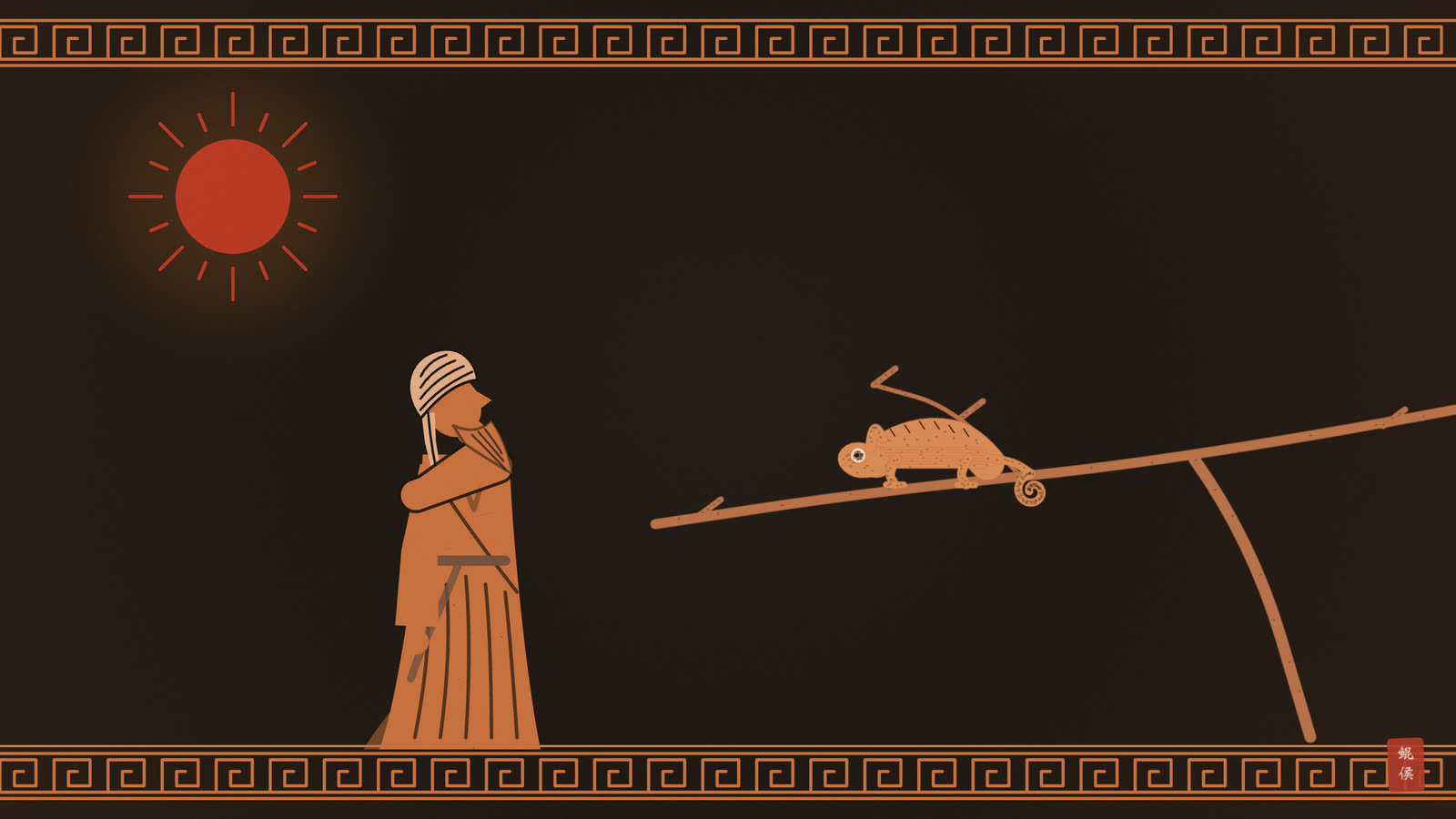
It is the motion by which each of the Sun, the Moon and the stars is seen rising, ascending until it reaches its highest point, then declining from it little by little, then setting, and after that returning to its place of rising. In the luminous bodies this motion is perceptible, and is hidden from no animal as it goes about seeking its livelihood, let alone from man. Some animals move in accordance with it, such as the chameleon, which faces the Sun however it turns; and so do the leaves of plants, most clearly the leaves of the mung bean and the lily. This motion is called the first because it is the first of the heavenly motions to be perceived, and westward because the furthest point that what is moved by it can be seen to reach is its setting.
§127. What is the second, eastward motion?
Each of the stars moves towards the quarter from which the rising takes place. In all the fixed stars this motion is small in amount, and it is because the distances between them stay fixed that they were called fixed. In the planets it is greater and more evident, and moreover irregular; and in the Moon, because of her speed, it is much plainer still. For from her first appearance as a crescent in the west she increases her distance each night from the Sun and from the stars that lie between her and the Sun, and draws nearer to the stars that lie between the Sun and her on the other side; and when she meets one of them she hides it on the eastern side and reveals it on the western. This motion, which belongs to all of them, is opposite to the first in direction, but does not face it squarely; it inclines a little. It is called the second because its amount varies in each of the stars, whereas the first is uniform for all; it overpowers them and carries them round while they move contrary to it, as the passengers of a ship move in the direction of the water's flow while they walk within it against the flow; and uniformity has over variation the merit of precedence. Nor is this motion equally evident: to recognise it one needs reasoning drawn from sense perception. It is called eastward because what is moved by it heads towards the quarter from which the rising takes place.
翻译点开
§126. What is the first, westward motion?
第一百二十六问 何谓第一运动,即西向运动?
It is the motion by which each of the Sun, the Moon and the stars is seen rising, ascending until it reaches its highest point, then declining from it little by little, then setting, and after that returning to its place of rising. In the luminous bodies this motion is perceptible, and is hidden from no animal as it goes about seeking its livelihood, let alone from man. Some animals move in accordance with it, such as the chameleon, which faces the Sun however it turns; and so do the leaves of plants, most clearly the leaves of the mung bean and the lily. This motion is called the first because it is the first of the heavenly motions to be perceived, and westward because the furthest point that what is moved by it can be seen to reach is its setting.
这就是使太阳、月亮和群星各自被看到升起、上升到最高处、然后从那里一点一点下降、再落下、此后又回到升起之处的那种运动。在发光的天体上,这种运动是感官可以察觉的,任何动物在四处觅食时都不会看不到它,更不必说人了。有些动物顺着它而动,例如变色龙,太阳无论转到哪里,它都面向太阳;植物的叶子也是这样,最明显的是绿豆与百合的叶子。这种运动被称为第一运动,因为它是天上诸运动中最先被察觉的;被称为西向运动,是因为被它带动的东西所能被看到到达的最远之处,就是它的落下。
§127. What is the second, eastward motion?
第一百二十七问 何谓第二运动,即东向运动?
Each of the stars moves towards the quarter from which the rising takes place. In all the fixed stars this motion is small in amount, and it is because the distances between them stay fixed that they were called fixed. In the planets it is greater and more evident, and moreover irregular; and in the Moon, because of her speed, it is much plainer still. For from her first appearance as a crescent in the west she increases her distance each night from the Sun and from the stars that lie between her and the Sun, and draws nearer to the stars that lie between the Sun and her on the other side; and when she meets one of them she hides it on the eastern side and reveals it on the western. This motion, which belongs to all of them, is opposite to the first in direction, but does not face it squarely; it inclines a little. It is called the second because its amount varies in each of the stars, whereas the first is uniform for all; it overpowers them and carries them round while they move contrary to it, as the passengers of a ship move in the direction of the water's flow while they walk within it against the flow; and uniformity has over variation the merit of precedence. Nor is this motion equally evident: to recognise it one needs reasoning drawn from sense perception. It is called eastward because what is moved by it heads towards the quarter from which the rising takes place.
每一颗星都向升起所在的那一方运动。在所有恒星中,这种运动的量都很小;正因为它们之间的距离保持固定,它们才被称为恒星。在行星中,这种运动较大、较明显,而且不均匀;在月亮,由于她走得快,就更加明显得多。因为她从第一次在西方以新月出现起,每一夜都更远离太阳,也更远离位于她与太阳之间的那些星,而更接近从另一侧位于太阳与她之间的那些星;当她遇到其中一颗时,就在东侧把它遮住,在西侧把它显露出来。这种为所有星所共有的运动,在方向上与第一运动相反,但并不正面相对,而是稍稍倾斜。它被称为第二运动,是因为它的量在每颗星上都不同,而第一运动对一切星都是均匀的;第一运动压倒它们,带着它们旋转,而它们则逆着它运动,正如船上的乘客随着水流的方向而行,同时又在船内逆着水流行走;而均匀比起变化,有占先的资格。这种运动也不是同样明显:要认出它,需要从感官知觉中引出推理。它被称为东向运动,是因为被它带动的东西朝着升起所在的那一方前进。
大意与图解点开
🔎 大意:第一运动使日月星辰东升西落,人兽草木皆可感知;第二运动是各星逆向东行,恒星极慢,月亮最显,方向与第一运动相反而略斜。
📖 术语
| 术语 | 英文原词 | 意思 |
|---|---|---|
| 第一运动 | the first motion | 东升西落的周日运动 |
| 西向 | westward | 所到最远处是西落 |
| 第二运动 | the second motion | 各星自身的东行 |
| 变色龙 | chameleon | 总面向太阳 |
| 不均匀 | irregular | 行星东行时快时慢 |
🧭 图解与讲解
第一百二十六问讲第一运动:日月星辰每天东升、上中天、西落、再回到东方(图一红箭头)。比鲁尼说这运动连动物都察觉得到:变色龙总面向太阳,绿豆与百合的叶子随日转动。叫“第一”,是因为它最先被察觉;叫“西向”,是因为被它带动的星最远只能看到落向西方。
〔图〕第一运动带着全天自东向西,一日一周;各星又以第二运动沿黄道缓缓东行,方向相反而略斜
| 第一运动(西向) | 第二运动(东向) | |
|---|---|---|
| 所见 | 升起、上升到最高、下降、落下、再回升起处 | 各星渐向东方移动 |
| 快慢 | 对一切星都均匀 | 恒星极小,行星较大且不均,月亮最显 |
| 怎样认出 | 感官可见,动物、植物都随之而动 | 要从观察中推理才能认出 |
| 为何称“第一”“第二” | 最先被察觉;均匀者占先 | 量各不同,位在其次 |
| 比喻 | 船随水流而下 | 乘客在船内逆流而行 |
第一百二十七问讲第二运动:每颗星又自西向东缓慢移动(图一绿箭头)。恒星的东行极小,所以彼此距离看似不变;行星较大而不均;月亮最明显。比鲁尼举了一个人人可以验证的例子:新月初见于西方后,一夜比一夜离太阳远;月亮掩星时,星总是从月亮东侧被遮住、从西侧重新露出,证明月亮在星间东行。
两种运动方向相反,“却不正面相对,而是稍稍倾斜”:第一运动沿赤道,第二运动沿黄道,两圈斜交。比鲁尼用船作比:船顺水而下是第一运动,乘客在船上逆流而行是第二运动,乘客的实际行程是两者之和(表二)。
这两种运动是全部占星技术的基础。第一运动决定上升点与中天:同一时刻不同地方、同一地方不同时刻,地平线上升起的星座不同,宫位就不同。第二运动决定行星在黄道上的位置:行星落在哪个星座、几度,彼此成何相位,都由它而来。下一章先讲第一运动所依的地平与子午。
📖 术语
| 术语 | 英文原词 | 意思 |
|---|---|---|
| 第一运动 | the first motion | 东升西落的周日运动 |
| 西向 | westward | 所到最远处是西落 |
| 第二运动 | the second motion | 各星自身的东行 |
| 变色龙 | chameleon | 总面向太阳 |
| 不均匀 | irregular | 行星东行时快时慢 |
🧭 图解与讲解
第一百二十六问讲第一运动:日月星辰每天东升、上中天、西落、再回到东方(图一红箭头)。比鲁尼说这运动连动物都察觉得到:变色龙总面向太阳,绿豆与百合的叶子随日转动。叫“第一”,是因为它最先被察觉;叫“西向”,是因为被它带动的星最远只能看到落向西方。
| 第一运动(西向) | 第二运动(东向) | |
|---|---|---|
| 所见 | 升起、上升到最高、下降、落下、再回升起处 | 各星渐向东方移动 |
| 快慢 | 对一切星都均匀 | 恒星极小,行星较大且不均,月亮最显 |
| 怎样认出 | 感官可见,动物、植物都随之而动 | 要从观察中推理才能认出 |
| 为何称“第一”“第二” | 最先被察觉;均匀者占先 | 量各不同,位在其次 |
| 比喻 | 船随水流而下 | 乘客在船内逆流而行 |
第一百二十七问讲第二运动:每颗星又自西向东缓慢移动(图一绿箭头)。恒星的东行极小,所以彼此距离看似不变;行星较大而不均;月亮最明显。比鲁尼举了一个人人可以验证的例子:新月初见于西方后,一夜比一夜离太阳远;月亮掩星时,星总是从月亮东侧被遮住、从西侧重新露出,证明月亮在星间东行。
两种运动方向相反,“却不正面相对,而是稍稍倾斜”:第一运动沿赤道,第二运动沿黄道,两圈斜交。比鲁尼用船作比:船顺水而下是第一运动,乘客在船上逆流而行是第二运动,乘客的实际行程是两者之和(表二)。
这两种运动是全部占星技术的基础。第一运动决定上升点与中天:同一时刻不同地方、同一地方不同时刻,地平线上升起的星座不同,宫位就不同。第二运动决定行星在黄道上的位置:行星落在哪个星座、几度,彼此成何相位,都由它而来。下一章先讲第一运动所依的地平与子午。
原文为公有领域古籍;翻译、印象画与图文解读由 AI 辅助生成,鲲侯审校。