第一部·星位数字的读法 第二至四则 上升差、半弧与时量
第二至四则:由赤纬与极高查上升差;九十度加减上升差得半昼弧、半夜弧;半弧六分之一为时量,昼夜时量合为三十度。
CANON II.
The Ascensional Difference.
In the first part of the ascensional difference, look for the Pole's elevation of the country, and in the first colume the declination of the place; which, if it be with the integral degrees, the ascensional difference required is placed in the common angle; but if the declination be with the degrees and minutes, then take the proportional part, as in Canon I.
If the given declination be 12, at the Pole's elevation 42°, the ascensional difference is placed in the common angle, 11° 2'; but if the declination be given 12° 25', the ascensional difference at declination 13, is 12; wherefore the difference between the former is 58', from which 24' is due, i. e. to be taken; in their room, 25' to be added, and the ascensional difference becomes 11° 26'.—Another way.—If you have already by you the tables of oblique ascension of the given place, and the right ascension, substract the less from the greater, and the remainder is the ascensional difference.
In like manner, if you have already the semi-diurnal or nocturnal arc, substract from the 90°, if it be less; if greater, substract therefrom the 90°, and the remainder is the ascensional difference.
翻译点开
CANON II.
第二则。
The Ascensional Difference.
上升差。
In the first part of the ascensional difference, look for the Pole's elevation of the country, and in the first colume the declination of the place; which, if it be with the integral degrees, the ascensional difference required is placed in the common angle; but if the declination be with the degrees and minutes, then take the proportional part, as in Canon I.
在上升差表的第一部分,找本地的极高,在第一栏找该处的赤纬;赤纬若是整度,所求的上升差就在共同的格中;但若赤纬带度和分,就取比例部分,如第一则。
If the given declination be 12, at the Pole's elevation 42°, the ascensional difference is placed in the common angle, 11° 2'; but if the declination be given 12° 25', the ascensional difference at declination 13, is 12; wherefore the difference between the former is 58', from which 24' is due, i. e. to be taken; in their room, 25' to be added, and the ascensional difference becomes 11° 26'.—Another way.—If you have already by you the tables of oblique ascension of the given place, and the right ascension, substract the less from the greater, and the remainder is the ascensional difference.
若给定的赤纬是十二度,极高四十二度,上升差在共同的格中,为十一度二分;但若给定的赤纬是十二度二十五分,赤纬十三度的上升差是十二度;因此两者之差是五十八分,其中应得二十四分,即要取的数;对着那二十五分,要加上去,上升差成为十一度二十六分。——另一法。——若手边已有给定地方的斜升表与赤经表,以大减小,余数就是上升差。
In like manner, if you have already the semi-diurnal or nocturnal arc, substract from the 90°, if it be less; if greater, substract therefrom the 90°, and the remainder is the ascensional difference.
同样,若手边已有半昼弧或半夜弧,它若小于九十度,就从九十度中减去它;若大于九十度,就从它减去九十度,余数就是上升差。
大意与图解点开
🔎 大意:上升差由极高与赤纬查表,带分的取比例部分;也可由赤经与斜升相减,或由半弧与九十度相减求得。
📖 术语
| 术语 | 英文原词 | 意思 |
|---|---|---|
| 上升差 | ascensional difference | 赤经与斜升之差 |
| 极高 | Pole's elevation | 天极高出地平的度数 |
| 上升差表 | table of ascensional difference | 由极高、赤纬查上升差 |
| 斜升 | oblique ascension | 某纬度下与星同升的赤道度 |
| 共同的格 | common angle | 行与栏相交之处 |
🧭 图解与讲解
第二则讲上升差(ascensional difference)。一颗星在赤道上的赤经,与它在本地地平上升起时同升的赤道度(斜升)并不相等,两者之差就是上升差。它取决于两个数:本地的极高(即纬度),与星的赤纬。极高越大、赤纬越大,上升差越大;在赤道上(极高为零)或星在天赤道上(赤纬为零),上升差都是零。
| 步骤 | 算什么 | 用哪个数 | 结果 |
|---|---|---|---|
| 一 | 极高 42°、赤纬 12°,查表 | 上升差表 | 11°2′ |
| 二 | 同栏查赤纬 13° | 上升差表 | 12°0′ |
| 三 | 两个上升差之差 | 12°0′ − 11°2′ | 58′ |
| 四 | 比例部分:60′ 得 58′,25′ 得多少 | 58′ × 25 ÷ 60 | 约 24′ |
| 五 | 上升差随赤纬增大,故加上 | 11°2′ + 24′ | 11°26′ |
〔图〕上升差有三种求法,结果相同
原书举例(表一):极高四十二度、赤纬十二度,表中上升差为十一度二分;赤纬十三度为十二度,相差五十八分;赤纬多出的二十五分按比例得二十四分,加上去,得十一度二十六分。这是第一则讲过的插值法的又一次应用。
普拉西德斯还给了两条捷径(图二):若已有赤经表与本地的斜升表,两数相减就是上升差;若已有半昼弧或半夜弧,它与九十度之差也是上升差。后一法的道理在第三则:半弧本来就是九十度加减上升差得来的。
📖 术语
| 术语 | 英文原词 | 意思 |
|---|---|---|
| 上升差 | ascensional difference | 赤经与斜升之差 |
| 极高 | Pole's elevation | 天极高出地平的度数 |
| 上升差表 | table of ascensional difference | 由极高、赤纬查上升差 |
| 斜升 | oblique ascension | 某纬度下与星同升的赤道度 |
| 共同的格 | common angle | 行与栏相交之处 |
🧭 图解与讲解
第二则讲上升差(ascensional difference)。一颗星在赤道上的赤经,与它在本地地平上升起时同升的赤道度(斜升)并不相等,两者之差就是上升差。它取决于两个数:本地的极高(即纬度),与星的赤纬。极高越大、赤纬越大,上升差越大;在赤道上(极高为零)或星在天赤道上(赤纬为零),上升差都是零。
| 步骤 | 算什么 | 用哪个数 | 结果 |
|---|---|---|---|
| 一 | 极高 42°、赤纬 12°,查表 | 上升差表 | 11°2′ |
| 二 | 同栏查赤纬 13° | 上升差表 | 12°0′ |
| 三 | 两个上升差之差 | 12°0′ − 11°2′ | 58′ |
| 四 | 比例部分:60′ 得 58′,25′ 得多少 | 58′ × 25 ÷ 60 | 约 24′ |
| 五 | 上升差随赤纬增大,故加上 | 11°2′ + 24′ | 11°26′ |
原书举例(表一):极高四十二度、赤纬十二度,表中上升差为十一度二分;赤纬十三度为十二度,相差五十八分;赤纬多出的二十五分按比例得二十四分,加上去,得十一度二十六分。这是第一则讲过的插值法的又一次应用。
普拉西德斯还给了两条捷径(图二):若已有赤经表与本地的斜升表,两数相减就是上升差;若已有半昼弧或半夜弧,它与九十度之差也是上升差。后一法的道理在第三则:半弧本来就是九十度加减上升差得来的。
CANON III.
The semi-diurnal or nocturnal arcs are thus obtained; the semi-diurnal in degrees and minutes, by adding the ascensional difference to 90; when a star in the six northern signs: by substracting 90, when in the southern, the contrary. The semi-nocturnal, is found by substracting the ascensional difference from 90°, when a star declines to the north; by adding to 90, when to the south; for either the remainder sums will be the semi-nocturnal or diurnal arc in degrees and minutes.
If the declination above given, viz. 12° 25' be northern, the semi-diurnal arc will become 101° 26', by adding the ascensional difference 11° 26' to 90: if the declination be south, the semi-nocturnal will be the same; if the declination be north, and substract from 90, there will remain the semi-nocturnal arc 78 34; but if it be southern, the semi-diurnal will be the same.
If you would reduce the semi-diurnal or semi-nocturnal arc into hours and minutes, (see Canon XI.) you will likewise have the semi-diurnal and semi-nocturnal arc of the places in the ecliptic from the tables of semi-diurnal and nocturnal arcs at your Pole's elevation.
翻译点开
CANON III.
第三则。
The semi-diurnal or nocturnal arcs are thus obtained; the semi-diurnal in degrees and minutes, by adding the ascensional difference to 90; when a star in the six northern signs: by substracting 90, when in the southern, the contrary. The semi-nocturnal, is found by substracting the ascensional difference from 90°, when a star declines to the north; by adding to 90, when to the south; for either the remainder sums will be the semi-nocturnal or diurnal arc in degrees and minutes.
半昼弧或半夜弧这样求得:星在北方六个星座时,以度和分表示的半昼弧,由九十度加上升差得到;在南方星座时则相反,由九十度减去上升差。半夜弧,在星向北偏离时,由九十度减去上升差求得;向南时,由九十度加上升差求得;所得的余数或和数,就是以度和分表示的半夜弧或半昼弧。
If the declination above given, viz. 12° 25' be northern, the semi-diurnal arc will become 101° 26', by adding the ascensional difference 11° 26' to 90: if the declination be south, the semi-nocturnal will be the same; if the declination be north, and substract from 90, there will remain the semi-nocturnal arc 78 34; but if it be southern, the semi-diurnal will be the same.
若上面给的赤纬十二度二十五分是北赤纬,九十度加上上升差十一度二十六分,半昼弧就是一百零一度二十六分:若赤纬是南的,半夜弧也是这个数;若赤纬是北的而从九十度中减去,剩下半夜弧七十八度三十四分;但若是南的,半昼弧也是这个数。
If you would reduce the semi-diurnal or semi-nocturnal arc into hours and minutes, (see Canon XI.) you will likewise have the semi-diurnal and semi-nocturnal arc of the places in the ecliptic from the tables of semi-diurnal and nocturnal arcs at your Pole's elevation.
若你要把半昼弧或半夜弧化为时和分(见第十一则),你也可以从你的极高下的半昼弧与半夜弧表中,得到黄道上各点的半昼弧与半夜弧。
大意与图解点开
🔎 大意:北赤纬的星,半昼弧为九十度加上升差,半夜弧为九十度减之;南赤纬反之。赤纬十二度二十五分得一百零一度二十六分。
📖 术语
| 术语 | 英文原词 | 意思 |
|---|---|---|
| 半昼弧 | semi-diurnal arc | 从地平到中天之弧 |
| 半夜弧 | semi-nocturnal arc | 从地平到天底之弧 |
| 北方星座 | northern signs | 白羊至处女六座 |
| 南方星座 | southern signs | 天秤至双鱼六座 |
| 偏离 | decline | 赤纬偏向南或北 |
🧭 图解与讲解
第三则由上升差求半弧。一颗星从东方地平升到中天所走的赤道度数叫半昼弧(semi-diurnal arc),从中天之下的天底到地平所走的叫半夜弧;两者相加总是一百八十度(表一)。在北半球,赤纬为北的星在地平上停留得久,半昼弧就是九十度加上升差;赤纬为南的反过来减。
| 赤纬 | 半昼弧 | 半夜弧 | 本例(上升差 11°26′) |
|---|---|---|---|
| 北 | 90° + 上升差 | 90° − 上升差 | 昼 101°26′,夜 78°34′ |
| 南 | 90° − 上升差 | 90° + 上升差 | 昼 78°34′,夜 101°26′ |
| 无(在赤道上) | 90° | 90° | 昼夜各 90° |
〔图〕北方六座的点在地平上停留更久,半昼弧大于九十度;南方六座反之
原书接上一则的例子:赤纬北十二度二十五分、上升差十一度二十六分,半昼弧一百零一度二十六分,半夜弧七十八度三十四分;赤纬若是南的,两数互换。普拉西德斯说「北方六个星座」,是因为黄道从白羊到处女的点赤纬都在北(图二);行星有纬度时,要按它实际的赤纬定南北。
半弧是普拉西德斯整套方法的基础:第一部「天的哲学」已说过,宫位按季节时、即按半弧的比例划分,位置圈与世界上的相位也都按半弧的比例来取。半弧可用度分,也可化成时分(一时合十五度),化法留待第十一则。
📖 术语
| 术语 | 英文原词 | 意思 |
|---|---|---|
| 半昼弧 | semi-diurnal arc | 从地平到中天之弧 |
| 半夜弧 | semi-nocturnal arc | 从地平到天底之弧 |
| 北方星座 | northern signs | 白羊至处女六座 |
| 南方星座 | southern signs | 天秤至双鱼六座 |
| 偏离 | decline | 赤纬偏向南或北 |
🧭 图解与讲解
第三则由上升差求半弧。一颗星从东方地平升到中天所走的赤道度数叫半昼弧(semi-diurnal arc),从中天之下的天底到地平所走的叫半夜弧;两者相加总是一百八十度(表一)。在北半球,赤纬为北的星在地平上停留得久,半昼弧就是九十度加上升差;赤纬为南的反过来减。
| 赤纬 | 半昼弧 | 半夜弧 | 本例(上升差 11°26′) |
|---|---|---|---|
| 北 | 90° + 上升差 | 90° − 上升差 | 昼 101°26′,夜 78°34′ |
| 南 | 90° − 上升差 | 90° + 上升差 | 昼 78°34′,夜 101°26′ |
| 无(在赤道上) | 90° | 90° | 昼夜各 90° |
原书接上一则的例子:赤纬北十二度二十五分、上升差十一度二十六分,半昼弧一百零一度二十六分,半夜弧七十八度三十四分;赤纬若是南的,两数互换。普拉西德斯说「北方六个星座」,是因为黄道从白羊到处女的点赤纬都在北(图二);行星有纬度时,要按它实际的赤纬定南北。
半弧是普拉西德斯整套方法的基础:第一部「天的哲学」已说过,宫位按季节时、即按半弧的比例划分,位置圈与世界上的相位也都按半弧的比例来取。半弧可用度分,也可化成时分(一时合十五度),化法留待第十一则。
If the sign of the given degree be in the first part, look for its degree in the descendant degree placed to the left; but if it be at the latter part, in the ascendant degree, which is to the right, and in the common angle of meeting, you will have the arc required, whose denomination you will perceive under the very sign, whether diurnal or nocturnal.
And remember, if these are minutes, to take the proportional part; but if it be denominated semi-diurnal, and you want the semi-nocturnal, on the contrary, substract the arc found from 12 hours, and the remainder is the other arc required.
In the nativity of Charles V. the Sun is in 14° 30' of ♓: at the Pole's elevation 52°, I find the sign ♓ in the latter part; wherefore, to the 14 ascendant degrees, I take in the common angle the semi-nocturnal arc, 6h 33'; but because the Sun has above 30', I substract one minute, and there remains of the semi-nocturnal arc, 6h 32': whereas, if I want the semi-diurnal arc, I take 6h 32', from 12h, and there remains 5h 28' of the latitudinal planets, provided their declination does not exceed 23° 32'.
The said semi-diurnal or nocturnal arc, in the hours and minutes, may be had thus: After reducing their declination to the longitude of the ecliptic, in the manner explained in Canon I. with this degree of the ecliptic, I enter the table of the semi-diurnal arc, and take out the hours and minutes corresponding thereto, in the manner we have mentioned, &c. as in the nativity of Sebastian. Saturn hath declination, 7° 47' and is reduced, to 19° 50' of ♎, or 10° 10' of ♓, whose semi-diurnal arc at the Pole's elevation 40°, is 6° 27'.
翻译点开
If the sign of the given degree be in the first part, look for its degree in the descendant degree placed to the left; but if it be at the latter part, in the ascendant degree, which is to the right, and in the common angle of meeting, you will have the arc required, whose denomination you will perceive under the very sign, whether diurnal or nocturnal.
若给定度数的星座在表的前半部分,就在左边下行的度数中找它的度数;若在后半部分,就在右边上行的度数中找;在相交的共同格中,你就得到所求的弧,它的名目是昼还是夜,你在那个星座的下面就能看出。
And remember, if these are minutes, to take the proportional part; but if it be denominated semi-diurnal, and you want the semi-nocturnal, on the contrary, substract the arc found from 12 hours, and the remainder is the other arc required.
还要记住,若有分数,要取比例部分;若所得的名为半昼弧,而你要的是半夜弧,就反过来,从十二小时中减去所得之弧,余数就是所求的另一弧。
In the nativity of Charles V. the Sun is in 14° 30' of ♓: at the Pole's elevation 52°, I find the sign ♓ in the latter part; wherefore, to the 14 ascendant degrees, I take in the common angle the semi-nocturnal arc, 6h 33'; but because the Sun has above 30', I substract one minute, and there remains of the semi-nocturnal arc, 6h 32': whereas, if I want the semi-diurnal arc, I take 6h 32', from 12h, and there remains 5h 28' of the latitudinal planets, provided their declination does not exceed 23° 32'.
在查理五世的本命中,太阳在双鱼十四度三十分:在极高五十二度下,我发现双鱼在表的后半部分;因此,对着上行的十四度,我在共同的格中取得半夜弧六时三十三分;但因为太阳多出三十分,我减去一分,剩下半夜弧六时三十二分:若我要半昼弧,就从十二时中减去六时三十二分,剩下五时二十八分;有纬度的行星〔亦可如此求〕,只要它们的赤纬不超过二十三度三十二分。
The said semi-diurnal or nocturnal arc, in the hours and minutes, may be had thus: After reducing their declination to the longitude of the ecliptic, in the manner explained in Canon I. with this degree of the ecliptic, I enter the table of the semi-diurnal arc, and take out the hours and minutes corresponding thereto, in the manner we have mentioned, &c. as in the nativity of Sebastian. Saturn hath declination, 7° 47' and is reduced, to 19° 50' of ♎, or 10° 10' of ♓, whose semi-diurnal arc at the Pole's elevation 40°, is 6° 27'.
上述以时和分表示的半昼弧或半夜弧,可以这样求得:先按第一则所讲的方法把它们的赤纬还原为黄道上的黄经,再以这个黄道度数查半昼弧表,按我们所说的方法取出相应的时和分,等等,如在塞巴斯蒂安的本命中。土星赤纬七度四十七分,还原为天秤十九度五十分,或双鱼十度十分,它在极高四十度下的半昼弧是六度二十七分。
大意与图解点开
🔎 大意:半弧表按星座前后半分左右两栏,昼夜互求以十二时相减。查理五世的太阳半夜弧六时三十二分,半昼弧五时二十八分。
📖 术语
| 术语 | 英文原词 | 意思 |
|---|---|---|
| 查理五世 | Charles V. | 神圣罗马帝国皇帝 |
| 半弧表 | tables of semi-diurnal arcs | 按极高列各度半弧 |
| 下行 / 上行 | descendant / ascendant degree | 表左栏 / 右栏的度数 |
| 有纬度的行星 | latitudinal planets | 离开黄道的行星 |
| 还原 | reducing | 由赤纬求黄道度 |
🧭 图解与讲解
半弧表与第一则的赤纬表排法相同:前六个星座在左栏,度数自上而下;后六个在右栏,度数自下而上;栏头注明所列的是半昼弧还是半夜弧。查得的若是半昼弧而要半夜弧,用十二时去减就是,因为两弧合为十二时(一百八十度)。
| 步骤 | 算什么 | 用哪个数 | 结果 |
|---|---|---|---|
| 一 | 极高 52°,双鱼在表的后半部分 | 查右栏上行度数 14° | 半夜弧 6h33′ |
| 二 | 太阳多出 30′,取比例部分 | 相邻两度相差约 2′ | 减 1′ |
| 三 | 太阳的半夜弧 | 6h33′ − 1′ | 6h32′ |
| 四 | 昼夜互求 | 12h − 6h32′ | 半昼弧 5h28′ |
| 步骤 | 算什么 | 用哪个数 | 结果 |
|---|---|---|---|
| 一 | 土星赤纬南 7°47′ 还原到黄道 | 第一则 | 天秤 19°50′ 或双鱼 10°10′ |
| 二 | 以此度数查极高 40° 的半弧表 | 半弧表 | 原书印作「半昼弧 6°27′」 |
| 验算 | 南赤纬,半昼弧应小于 6h | 90° − 上升差约 6°35′ | 半昼弧约 5h33′,半夜弧约 6h27′ |
查理五世(一五〇〇年生)的太阳在双鱼十四度三十分(表一)。在极高五十二度下查双鱼十四度,半夜弧六时三十三分;太阳多出半度,半弧随度数减小,所以减去一分,得六时三十二分;半昼弧便是五时二十八分。太阳在双鱼时赤纬为南,昼短夜长,正合此数。下一句说有纬度的行星也可照此求,只要其赤纬不超过黄道的最大赤纬二十三度三十二分;超过了,就还原不到黄道上。
塞巴斯蒂安的土星是第一则末尾求过的例子:南赤纬七度四十七分,还原为天秤十九度五十分(表二)。原书此处数字疑有误:所印「半昼弧六度二十七分」,单位当是时分;而且南赤纬的星半昼弧应小于六时,照极高四十度验算,半昼弧约五时三十三分,六时二十七分正是半夜弧。本站照印原文,讲解点明。
CANON IV.
The Horary Times.
These may be taken several ways; first, the diurnal from the partition of the semi-diurnal arc in degrees and minutes taken by six; the nocturnal from the position of the semi-nocturnal; likewise by six, from the six temporal hours; the cardinal signs of the world are mutually distant: let the semi-diurnal arc be 104° 45', the 104° divided by 6 make 17, and there remains 2; which, reduced to minutes, and these added to the other 45, makes 165; which, when divided by 6, the remainder is 27', and the horary times 17° 27' diurnal.
Secondly, the horary times of the parts of the ecliptic are judged of in the proper tables; as at the pole's elevation 45, the 15° of the ecliptic of ♉, the horary times are diurnal 17° 51'. Thirdly, the semi-diurnal arc taken in the hours and minutes, if produced by two with the half, is transmuted into the diurnal horary times; and in like manner the semi-nocturnal arc into the nocturnal horary times; as the semi-diurnal arc is 15 of ♉, at the Pole 45°, is 7h. 9', which, deducted by 2, with the half, becomes 17° 52'.
Fourthly, of the planets having latitude, let their received declination be brought back to the ecliptic in the manner as explained in Canon I. and with that degree of the ecliptic in the table of horary times, they may be taken as above-mentioned; but if the planet has a greater declination, these 23° 32', the horary times cannot be taken any other way, except by the help of the ascensional difference.
But if you have the diurnal horary times, and want the nocturnal, or the contrary, substract your sum from 30, and the rest will be the horary times required; as in the given example, I substract 17° 51' from 30, and there remains the horary times nocturnal 12° 9'.
翻译点开
CANON IV.
第四则。
The Horary Times.
时量。
These may be taken several ways; first, the diurnal from the partition of the semi-diurnal arc in degrees and minutes taken by six; the nocturnal from the position of the semi-nocturnal; likewise by six, from the six temporal hours; the cardinal signs of the world are mutually distant: let the semi-diurnal arc be 104° 45', the 104° divided by 6 make 17, and there remains 2; which, reduced to minutes, and these added to the other 45, makes 165; which, when divided by 6, the remainder is 27', and the horary times 17° 27' diurnal.
时量可用几种方法求得;第一,昼时量由以度和分表示的半昼弧除以六得出;夜时量由半夜弧同样除以六得出,因为世界的四角彼此相隔六个季节时:设半昼弧为一百零四度四十五分,一百零四度除以六得十七,余二;化为分,加上另外的四十五分,得一百六十五分;除以六,得二十七分,于是昼时量为十七度二十七分。
Secondly, the horary times of the parts of the ecliptic are judged of in the proper tables; as at the pole's elevation 45, the 15° of the ecliptic of ♉, the horary times are diurnal 17° 51'. Thirdly, the semi-diurnal arc taken in the hours and minutes, if produced by two with the half, is transmuted into the diurnal horary times; and in like manner the semi-nocturnal arc into the nocturnal horary times; as the semi-diurnal arc is 15 of ♉, at the Pole 45°, is 7h. 9', which, deducted by 2, with the half, becomes 17° 52'.
第二,黄道各部分的时量可在专门的表中查得;如在极高四十五度下,黄道上金牛十五度的昼时量是十七度五十一分。第三,以时和分表示的半昼弧,乘以二又二分之一,就变成昼时量;半夜弧同样变成夜时量;如在极高四十五度下,金牛十五度的半昼弧是七时九分,乘以二又二分之一,成为十七度五十二分。
Fourthly, of the planets having latitude, let their received declination be brought back to the ecliptic in the manner as explained in Canon I. and with that degree of the ecliptic in the table of horary times, they may be taken as above-mentioned; but if the planet has a greater declination, these 23° 32', the horary times cannot be taken any other way, except by the help of the ascensional difference.
第四,有纬度的行星,按第一则所讲的方法把所得的赤纬还原到黄道上,以那个黄道度数查时量表,就可如上所说取得;但若行星的赤纬大于二十三度三十二分,时量就只能借上升差求得,别无他法。
But if you have the diurnal horary times, and want the nocturnal, or the contrary, substract your sum from 30, and the rest will be the horary times required; as in the given example, I substract 17° 51' from 30, and there remains the horary times nocturnal 12° 9'.
若你有昼时量而要夜时量,或者相反,就从三十度中减去你所得之数,余数就是所求的时量;如在所给的例子中,我从三十度减去十七度五十一分,剩下夜时量十二度九分。
大意与图解点开
🔎 大意:时量是一个季节时所含的赤道度数:半弧除以六,或查表,或以时分表示的半弧乘二又二分之一;昼夜时量合为三十度。
📖 术语
| 术语 | 英文原词 | 意思 |
|---|---|---|
| 时量 | horary times | 一个季节时的赤道度数 |
| 季节时 | temporal hours | 昼夜各分十二等分 |
| 昼时量 / 夜时量 | diurnal / nocturnal horary times | 昼 / 夜一时的度数 |
| 时量表 | table of horary times | 按极高列黄道各度时量 |
| 四角 | cardinal signs of the world | 上升、中天、下降、天底 |
🧭 图解与讲解
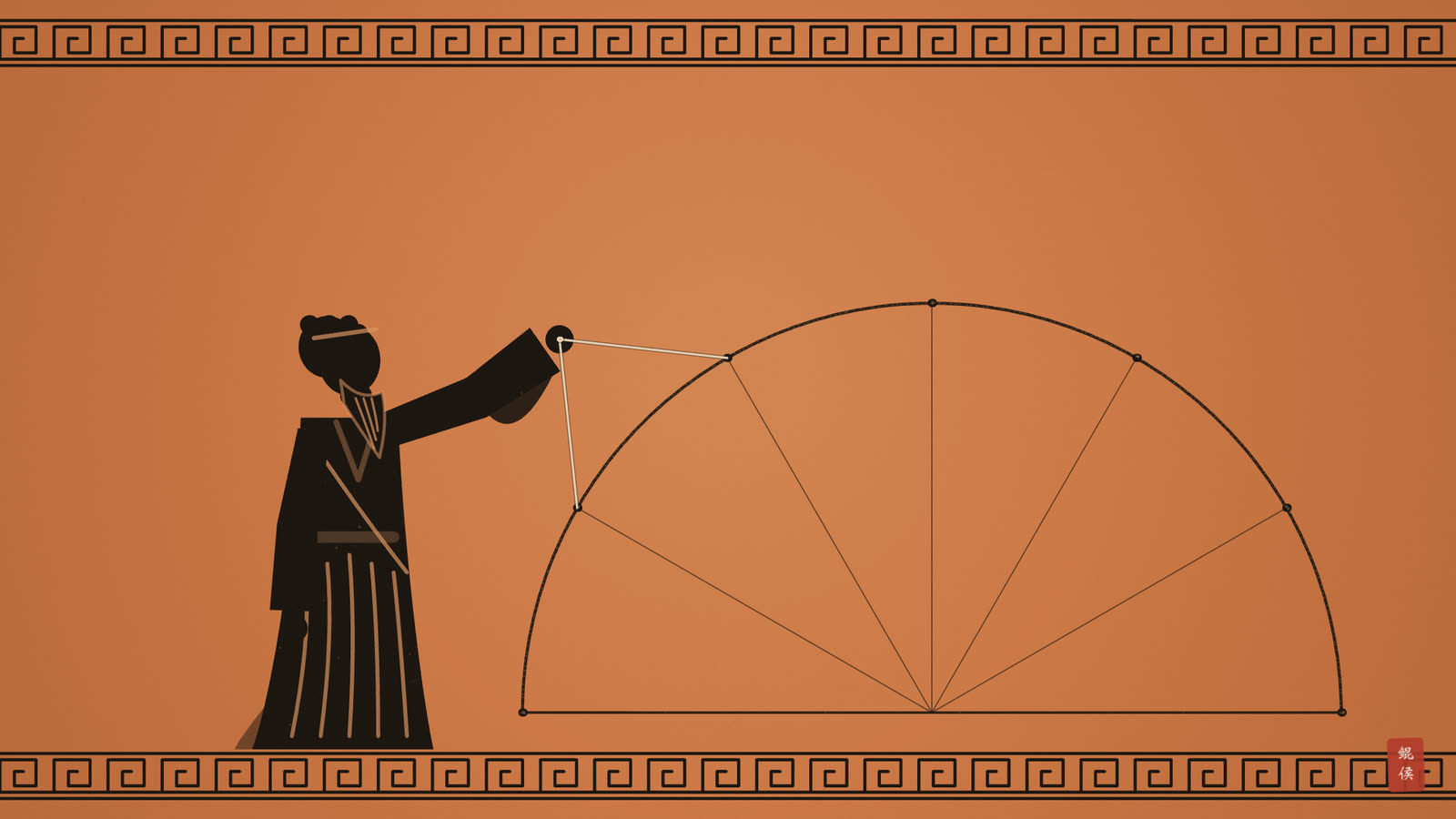
第四则讲时量(horary times),即一个季节时(temporal hour)所含的赤道度数。古法把白昼、黑夜各分十二等分,称季节时;从地平到中天是六个季节时,所以半昼弧除以六就是昼时量,半夜弧除以六就是夜时量(图二)。原书例:半昼弧一百零四度四十五分,除以六得十七度二十七分。
| 方法 | 算法 | 原书例 | 结果 |
|---|---|---|---|
| 第一 | 度分表示的半昼弧 ÷ 6 | 104°45′ ÷ 6(104 ÷ 6 = 17 余 2,2°45′ = 165′,165′ ÷ 6) | 17°27′ |
| 第二 | 查时量表 | 极高 45°,金牛 15° | 昼 17°51′ |
| 第三 | 时分表示的半昼弧 × 2½ | 极高 45°,金牛 15°:7h9′ × 2½ | 17°52′ |
| 第四 | 行星赤纬还原到黄道,再查表 | 赤纬超过 23°32′ 则改用上升差 | — |
| 昼夜互求 | 30° − 已知的时量 | 30° − 17°51′ | 夜 12°9′ |
〔图〕六个季节时合成一个半弧,所以时量是半弧的六分之一
第二法查专门的时量表:极高四十五度下,金牛十五度的昼时量是十七度五十一分。第三法用时分表示的半弧乘以二又二分之一:因为一时合十五度,除以六就是乘十五除六,即乘二又二分之一。金牛十五度的半昼弧七时九分,乘得十七度五十二分,与查表的十七度五十一分只差一分(表一)。原文这里的动词作「减」(deducted),按算法当是「乘」,本站照算法译。
最后两条:有纬度的行星照第一则先把赤纬还原到黄道上再查表;赤纬超过二十三度三十二分的,表里查不到,只能用上升差先求半弧再除以六。昼夜互求用三十度相减,因为昼一时加夜一时恰是一百八十度的六分之一,即三十度:三十度减十七度五十一分,夜时量十二度九分。时量在第九则量星离宫头的距离、第十二则求位置圈时都要用到。
📖 术语
| 术语 | 英文原词 | 意思 |
|---|---|---|
| 时量 | horary times | 一个季节时的赤道度数 |
| 季节时 | temporal hours | 昼夜各分十二等分 |
| 昼时量 / 夜时量 | diurnal / nocturnal horary times | 昼 / 夜一时的度数 |
| 时量表 | table of horary times | 按极高列黄道各度时量 |
| 四角 | cardinal signs of the world | 上升、中天、下降、天底 |
🧭 图解与讲解
第四则讲时量(horary times),即一个季节时(temporal hour)所含的赤道度数。古法把白昼、黑夜各分十二等分,称季节时;从地平到中天是六个季节时,所以半昼弧除以六就是昼时量,半夜弧除以六就是夜时量(图二)。原书例:半昼弧一百零四度四十五分,除以六得十七度二十七分。
| 方法 | 算法 | 原书例 | 结果 |
|---|---|---|---|
| 第一 | 度分表示的半昼弧 ÷ 6 | 104°45′ ÷ 6(104 ÷ 6 = 17 余 2,2°45′ = 165′,165′ ÷ 6) | 17°27′ |
| 第二 | 查时量表 | 极高 45°,金牛 15° | 昼 17°51′ |
| 第三 | 时分表示的半昼弧 × 2½ | 极高 45°,金牛 15°:7h9′ × 2½ | 17°52′ |
| 第四 | 行星赤纬还原到黄道,再查表 | 赤纬超过 23°32′ 则改用上升差 | — |
| 昼夜互求 | 30° − 已知的时量 | 30° − 17°51′ | 夜 12°9′ |
第二法查专门的时量表:极高四十五度下,金牛十五度的昼时量是十七度五十一分。第三法用时分表示的半弧乘以二又二分之一:因为一时合十五度,除以六就是乘十五除六,即乘二又二分之一。金牛十五度的半昼弧七时九分,乘得十七度五十二分,与查表的十七度五十一分只差一分(表一)。原文这里的动词作「减」(deducted),按算法当是「乘」,本站照算法译。
最后两条:有纬度的行星照第一则先把赤纬还原到黄道上再查表;赤纬超过二十三度三十二分的,表里查不到,只能用上升差先求半弧再除以六。昼夜互求用三十度相减,因为昼一时加夜一时恰是一百八十度的六分之一,即三十度:三十度减十七度五十一分,夜时量十二度九分。时量在第九则量星离宫头的距离、第十二则求位置圈时都要用到。
原文为公有领域古籍;翻译、印象画与图文解读由 AI 辅助生成,鲲侯审校。