卷七·第 326–331 问 星盘诸线、全盘与分盘、南盘与变体、测高与测影
背面与盘片上诸线之名,全盘、半盘与分盘,北盘南盘与各种变体,背面的星符,用照准尺测太阳高度与影长。
§326. The names of the lines of the astrolabe.
On its back, when it faces you with its throne upwards, the diameter running across from your right to your left is called the horizontal line, and is also called the line of east and west. The left of the two upper quadrants of the circumference is called the quadrant of altitude. It is divided into 90, and the parts of altitude follow one another, beginning from the horizontal line and ending opposite the middle of the throne; their fives are in the jummal letters, and their tens are written above them. The quadrant opposite this quadrant is called the quadrant of the shadow; it is divided into fingers of the shadow, beginning from the diameter that comes from the middle of the throne, and its end is not limited, for it stops short where the maker can go no further because of the excessive crowding. What is on the spider we have already mentioned. As for what is on the plates: on the face of each of them are three parallel circles. The outer, greatest, which is near the edge of the plate, is the orbit of Capricorn; the inner, smallest, is the orbit of Cancer; and the middle one is the orbit of Aries and Libra. On it are two diameters dividing the plate into quarters. One of them, the transverse one, is called the line of east and west; it is divided at the centre, so that it becomes two halves: the left one is the line of the east and the other, the right one, the line of the west. The second diameter is divided by the horizon, and the segment of it next to the throne is the line of mid-heaven, [and the rest of it] is called the line of midnight [corrected: MS omits the second segment]. The horizon is the arc that passes through the intersections of the orbit of Aries with the line of east and west. The arcs and circles like it above it are called almucantars; what falls of them towards the east from the meridian line is eastern, and what falls of them towards the west from it is western. The almucantars are one and the same, and differ only by the meridian line; for that reason they are called the almucantars of the east and the almucantars of the west. In the same way the horizon is divided along with them, so that its left half is the horizon of the east and its right half the horizon of the west. Inside the smallest of the almucantars is a point, on which is written the letter ṣād (90), at the zenith. On the lines of the crooked hours, which are below the horizon between the orbits of Capricorn and Cancer, are written the numbers from 1 to 12.
翻译点开
§326. The names of the lines of the astrolabe.
第三百二十六问 星盘诸线的名称。
On its back, when it faces you with its throne upwards, the diameter running across from your right to your left is called the horizontal line, and is also called the line of east and west. The left of the two upper quadrants of the circumference is called the quadrant of altitude. It is divided into 90, and the parts of altitude follow one another, beginning from the horizontal line and ending opposite the middle of the throne; their fives are in the jummal letters, and their tens are written above them. The quadrant opposite this quadrant is called the quadrant of the shadow; it is divided into fingers of the shadow, beginning from the diameter that comes from the middle of the throne, and its end is not limited, for it stops short where the maker can go no further because of the excessive crowding. What is on the spider we have already mentioned. As for what is on the plates: on the face of each of them are three parallel circles. The outer, greatest, which is near the edge of the plate, is the orbit of Capricorn; the inner, smallest, is the orbit of Cancer; and the middle one is the orbit of Aries and Libra. On it are two diameters dividing the plate into quarters. One of them, the transverse one, is called the line of east and west; it is divided at the centre, so that it becomes two halves: the left one is the line of the east and the other, the right one, the line of the west. The second diameter is divided by the horizon, and the segment of it next to the throne is the line of mid-heaven, [and the rest of it] is called the line of midnight [corrected: MS omits the second segment]. The horizon is the arc that passes through the intersections of the orbit of Aries with the line of east and west. The arcs and circles like it above it are called almucantars; what falls of them towards the east from the meridian line is eastern, and what falls of them towards the west from it is western. The almucantars are one and the same, and differ only by the meridian line; for that reason they are called the almucantars of the east and the almucantars of the west. In the same way the horizon is divided along with them, so that its left half is the horizon of the east and its right half the horizon of the west. Inside the smallest of the almucantars is a point, on which is written the letter ṣād (90), at the zenith. On the lines of the crooked hours, which are below the horizon between the orbits of Capricorn and Cancer, are written the numbers from 1 to 12.
在背面,当它对着你、宝座朝上时,从你的右边横贯到你左边的那条直径叫作水平线,又叫东西线。圆周上方两个四分之一中靠左的那个叫作高度象限。它分成九十,高度的份数依次相续,从水平线开始,到宝座正中的对面为止;每五份用朱马勒字母标出,每十份写在它们上方。与这个象限相对的象限叫作影象限;它分成影指,从通过宝座正中的那条直径开始,其尽头没有限定,因为过分拥挤,到制作者再也分不下去的地方就停止了。蛛网上的东西,我们前面已经说过。至于盘片上的东西:每块盘片的正面有三个平行的圆。外面最大、靠近盘片边缘的,是摩羯座的轨道;里面最小的是巨蟹座的轨道;中间的是白羊座与天秤座的轨道。盘片上有两条直径把它分成四份。其中横的一条叫作东西线;它在中心处被分开,成为两半:左半是东方线,另一半即右半是西方线。第二条直径被地平分开,靠近宝座的那一段是中天线,[其余部分]叫作子夜线〔抄本漏了第二段,据文义改正〕。地平是通过白羊座轨道与东西线两个交点的那条弧。地平以上与它相似的弧和圆叫作地平纬圈;其中落在子午线以东的是东方的,落在子午线以西的是西方的。地平纬圈本是同一组,只因子午线而有区别;所以称为东方地平纬圈和西方地平纬圈。地平也同样随之分开,左半是东方地平,右半是西方地平。最小的地平纬圈之内有一点,上面写着字母“萨德”(九十),就在天顶。在地平以下、摩羯座轨道与巨蟹座轨道之间的曲时线上,写着从一到十二的数。
大意与图解点开
🔎 大意:背面有水平线、高度象限与影象限;盘片上有三条轨道、东西线与中天子夜线、地平、东西地平纬圈、天顶与曲时线。
📖 术语
| 术语 | 英文原词 | 意思 |
|---|---|---|
| 高度象限 | the quadrant of altitude | 背面左上,分九十 |
| 影象限 | the quadrant of the shadow | 背面右下,分影指 |
| 地平纬圈 | almucantars | 地平以上的等高圈 |
| 中天线 | the line of mid-heaven | 子午线近宝座的一段 |
| 曲时 | crooked hours | 昼或夜的十二分之一 |
🧭 图解与讲解
这一问是星盘的“读图说明”,先背后面(表二)。宝座朝上、背面对着自己时,左右横贯的直径是水平线,也叫东西线。左上四分之一是高度象限,从水平线的零度数到宝座下的九十度,每五度用朱马勒字母(卷二讲过的字母记数)标出。右下四分之一是影象限,刻的是“影指”,从竖直径的零开始,越往外越密,刻到挤不下为止,所以说“没有尽头”。
〔图〕盘片:三条轨道、东西线与子午线、地平、地平纬圈、天顶与曲时线
| 所在 | 线 | 说明 |
|---|---|---|
| 背面 | 水平线(东西线) | 宝座朝上时左右横贯的直径 |
| 背面 | 高度象限 | 左上四分之一,从水平线起分九十,每五份记朱马勒字母 |
| 背面 | 影象限 | 与高度象限相对,从竖直径起分影指,越往外越密,无尽头 |
| 盘片 | 摩羯、白羊天秤、巨蟹三条轨道 | 由外到内三个同心圆 |
| 盘片 | 东方线、西方线 | 横直径的左半、右半 |
| 盘片 | 中天线、子夜线 | 竖直径被地平分开:近宝座一段、其余一段 |
| 盘片 | 地平、地平纬圈、天顶 | 地平过中圈与东西线两交点;纬圈收于天顶,记“萨德”(九十) |
| 盘片 | 曲时线 | 地平以下、两轨道之间,记一到十二 |
正面的盘片(图一)由外到内有三个同心圆:摩羯座轨道、白羊天秤座轨道、巨蟹座轨道,也就是太阳在冬至、春秋分、夏至时每天绕行的圈。横直径左半是东方线,右半是西方线;竖直径被地平分成两段,靠宝座的一段是中天线,另一段是子夜线。抄本这里漏写了第二段,把“子夜线”之名直接接在中天线上,裁定表据文义补出。
地平是一条大弧,过中圈与东西线的两个交点。地平以上一层层与它相似的圈叫地平纬圈,就是同一高度的点连成的圈,一直收到天顶一点,上面写字母“萨德”,数值九十。子午线以东的半边是东方地平纬圈,以西的是西方地平纬圈;地平也分东方地平与西方地平。地平以下、两条回归圈之间是曲时线,记着一到十二,用来读不等时。
这些线就是把天球压平在一个圆盘上:盘片代表某一纬度的地平坐标,蛛网代表随天旋转的黄道与恒星。卷三讲过的地平、子午、地平纬圈、曲时,在这里都变成了看得见、摸得着的线。下几问的一切操作,都只是在这几条线之间转动蛛网、读出交点。
📖 术语
| 术语 | 英文原词 | 意思 |
|---|---|---|
| 高度象限 | the quadrant of altitude | 背面左上,分九十 |
| 影象限 | the quadrant of the shadow | 背面右下,分影指 |
| 地平纬圈 | almucantars | 地平以上的等高圈 |
| 中天线 | the line of mid-heaven | 子午线近宝座的一段 |
| 曲时 | crooked hours | 昼或夜的十二分之一 |
🧭 图解与讲解
这一问是星盘的“读图说明”,先背后面(表二)。宝座朝上、背面对着自己时,左右横贯的直径是水平线,也叫东西线。左上四分之一是高度象限,从水平线的零度数到宝座下的九十度,每五度用朱马勒字母(卷二讲过的字母记数)标出。右下四分之一是影象限,刻的是“影指”,从竖直径的零开始,越往外越密,刻到挤不下为止,所以说“没有尽头”。
| 所在 | 线 | 说明 |
|---|---|---|
| 背面 | 水平线(东西线) | 宝座朝上时左右横贯的直径 |
| 背面 | 高度象限 | 左上四分之一,从水平线起分九十,每五份记朱马勒字母 |
| 背面 | 影象限 | 与高度象限相对,从竖直径起分影指,越往外越密,无尽头 |
| 盘片 | 摩羯、白羊天秤、巨蟹三条轨道 | 由外到内三个同心圆 |
| 盘片 | 东方线、西方线 | 横直径的左半、右半 |
| 盘片 | 中天线、子夜线 | 竖直径被地平分开:近宝座一段、其余一段 |
| 盘片 | 地平、地平纬圈、天顶 | 地平过中圈与东西线两交点;纬圈收于天顶,记“萨德”(九十) |
| 盘片 | 曲时线 | 地平以下、两轨道之间,记一到十二 |
正面的盘片(图一)由外到内有三个同心圆:摩羯座轨道、白羊天秤座轨道、巨蟹座轨道,也就是太阳在冬至、春秋分、夏至时每天绕行的圈。横直径左半是东方线,右半是西方线;竖直径被地平分成两段,靠宝座的一段是中天线,另一段是子夜线。抄本这里漏写了第二段,把“子夜线”之名直接接在中天线上,裁定表据文义补出。
地平是一条大弧,过中圈与东西线的两个交点。地平以上一层层与它相似的圈叫地平纬圈,就是同一高度的点连成的圈,一直收到天顶一点,上面写字母“萨德”,数值九十。子午线以东的半边是东方地平纬圈,以西的是西方地平纬圈;地平也分东方地平与西方地平。地平以下、两条回归圈之间是曲时线,记着一到十二,用来读不等时。
这些线就是把天球压平在一个圆盘上:盘片代表某一纬度的地平坐标,蛛网代表随天旋转的黄道与恒星。卷三讲过的地平、子午、地平纬圈、曲时,在这里都变成了看得见、摸得着的线。下几问的一切操作,都只是在这几条线之间转动蛛网、读出交点。
§327. What are the complete astrolabe, the half, and the others?
In the complete one, its almucantars, drawn from the horizon to the zenith, are a full 90, and their numbers, written in the jummal letters, begin on each of the two sides, east and west, from 1, in the natural order. When the size of the astrolabe falls short of the size of the complete one, so that it cannot hold all 90 almucantars, one is left out between every two of them, so that the lines of them on it are 45, and the numbers written with them become the successive even numbers; and the astrolabe is called a half. If it is smaller than that, its almucantars are made 30, their numbers differing by 3 and 3, and it is called a third, that is, its almucantars are a third of the 90. On this pattern are the sixth and the tenth. No one has ventured to draw it by fifths, though that is possible and permissible. Whatever is done in this respect with the almucantars, the like is done with the degrees of the signs. The cause of these names, then, is the largeness and smallness of the astrolabe, and the fineness of the maker's hand or its opposite.
翻译点开
§327. What are the complete astrolabe, the half, and the others?
第三百二十七问 何谓全盘、半盘以及其他?
In the complete one, its almucantars, drawn from the horizon to the zenith, are a full 90, and their numbers, written in the jummal letters, begin on each of the two sides, east and west, from 1, in the natural order. When the size of the astrolabe falls short of the size of the complete one, so that it cannot hold all 90 almucantars, one is left out between every two of them, so that the lines of them on it are 45, and the numbers written with them become the successive even numbers; and the astrolabe is called a half. If it is smaller than that, its almucantars are made 30, their numbers differing by 3 and 3, and it is called a third, that is, its almucantars are a third of the 90. On this pattern are the sixth and the tenth. No one has ventured to draw it by fifths, though that is possible and permissible. Whatever is done in this respect with the almucantars, the like is done with the degrees of the signs. The cause of these names, then, is the largeness and smallness of the astrolabe, and the fineness of the maker's hand or its opposite.
在全盘上,从地平画到天顶的地平纬圈足足有九十条,用朱马勒字母写的编号,在东、西两边各从一开始,按自然次序排列。当星盘的尺寸不及全盘,容不下全部九十条地平纬圈时,每两条之间就略去一条,于是盘上的线成为四十五条,所写的编号成为相继的偶数;这种星盘称为半盘。若比这还小,就把地平纬圈做成三十条,编号每次相差三,称为三分盘,意思是它的地平纬圈是九十条的三分之一。照这个样式还有六分盘和十分盘。没有人敢按五分来画,虽然那是可能的,也是允许的。在地平纬圈上怎样做,在星座的度数上也就同样怎样做。所以这些名称的缘故,在于星盘的大小,以及制作者手艺的精细或与之相反。
大意与图解点开
🔎 大意:全盘每度一圈共九十;小盘依次每二、三、六、十度一圈,称半盘、三分、六分、十分盘;无人按五分画;星座度数照样分。
📖 术语
| 术语 | 英文原词 | 意思 |
|---|---|---|
| 全盘 | the complete (astrolabe) | 每度一条地平纬圈 |
| 半盘 | the half | 每二度一条 |
| 三分盘 | the third | 每三度一条 |
| 六分盘 | the sixth | 每六度一条 |
🧭 图解与讲解
星盘大小不一,盘片上画不下每度一条地平纬圈时,就隔几度画一条,并按间隔命名(表一):每度一条、共九十条的是全盘;每两度一条的是半盘,编号是相继的偶数;每三度一条的是三分盘;照此还有六分盘(每六度)和十分盘(每十度)。
| 名称 | 地平纬圈条数 | 每条相隔 | 编号 |
|---|---|---|---|
| 全盘 | 90 | 1° | 1、2、3…… |
| 半盘 | 45 | 2° | 2、4、6…… |
| 三分盘 | 30 | 3° | 3、6、9…… |
| 六分盘 | 15 | 6° | 6、12、18…… |
| 十分盘 | 9 | 10° | 10、20、30…… |
| (五分盘) | 18 | 5° | 可以画,但无人敢画 |
〔图〕名称取决于盘的大小与工匠手艺:盘越小,圈越疏
比鲁尼特别提一句:没有人按五分来画,也就是每五度一条、共十八条,虽然完全可以这样做。为什么无人这样做,他没有说。裁定表指出,这一句的读法定为“无人敢画”,并与下一章的例子相合:六分盘的圈在十八、二十四度,三分盘在十八、二十一度。
黄道上的度数也照同样的间隔刻:全盘每度一刻,六分盘每六度一刻。名称的来由,归根到底是盘的大小与工匠手艺的精粗(图二)。圈疏的盘读数不能直接对上,下一章求上升点时,比鲁尼专门教了怎样在两条线之间按比例目测插补。
📖 术语
| 术语 | 英文原词 | 意思 |
|---|---|---|
| 全盘 | the complete (astrolabe) | 每度一条地平纬圈 |
| 半盘 | the half | 每二度一条 |
| 三分盘 | the third | 每三度一条 |
| 六分盘 | the sixth | 每六度一条 |
🧭 图解与讲解
星盘大小不一,盘片上画不下每度一条地平纬圈时,就隔几度画一条,并按间隔命名(表一):每度一条、共九十条的是全盘;每两度一条的是半盘,编号是相继的偶数;每三度一条的是三分盘;照此还有六分盘(每六度)和十分盘(每十度)。
| 名称 | 地平纬圈条数 | 每条相隔 | 编号 |
|---|---|---|---|
| 全盘 | 90 | 1° | 1、2、3…… |
| 半盘 | 45 | 2° | 2、4、6…… |
| 三分盘 | 30 | 3° | 3、6、9…… |
| 六分盘 | 15 | 6° | 6、12、18…… |
| 十分盘 | 9 | 10° | 10、20、30…… |
| (五分盘) | 18 | 5° | 可以画,但无人敢画 |
比鲁尼特别提一句:没有人按五分来画,也就是每五度一条、共十八条,虽然完全可以这样做。为什么无人这样做,他没有说。裁定表指出,这一句的读法定为“无人敢画”,并与下一章的例子相合:六分盘的圈在十八、二十四度,三分盘在十八、二十一度。
黄道上的度数也照同样的间隔刻:全盘每度一刻,六分盘每六度一刻。名称的来由,归根到底是盘的大小与工匠手艺的精粗(图二)。圈疏的盘读数不能直接对上,下一章求上升点时,比鲁尼专门教了怎样在两条线之间按比例目测插补。
§328. What are the astrolabes that differ from these descriptions?
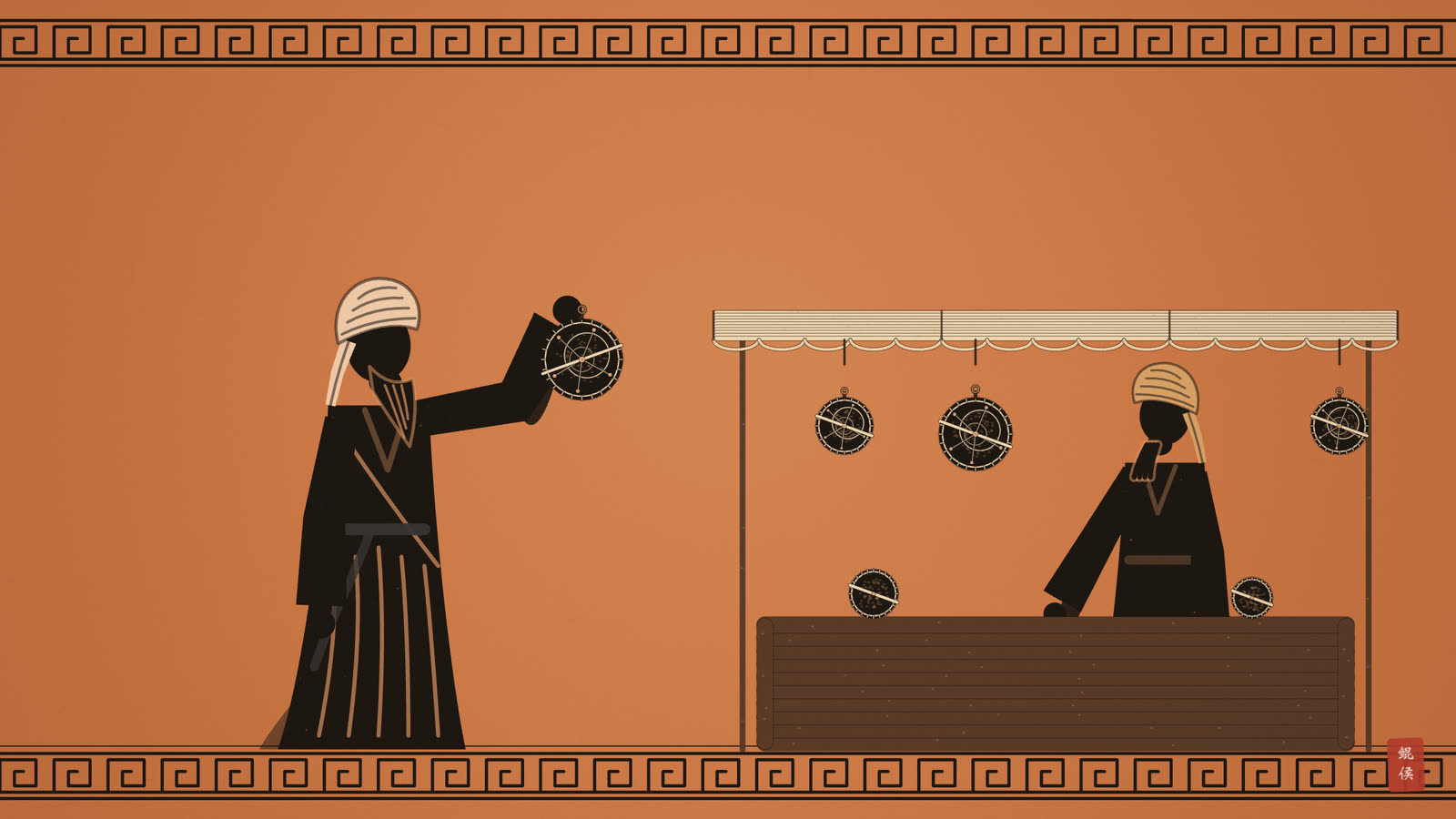
The astrolabe is divided first into two kinds. One is northern, which is the one we have described, plain and not going beyond what suffices. The other is southern. Its mark, on the spider, is that the head of Cancer is in the place where we wrote the head of Capricorn, Capricorn is in the place of Cancer, and the rest of the signs opposite them; and on the plate, that the ends of the horizon and of some of the almucantars are downwards, with their convexity towards the throne, while some of the almucantars are in the manner of those in the northern. Then from these two kinds are compounded sorts, such as the myrtle-shaped (al-āsī), the drum-shaped (al-muṭabbal) and the crab-shaped (al-musarṭan). Among them is a sort called the melon-shaped (mubaṭṭakh), whose almucantars and zodiac are not circular but flattened like a melon. Sometimes the difference is by way of additions: such as the plate of the casting of the rays and the plate of the horizons (al-āfāqiyya); what is drawn on the plates of the azimuth circles meeting at the zenith, of the lines of the equal hours together with the crooked, and of the rising of the dawn and the setting of the twilight; and on its back, of the lines of the sines, of the shadow of the azimuth, and the lines of midday (ẓuhr) and of the afternoon (ʿaṣr). To this is added the alidade halved lengthwise, called the pierced, with the crooked hours on it, the divisions of the sines, the arcs and their numbers. There is no end to this chapter.
翻译点开
§328. What are the astrolabes that differ from these descriptions?
第三百二十八问 哪些星盘与这些描述不同?
The astrolabe is divided first into two kinds. One is northern, which is the one we have described, plain and not going beyond what suffices. The other is southern. Its mark, on the spider, is that the head of Cancer is in the place where we wrote the head of Capricorn, Capricorn is in the place of Cancer, and the rest of the signs opposite them; and on the plate, that the ends of the horizon and of some of the almucantars are downwards, with their convexity towards the throne, while some of the almucantars are in the manner of those in the northern. Then from these two kinds are compounded sorts, such as the myrtle-shaped (al-āsī), the drum-shaped (al-muṭabbal) and the crab-shaped (al-musarṭan). Among them is a sort called the melon-shaped (mubaṭṭakh), whose almucantars and zodiac are not circular but flattened like a melon. Sometimes the difference is by way of additions: such as the plate of the casting of the rays and the plate of the horizons (al-āfāqiyya); what is drawn on the plates of the azimuth circles meeting at the zenith, of the lines of the equal hours together with the crooked, and of the rising of the dawn and the setting of the twilight; and on its back, of the lines of the sines, of the shadow of the azimuth, and the lines of midday (ẓuhr) and of the afternoon (ʿaṣr). To this is added the alidade halved lengthwise, called the pierced, with the crooked hours on it, the divisions of the sines, the arcs and their numbers. There is no end to this chapter.
星盘首先分为两类。一类是北盘,就是我们所描述的那种,朴素,不超出够用的范围。另一类是南盘。它的标志,在蛛网上,是巨蟹座的起点在我们写摩羯座起点的地方,摩羯座在巨蟹座的位置,其余星座与之相对;在盘片上,是地平和一部分地平纬圈的两端朝下,凸面朝向宝座,而另一部分地平纬圈则与北盘的样式相同。然后由这两类又合成若干种,如桃金娘形、鼓形和蟹形。其中有一种称为瓜形,它的地平纬圈和黄道带不是圆的,而是像瓜一样扁。有时差别在于附加之物:例如投光盘和诸地平盘;在盘片上画出交于天顶的方位圈、等时线连同曲时线、晨光初现与暮光消失的线;在背面画出正弦线、方位之影线,以及正午(晌礼)线和晡时(晡礼)线。此外还加上沿长边剖去一半的照准尺,称为穿孔照准尺,上面有曲时、正弦的分度、弧及其数值。这一章是没有尽头的。
大意与图解点开
🔎 大意:星盘分北盘与南盘,南盘蛛网上巨蟹、摩羯对调;两者合成桃金娘形、鼓形、蟹形、瓜形诸种;又可附加各种盘、线与照准尺。
📖 术语
| 术语 | 英文原词 | 意思 |
|---|---|---|
| 北盘 | northern (astrolabe) | 即前述的寻常星盘 |
| 南盘 | southern (astrolabe) | 巨蟹、摩羯位置对调 |
| 瓜形 | melon-shaped (mubaṭṭakh) | 圈不圆而扁 |
| 投光盘 | the plate of the casting of the rays | 附加的盘片 |
| 方位圈 | azimuth circles | 交于天顶的圈 |
🧭 图解与讲解
前两问讲的是最常见的北盘,比鲁尼说它“朴素,不超出够用的范围”。另一类是南盘:蛛网上巨蟹座起点放在北盘摩羯座起点的位置,摩羯座反过来,其余星座随之对调;盘片上的地平和一部分地平纬圈两端朝下,凸面朝宝座(图一)。也就是说,两种盘是从天球的不同一端去投影的。
〔图〕北盘与南盘:蛛网上摩羯与巨蟹的位置对调,地平的弯向也相反
| 差别所在 | 名目 |
|---|---|
| 两类合成 | 桃金娘形、鼓形、蟹形;瓜形(地平纬圈与黄道带扁如瓜) |
| 附加的盘 | 投光盘、诸地平盘 |
| 盘片上加画 | 交于天顶的方位圈、等时线与曲时线、晨光初现与暮光消失之线 |
| 背面加画 | 正弦线、方位之影线、正午(晌礼)线与晡时(晡礼)线 |
| 照准尺 | 沿长边剖去一半的穿孔照准尺,刻曲时、正弦分度、弧与数值 |
把两类合起来,又做出桃金娘形、鼓形、蟹形等复合的盘;瓜形盘的地平纬圈与黄道带不是圆,而扁得像瓜。这些名目只说到形状为止,比鲁尼没有展开它们的画法。
另一种差别是“加东西”(表二):附加投光盘、诸地平盘;盘片上加画方位圈、等时线、晨光暮光线;背面加画正弦线、方位之影,以及正午礼拜与晡礼的时刻线;照准尺也可以剖成一半、刻上曲时与正弦。正午线与晡时线关系到每日礼拜的时刻,可见星盘在当时并不只为占星家所用。
“这一章是没有尽头的”,是比鲁尼对仪器花样的感叹。他点到为止,回头只讲最基本的北盘用法,这也是全书入门的一贯分寸。
📖 术语
| 术语 | 英文原词 | 意思 |
|---|---|---|
| 北盘 | northern (astrolabe) | 即前述的寻常星盘 |
| 南盘 | southern (astrolabe) | 巨蟹、摩羯位置对调 |
| 瓜形 | melon-shaped (mubaṭṭakh) | 圈不圆而扁 |
| 投光盘 | the plate of the casting of the rays | 附加的盘片 |
| 方位圈 | azimuth circles | 交于天顶的圈 |
🧭 图解与讲解
前两问讲的是最常见的北盘,比鲁尼说它“朴素,不超出够用的范围”。另一类是南盘:蛛网上巨蟹座起点放在北盘摩羯座起点的位置,摩羯座反过来,其余星座随之对调;盘片上的地平和一部分地平纬圈两端朝下,凸面朝宝座(图一)。也就是说,两种盘是从天球的不同一端去投影的。
| 差别所在 | 名目 |
|---|---|
| 两类合成 | 桃金娘形、鼓形、蟹形;瓜形(地平纬圈与黄道带扁如瓜) |
| 附加的盘 | 投光盘、诸地平盘 |
| 盘片上加画 | 交于天顶的方位圈、等时线与曲时线、晨光初现与暮光消失之线 |
| 背面加画 | 正弦线、方位之影线、正午(晌礼)线与晡时(晡礼)线 |
| 照准尺 | 沿长边剖去一半的穿孔照准尺,刻曲时、正弦分度、弧与数值 |
把两类合起来,又做出桃金娘形、鼓形、蟹形等复合的盘;瓜形盘的地平纬圈与黄道带不是圆,而扁得像瓜。这些名目只说到形状为止,比鲁尼没有展开它们的画法。
另一种差别是“加东西”(表二):附加投光盘、诸地平盘;盘片上加画方位圈、等时线、晨光暮光线;背面加画正弦线、方位之影,以及正午礼拜与晡礼的时刻线;照准尺也可以剖成一半、刻上曲时与正弦。正午线与晡时线关系到每日礼拜的时刻,可见星盘在当时并不只为占星家所用。
“这一章是没有尽头的”,是比鲁尼对仪器花样的感叹。他点到为止,回头只讲最基本的北盘用法,这也是全书入门的一贯分寸。
§329. What are the figures that are on its back?
Sometimes there are written on it the terms of the planets, their faces and their triplicities; and the space is too narrow to set down the names of the planets in them, so they are drawn with figures that belong to the Romans and have become well known among the people of the craft, thus: Saturn, Jupiter, Mars, the Sun, Venus, Mercury, the Moon. The Indians have a way of writing for each planet the first letter of its name in their language.
翻译点开
§329. What are the figures that are on its back?
第三百二十九问 它背面有哪些符号?
Sometimes there are written on it the terms of the planets, their faces and their triplicities; and the space is too narrow to set down the names of the planets in them, so they are drawn with figures that belong to the Romans and have become well known among the people of the craft, thus: Saturn, Jupiter, Mars, the Sun, Venus, Mercury, the Moon. The Indians have a way of writing for each planet the first letter of its name in their language.
背面上有时写着诸星的界、面与三方;地方太窄,写不下行星的名字,就画上符号,这些符号属于罗马人,已为这门技艺的人所熟知,即:土星、木星、火星、太阳、金星、水星、月亮。印度人则有一种写法,为每颗行星写出它在他们语言里名字的第一个字母。
大意与图解点开
🔎 大意:背面有时刻着界、面与三方,地方窄,就用罗马人传下的七曜符号代替星名;印度人则写星名的首字母。
📖 术语
| 术语 | 英文原词 | 意思 |
|---|---|---|
| 界 | terms | 星座内分给五星的度段 |
| 面 | faces | 每座三分,各十度 |
| 三方 | triplicities | 同象的三个星座 |
| 罗马人 | the Romans | 即拜占庭希腊人 |
🧭 图解与讲解
星盘背面空着的地方常刻上占星用的表:诸星的界、面与三方。格子太小写不下星名,就用符号。比鲁尼说这些符号“属于罗马人”,指的是东罗马的希腊人传下的写法,在他那时已为占星家熟知(表一)。抄本在正文行间把七个符号一一画出,次序是土、木、火、日、金、水、月,正是由远到近的天层次序。
| 行星 | 符号 |
|---|---|
| 土星 | ♄ |
| 木星 | ♃ |
| 火星 | ♂ |
| 太阳 | ☉ |
| 金星 | ♀ |
| 水星 | ☿ |
| 月亮 | ☽ |
印度人另有办法:写各星在梵语里名字的首字母。这又是比鲁尼惯用的并列比较,同一件事,罗马人怎样做、印度人怎样做。
界、面、三方都是卷八要细讲的星座划分。刻在星盘背面,是为了起盘时一边测时、一边就近查到某度属于哪颗星,可见星盘与占星判断本来就连在一起。
§330. How is the altitude taken with the astrolabe?
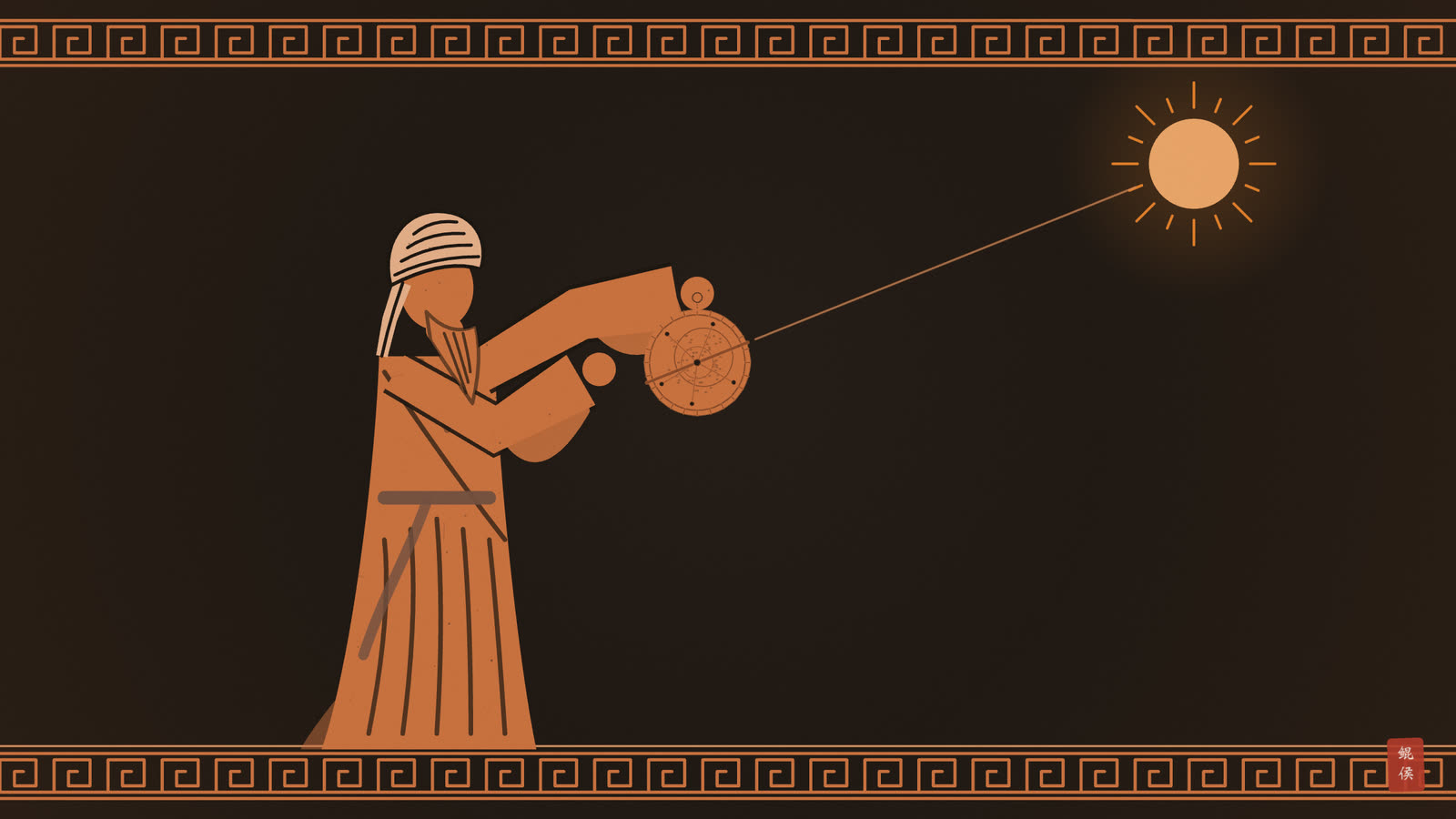
Face the Sun, and hang the astrolabe from your right hand so that it hangs freely, and turn the quadrant of altitude towards the body of the Sun, so that the back of the astrolabe is towards you. Then turn the alidade up and down until the shadow of the sight next to the Sun falls on the sight next to the earth, and the ray from the upper hole falls exactly on the lower hole. When that happens, leave the alidade in its position and do not move it, and look where the tip that passes over the parts of altitude is. Find the number of the fives from the line on which the tip falls, and add to that what lies between the line and the tip; the total is the parts of the Sun's altitude at that time. Find out also whether it is eastern or western: before the declining (zawāl) it is eastern, and after it western.
翻译点开
§330. How is the altitude taken with the astrolabe?
第三百三十问 怎样用星盘测高度?
Face the Sun, and hang the astrolabe from your right hand so that it hangs freely, and turn the quadrant of altitude towards the body of the Sun, so that the back of the astrolabe is towards you. Then turn the alidade up and down until the shadow of the sight next to the Sun falls on the sight next to the earth, and the ray from the upper hole falls exactly on the lower hole. When that happens, leave the alidade in its position and do not move it, and look where the tip that passes over the parts of altitude is. Find the number of the fives from the line on which the tip falls, and add to that what lies between the line and the tip; the total is the parts of the Sun's altitude at that time. Find out also whether it is eastern or western: before the declining (zawāl) it is eastern, and after it western.
面向太阳,用右手提起星盘,让它自由下垂,把高度象限转向太阳本体,使星盘的背面朝着你。然后把照准尺上下转动,直到靠近太阳的那块觇板的影子落在靠近地面的那块觇板上,从上孔射入的光线恰好落在下孔上。这时让照准尺留在原位,不要移动它,看经过高度份数的那个尖头在哪里。从尖头所落的那条线数出有几个五,再加上那条线与尖头之间的部分;总数就是此时太阳高度的份数。还要弄清它是东方的还是西方的:扎瓦勒之前是东方的,之后是西方的。
大意与图解点开
🔎 大意:右手提盘自由下垂,背面朝己、高度象限朝日,转照准尺使光从上孔落到下孔,读尖头所指即太阳高度;过午为西,午前为东。
📖 术语
| 术语 | 英文原词 | 意思 |
|---|---|---|
| 照准尺 | the alidade | 背面绕轴转的长尺 |
| 觇板 | sights | 尺上两块带孔的方片 |
| 扎瓦勒 | zawāl | 日过中天西斜 |
| 东方的高度 | eastern (altitude) | 午前测得的高度 |
🧭 图解与讲解
测高是星盘一切用法的第一步。做法(图一):面向太阳,右手提着吊环,让星盘靠自重垂直下垂,这样水平线才真正水平;背面朝着自己,高度象限朝向太阳。然后上下转动照准尺,直到上面那块觇板的影子正好盖住下面那块,日光从上孔穿进、落在下孔上。
〔图〕测太阳高度:日光穿过两孔时,照准尺尖头指在高度象限上的度数
照准尺不动,看尖头落在高度象限的哪里:先数到最近的一条五度线,再目测加上余下的零头,就是太阳的高度。比鲁尼教的是“先整后零”,与下一章在地平纬圈之间插补的道理一样。
最后要记下高度是东方还是西方:扎瓦勒(日过中天)以前太阳在东半天,以后在西半天。同一个高度,上午、下午各出现一次,盘片上也就有东方、西方两套地平纬圈;不分清东西,下一步求上升点就会差出半天。
📖 术语
| 术语 | 英文原词 | 意思 |
|---|---|---|
| 照准尺 | the alidade | 背面绕轴转的长尺 |
| 觇板 | sights | 尺上两块带孔的方片 |
| 扎瓦勒 | zawāl | 日过中天西斜 |
| 东方的高度 | eastern (altitude) | 午前测得的高度 |
🧭 图解与讲解
测高是星盘一切用法的第一步。做法(图一):面向太阳,右手提着吊环,让星盘靠自重垂直下垂,这样水平线才真正水平;背面朝着自己,高度象限朝向太阳。然后上下转动照准尺,直到上面那块觇板的影子正好盖住下面那块,日光从上孔穿进、落在下孔上。
照准尺不动,看尖头落在高度象限的哪里:先数到最近的一条五度线,再目测加上余下的零头,就是太阳的高度。比鲁尼教的是“先整后零”,与下一章在地平纬圈之间插补的道理一样。
最后要记下高度是东方还是西方:扎瓦勒(日过中天)以前太阳在东半天,以后在西半天。同一个高度,上午、下午各出现一次,盘片上也就有东方、西方两套地平纬圈;不分清东西,下一步求上升点就会差出半天。
§331. Finding the shadow and the altitude, each from the other.
When you have taken the altitude and want to know how much the shadow of a body is at that time, look at the lower pointer of the alidade, at how many of the fingers of the shadow it falls on, always beginning them from the diameter passing through the middle of the throne, and find their number as you found it for the altitude. Whatever it is, that is the shadow of every body at that time, in the measure by which the length of that body is 12. When you have measured the shadow of a body on the ground and know how many fingers it is, and then want the altitude of the Sun at that time, put the pointer of the alidade in the quadrant of the shadow on the number of the fingers you found by measurement; then look at the upper pointer of the alidade, at how many of the parts of altitude it falls on. Whatever it is, that is the altitude of the Sun at the time at which you measured the shadow of the body.
翻译点开
§331. Finding the shadow and the altitude, each from the other.
第三百三十一问 影与高度互求。
When you have taken the altitude and want to know how much the shadow of a body is at that time, look at the lower pointer of the alidade, at how many of the fingers of the shadow it falls on, always beginning them from the diameter passing through the middle of the throne, and find their number as you found it for the altitude. Whatever it is, that is the shadow of every body at that time, in the measure by which the length of that body is 12. When you have measured the shadow of a body on the ground and know how many fingers it is, and then want the altitude of the Sun at that time, put the pointer of the alidade in the quadrant of the shadow on the number of the fingers you found by measurement; then look at the upper pointer of the alidade, at how many of the parts of altitude it falls on. Whatever it is, that is the altitude of the Sun at the time at which you measured the shadow of the body.
测得高度以后,想知道此时一个物体的影有多长,就看照准尺下端的指针落在影指的多少上,影指总是从通过宝座正中的那条直径开始数,照求高度的办法求出它的数。不论是多少,那就是此时每一个物体的影,以该物体之长为十二的尺度来计。若量了地上一个物体的影,知道它有多少指,想求此时太阳的高度,就把照准尺的指针放在影象限中量得的指数上;然后看照准尺上端的指针落在高度的多少份上。不论是多少,那就是你量物体之影时太阳的高度。
大意与图解点开
🔎 大意:照准尺一端读高度,另一端同时读影指(物长作十二);反过来,把尺尖放在量得的影指上,另一端就指出太阳高度。
📖 术语
| 术语 | 英文原词 | 意思 |
|---|---|---|
| 影指 | fingers of the shadow | 物长十二时的影长 |
| 影象限 | the quadrant of the shadow | 背面刻影指处 |
| 下端的指针 | the lower pointer | 照准尺落在影象限的一端 |
🧭 图解与讲解
照准尺是一根直尺,一端落在高度象限,另一端就落在对面的影象限。所以测得高度的同时,下端已经指出了影长(图一)。影长以“影指”计:把物体的高度当作十二指,影有几指就是几。这就是前面讲日影时说过的“平影”,换成今天的说法,影长等于十二乘高度的余切。
〔图〕影指以物长为十二计:高度四十五度影等于十二指,高度越低影越长
| 太阳高度 | 15° | 30° | 45° | 60° | 75° |
|---|---|---|---|---|---|
| 影长(影指) | 44.8 | 20.8 | 12 | 6.9 | 3.2 |
反过来也行:在地上量出一根竿子的影,按竿长十二折成影指,把照准尺下端放在这个指数上,上端就指出太阳的高度。没有星盘的人用一根竿子也能测日高,这正是这一问的用处。
高度四十五度时影长恰好等于物长,十二指;高度越低,影越长,到地平时无穷长,所以影象限“没有尽头”(表二)。这条关系下面还要反复用到:第四十一章测塔高,就是等太阳高四十五度时去量影。
📖 术语
| 术语 | 英文原词 | 意思 |
|---|---|---|
| 影指 | fingers of the shadow | 物长十二时的影长 |
| 影象限 | the quadrant of the shadow | 背面刻影指处 |
| 下端的指针 | the lower pointer | 照准尺落在影象限的一端 |
🧭 图解与讲解
照准尺是一根直尺,一端落在高度象限,另一端就落在对面的影象限。所以测得高度的同时,下端已经指出了影长(图一)。影长以“影指”计:把物体的高度当作十二指,影有几指就是几。这就是前面讲日影时说过的“平影”,换成今天的说法,影长等于十二乘高度的余切。
| 太阳高度 | 15° | 30° | 45° | 60° | 75° |
|---|---|---|---|---|---|
| 影长(影指) | 44.8 | 20.8 | 12 | 6.9 | 3.2 |
反过来也行:在地上量出一根竿子的影,按竿长十二折成影指,把照准尺下端放在这个指数上,上端就指出太阳的高度。没有星盘的人用一根竿子也能测日高,这正是这一问的用处。
高度四十五度时影长恰好等于物长,十二指;高度越低,影越长,到地平时无穷长,所以影象限“没有尽头”(表二)。这条关系下面还要反复用到:第四十一章测塔高,就是等太阳高四十五度时去量影。
原文为公有领域古籍;翻译、印象画与图文解读由 AI 辅助生成,鲲侯审校。