卷五·第 244–252 问 已转之度、上升点、宫位、四角与会合
天象卷开篇:由已过的时辰求赤道转过的时度,再定上升点、十二宫与四角;年的回归、土木三种会合、行经,以及合与望。
BOOK V. CELESTIAL PHENOMENA
§244. What is the revolved part (al-dāʾir) of the orb?
When what has passed of the daytime is known, it is multiplied, if the hours are equal hours, by 15; if they are crooked hours, by the parts of the hours of the Sun's daytime, which are one twelfth of the arc of its daytime; and if they are gharīs, which are the minutes of the days, by 6. From all this comes the revolved part, which is the amount of the times of the equator that has revolved from the rising of the Sun up to the assumed moment. If it is what has passed of the night, the matter is as before, except that if the hours are crooked, they are then multiplied by the parts of the hours of the Sun's night, which are those of the opposite of its degree, and that is one twelfth of the arc of its night; and so the revolved part is obtained.
翻译点开
BOOK V. CELESTIAL PHENOMENA
卷五 天象
§244. What is the revolved part (al-dāʾir) of the orb?
第二百四十四问 何谓天球的“已转之度”(达伊尔)?
When what has passed of the daytime is known, it is multiplied, if the hours are equal hours, by 15; if they are crooked hours, by the parts of the hours of the Sun's daytime, which are one twelfth of the arc of its daytime; and if they are gharīs, which are the minutes of the days, by 6. From all this comes the revolved part, which is the amount of the times of the equator that has revolved from the rising of the Sun up to the assumed moment. If it is what has passed of the night, the matter is as before, except that if the hours are crooked, they are then multiplied by the parts of the hours of the Sun's night, which are those of the opposite of its degree, and that is one twelfth of the arc of its night; and so the revolved part is obtained.
若已知白昼已过去了多少:时辰若是等时,就乘以十五;若是曲时,就乘以太阳白昼的时辰度数,即它的昼弧的十二分之一;若是伽利,即日的分,就乘以六。由这一切得出“已转之度”,就是从日出到所设时刻,赤道已转过的时度之数。若是黑夜已过去了多少,事情同前,只是时辰若是曲时,就乘以太阳黑夜的时辰度数,那是它所在度数的对冲度的时辰度数,即它的夜弧的十二分之一;这样就得出已转之度。
大意与图解点开
🔎 大意:卷五开篇:把日出或日落后已过的时辰化成赤道转过的时度,等时乘十五,曲时乘昼弧或夜弧的十二分之一,伽利乘六。
📖 术语
| 术语 | 英文原词 | 意思 |
|---|---|---|
| 已转之度 | the revolved part (al-dāʾir) | 日出后赤道转过的时度 |
| 曲时 | crooked hours | 昼夜各分十二的时辰 |
| 伽利 | gharīs | 一日的六十分之一 |
| 时度 | times | 在天赤道上量的度 |
| 昼弧 | the arc of the daytime | 太阳在地上所行之弧 |
🧭 图解与讲解
卷五讲“天象”,即日常观测与推算中会遇到的天上之事:上升点与宫位、年的回归、会合、两弦、交食与视差。它紧接卷三天文与卷四地理:卷三给出诸星的运动,卷四给出各地的纬度与上升时间,到这里就合起来,回答“此时此地,天上是什么样子”。
| 时辰的种类 | 乘数 | 为什么(讲解所加) |
|---|---|---|
| 等时 | 15 | 赤道一日转三百六十时度,分二十四等时,每时十五时度 |
| 曲时(白昼) | 太阳昼弧 ÷ 12 | 一段白昼分十二曲时,每时占昼弧的十二分之一 |
| 曲时(黑夜) | 太阳夜弧 ÷ 12 | 夜弧等于太阳对冲度的昼弧 |
| 伽利 | 6 | 一日分六十伽利,三百六十 ÷ 六十 = 六 |
〔图〕已过的时辰乘上每时的时度,就得出自日出起赤道已转过的度数,这是求上升点的第一步
第一问讲“已转之度”(达伊尔):从日出到所设时刻,天赤道已转过了多少时度(表一)。时辰有三种算法,卷三第一百三十五问讲过:等时每个都是十五时度;曲时把白昼(或黑夜)分成十二份,长短随季节变,所以要用太阳当天的昼弧(或夜弧)除以十二;印度人的伽利是一日的六十分之一,合六时度。
夜里的曲时,比鲁尼说要用太阳“对冲度”的时辰度数:太阳的夜弧,正等于与它相对那一度的昼弧,所以查对冲度的昼弧就行。这些都是查表与乘法的事,卷二算术已经铺好。
这一步为什么要紧?因为已转过的时度加上太阳所在之度的上升时间,就能查出此刻正在东方地平升起的是黄道哪一度,也就是下一问的上升点(图二)。没有准确的钟表时,占星家正是靠量太阳高度、推出已过的时辰,再这样算出上升点来起盘。
📖 术语
| 术语 | 英文原词 | 意思 |
|---|---|---|
| 已转之度 | the revolved part (al-dāʾir) | 日出后赤道转过的时度 |
| 曲时 | crooked hours | 昼夜各分十二的时辰 |
| 伽利 | gharīs | 一日的六十分之一 |
| 时度 | times | 在天赤道上量的度 |
| 昼弧 | the arc of the daytime | 太阳在地上所行之弧 |
🧭 图解与讲解
卷五讲“天象”,即日常观测与推算中会遇到的天上之事:上升点与宫位、年的回归、会合、两弦、交食与视差。它紧接卷三天文与卷四地理:卷三给出诸星的运动,卷四给出各地的纬度与上升时间,到这里就合起来,回答“此时此地,天上是什么样子”。
| 时辰的种类 | 乘数 | 为什么(讲解所加) |
|---|---|---|
| 等时 | 15 | 赤道一日转三百六十时度,分二十四等时,每时十五时度 |
| 曲时(白昼) | 太阳昼弧 ÷ 12 | 一段白昼分十二曲时,每时占昼弧的十二分之一 |
| 曲时(黑夜) | 太阳夜弧 ÷ 12 | 夜弧等于太阳对冲度的昼弧 |
| 伽利 | 6 | 一日分六十伽利,三百六十 ÷ 六十 = 六 |
第一问讲“已转之度”(达伊尔):从日出到所设时刻,天赤道已转过了多少时度(表一)。时辰有三种算法,卷三第一百三十五问讲过:等时每个都是十五时度;曲时把白昼(或黑夜)分成十二份,长短随季节变,所以要用太阳当天的昼弧(或夜弧)除以十二;印度人的伽利是一日的六十分之一,合六时度。
夜里的曲时,比鲁尼说要用太阳“对冲度”的时辰度数:太阳的夜弧,正等于与它相对那一度的昼弧,所以查对冲度的昼弧就行。这些都是查表与乘法的事,卷二算术已经铺好。
这一步为什么要紧?因为已转过的时度加上太阳所在之度的上升时间,就能查出此刻正在东方地平升起的是黄道哪一度,也就是下一问的上升点(图二)。没有准确的钟表时,占星家正是靠量太阳高度、推出已过的时辰,再这样算出上升点来起盘。
§245. What is the ascendant?
It is the part of the zodiac that has reached the eastern horizon: the sign is the sign of the ascendant and the degree its degree, and that at an assumed moment.
§246. What are the houses?
The zodiac is divided into twelve unequal divisions, beginning from the degree of the ascendant in the order of the signs, so that the first division of them is the ascendant, and the second, and so on to the twelfth. The degrees of each house are equal to the degrees of its seventh, and working this out is called the equalization of the houses.
§247. What are the angles, what follows them, and the cadents?
The houses that begin from the horizon, east and west, and from the meridian and the orb of midnight, are the angles. The first of them is the ascendant; the second is the angle of the fourth, also called the angle of the earth; the third is the angle of the seventh, also called the angle of the setting; and the fourth is the angle of the tenth, also called the angle of mid-heaven. Those that follow the angles are the ones that come after the angles in the order of the signs, I mean the second, the fifth, the eighth and the eleventh; they are ready to become angles. The cadents (zawāʾil, 'those that have declined') are those beneath the angles against the order of the signs, I mean the third, the sixth, the ninth and the twelfth; they were angles and then declined from them. Some people call them the fallen ones (sawāqiṭ), but I do not prefer that, because it can bear another meaning and so gives rise to confusion.
§248. What are the upright angles and the others?
The angle of mid-heaven is the tenth of the houses. If its degree happens to be in the tenth sign from the sign of the ascendant, the angles are called upright; if its degree happens to be in the eleventh sign from the sign of the ascendant, the angles are called inclining; and if its degree happens to be in the ninth, the angles are called declining.
翻译点开
§245. What is the ascendant?
第二百四十五问 何谓上升点?
It is the part of the zodiac that has reached the eastern horizon: the sign is the sign of the ascendant and the degree its degree, and that at an assumed moment.
它是黄道已到达东方地平的那一部分:那个星座是上升的星座,那一度是上升的度;这是就某一所设的时刻而言的。
§246. What are the houses?
第二百四十六问 何谓宫位?
The zodiac is divided into twelve unequal divisions, beginning from the degree of the ascendant in the order of the signs, so that the first division of them is the ascendant, and the second, and so on to the twelfth. The degrees of each house are equal to the degrees of its seventh, and working this out is called the equalization of the houses.
黄道被分成十二个不相等的部分,从上升度起,顺星座次序,于是其中第一部分就是上升,然后是第二,依次直到第十二。每一宫的度数等于它的第七宫的度数;把这些算出来,称为“宫位的均齐”。
§247. What are the angles, what follows them, and the cadents?
第二百四十七问 何谓四角、随角者与果宫?
The houses that begin from the horizon, east and west, and from the meridian and the orb of midnight, are the angles. The first of them is the ascendant; the second is the angle of the fourth, also called the angle of the earth; the third is the angle of the seventh, also called the angle of the setting; and the fourth is the angle of the tenth, also called the angle of mid-heaven. Those that follow the angles are the ones that come after the angles in the order of the signs, I mean the second, the fifth, the eighth and the eleventh; they are ready to become angles. The cadents (zawāʾil, 'those that have declined') are those beneath the angles against the order of the signs, I mean the third, the sixth, the ninth and the twelfth; they were angles and then declined from them. Some people call them the fallen ones (sawāqiṭ), but I do not prefer that, because it can bear another meaning and so gives rise to confusion.
从地平的东西两端、从子午圈与午夜之圈起始的宫位,就是四角。其中第一是上升;第二是第四宫之角,又称地之角;第三是第七宫之角,又称西没之角;第四是第十宫之角,又称中天之角。随角者是按星座次序跟在四角之后的宫位,我是指第二、第五、第八与第十一宫;它们即将成为四角。果宫(扎瓦伊勒,“已偏离者”)是逆星座次序在四角之下的宫位,我是指第三、第六、第九与第十二宫;它们曾是四角,后来从四角偏离了。有些人称它们为“坠落者”(萨瓦基特),但我不取这个名字,因为它还能有别的意思,于是引起混淆。
§248. What are the upright angles and the others?
第二百四十八问 何谓直立的四角及其他?
The angle of mid-heaven is the tenth of the houses. If its degree happens to be in the tenth sign from the sign of the ascendant, the angles are called upright; if its degree happens to be in the eleventh sign from the sign of the ascendant, the angles are called inclining; and if its degree happens to be in the ninth, the angles are called declining.
中天之角是诸宫中的第十宫。它的度数若恰落在从上升星座数起的第十个星座中,四角就称为直立的;它的度数若落在从上升星座数起的第十一个星座中,四角就称为倾斜的;若落在第九个星座中,四角就称为偏落的。
大意与图解点开
🔎 大意:上升点是此刻东方地平上的黄道度;自它起把黄道分成不等的十二宫,起于地平与子午圈的是四角,其后为随角者,其前为果宫。
📖 术语
| 术语 | 英文原词 | 意思 |
|---|---|---|
| 上升点 | the ascendant | 东方地平上的黄道度 |
| 宫位的均齐 | the equalization of the houses | 推算十二宫头 |
| 四角 | the angles | 第一、四、七、十宫 |
| 随角者 | those that follow the angles | 即续宫 |
| 果宫 | the cadents (zawāʾil) | 已从角偏离的宫 |
🧭 图解与讲解
上升点是星盘的起点:所设时刻正在东方地平上的那一度黄道,它所在的星座叫上升星座。上一问求出的“已转之度”,就是为了找到它。比鲁尼特别说“这是就某一所设时刻而言”:上升点每时每刻都在变,约两小时换一个星座。
〔图〕十二宫自上升度起顺星座次序划分,各宫不等;起于地平与子午圈的四宫是四角,其后为随角者,其前为果宫
| 中天度数落在(自上升星座数起) | 四角称为 | 说明(讲解所加) |
|---|---|---|
| 第十个星座 | 直立的 | 上升与中天之间恰隔三个星座 |
| 第十一个星座 | 倾斜的 | 中天越过了整宫的第十座 |
| 第九个星座 | 偏落的 | 中天还未到整宫的第十座 |
宫位从上升度起,顺星座次序把黄道分成十二份,而且“不相等”。这是因为宫位是按天球的周日转动来分的,在中纬度地区,黄道各段升起所需的时间不同,分出来的十二宫度数也就不同。比鲁尼只给一条规律:每宫与它的第七宫等大,因为相对的两宫在天球上是对称的(图一)。推算各宫起点叫“宫位的均齐”,这里只给名目,不讲算法。
四角是起于四条基准线的宫:东方地平(上升,第一宫)、午夜之圈(地之角,第四宫)、西方地平(西没之角,第七宫)、子午圈(中天之角,第十宫)。顺次序跟在角后的第二、五、八、十一宫叫随角者,天一转,它们就要转到角上,所以说“即将成为四角”;逆次序在角前的第三、六、九、十二宫叫果宫,阿拉伯语“扎瓦伊勒”是“已偏离者”,它们刚从角上转下去。比鲁尼不用“坠落者”这个别名,嫌它有歧义。
最后一问说中天落在哪个星座。中天按子午圈定,不一定恰在上升星座数起的第十座:恰在第十座叫“直立”,落到第十一座叫“倾斜”,落在第九座叫“偏落”(表二)。这正是象限宫制与整宫制的分歧所在:以星座为宫时第十宫总是第十座,以子午圈定宫时就会错开。
📖 术语
| 术语 | 英文原词 | 意思 |
|---|---|---|
| 上升点 | the ascendant | 东方地平上的黄道度 |
| 宫位的均齐 | the equalization of the houses | 推算十二宫头 |
| 四角 | the angles | 第一、四、七、十宫 |
| 随角者 | those that follow the angles | 即续宫 |
| 果宫 | the cadents (zawāʾil) | 已从角偏离的宫 |
🧭 图解与讲解
上升点是星盘的起点:所设时刻正在东方地平上的那一度黄道,它所在的星座叫上升星座。上一问求出的“已转之度”,就是为了找到它。比鲁尼特别说“这是就某一所设时刻而言”:上升点每时每刻都在变,约两小时换一个星座。
| 中天度数落在(自上升星座数起) | 四角称为 | 说明(讲解所加) |
|---|---|---|
| 第十个星座 | 直立的 | 上升与中天之间恰隔三个星座 |
| 第十一个星座 | 倾斜的 | 中天越过了整宫的第十座 |
| 第九个星座 | 偏落的 | 中天还未到整宫的第十座 |
宫位从上升度起,顺星座次序把黄道分成十二份,而且“不相等”。这是因为宫位是按天球的周日转动来分的,在中纬度地区,黄道各段升起所需的时间不同,分出来的十二宫度数也就不同。比鲁尼只给一条规律:每宫与它的第七宫等大,因为相对的两宫在天球上是对称的(图一)。推算各宫起点叫“宫位的均齐”,这里只给名目,不讲算法。
四角是起于四条基准线的宫:东方地平(上升,第一宫)、午夜之圈(地之角,第四宫)、西方地平(西没之角,第七宫)、子午圈(中天之角,第十宫)。顺次序跟在角后的第二、五、八、十一宫叫随角者,天一转,它们就要转到角上,所以说“即将成为四角”;逆次序在角前的第三、六、九、十二宫叫果宫,阿拉伯语“扎瓦伊勒”是“已偏离者”,它们刚从角上转下去。比鲁尼不用“坠落者”这个别名,嫌它有歧义。
最后一问说中天落在哪个星座。中天按子午圈定,不一定恰在上升星座数起的第十座:恰在第十座叫“直立”,落到第十一座叫“倾斜”,落在第九座叫“偏落”(表二)。这正是象限宫制与整宫制的分歧所在:以星座为宫时第十宫总是第十座,以子午圈定宫时就会错开。
§249. What is the revolution of the years?
The year is the return of the Sun to the place where it was at its beginning. The year of the world, as the practitioners of this art have agreed, is from the Sun's reaching the beginning of Aries; and the year of nativities is from its reaching the place where it was at the time of birth. One needs to know that in order to work out the ascendant by it, which is then the ascendant of the revolution of that year.
翻译点开
§249. What is the revolution of the years?
第二百四十九问 何谓年的回归?
The year is the return of the Sun to the place where it was at its beginning. The year of the world, as the practitioners of this art have agreed, is from the Sun's reaching the beginning of Aries; and the year of nativities is from its reaching the place where it was at the time of birth. One needs to know that in order to work out the ascendant by it, which is then the ascendant of the revolution of that year.
年就是太阳回到它在年初所在之处。世界之年,照此术从业者的公议,是从太阳到达白羊之首算起;本命之年,是从太阳到达出生时它所在之处算起。需要知道这一点,是为了据此算出上升点,那就是这一年回归的上升点。
大意与图解点开
🔎 大意:年是太阳回到年初之处:世界之年从太阳入白羊之首起,本命之年从太阳回到出生时之处起;据此时刻起回归盘。
📖 术语
| 术语 | 英文原词 | 意思 |
|---|---|---|
| 年的回归 | the revolution of the years | 太阳回到原处的时刻 |
| 世界之年 | the year of the world | 自太阳入白羊起 |
| 本命之年 | the year of nativities | 自太阳回到命盘处起 |
🧭 图解与讲解
“年的回归”在占星里是一个专门的盘:太阳每年回到同一点的那一刻起盘,用来判断这一年。比鲁尼分出两种:世界之年从太阳到达白羊之首(春分)起算,判断天下大事;本命之年从太阳回到出生时它所在的度数起算,判断一个人这一年的运势(图一)。
〔图〕两种回归都是找太阳回到起点的时刻,再在那一刻起盘求上升点
〔图〕求回归上升点三步:先定太阳回到起点的时刻,再求已转之度,最后查出上升度
他强调要“据此算出上升点”:同样是太阳回到原处,不同的地方、不同的时刻,上升点完全不同,回归盘的意义主要就在这个上升点与它带出的宫位。这就把前两问连起来了:先求太阳回到起点的时刻,再求已转之度,最后查上升度(图二)。
回归盘要准,先要知道太阳年有多长、太阳的真位置怎么算,这是卷三第一百七十五问与均差各问的用处。下一问讲会合时,“行经转移之年”的回归也是这样一张盘。
📖 术语
| 术语 | 英文原词 | 意思 |
|---|---|---|
| 年的回归 | the revolution of the years | 太阳回到原处的时刻 |
| 世界之年 | the year of the world | 自太阳入白羊起 |
| 本命之年 | the year of nativities | 自太阳回到命盘处起 |
🧭 图解与讲解
“年的回归”在占星里是一个专门的盘:太阳每年回到同一点的那一刻起盘,用来判断这一年。比鲁尼分出两种:世界之年从太阳到达白羊之首(春分)起算,判断天下大事;本命之年从太阳回到出生时它所在的度数起算,判断一个人这一年的运势(图一)。
他强调要“据此算出上升点”:同样是太阳回到原处,不同的地方、不同的时刻,上升点完全不同,回归盘的意义主要就在这个上升点与它带出的宫位。这就把前两问连起来了:先求太阳回到起点的时刻,再求已转之度,最后查上升度(图二)。
回归盘要准,先要知道太阳年有多长、太阳的真位置怎么算,这是卷三第一百七十五问与均差各问的用处。下一问讲会合时,“行经转移之年”的回归也是这样一张盘。
§250. What are the conjunctions?
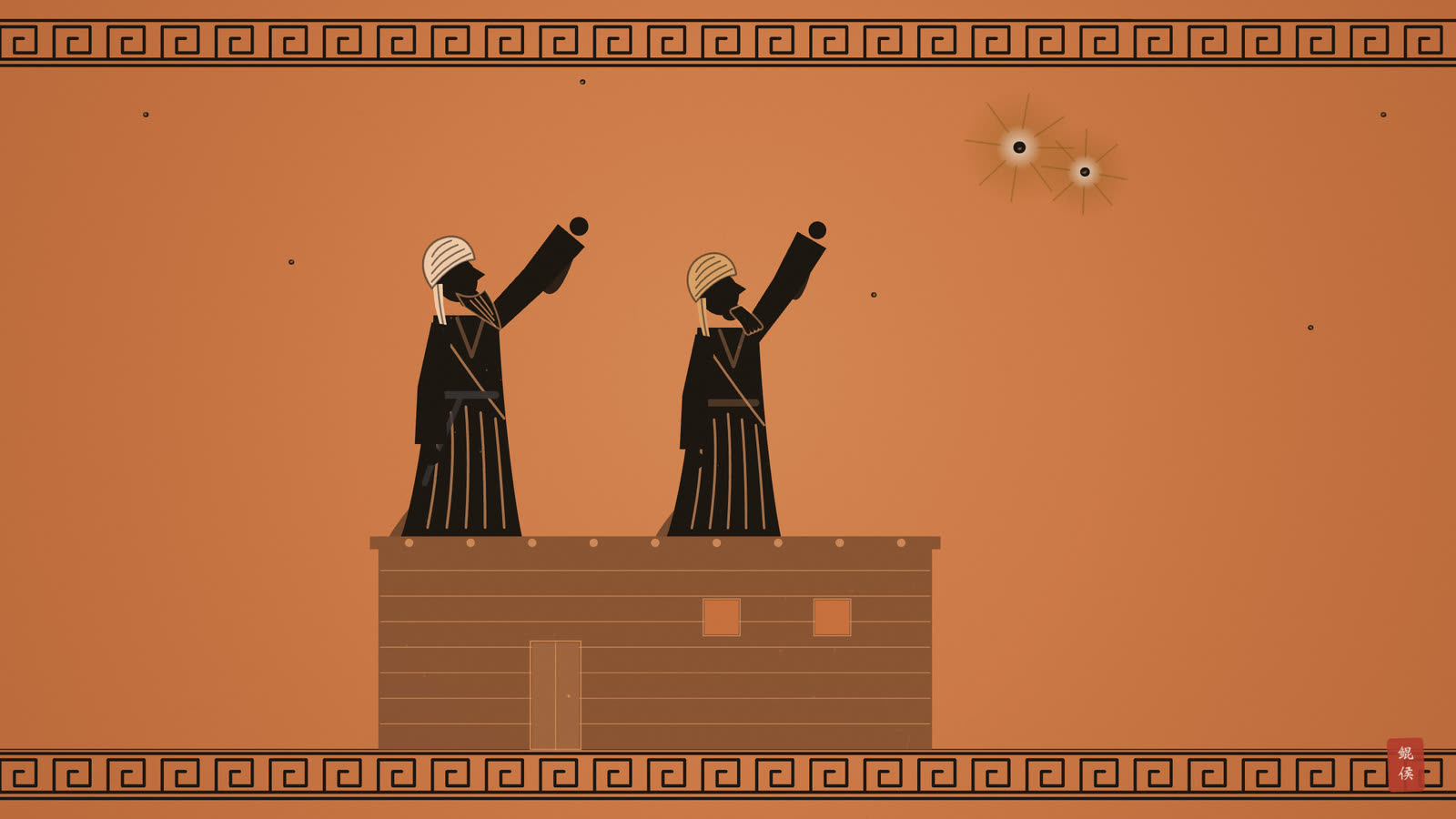
A conjunction belongs to two planets or more when they come together at one place in the longitude of the signs. But 'conjunction' without qualification is applied to the conjunction of Saturn and Jupiter. It happens once every 20 years and is called the lesser conjunction. If their conjunction is reckoned by their mean course, the second is in the ninth sign from the preceding one; these signs are of one triplicity, and they conjoin in them 12 times and then pass in their conjunction to another triplicity. For example, the first conjunction was in Aries, the second in Sagittarius, the third in Leo and the fourth in Aries; these are the signs of a triangular figure. In this way they conjoin in them until the twelfth is in Leo; then they pass to the triplicity of Taurus, so that the first conjunction is in Taurus, the second in Capricorn and the third in Virgo. This transfer takes place in 240 years and is called the middle conjunction, the transfer of the passage, and the revolution of the year in which the transfer of the passage takes place. It is known that the triplicities are four, the first of them the triplicity of Aries and the last the triplicity of Cancer. When the conjunctions have gone through all the triplicities, 12 times in each, they return to the beginning of Aries, and that is in 960 years; this is called the greatest conjunction. The conjunction of Saturn and Mars in one assumed sign, to the exclusion of others, which is Cancer, is also used.
翻译点开
§250. What are the conjunctions?
第二百五十问 何谓会合?
A conjunction belongs to two planets or more when they come together at one place in the longitude of the signs. But 'conjunction' without qualification is applied to the conjunction of Saturn and Jupiter. It happens once every 20 years and is called the lesser conjunction. If their conjunction is reckoned by their mean course, the second is in the ninth sign from the preceding one; these signs are of one triplicity, and they conjoin in them 12 times and then pass in their conjunction to another triplicity. For example, the first conjunction was in Aries, the second in Sagittarius, the third in Leo and the fourth in Aries; these are the signs of a triangular figure. In this way they conjoin in them until the twelfth is in Leo; then they pass to the triplicity of Taurus, so that the first conjunction is in Taurus, the second in Capricorn and the third in Virgo. This transfer takes place in 240 years and is called the middle conjunction, the transfer of the passage, and the revolution of the year in which the transfer of the passage takes place. It is known that the triplicities are four, the first of them the triplicity of Aries and the last the triplicity of Cancer. When the conjunctions have gone through all the triplicities, 12 times in each, they return to the beginning of Aries, and that is in 960 years; this is called the greatest conjunction. The conjunction of Saturn and Mars in one assumed sign, to the exclusion of others, which is Cancer, is also used.
两颗或更多的行星在星座经度上聚于一处,就是会合。但不加限定地说“会合”,指的是土星与木星的会合。它每二十年发生一次,称为小会合。若按它们的平均行程推算会合,第二次就落在从前一次数起的第九个星座;这些星座同属一个三方,它们在其中会合十二次,然后它们的会合便转到另一个三方。例如,第一次会合在白羊,第二次在射手,第三次在狮子,第四次又在白羊;这些是一个三角形图形上的星座。它们就这样在其中会合,直到第十二次落在狮子;然后转到金牛的三方,于是第一次会合在金牛,第二次在摩羯,第三次在处女。这一转移历时二百四十年,称为中会合、行经之转移,而发生行经转移的那一年的回归也这样称呼。已知三方有四个,第一个是白羊的三方,最后一个是巨蟹的三方。当会合走遍所有三方、每个三方十二次之后,就回到白羊之首,那需要九百六十年;这称为最大会合。土星与火星在一个特定的星座——即巨蟹,而不在别的星座——中的会合,也有人使用。
大意与图解点开
🔎 大意:不加限定的会合指土木之会:二十年一次为小会合,同一三方会合十二次后转入下一三方为中会合,走遍四三方为最大会合。
📖 术语
| 术语 | 英文原词 | 意思 |
|---|---|---|
| 会合 | conjunction | 诸星同在一经度 |
| 小会合 | the lesser conjunction | 土木二十年一会 |
| 中会合 | the middle conjunction | 转入另一三方 |
| 最大会合 | the greatest conjunction | 四三方走遍 |
| 三方 | triplicity | 彼此相隔四座的三座 |
🧭 图解与讲解
会合本义是两颗以上的行星在黄经上聚于一处,但占星家单说“会合”,专指土星与木星的会合。这两颗最慢的行星约二十年相会一次,叫小会合。按平均行程算,下一次会合比上一次前进八个星座、落在数起的第九座,也就是同一个三方里的下一座(图一):白羊、射手、狮子,三次绕成一个三角形。
〔图〕土木会合每二十年一次,每次前进到第九个星座,三次绕成一个三方的三角形;十二次后转入下一个三方
| 名称 | 周期 | 是什么 |
|---|---|---|
| 小会合 | 二十年 | 土星与木星相会一次;不加限定的“会合”即指此 |
| 中会合(行经之转移) | 二百四十年 | 同一三方里会合十二次后,转入下一个三方 |
| 最大会合 | 九百六十年 | 走遍四个三方,每个十二次,回到白羊之首 |
| 土星与火星之会 | — | 只取在巨蟹中的那一次 |
在同一三方里会合十二次(二百四十年)后,会合点转入下一个三方,比鲁尼举的例子是从火象的白羊三方转到土象的金牛三方。这次转移叫中会合,也叫“行经之转移”,转移那一年的回归盘也用这个名字。四个三方各走十二次,共九百六十年,回到白羊之首,叫最大会合(表二)。
这里的数是按平均行程的整齐数。三方的次序“第一个是白羊的,最后一个是巨蟹的”,即火、土、风、水的次序,卷八第三百七十九问讲三方时还会说到。比鲁尼还附带一句:也有人用土星与火星在巨蟹的会合,只取这一个星座。
会合是阿拉伯世运占星的骨架:王朝兴替、宗教变迁、大事的年代,常用小、中、大三种会合来分期,后来随阿拉伯著作传入欧洲。本书卷八第五百一十八问讲会合的周期与其四分时还要用到它;这里只是先把名词与年数讲清楚。
📖 术语
| 术语 | 英文原词 | 意思 |
|---|---|---|
| 会合 | conjunction | 诸星同在一经度 |
| 小会合 | the lesser conjunction | 土木二十年一会 |
| 中会合 | the middle conjunction | 转入另一三方 |
| 最大会合 | the greatest conjunction | 四三方走遍 |
| 三方 | triplicity | 彼此相隔四座的三座 |
🧭 图解与讲解
会合本义是两颗以上的行星在黄经上聚于一处,但占星家单说“会合”,专指土星与木星的会合。这两颗最慢的行星约二十年相会一次,叫小会合。按平均行程算,下一次会合比上一次前进八个星座、落在数起的第九座,也就是同一个三方里的下一座(图一):白羊、射手、狮子,三次绕成一个三角形。
| 名称 | 周期 | 是什么 |
|---|---|---|
| 小会合 | 二十年 | 土星与木星相会一次;不加限定的“会合”即指此 |
| 中会合(行经之转移) | 二百四十年 | 同一三方里会合十二次后,转入下一个三方 |
| 最大会合 | 九百六十年 | 走遍四个三方,每个十二次,回到白羊之首 |
| 土星与火星之会 | — | 只取在巨蟹中的那一次 |
在同一三方里会合十二次(二百四十年)后,会合点转入下一个三方,比鲁尼举的例子是从火象的白羊三方转到土象的金牛三方。这次转移叫中会合,也叫“行经之转移”,转移那一年的回归盘也用这个名字。四个三方各走十二次,共九百六十年,回到白羊之首,叫最大会合(表二)。
这里的数是按平均行程的整齐数。三方的次序“第一个是白羊的,最后一个是巨蟹的”,即火、土、风、水的次序,卷八第三百七十九问讲三方时还会说到。比鲁尼还附带一句:也有人用土星与火星在巨蟹的会合,只取这一个星座。
会合是阿拉伯世运占星的骨架:王朝兴替、宗教变迁、大事的年代,常用小、中、大三种会合来分期,后来随阿拉伯著作传入欧洲。本书卷八第五百一十八问讲会合的周期与其四分时还要用到它;这里只是先把名词与年数讲清楚。
§251. What is the passage (mamarr) used in the conjunctions?
By it is not meant high and low absolutely; for if that were so, no planet would pass over another whose orb is higher. The Moon, for example: its passing over Mercury, let alone over the others up to Saturn, would be impossible and out of the question. They take the passage of a planet over another to mean the comparison of their places with respect to the mean distance, in the apogee orb on its own and in the epicycle on its own. When both are at their mean distances, they are level in their path and neither passes over the other. If one of them is in the first or the fourth belt, it is called passing over the one that is in the other two belts, even if its orb is lower than the other's orb. If both are in one belt, and are wholly in the first [text uncertain], the one that is farther from its mean distance passes over the one that is nearer to its mean distance; it is as if the two were imagined together on one orb and then compared by their distance from the earth. To know this, a separate operation is used.
翻译点开
§251. What is the passage (mamarr) used in the conjunctions?
第二百五十一问 会合中所用的“行经”(马马尔)是什么?
By it is not meant high and low absolutely; for if that were so, no planet would pass over another whose orb is higher. The Moon, for example: its passing over Mercury, let alone over the others up to Saturn, would be impossible and out of the question. They take the passage of a planet over another to mean the comparison of their places with respect to the mean distance, in the apogee orb on its own and in the epicycle on its own. When both are at their mean distances, they are level in their path and neither passes over the other. If one of them is in the first or the fourth belt, it is called passing over the one that is in the other two belts, even if its orb is lower than the other's orb. If both are in one belt, and are wholly in the first [text uncertain], the one that is farther from its mean distance passes over the one that is nearer to its mean distance; it is as if the two were imagined together on one orb and then compared by their distance from the earth. To know this, a separate operation is used.
它不是指绝对意义上的高与低;若是那样,就没有一颗行星能行经于天球比它高的另一颗之上了。比如月亮:它行经于水星之上,更不用说行经于直到土星的其余诸星之上,就成了不可能、无从谈起的事。他们把一颗行星行经于另一颗之上,理解为比较两者相对于平均距离的位置,远地点圈单独比,本轮单独比。当两者都在平均距离时,它们在行程上持平,谁也不行经于谁之上。若其中一颗在第一带或第四带,就说它行经于在另外两带中的那一颗之上,即使它的天球比另一颗的天球低。若两者在同一带中,而且全在第一带〔原文疑有讹误〕,那么离其平均距离较远的,就行经于离其平均距离较近的之上;就好比把两者设想在同一个天球上,再比较它们离大地的远近。要知道这一点,另有专门的算法。
大意与图解点开
🔎 大意:会合中说一星“行经”于另一星之上,不比天球高低,而比各自离平均距离的远近:在第一、四带者在上,同带则较远者在上。
📖 术语
| 术语 | 英文原词 | 意思 |
|---|---|---|
| 行经 | the passage (mamarr) | 会合时一星居上 |
| 平均距离 | the mean distance | 远近地点之间的距离 |
| 带 | belt | 圈上的四分之一段 |
🧭 图解与讲解
上一问提到“行经之转移”,这一问解释会合里说的“行经”(马马尔):两星相会时,哪一颗算在上面、压过另一颗。比鲁尼先排除字面理解:若按天球的高低,月亮永远在最下层,就不可能行经于任何星之上,这说法显然不通。
〔图〕行经比的不是天球的高低,而是各自离平均距离的远近:在第一、第四带者行经于在第二、第三带者之上
| 两星的情形 | 谁行经于谁之上 |
|---|---|
| 都在平均距离 | 持平,谁也不在上 |
| 一在第一或第四带,一在第二或第三带 | 前者在上,即使它的天球较低 |
| 同在第一带〔原文疑有讹误〕 | 离平均距离较远者在上 |
| 远地点圈、本轮 | 各自单独比较 |
占星家的意思是比较两星各自在自己圈上的位置:远地点圈上比一次,本轮上也比一次。卷三第二百零一问讲过“四分带”:从远地点起顺次是第一、二、三、四带,第一、第四带在远地点一侧(在上),第二、第三带在近地点一侧(在下)。在上半的那颗就算“行经于”在下半的那颗之上,不管谁的天球更高(图一)。
若两星同在一带,就比谁离平均距离更远:好比把两颗星放到同一个天球上,看谁离大地更远。原文这里说“全在第一带”,抄本字句不稳,标为〔原文疑有讹误〕;按理这条规则只在第一、第四带成立,在第二、第三带应当反过来,比鲁尼只说“另有专门的算法”。
在会合判断里,居上者被认为压过居下者,会合的意义要看谁在上。比鲁尼在这里只讲定义,把算法留给专门的书,这与他一贯的做法相合:先把概念讲清,不把操作细节塞进入门书。
📖 术语
| 术语 | 英文原词 | 意思 |
|---|---|---|
| 行经 | the passage (mamarr) | 会合时一星居上 |
| 平均距离 | the mean distance | 远近地点之间的距离 |
| 带 | belt | 圈上的四分之一段 |
🧭 图解与讲解
上一问提到“行经之转移”,这一问解释会合里说的“行经”(马马尔):两星相会时,哪一颗算在上面、压过另一颗。比鲁尼先排除字面理解:若按天球的高低,月亮永远在最下层,就不可能行经于任何星之上,这说法显然不通。
| 两星的情形 | 谁行经于谁之上 |
|---|---|
| 都在平均距离 | 持平,谁也不在上 |
| 一在第一或第四带,一在第二或第三带 | 前者在上,即使它的天球较低 |
| 同在第一带〔原文疑有讹误〕 | 离平均距离较远者在上 |
| 远地点圈、本轮 | 各自单独比较 |
占星家的意思是比较两星各自在自己圈上的位置:远地点圈上比一次,本轮上也比一次。卷三第二百零一问讲过“四分带”:从远地点起顺次是第一、二、三、四带,第一、第四带在远地点一侧(在上),第二、第三带在近地点一侧(在下)。在上半的那颗就算“行经于”在下半的那颗之上,不管谁的天球更高(图一)。
若两星同在一带,就比谁离平均距离更远:好比把两颗星放到同一个天球上,看谁离大地更远。原文这里说“全在第一带”,抄本字句不稳,标为〔原文疑有讹误〕;按理这条规则只在第一、第四带成立,在第二、第三带应当反过来,比鲁尼只说“另有专门的算法”。
在会合判断里,居上者被认为压过居下者,会合的意义要看谁在上。比鲁尼在这里只讲定义,把算法留给专门的书,这与他一贯的做法相合:先把概念讲清,不把操作细节塞进入门书。
§252. What are conjunction and opposition?
Conjunction (ijtimāʿ) is the coming together of the Sun and the Moon at the end of the month; in the Almagest it is called the first joining (ittiṣāl). The part in which this takes place is called the part of the conjunction, and the ascendant at its time is the ascendant of the conjunction. It takes place in the middle of the period during which the Moon is hidden under the rays of the Sun; this period is called sirār, because the Moon is concealed (istisrār) in it, and muḥāq, because its light is effaced (inmiḥāq). Opposition (istiqbāl) is when the Moon is in the seventh sign from the sign of the Sun and their parts in them are equal. It is called a joining [sic], because the Moon is filled with light in it, and the Moon is called badr (full moon) because of its completeness and its hastening (mubādara) to rise at sunset. The ascendant at its time is called the ascendant of the opposition. As for its part, by reasoning it ought to be the one in which the Moon is; but the astrologers take it as the part of whichever luminary is then above the earth, whether it be the Moon or the Sun.
翻译点开
§252. What are conjunction and opposition?
第二百五十二问 何谓合与望?
Conjunction (ijtimāʿ) is the coming together of the Sun and the Moon at the end of the month; in the Almagest it is called the first joining (ittiṣāl). The part in which this takes place is called the part of the conjunction, and the ascendant at its time is the ascendant of the conjunction. It takes place in the middle of the period during which the Moon is hidden under the rays of the Sun; this period is called sirār, because the Moon is concealed (istisrār) in it, and muḥāq, because its light is effaced (inmiḥāq). Opposition (istiqbāl) is when the Moon is in the seventh sign from the sign of the Sun and their parts in them are equal. It is called a joining [sic], because the Moon is filled with light in it, and the Moon is called badr (full moon) because of its completeness and its hastening (mubādara) to rise at sunset. The ascendant at its time is called the ascendant of the opposition. As for its part, by reasoning it ought to be the one in which the Moon is; but the astrologers take it as the part of whichever luminary is then above the earth, whether it be the Moon or the Sun.
合(伊吉蒂马)是日月在月末聚到一起;在《天文学大成》里它称为“第一次相接”。发生合的那一度称为合之度,合时的上升点就是合的上升点。它发生在月亮隐没于太阳光线之下那段时期的正中;这段时期称为“西拉尔”,因为月亮在其中隐藏(伊斯提斯拉尔),又称“穆哈格”,因为它的光在其中被抹去(茵米哈格)。望(伊斯提格巴勒)是月亮在从太阳所在星座数起的第七个星座中,而且两者在各自星座中的度数相等。它被称为“相接”〔原书如此〕,因为月亮在其中充满了光;月亮被称为“巴德尔”(满月),是因为它的圆满,也因为它在日落时急于(穆巴达拉)升起。望时的上升点称为望的上升点。至于望之度,按道理应当是月亮所在的那一度;但占星家取当时在地上的那颗发光体所在的那一度,不论那是月亮还是太阳。
大意与图解点开
🔎 大意:合是日月在月末相聚,正当月隐于日光之下时期的中间;望是月在日的第七座、度数相等。望之度占星家取当时在地上的那颗发光体。
📖 术语
| 术语 | 英文原词 | 意思 |
|---|---|---|
| 合 | conjunction (ijtimāʿ) | 日月同度 |
| 望 | opposition (istiqbāl) | 日月相对 |
| 相接 | joining (ittiṣāl) | 《天文学大成》之称 |
| 西拉尔 | sirār | 月隐期,取“隐藏”义 |
| 巴德尔 | badr | 满月 |
🧭 图解与讲解
合与望是日月关系的两个端点。合是月末日月同处一度,《天文学大成》称为“第一次相接”。它正好落在月亮被太阳光线淹没、看不见的那几天的正中,这几天阿拉伯语叫“西拉尔”(隐藏)或“穆哈格”(光被抹去)。望是月亮走到太阳所在星座的第七座、度数相同,也就是与太阳正相对(表一)。
| 合(伊吉蒂马) | 望(伊斯提格巴勒) | |
|---|---|---|
| 日月位置 | 在月末聚于同一处 | 月在太阳所在星座数起的第七座,度数相等 |
| 《天文学大成》称 | 第一次相接 | 相接〔原书如此〕 |
| 相关之名 | 西拉尔(隐藏)、穆哈格(光被抹去):月隐于日光下的时期,合在其正中 | 巴德尔(满月):因其圆满,又急于在日落时升起 |
| 取哪一度 | 合之度 | 理应取月亮之度;占星家取当时在地上的那颗发光体之度 |
| 上升点 | 合的上升点 | 望的上升点 |
〔图〕合与望各有其度与上升点,是推算新月、满月前后天象的两个基准时刻
望在原文里也被称为“相接”,理由却是“月亮充满了光”,这个理由与“相接”对不上,可能抄本把“满”字写成了“接”,也可能脱了“第二次”二字,与合的“第一次相接”相对。本站照译,标〔原书如此〕。满月叫“巴德尔”,比鲁尼取了两层意思:圆满,以及日落时它急着从东方升起。
合与望各有自己的“度”与“上升点”,即发生那一刻的黄道度与上升盘。最后一句是实用上的规矩:望之度按理应取月亮所在之度,但占星家取那一刻在地平之上的那颗发光体,白天望取太阳,夜里望取月亮。这个“前一次合或望之度”,后世本命与天气占常用。
📖 术语
| 术语 | 英文原词 | 意思 |
|---|---|---|
| 合 | conjunction (ijtimāʿ) | 日月同度 |
| 望 | opposition (istiqbāl) | 日月相对 |
| 相接 | joining (ittiṣāl) | 《天文学大成》之称 |
| 西拉尔 | sirār | 月隐期,取“隐藏”义 |
| 巴德尔 | badr | 满月 |
🧭 图解与讲解
合与望是日月关系的两个端点。合是月末日月同处一度,《天文学大成》称为“第一次相接”。它正好落在月亮被太阳光线淹没、看不见的那几天的正中,这几天阿拉伯语叫“西拉尔”(隐藏)或“穆哈格”(光被抹去)。望是月亮走到太阳所在星座的第七座、度数相同,也就是与太阳正相对(表一)。
| 合(伊吉蒂马) | 望(伊斯提格巴勒) | |
|---|---|---|
| 日月位置 | 在月末聚于同一处 | 月在太阳所在星座数起的第七座,度数相等 |
| 《天文学大成》称 | 第一次相接 | 相接〔原书如此〕 |
| 相关之名 | 西拉尔(隐藏)、穆哈格(光被抹去):月隐于日光下的时期,合在其正中 | 巴德尔(满月):因其圆满,又急于在日落时升起 |
| 取哪一度 | 合之度 | 理应取月亮之度;占星家取当时在地上的那颗发光体之度 |
| 上升点 | 合的上升点 | 望的上升点 |
望在原文里也被称为“相接”,理由却是“月亮充满了光”,这个理由与“相接”对不上,可能抄本把“满”字写成了“接”,也可能脱了“第二次”二字,与合的“第一次相接”相对。本站照译,标〔原书如此〕。满月叫“巴德尔”,比鲁尼取了两层意思:圆满,以及日落时它急着从东方升起。
合与望各有自己的“度”与“上升点”,即发生那一刻的黄道度与上升盘。最后一句是实用上的规矩:望之度按理应取月亮所在之度,但占星家取那一刻在地平之上的那颗发光体,白天望取太阳,夜里望取月亮。这个“前一次合或望之度”,后世本命与天气占常用。
原文为公有领域古籍;翻译、印象画与图文解读由 AI 辅助生成,鲲侯审校。