卷二·第十八至二十章 映点、七曜名号与诸重天
映点与反映点的求法;七曜名字与符号的由来;九重天的次序与运动,原动天带动诸天,恒星天三万六千年一周。
CHAP. XVIII. Of the Antiscions and Contrantiscions of the Planets.
SOme of the learned in this Art do hold that the Antiscions of the Planets be equivalent unto a Sextile or a Trine-aspect, especially if they were beneficial Planets; and their Contrantiscions to be of the nature of Quadrate or Opposition.
How to know the Antiscions is no more but thus; first, know the Antiscions of the signs, which is no more but a sign being equally distant with another from Cancer and Capricorn the two Tropicks; as Gemini hath its Antiscion in Cancer, Taurus in Leo, Aries in Virgo, Pisces in Libra, Aquaries in Scorpio, and Capricorn in Sagittary; for when the Sun is in the 1. degree of Gemini, he is as far from the Tropick point of Cancer, as when he is in 29. degrees of Cancer; and in the 5 degree of Taurus, as when in the 25. degree of Leo, &c.
Having the true knowledge of the Antiscions of the signs, the Antiscions of the Planets then is easily known; viz. look in what sign and degrees your Planet is whose Antiscion you would know, and substract the degrees and minutes he is in from 30. degrees or a whole sign, and in what degree and minute remains is his Antiscion and then knowing in what sign he is, and his Antiscion must be in what answers thereunto as abovesaid; as if he be in Virgo, his Antiscion is in Aries &c.
The Contrantiscion is known thus; look in what sign, degree and minute your Antiscion falls, and your contrantiscion will be in the same degree and minute of the opposite sign to your Antiscion: as for example, I admit your Antiscion of Saturn, Iupiter or Mars, or any Planet be in the 16. degree, 24. minutes of Leo, then your Contrantiscion falls in the 16. degree, 24. minutes of Aquaries, &c.
But these are things now (by Gods blessing) vulgarly known; it is not our business therefore here to dwell, only since in such a work as this, it is necessary to say somewhat of the Planets, their dignities, signs, aspects and natures, the whole Art consisting thereon, as the chief rock on which this most incomparable glorious Fabrick, viz.
Astrologie is founded and built; and having by the blessed assistance of my glorious Maker waded through the beginning, that the work might be full, I thought to give some small hint of the Antiscions, and so proceed; for our intentions in these our undertakings are not to insist on what is already made manifest (further then to make the work the easier to the weaker sort and students therein) but what remains in the Art (as yet unrevealed and not made to speak our language) which we conceive the present times capable of receiving; it being my hearty desire to have knowledge increase upon the face of the earth, and ignorance abolished, since the more knowledge a man hath, the nearer he is to the Divine Essence, and further from the sottish stupidity of the World.
翻译点开
CHAP. XVIII. Of the Antiscions and Contrantiscions of the Planets.
第十八章 论诸行星的映点与反映点。
SOme of the learned in this Art do hold that the Antiscions of the Planets be equivalent unto a Sextile or a Trine-aspect, especially if they were beneficial Planets; and their Contrantiscions to be of the nature of Quadrate or Opposition.
这门学问里有些博学之士主张,诸行星的映点等同于六分相或三分相,尤其如果是吉星的话;它们的反映点则具有四分或对冲的性质。
How to know the Antiscions is no more but thus; first, know the Antiscions of the signs, which is no more but a sign being equally distant with another from Cancer and Capricorn the two Tropicks; as Gemini hath its Antiscion in Cancer, Taurus in Leo, Aries in Virgo, Pisces in Libra, Aquaries in Scorpio, and Capricorn in Sagittary; for when the Sun is in the 1. degree of Gemini, he is as far from the Tropick point of Cancer, as when he is in 29. degrees of Cancer; and in the 5 degree of Taurus, as when in the 25. degree of Leo, &c.
怎样求映点,不过是这样:先要知道星座的映点,那不过是一个星座与另一个星座距巨蟹与摩羯这两个回归点同样远;如双子的映点在巨蟹,金牛在狮子,白羊在处女,双鱼在天秤,水瓶在天蝎,摩羯在射手;因为太阳在双子第一度时,与巨蟹的回归点相距,正如他在巨蟹二十九度时一样远;在金牛第五度时,正如在狮子第二十五度时一样,等等。
Having the true knowledge of the Antiscions of the signs, the Antiscions of the Planets then is easily known; viz. look in what sign and degrees your Planet is whose Antiscion you would know, and substract the degrees and minutes he is in from 30. degrees or a whole sign, and in what degree and minute remains is his Antiscion and then knowing in what sign he is, and his Antiscion must be in what answers thereunto as abovesaid; as if he be in Virgo, his Antiscion is in Aries &c.
真正知道了星座的映点,行星的映点就容易知道了;即:看你要求其映点的那颗行星在什么星座、多少度,从三十度即一整个星座里减去他所在的度与分,余下的度与分就是他的映点,然后知道他在哪个星座,他的映点就必定在如上所说与之相应的那个星座里;如他在处女,他的映点就在白羊,等等。
The Contrantiscion is known thus; look in what sign, degree and minute your Antiscion falls, and your contrantiscion will be in the same degree and minute of the opposite sign to your Antiscion: as for example, I admit your Antiscion of Saturn, Iupiter or Mars, or any Planet be in the 16. degree, 24. minutes of Leo, then your Contrantiscion falls in the 16. degree, 24. minutes of Aquaries, &c.
反映点这样求:看你的映点落在什么星座、多少度分,你的反映点就在与映点所在星座相对的那个星座的同一度分:举例说,假定你的土星、木星、火星或任何行星的映点在狮子十六度二十四分,那么你的反映点就落在水瓶十六度二十四分,等等。
But these are things now (by Gods blessing) vulgarly known; it is not our business therefore here to dwell, only since in such a work as this, it is necessary to say somewhat of the Planets, their dignities, signs, aspects and natures, the whole Art consisting thereon, as the chief rock on which this most incomparable glorious Fabrick, viz.
但这些事如今(蒙神赐福)已人所共知;所以不是我们在此要多停留的;只因在这样一部著作里,有必要讲一些关于诸行星、它们的尊贵、星座、相位与本性的事,整门学问都建立在这些上面,它们是这座无与伦比的光辉大厦即——
Astrologie is founded and built; and having by the blessed assistance of my glorious Maker waded through the beginning, that the work might be full, I thought to give some small hint of the Antiscions, and so proceed; for our intentions in these our undertakings are not to insist on what is already made manifest (further then to make the work the easier to the weaker sort and students therein) but what remains in the Art (as yet unrevealed and not made to speak our language) which we conceive the present times capable of receiving; it being my hearty desire to have knowledge increase upon the face of the earth, and ignorance abolished, since the more knowledge a man hath, the nearer he is to the Divine Essence, and further from the sottish stupidity of the World.
占星学——赖以奠基和建造的主要磐石;我既蒙我荣耀的造物主的福佑,涉过了这开头的部分,为使这部著作完整,我想对映点略作提示,然后继续;因为我们从事这些工作的用意,不在于坚持讲已经显明的东西(除了让较弱的人和学者更容易学之外),而在于这门学问里尚存的东西(至今尚未揭示、尚未用我们的语言说出),我们认为当今时代能够接受它们;我衷心希望知识在大地上增长,愚昧被废除,因为一个人知识越多,就越接近神圣的本质,离世人愚蠢的麻木越远。
大意与图解点开
🔎 大意:映点是距两个至点等远的度数,求法是三十减去所在度数,放到相应星座;反映点是映点的对面同度。映点如吉相,反映点如凶相。
📖 术语
| 术语 | 英文原词 | 意思 |
|---|---|---|
| 映点 | Antiscions | 以两至点为轴的镜像 |
| 反映点 | Contrantiscions | 映点的对面 |
| 回归点 | Tropick point | 巨蟹、摩羯的起点 |
🧭 图解与讲解
第十八章讲映点(antiscion)与反映点(contrantiscion)。有些学者认为映点的作用等同六分或三分,尤其是吉星的映点;反映点则如四分或对冲。拉姆齐没有对此表态,只讲求法。
〔图〕映点以巨蟹、摩羯两个至点为轴,两边度数镜像相对:白羊对处女,金牛对狮子,双子对巨蟹
〔图〕拉姆齐的例子:映点在狮子十六度二十四分,反映点就在对面水瓶十六度二十四分
先认星座的映点(图一):两个星座距巨蟹、摩羯这两个回归点(夏至点、冬至点)一样远,就互为映点:双子与巨蟹,金牛与狮子,白羊与处女,双鱼与天秤,水瓶与天蝎,摩羯与射手。太阳在这样两处度数上,离至点一样远,白昼也一样长。原文举例说太阳在金牛五度,与在狮子「第五十五度」一样远;星座只有三十度,当是二十五度之误,翻译已按二十五度译出。
再求行星的映点:用三十度减去行星所在的度分,余数放到相应的星座。如图二,土星在金牛十三度三十六分,三十减之得十六度二十四分,金牛对狮子,所以映点在狮子十六度二十四分;反映点就是映点的对面同度,在水瓶十六度二十四分,这正是拉姆齐所举的数。
拉姆齐说这些在当时已人所共知,他讲一讲只是为了全书完整。接着交代全书的宗旨:不重复已经显明的东西,而要把这门学问里「尚未用我们的语言说出」的部分写出来,让知识增长、愚昧消除。他说人的知识越多,越接近神圣的本质。
📖 术语
| 术语 | 英文原词 | 意思 |
|---|---|---|
| 映点 | Antiscions | 以两至点为轴的镜像 |
| 反映点 | Contrantiscions | 映点的对面 |
| 回归点 | Tropick point | 巨蟹、摩羯的起点 |
🧭 图解与讲解
第十八章讲映点(antiscion)与反映点(contrantiscion)。有些学者认为映点的作用等同六分或三分,尤其是吉星的映点;反映点则如四分或对冲。拉姆齐没有对此表态,只讲求法。
先认星座的映点(图一):两个星座距巨蟹、摩羯这两个回归点(夏至点、冬至点)一样远,就互为映点:双子与巨蟹,金牛与狮子,白羊与处女,双鱼与天秤,水瓶与天蝎,摩羯与射手。太阳在这样两处度数上,离至点一样远,白昼也一样长。原文举例说太阳在金牛五度,与在狮子「第五十五度」一样远;星座只有三十度,当是二十五度之误,翻译已按二十五度译出。
再求行星的映点:用三十度减去行星所在的度分,余数放到相应的星座。如图二,土星在金牛十三度三十六分,三十减之得十六度二十四分,金牛对狮子,所以映点在狮子十六度二十四分;反映点就是映点的对面同度,在水瓶十六度二十四分,这正是拉姆齐所举的数。
拉姆齐说这些在当时已人所共知,他讲一讲只是为了全书完整。接着交代全书的宗旨:不重复已经显明的东西,而要把这门学问里「尚未用我们的语言说出」的部分写出来,让知识增长、愚昧消除。他说人的知识越多,越接近神圣的本质。
CHAP. XIX. Shewing the Reasons of the names of the seven Planets and their Characters.
ENter we shall in order, according to their stations and places in the Heaven, with the highest first, viz. Saturn.
And the reason why he was called Saturn is this (though I must confess for several reasons (which would be too tedious and superfluous here to relate) he was otherwise called) he is called I say Saturn (for because this is his vulgar name amongst us; I give you the reason and cause thereof) à saturo to fill or give in abundance, quasi saturavit omnia, it being thought amongst the learned that where he giveth, it is in full plenty and in abundance.
Jupiter, is so called à Juvando, quasi est Iuvans pater, from helping, or being beneficial to mankinde, he being naturally temperate, inclining by his sweet influence the dispositions of men to sobriety, moderation and goodness.
Mars, quasi Mavors, quia magna verteret, turning great things, and acting high exploits.
Sol, quasi solus Lucens, as only shining, being the Eye, Candle, and soul of the World.
Venus, à veneror, so called, to honour, and as it were giving due reverence to beauty, she being the cause thereof.
Mercury, quasi Merces, a merendo, signifying wages and mercature, being the cause and Author thereof.
Luna, quia aliena luce lucet, shining with a borrowed light.
Saturn is thus Charactered ♄, representing a Sithe or a Cross, for that he is author of mischief and old Age. Iupiter hath this Character ♃, representing one with a Mace or Scepter on his shoulder or in his hand, as deserving a Kingdom for his temperate good nature, and inclination. Mars is made thus ♂, pointed like a Dart or Engine of War, for that he excites to such mischief.
The Sun is so charactered ☉, as being a full light of himself, not borrowing in the least from others, or I may say he is made round, having a prick in the middle, as being the Center of the whole Universe, as some have maintained he is. Venus is thus charactered ♀, resembling a beautifull Lady, with a lovely round visage. Mercury is made in this manner ☿, for that he is the Embassador and Messenger of the gods, with a pair of wings as it were on his head. The Moon you know either in her wane or prime is horned: wherefore she is still charactered thus ☽, as best resembling her form.
翻译点开
CHAP. XIX. Shewing the Reasons of the names of the seven Planets and their Characters.
第十九章 说明七行星名字与符号的由来。
ENter we shall in order, according to their stations and places in the Heaven, with the highest first, viz. Saturn.
我们要照它们在天上的位次进入正题,先从最高的讲起,即土星。
And the reason why he was called Saturn is this (though I must confess for several reasons (which would be too tedious and superfluous here to relate) he was otherwise called) he is called I say Saturn (for because this is his vulgar name amongst us; I give you the reason and cause thereof) à saturo to fill or give in abundance, quasi saturavit omnia, it being thought amongst the learned that where he giveth, it is in full plenty and in abundance.
他之所以叫土星,理由是这样(虽然我必须承认,由于种种理由,在这里一一细说就太冗长多余了,他也有别的叫法),我说他叫土星(因为这是他在我们中间通行的名字;我把其中的理由和原因告诉你),源于拉丁语「使饱足」,即「使丰足」,好比说「他使万物饱足」,因为学者们认为,他所给予之处,便给得充足丰盛。
Jupiter, is so called à Juvando, quasi est Iuvans pater, from helping, or being beneficial to mankinde, he being naturally temperate, inclining by his sweet influence the dispositions of men to sobriety, moderation and goodness.
木星之所以这样叫,源于「相助」,好比说「相助的父亲」,因为他帮助人类、有益于人类,他本性温和,以他甜美的影响使人的性情趋向清醒、节制与良善。
Mars, quasi Mavors, quia magna verteret, turning great things, and acting high exploits.
火星,好比说「马沃尔斯」,因为他「翻转大事」,翻转大事,成就伟业。
Sol, quasi solus Lucens, as only shining, being the Eye, Candle, and soul of the World.
太阳,好比说「独自发光者」,因为只有他发光,他是世界的眼睛、灯烛与灵魂。
Venus, à veneror, so called, to honour, and as it were giving due reverence to beauty, she being the cause thereof.
金星之所以这样叫,源于「敬重」,即尊敬,仿佛是向美致以应有的敬意,因为她是美的原因。
Mercury, quasi Merces, a merendo, signifying wages and mercature, being the cause and Author thereof.
水星,好比说「酬劳」,源于「挣得」,表示工钱与买卖,因为他是这些的原因与创始者。
Luna, quia aliena luce lucet, shining with a borrowed light.
月亮,因为她借他者之光而发光,以借来的光照耀。
Saturn is thus Charactered ♄, representing a Sithe or a Cross, for that he is author of mischief and old Age. Iupiter hath this Character ♃, representing one with a Mace or Scepter on his shoulder or in his hand, as deserving a Kingdom for his temperate good nature, and inclination. Mars is made thus ♂, pointed like a Dart or Engine of War, for that he excites to such mischief.
土星的符号这样写 ♄,表示一把镰刀或一个十字,因为他是祸害与衰老的作者。木星的符号是这样 ♃,表示一个人肩上扛着或手里拿着权杖或王杖,因为他以温和良善的本性与倾向配得一个王国。火星写作这样 ♂,带尖,像一支标枪或一件兵器,因为他激起这类祸害。
The Sun is so charactered ☉, as being a full light of himself, not borrowing in the least from others, or I may say he is made round, having a prick in the middle, as being the Center of the whole Universe, as some have maintained he is. Venus is thus charactered ♀, resembling a beautifull Lady, with a lovely round visage. Mercury is made in this manner ☿, for that he is the Embassador and Messenger of the gods, with a pair of wings as it were on his head. The Moon you know either in her wane or prime is horned: wherefore she is still charactered thus ☽, as best resembling her form.
太阳的符号这样写 ☉,因为他本身是一团完满的光,丝毫不向别人借光,或者我可以说,他被画成圆形,中间一点,因为他是整个宇宙的中心,有些人就是这样主张的。金星的符号这样写 ♀,像一位美丽的女士,有一张可爱的圆脸。水星写作这样 ☿,因为他是众神的使者与信使,头上仿佛有一对翅膀。月亮你知道,不论亏时还是新生时都是带角的:所以她的符号始终这样写 ☽,最像她的形状。
大意与图解点开
🔎 大意:七曜之名按拉丁字源解释:土星使万物饱足,木星相助如父,太阳独自发光,月亮借光而照;符号也各像其形其性。
📖 术语
| 术语 | 英文原词 | 意思 |
|---|---|---|
| 符号 | Characters | 七曜的书写记号 |
| 镰刀 | Sithe | 土星符号所像 |
| 权杖 | Mace or Scepter | 木星符号所像 |
| 使者与信使 | Embassador and Messenger | 水星之职 |
🧭 图解与讲解
第十九章讲七曜名字与符号的由来,照天上的位次从最高的土星讲起。拉姆齐用的是拉丁语的字源说(表一):土星(Saturnus)出于 saturo「使饱足」,因为他给予时充足丰盛;木星出于「相助」,是「相助之父」;火星好比 Mavors,因为他「翻转大事」;太阳是「独自发光者」;金星出于「敬重」;水星出于「酬劳」「挣得」,所以主买卖;月亮「借他者之光而发光」。
| 行星 | 拉丁名的字源(拉姆齐之说) | 意思 |
|---|---|---|
| 土星 | Saturnus ← saturo「使饱足」 | 他所给予之处,充足丰盛 |
| 木星 | Jupiter ← juvando「相助」,iuvans pater | 相助之父,使人节制良善 |
| 火星 | Mars ← Mavors,magna verteret | 翻转大事,成就伟业 |
| 太阳 | Sol ← solus lucens「独自发光」 | 世界的眼睛、灯烛与灵魂 |
| 金星 | Venus ← veneror「敬重」 | 向美致敬,她是美的原因 |
| 水星 | Mercurius ← merces「酬劳」,mereo「挣得」 | 主工钱与买卖 |
| 月亮 | Luna ← aliena luce lucet | 借他者之光而发光 |
| 符号 | 所像 | 取义 |
|---|---|---|
| ♄ | 镰刀或十字 | 祸害与衰老的作者 |
| ♃ | 肩扛或手持权杖 | 温和良善,配得王国 |
| ♂ | 标枪或兵器 | 激起祸害 |
| ☉ | 圆中一点 | 自身完满之光;有人说是宇宙中心 |
| ♀ | 圆脸的美丽女士 | 美 |
| ☿ | 头上一对翅膀 | 众神的使者 |
| ☽ | 月牙之角 | 最像她的形状 |
这些字源都是古来通俗的说法,并非今日语言学的结论,翻译只照原书译出,把拉丁词义写成中文。土星一条拉姆齐说他「也有别的叫法」,只是不细说。
符号的解释(表二):土星像镰刀或十字,主祸害与衰老;木星像扛着权杖的人,配得王国;火星像标枪;太阳是圆中一点,表示自身完满之光,拉姆齐又顺带提到有人主张太阳是宇宙的中心,这是当时的日心说,他只记一笔,不作评论;金星像圆脸的女士;水星头上有一对翅膀,是众神的信使;月亮带角,像她的月牙。
CHAP. XX. Of the number of the Heavens and Sphears, their places, order and motions.
YOU are to know we are now about to speak of the signs of the Zodiack, as also of the Zodiack it self; it is necessary here therefore (having done with the Planets) that so this Art may be throughly understood by the lovers thereof, first to speak a word of the sphears, and number of the Heavens, which by most Philosophers, especially Hermes Trismegistus and Ptolomy are held to be in number nine, which indeed are plainly to be demonstrated and proved by reason; and this is the opinion not only of the Ancient Philosophers, but of all Astronomers and Mathematicians, who will better and more at large instruct you; wherefore I refer you for satisfaction in what you farther doubt of then what I shall here deliver, to their volumes; only for the satisfaction of my Reader, since it comes in my way, I thought good to say somewhat. Wherefore these are briefly thus distinguished.
First, know then, that about this Elementary World (as being the center) they all move one above another in their several sphears, as the Moon first above the earth in her sphear; Mercury above the Moon; Venus above Mercury; the Sun above Venus; Mars above the Sun; Iupiter above Mars;
Saturn above Iupiter; the starry heaven or eighth heaven, above Saturn; and in this heaven are located all the fixed stars which never move but as their sphear moves and carryeth them, they being never the one farther or nearer to another, but are firm and fixt in their places; for which cause was this eighth heaven called the firmament; and lastly is this firmament or starry heaven inclosed by the first mover or Chrystaline heaven, which is the guide (as I may say) of the heavens (not being at all under the rule of any of the other heavens, but governed only by that intelligence that ruleth it, or the express commandment of God) but carryeth them all violently about with it self (of whose motions you shall here more anon) yet there is another higher then the ninth heaven, which doth inclose and comprehend them all; and this by some is held to be the habitation of God, the Elect and Angels; others hold that Iupiter is the place of the Elect; and likewise that Mars is the local place of Hell for the damned, others hold Saturn to be Hell, &c. But we leave these opinions, it being no part of our Discourse; and return to shew you the motions of the sphears and heavens.
You have heard already of the quickness of the motion of the sphear of Saturn in the first chapter of this Treatise, where we speak of the significations, nature and shape of Saturn; as also of the sphear of Iupiter in the second chapter, where we treat of Iupiter, and so of all the rest of the Planets; viz. Saturn finisheth his motion, or he in his sphear in 29. years, some moneths and days; Iupiter in 12. years, &c.
Their motion, notwithstanding they are carryed violently and accidentally once a day about the earth by the force and power of the first mover, is quite contrary thereunto, viz. from West to East, and so likewise is the motion of the starry heaven from West to East also, whose Revolution is not finished in less then 36000. years, whence it is held conclusively by some, that the World must last millions of years before the subversion and dissolution thereof, or at least, till it hath made its Revolution once: from whence Plato was of opinion that after the Revolution of these years, all things should be as at the first Creation; and as the years came about again, so should things happen again as at first, viz. that after so many years there should be another deluge, and Noah and his company only saved; and that when the same years came about again in which he himself lived, he should again flourish as at that time, and be teaching his Scholars at Athens; and so in like manner that all things should be renewed again as at first.
But as these are points that would spend much time and labour to handle, and since the holy Writ testifyeth unto us that the Angels in Heaven, nay and Christ himself (as he was man) knew not when should be the last day; we hold it convenient to pass by such curious matters in silence, and hasten to say something of the Circles of Heaven, The Zodiack and the divisions thereof.
翻译点开
CHAP. XX. Of the number of the Heavens and Sphears, their places, order and motions.
第二十章 论诸重天与天球的数目,以及它们的位置、次序与运动。
YOU are to know we are now about to speak of the signs of the Zodiack, as also of the Zodiack it self; it is necessary here therefore (having done with the Planets) that so this Art may be throughly understood by the lovers thereof, first to speak a word of the sphears, and number of the Heavens, which by most Philosophers, especially Hermes Trismegistus and Ptolomy are held to be in number nine, which indeed are plainly to be demonstrated and proved by reason; and this is the opinion not only of the Ancient Philosophers, but of all Astronomers and Mathematicians, who will better and more at large instruct you; wherefore I refer you for satisfaction in what you farther doubt of then what I shall here deliver, to their volumes; only for the satisfaction of my Reader, since it comes in my way, I thought good to say somewhat. Wherefore these are briefly thus distinguished.
你要知道,我们现在就要讲黄道的星座以及黄道本身;所以(讲完了诸行星)在这里有必要先就天球与诸重天的数目说一句,好让爱好这门学问的人彻底明白;大多数哲学家,尤其是赫尔墨斯·特里斯墨吉斯托斯和托勒密,都认为天有九重,这确实可以用理性明白地论证和证明;这不仅是古代哲学家的看法,也是一切天文学家与数学家的看法,他们会更好、更详尽地教导你;所以你若对我在这里所讲的还有疑问,我请你去读他们的书以求满意;只是为了让我的读者满意,既然讲到这里,我认为宜说一些。所以它们简要地这样区分。
First, know then, that about this Elementary World (as being the center) they all move one above another in their several sphears, as the Moon first above the earth in her sphear; Mercury above the Moon; Venus above Mercury; the Sun above Venus; Mars above the Sun; Iupiter above Mars;
那么首先要知道,它们都绕着这个元素世界(作为中心)一层在一层之上,在各自的天球里运行,如月亮首先在大地之上,在她的天球里;水星在月亮之上;金星在水星之上;太阳在金星之上;火星在太阳之上;木星在火星之上;
Saturn above Iupiter; the starry heaven or eighth heaven, above Saturn; and in this heaven are located all the fixed stars which never move but as their sphear moves and carryeth them, they being never the one farther or nearer to another, but are firm and fixt in their places; for which cause was this eighth heaven called the firmament; and lastly is this firmament or starry heaven inclosed by the first mover or Chrystaline heaven, which is the guide (as I may say) of the heavens (not being at all under the rule of any of the other heavens, but governed only by that intelligence that ruleth it, or the express commandment of God) but carryeth them all violently about with it self (of whose motions you shall here more anon) yet there is another higher then the ninth heaven, which doth inclose and comprehend them all; and this by some is held to be the habitation of God, the Elect and Angels; others hold that Iupiter is the place of the Elect; and likewise that Mars is the local place of Hell for the damned, others hold Saturn to be Hell, &c. But we leave these opinions, it being no part of our Discourse; and return to shew you the motions of the sphears and heavens.
土星在木星之上;星辰之天即第八重天在土星之上;在这一重天里安放着一切恒星,它们从不自己移动,只随它们的天球移动、被天球带着走,它们彼此之间从不更远或更近,而是在原位上稳固不移;因此这第八重天称为恒星天;最后,这恒星天即星辰之天,被第一原动天即水晶天所包围,它可以说是诸天的向导(完全不受其他任何一重天的管辖,只受统治它的那个灵智或神明确的命令所管),却以猛力带着其余诸天绕它自己旋转(它的运动你待会儿还会听到更多);然而在第九重天之上还有另一重更高的天,包容并统括它们全部;有些人认为这是神、选民与天使的居所;另有人认为木星是选民之所;同样认为火星是罚入地狱者的地狱所在,又有人认为土星是地狱,等等。但我们撇开这些意见,因为这不属于我们的讨论;回过头来给你说明诸天球与诸重天的运动。
You have heard already of the quickness of the motion of the sphear of Saturn in the first chapter of this Treatise, where we speak of the significations, nature and shape of Saturn; as also of the sphear of Iupiter in the second chapter, where we treat of Iupiter, and so of all the rest of the Planets; viz. Saturn finisheth his motion, or he in his sphear in 29. years, some moneths and days; Iupiter in 12. years, &c.
在本论第一章讲土星的所主、本性与形貌时,你已听过土星天球运动的快慢;在第二章讲木星时也讲了木星的天球,其余诸行星也都一样;即土星在二十九年又若干月日里走完他的运动,或者说他在他的天球里走完一周;木星在十二年,等等。
Their motion, notwithstanding they are carryed violently and accidentally once a day about the earth by the force and power of the first mover, is quite contrary thereunto, viz. from West to East, and so likewise is the motion of the starry heaven from West to East also, whose Revolution is not finished in less then 36000. years, whence it is held conclusively by some, that the World must last millions of years before the subversion and dissolution thereof, or at least, till it hath made its Revolution once: from whence Plato was of opinion that after the Revolution of these years, all things should be as at the first Creation; and as the years came about again, so should things happen again as at first, viz. that after so many years there should be another deluge, and Noah and his company only saved; and that when the same years came about again in which he himself lived, he should again flourish as at that time, and be teaching his Scholars at Athens; and so in like manner that all things should be renewed again as at first.
它们的运动,尽管每天一次被第一原动天的力量与权能猛然地、偶然地带着绕地球一周,却与之完全相反,即由西向东;星辰之天的运动同样也是由西向东,它的一周不少于三万六千年才走完,所以有些人断然认为,世界在倾覆消解之前必定还要延续数百万年,至少要等到它走完一周:柏拉图由此认为,这些年走完一周之后,万物都会如最初创世时一样;当这些年再度轮回时,事情也会像当初那样再度发生,即过了那么多年之后又会有一次大洪水,只有挪亚和他的同伴得救;当他自己生活的那些年再度到来时,他又会像那时一样兴盛,在雅典教他的学生;万物都会照样如最初一样更新。
But as these are points that would spend much time and labour to handle, and since the holy Writ testifyeth unto us that the Angels in Heaven, nay and Christ himself (as he was man) knew not when should be the last day; we hold it convenient to pass by such curious matters in silence, and hasten to say something of the Circles of Heaven, The Zodiack and the divisions thereof.
但这些问题要花很多时间与功夫去处理,而且圣经向我们证明,天上的天使,甚至基督自己(就他作为人而言)都不知道末日何时来到;我们认为宜把这些好奇之事默默略过,赶紧来讲天上的诸圈、黄道及其划分。
大意与图解点开
🔎 大意:天有九重:七曜七天,其上恒星天,再上原动天带动诸天由东向西;诸星自身由西向东,恒星天三万六千年一周。
📖 术语
| 术语 | 英文原词 | 意思 |
|---|---|---|
| 元素世界 | Elementary World | 月下的四元素界 |
| 恒星天 | firmament | 第八重天 |
| 第一原动天 | first mover | 第九重天 |
| 水晶天 | Chrystaline heaven | 原动天的别名 |
| 灵智 | intelligence | 推动天球的灵 |
🧭 图解与讲解
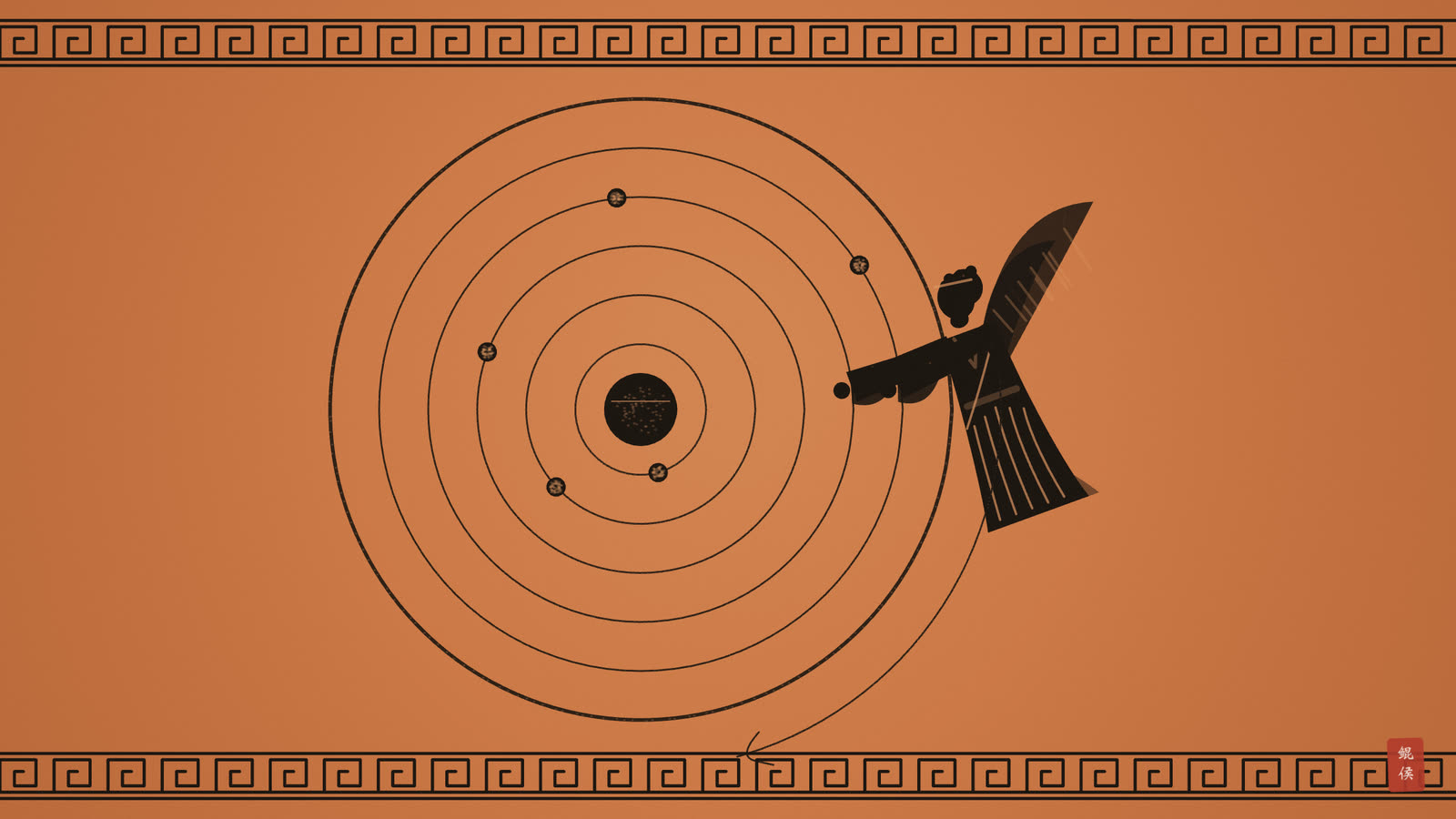
第二十章是从七曜转到星座之前的一段宇宙论。拉姆齐说,要讲黄道,得先讲天球与诸重天。照赫尔墨斯和托勒密,天有九重(图一):以元素世界即大地为中心,由内到外是月亮、水星、金星、太阳、火星、木星、土星七天,其上第八重是恒星天,一切恒星在其中「稳固不移」,所以叫 firmament;再上是第一原动天,又称水晶天。
〔图〕九重天由内到外:七曜各占一层,其上恒星天,再上原动天,最外另有一天
| 天球 | 自身运动 | 一周所需 |
|---|---|---|
| 原动天 | 带动诸天每日由东向西绕地一周 | 一日 |
| 土星天 | 由西向东 | 二十九年又若干月日 |
| 木星天 | 由西向东 | 十二年 |
| 恒星天 | 由西向东 | 不少于三万六千年 |
原动天不受其他任何天管辖,只受推动它的灵智或神的命令所管,它以「猛力」每天带着诸天绕地一周。第九重之上还有一重包容一切的天,有人说是神、选民与天使的居所;至于木星是选民之所、火星或土星是地狱之类说法,拉姆齐只列出,说不属本书讨论,撇开不谈。
运动分两种(表二):诸天每天被原动天带着由东向西,这是「偶然的」运动;它们自身的运动则相反,由西向东,土星二十九年余一周,木星十二年。恒星天也由西向东缓缓移动,一周不少于三万六千年,这对应古人所说的岁差每百年一度。
由这三万六千年,又引出柏拉图的「大年」之说:一周之后万物复归创世之初,大洪水、挪亚、柏拉图在雅典讲学,都会重演一遍。拉姆齐引圣经说连天使和作为人的基督都不知末日何时,这类好奇之事宜默默略过,于是转入下一章的天上诸圈与黄道。
📖 术语
| 术语 | 英文原词 | 意思 |
|---|---|---|
| 元素世界 | Elementary World | 月下的四元素界 |
| 恒星天 | firmament | 第八重天 |
| 第一原动天 | first mover | 第九重天 |
| 水晶天 | Chrystaline heaven | 原动天的别名 |
| 灵智 | intelligence | 推动天球的灵 |
🧭 图解与讲解
第二十章是从七曜转到星座之前的一段宇宙论。拉姆齐说,要讲黄道,得先讲天球与诸重天。照赫尔墨斯和托勒密,天有九重(图一):以元素世界即大地为中心,由内到外是月亮、水星、金星、太阳、火星、木星、土星七天,其上第八重是恒星天,一切恒星在其中「稳固不移」,所以叫 firmament;再上是第一原动天,又称水晶天。
| 天球 | 自身运动 | 一周所需 |
|---|---|---|
| 原动天 | 带动诸天每日由东向西绕地一周 | 一日 |
| 土星天 | 由西向东 | 二十九年又若干月日 |
| 木星天 | 由西向东 | 十二年 |
| 恒星天 | 由西向东 | 不少于三万六千年 |
原动天不受其他任何天管辖,只受推动它的灵智或神的命令所管,它以「猛力」每天带着诸天绕地一周。第九重之上还有一重包容一切的天,有人说是神、选民与天使的居所;至于木星是选民之所、火星或土星是地狱之类说法,拉姆齐只列出,说不属本书讨论,撇开不谈。
运动分两种(表二):诸天每天被原动天带着由东向西,这是「偶然的」运动;它们自身的运动则相反,由西向东,土星二十九年余一周,木星十二年。恒星天也由西向东缓缓移动,一周不少于三万六千年,这对应古人所说的岁差每百年一度。
由这三万六千年,又引出柏拉图的「大年」之说:一周之后万物复归创世之初,大洪水、挪亚、柏拉图在雅典讲学,都会重演一遍。拉姆齐引圣经说连天使和作为人的基督都不知末日何时,这类好奇之事宜默默略过,于是转入下一章的天上诸圈与黄道。
原文为公有领域古籍;翻译、印象画与图文解读由 AI 辅助生成,鲲侯审校。