卷三·第 197–203 问 行星日行、留、四分带与升降增减
天文卷的收尾名词:日行与日行之差、留与系绳旧说、偏心圈与本轮上的四分带,以及上升下降、增与减诸义。
§197. What is buht?
This is an Indian word, bhukti, and it means the course of a planet in a single day. Our people apply it only to the true course for a day, whereas the Indians distinguish in it between the mean and the true. We have mentioned the mean under each planet. The true is not fixed: the planet sometimes goes fast, so that its buht is large, and sometimes slow, so that its buht is small; sometimes it is stationary and has no buht, and sometimes retrograde, so that its buht is retrograde.
§198. What is the corrected buht?
It is the difference between the buhts of the two luminaries, or of two planets, or of any two things moving in one direction with two unequal motions, when the time of their conjunction is wanted; for this is found from the difference between their two motions in one and the same period, since it is by that difference that the distance or the approach between them comes about. The corrected buht is also called the portion of the course (ḥiṣṣat al-masīr), and in Indian bhukty-antara, that is, the difference between the two buhts. Sometimes one needs to use the sum of the two buhts instead of their difference, and this is called in Indian bhukti-yoga; that is in the case of two planets that are not moving in the same direction, one of them being direct and the other retrograde.
翻译点开
§197. What is buht?
第一百九十七问 何谓“布赫特”?
This is an Indian word, bhukti, and it means the course of a planet in a single day. Our people apply it only to the true course for a day, whereas the Indians distinguish in it between the mean and the true. We have mentioned the mean under each planet. The true is not fixed: the planet sometimes goes fast, so that its buht is large, and sometimes slow, so that its buht is small; sometimes it is stationary and has no buht, and sometimes retrograde, so that its buht is retrograde.
这是一个印度词,原作“布克提”,意思是一颗行星在一日之内的行程。我们的人只把它用于一日的真行程,印度人则在其中分出平均的与真实的两种。平均的,我们已在各星之下提到过。真实的则不固定:行星有时走得快,它的布赫特就大;有时走得慢,它的布赫特就小;有时停留不动,就没有布赫特;有时逆行,它的布赫特就是逆向的。
§198. What is the corrected buht?
第一百九十八问 何谓改正的布赫特?
It is the difference between the buhts of the two luminaries, or of two planets, or of any two things moving in one direction with two unequal motions, when the time of their conjunction is wanted; for this is found from the difference between their two motions in one and the same period, since it is by that difference that the distance or the approach between them comes about. The corrected buht is also called the portion of the course (ḥiṣṣat al-masīr), and in Indian bhukty-antara, that is, the difference between the two buhts. Sometimes one needs to use the sum of the two buhts instead of their difference, and this is called in Indian bhukti-yoga; that is in the case of two planets that are not moving in the same direction, one of them being direct and the other retrograde.
它是两个发光体、或两颗行星、或任何两个以不相等的两种运动朝同一方向运行之物的布赫特之差,用于求它们相合的时刻;因为相合的时刻是由二者在同一段时间里两种运动之差求出的,二者之间的拉开或靠近,正是由这个差造成的。改正的布赫特又称“行程之份”,印度语称“布克提安塔拉”,意思是两个布赫特之差。有时需要用两个布赫特之和来代替它们的差,这在印度语里称“布克提瑜伽”;那是两颗行星运行方向不同的情形,其中一颗顺行,另一颗逆行。
大意与图解点开
🔎 大意:布赫特是行星一日的行程;两星布赫特之差叫改正的布赫特,用来求相合之时;一顺一逆时改用两者之和。
📖 术语
| 术语 | 英文原词 | 意思 |
|---|---|---|
| 布赫特 | buht (bhukti) | 行星一日的行程 |
| 改正的布赫特 | the corrected buht | 两星日行之差 |
| 行程之份 | ḥiṣṣat al-masīr | 改正布赫特的别名 |
| 布克提安塔拉 | bhukty-antara | 印度语:日行之差 |
| 布克提瑜伽 | bhukti-yoga | 印度语:日行之和 |
🧭 图解与讲解
卷三天文讲到这里,名词已近尾声。这一章先收两个印度词。“布赫特”是阿拉伯人对梵语“布克提”(bhukti)的转写,意思是一颗行星一日之内走过的路程,今天叫“日行”。比鲁尼点出一层差别:阿拉伯天文家只拿它指真实的日行,印度人却分平均日行与真实日行两种。平均日行前几章讲各星时已经给过;真实日行时快时慢,留时为零,逆行时为负。
| 步骤 | 算什么 | 示意数值 |
|---|---|---|
| 一 | 两星各自一日的行程(布赫特) | 月亮约 13°10′,太阳约 0°59′ |
| 二 | 同向而行:取两者之差(布克提安塔拉) | 13°10′ − 0°59′ = 12°11′ |
| 三 | 量出两星此刻相距多少 | 设月亮落后太阳 30° |
| 四 | 相距 ÷ 日行之差 = 相合所需日数 | 30° ÷ 12°11′ ≈ 2.46 日 |
| 另 | 一顺一逆、相向而行:取两者之和(布克提瑜伽) | 相距 ÷ 两者日行之和 |
〔图〕同向运行用两者日行之差,一顺一逆就用两者日行之和
“改正的布赫特”是两星日行之差。两星同向而行,一天里彼此拉近或拉开的度数,就是这个差;拿两星现在相距的度数除以它,便得相合还要几天(表一)。最常用的是日月:月亮一天约走十三度,太阳约一度,差约十二度,所以月亮追上太阳大约要用相距度数的十二分之一天。占星里求朔望、求两星正相位的时刻,都是这个算法。
若一颗星顺行、一颗逆行,两星相向而来,一天里拉近的就是两者日行之和,印度人称为“布克提瑜伽”(图二)。“瑜伽”在梵语里本义是“相合、相加”,与“安塔拉”(间隔、差)正好相对。比鲁尼在一问之内就把阿拉伯名“行程之份”与两个印度名并列,这正是全书的习惯:同一件事,各家怎么叫、怎么算,都摆在一起。
📖 术语
| 术语 | 英文原词 | 意思 |
|---|---|---|
| 布赫特 | buht (bhukti) | 行星一日的行程 |
| 改正的布赫特 | the corrected buht | 两星日行之差 |
| 行程之份 | ḥiṣṣat al-masīr | 改正布赫特的别名 |
| 布克提安塔拉 | bhukty-antara | 印度语:日行之差 |
| 布克提瑜伽 | bhukti-yoga | 印度语:日行之和 |
🧭 图解与讲解
卷三天文讲到这里,名词已近尾声。这一章先收两个印度词。“布赫特”是阿拉伯人对梵语“布克提”(bhukti)的转写,意思是一颗行星一日之内走过的路程,今天叫“日行”。比鲁尼点出一层差别:阿拉伯天文家只拿它指真实的日行,印度人却分平均日行与真实日行两种。平均日行前几章讲各星时已经给过;真实日行时快时慢,留时为零,逆行时为负。
| 步骤 | 算什么 | 示意数值 |
|---|---|---|
| 一 | 两星各自一日的行程(布赫特) | 月亮约 13°10′,太阳约 0°59′ |
| 二 | 同向而行:取两者之差(布克提安塔拉) | 13°10′ − 0°59′ = 12°11′ |
| 三 | 量出两星此刻相距多少 | 设月亮落后太阳 30° |
| 四 | 相距 ÷ 日行之差 = 相合所需日数 | 30° ÷ 12°11′ ≈ 2.46 日 |
| 另 | 一顺一逆、相向而行:取两者之和(布克提瑜伽) | 相距 ÷ 两者日行之和 |
“改正的布赫特”是两星日行之差。两星同向而行,一天里彼此拉近或拉开的度数,就是这个差;拿两星现在相距的度数除以它,便得相合还要几天(表一)。最常用的是日月:月亮一天约走十三度,太阳约一度,差约十二度,所以月亮追上太阳大约要用相距度数的十二分之一天。占星里求朔望、求两星正相位的时刻,都是这个算法。
若一颗星顺行、一颗逆行,两星相向而来,一天里拉近的就是两者日行之和,印度人称为“布克提瑜伽”(图二)。“瑜伽”在梵语里本义是“相合、相加”,与“安塔拉”(间隔、差)正好相对。比鲁尼在一问之内就把阿拉伯名“行程之份”与两个印度名并列,这正是全书的习惯:同一件事,各家怎么叫、怎么算,都摆在一起。
§199. What are the stations?
They are amounts and numbers laid down for each planet, and for each place in its apogee orb, such that when the true anomaly of the planet equals them, the planet is then standing still and stationary, and no motion of it is seen in the zodiac. If the station is more than six signs [corrected: MS has 'less than six signs'], the planet is called stationary for the second time, and the standing after it is for direct motion. When one of the two stations is subtracted from 360 parts, the other station remains.
§200. What are the murābaṭāt ('tetherings')?
They are the stations, except that some of the ancients knew them by received tradition rather than by verification, believing that the planets are tethered to the Sun. So they expressed them in terms of a tether that slackens as the planets come near the Sun, so that their course becomes direct, and is drawn tight as they move away from it, so that at that point they stand still and go back. This is false and deserves no attention, since there is no use in it and nothing to be gained from it.
翻译点开
§199. What are the stations?
第一百九十九问 何谓留?
They are amounts and numbers laid down for each planet, and for each place in its apogee orb, such that when the true anomaly of the planet equals them, the planet is then standing still and stationary, and no motion of it is seen in the zodiac. If the station is more than six signs [corrected: MS has 'less than six signs'], the planet is called stationary for the second time, and the standing after it is for direct motion. When one of the two stations is subtracted from 360 parts, the other station remains.
留是为每颗行星、并为它在远地点圈上的每一处位置所定的一些数值;当行星的真近点角等于这些数值时,行星便停住不动,处于留的状态,在黄道上看不出它有任何运动。若留的数值多于六个星座〔抄本作“少于六个星座”,据文义改正〕,这颗行星就称为第二次留,留过之后转为顺行。把两个留中的一个从三百六十度中减去,剩下的就是另一个留。
§200. What are the murābaṭāt ('tetherings')?
第二百问 何谓“穆拉巴塔特”(“系缚”)?
They are the stations, except that some of the ancients knew them by received tradition rather than by verification, believing that the planets are tethered to the Sun. So they expressed them in terms of a tether that slackens as the planets come near the Sun, so that their course becomes direct, and is drawn tight as they move away from it, so that at that point they stand still and go back. This is false and deserves no attention, since there is no use in it and nothing to be gained from it.
它们就是留,只是有些古人是凭传承而不是凭验证知道它们的,以为诸行星被系在太阳上。于是他们用一根系绳来表述:行星靠近太阳时,系绳松弛,所以它的行程变为顺行;离开太阳时,系绳被拉紧,所以到了那一点它便停住并往回走。这是错误的,不值得理会,因为它毫无用处,也得不到任何东西。
大意与图解点开
🔎 大意:近点角到某一数值时行星停住不动,叫留;第一、第二次留之和为三百六十度。以绳系日来解释留的旧说,比鲁尼斥为无用。
📖 术语
| 术语 | 英文原词 | 意思 |
|---|---|---|
| 留 | station | 行星看似停住不动 |
| 真近点角 | the true anomaly | 行星在本轮上的真位置 |
| 第二次留 | stationary for the second time | 留后转为顺行 |
| 穆拉巴塔特 | murābaṭāt ('tetherings') | 系绳说的留 |
| 远地点圈 | the apogee orb | 偏心圈 |
🧭 图解与讲解
留,就是行星看起来停在黄道上不动的那一刻。比鲁尼用本轮来说明(图一):行星在本轮上的位置用“近点角”来量,从本轮顶点起算;当真近点角走到某个定数,本轮上的运动与本轮中心的前进在地上看来正好抵消,行星就停住了。这个定数每颗行星不同,而且随本轮中心在偏心圈上的位置而变,所以说“为每颗行星、并为它在远地点圈上的每一处位置所定”。
〔图〕两个留对称地落在本轮近地点两侧,两数相加正好是三百六十度
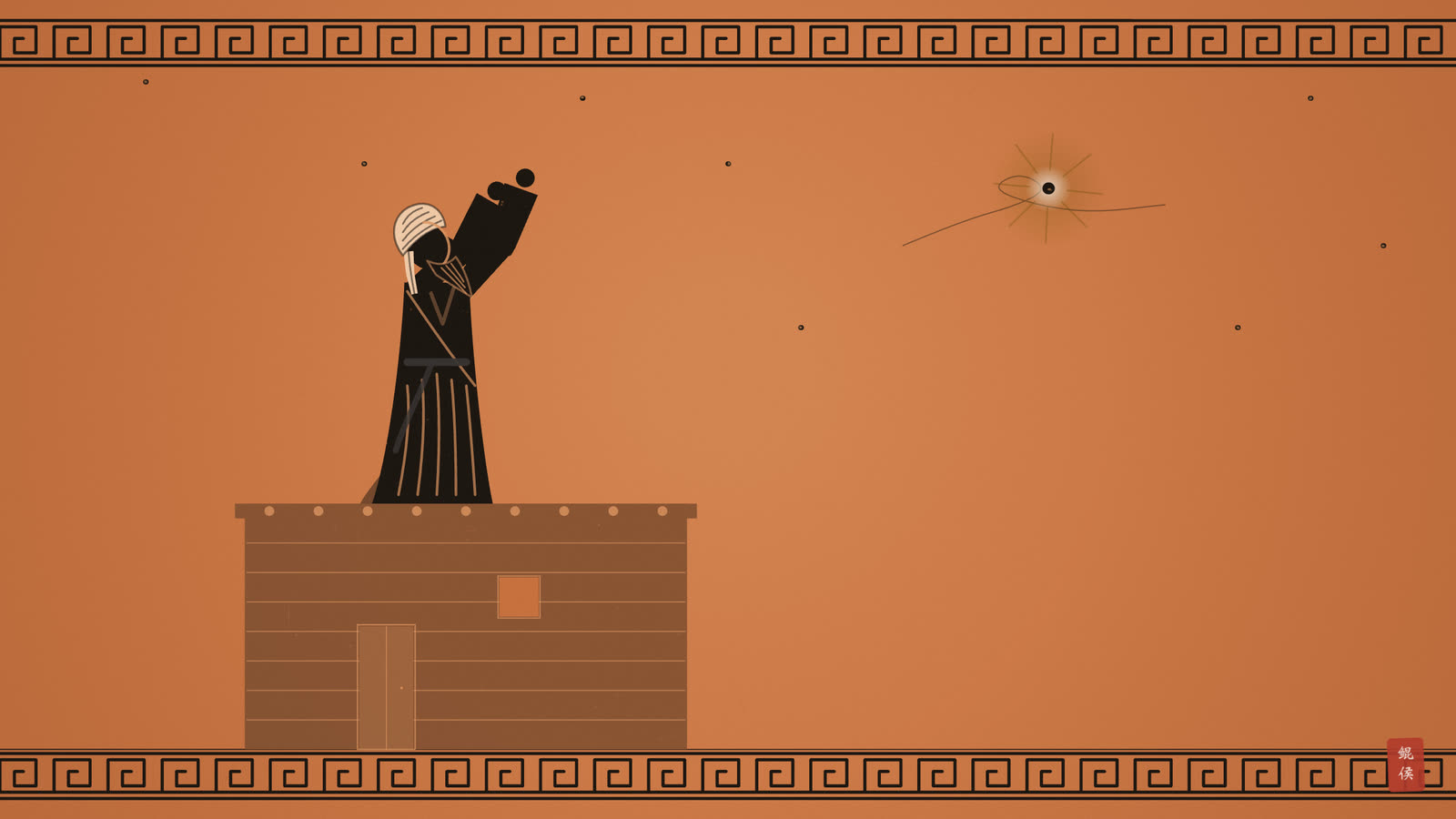
〔图〕比鲁尼取本轮算出的留,斥以绳系日之说为无据、无用
两个留对称地落在本轮近地点两侧:第一次留在一百八十度以内,过了它就转为逆行;第二次留在一百八十度以外,过了它又转为顺行。所以两数相加是三百六十度,知道一个就知道另一个。抄本这里写作“少于六个星座”才称第二次留,与紧接着的“留过之后转为顺行”和“相减得另一个”都不合,统稿时据文义改为“多于”。
“穆拉巴塔特”本义是“系缚”。有些古人只凭传承,以为行星被一根绳子系在太阳上:靠近太阳时绳松,行星顺行;远离时绳紧,行星被扯住、停下、往回退。这个说法确实抓住了一个现象:外行星的逆行总是发生在与太阳相对的那一段。但比鲁尼不接受没有验证、也算不出数值的解释,斥之为“毫无用处”(图二)。
对占星来说,留与逆行是判断行星力量的基本事项:卷八讲行星的状态时,顺行、留、逆行各有吉凶轻重。这里先把留的天文来历讲清,日后读到“第一次留”“第二次留”,就知道那是本轮上两个确定的位置,而不是神秘的停顿。
📖 术语
| 术语 | 英文原词 | 意思 |
|---|---|---|
| 留 | station | 行星看似停住不动 |
| 真近点角 | the true anomaly | 行星在本轮上的真位置 |
| 第二次留 | stationary for the second time | 留后转为顺行 |
| 穆拉巴塔特 | murābaṭāt ('tetherings') | 系绳说的留 |
| 远地点圈 | the apogee orb | 偏心圈 |
🧭 图解与讲解
留,就是行星看起来停在黄道上不动的那一刻。比鲁尼用本轮来说明(图一):行星在本轮上的位置用“近点角”来量,从本轮顶点起算;当真近点角走到某个定数,本轮上的运动与本轮中心的前进在地上看来正好抵消,行星就停住了。这个定数每颗行星不同,而且随本轮中心在偏心圈上的位置而变,所以说“为每颗行星、并为它在远地点圈上的每一处位置所定”。
两个留对称地落在本轮近地点两侧:第一次留在一百八十度以内,过了它就转为逆行;第二次留在一百八十度以外,过了它又转为顺行。所以两数相加是三百六十度,知道一个就知道另一个。抄本这里写作“少于六个星座”才称第二次留,与紧接着的“留过之后转为顺行”和“相减得另一个”都不合,统稿时据文义改为“多于”。
“穆拉巴塔特”本义是“系缚”。有些古人只凭传承,以为行星被一根绳子系在太阳上:靠近太阳时绳松,行星顺行;远离时绳紧,行星被扯住、停下、往回退。这个说法确实抓住了一个现象:外行星的逆行总是发生在与太阳相对的那一段。但比鲁尼不接受没有验证、也算不出数值的解释,斥之为“毫无用处”(图二)。
对占星来说,留与逆行是判断行星力量的基本事项:卷八讲行星的状态时,顺行、留、逆行各有吉凶轻重。这里先把留的天文来历讲清,日后读到“第一次留”“第二次留”,就知道那是本轮上两个确定的位置,而不是神秘的停顿。
§201. What are the niṭāqāt ('belts')?
They are of two kinds: one in the eccentric orb and the other in the epicycle. As to the first kind, the apogee orb is divided by these two lines: one of them passes through the apogee and the perigee, and at its two ends the equation vanishes, the mean and the true places of the planet coincide, and the course differs to the utmost, being slowest at the apogee and fastest at the perigee; the other line is the one perpendicular to the first, passing through the centre of the world, and at its two ends the greatest equation and the mean course occur. The first belt runs from the apogee in the order of the signs, the second to the perigee, the third from the perigee, and the fourth to the apogee. This is the figure of it.
As to their amounts: if the reckoning is by the true centre, the beginning of the first is at the apogee, the beginning of the second at 90 degrees beyond the apogee, the beginning of the third at 180 beyond the apogee, and the beginning of the fourth at 270 beyond it. If the reckoning is by the uncorrected centre, their beginnings come when the centre is as given in the following table.
翻译点开
§201. What are the niṭāqāt ('belts')?
第二百零一问 何谓“尼塔卡特”(“带”)?
They are of two kinds: one in the eccentric orb and the other in the epicycle. As to the first kind, the apogee orb is divided by these two lines: one of them passes through the apogee and the perigee, and at its two ends the equation vanishes, the mean and the true places of the planet coincide, and the course differs to the utmost, being slowest at the apogee and fastest at the perigee; the other line is the one perpendicular to the first, passing through the centre of the world, and at its two ends the greatest equation and the mean course occur. The first belt runs from the apogee in the order of the signs, the second to the perigee, the third from the perigee, and the fourth to the apogee. This is the figure of it.
带有两类:一类在偏心圈上,另一类在本轮上。先说第一类:远地点圈被这样两条线分开:一条通过远地点与近地点,在它的两端均差消失,行星的平均位置与真位置重合,而行程的差异达到极点,在远地点最慢,在近地点最快;另一条线与第一条垂直,通过世界的中心,在它的两端出现最大均差与平均行程。第一带从远地点起按星座次序而行,第二带到近地点为止,第三带从近地点起,第四带到远地点为止。这是它的图。
As to their amounts: if the reckoning is by the true centre, the beginning of the first is at the apogee, the beginning of the second at 90 degrees beyond the apogee, the beginning of the third at 180 beyond the apogee, and the beginning of the fourth at 270 beyond it. If the reckoning is by the uncorrected centre, their beginnings come when the centre is as given in the following table.
至于它们的数值:若按真的中心计算,第一带始于远地点,第二带始于远地点之后九十度,第三带始于远地点之后一百八十度,第四带始于远地点之后二百七十度。若按未改正的中心计算,它们的起点就在中心达到下表所给的数值之时。
大意与图解点开
🔎 大意:偏心圈被过远近地点的线与过世界中心的垂线分成四带;按真中心各九十度,按平中心则见原书表。
📖 术语
| 术语 | 英文原词 | 意思 |
|---|---|---|
| 带 | niṭāq ('belt') | 偏心圈或本轮的四分之一 |
| 偏心圈 | the eccentric orb | 圆心不在地心的天球 |
| 均差 | equation | 平位置与真位置之差 |
| 中心 | centre (markaz) | 自远地点量起的距离 |
| 平均行程 | the mean course | 不快不慢的行程 |
🧭 图解与讲解
“带”在阿拉伯语里本义是束腰的带子,这里指把一个圆分成的四段,本站称为“四分带”。偏心圈上的四带由两条线划定(图一):一条是过远地点和近地点的竖线,两端均差为零,平位置与真位置重合,行星在远地点走得最慢、在近地点最快;另一条与它垂直,但要过世界中心(地)而不是偏心圈的圆心,两端是均差最大、行程恰等于平均行程之处。
〔图〕偏心圈被两条线分成四带:竖线过远近地点,横线过世界中心并与之垂直
| 原书表:未改正中心下的诸带起点 | 第一带起点 | 第二带起点 | 第三带起点 | 第四带起点 | 核:二+四 |
|---|---|---|---|---|---|
| 太阳 | 0°00′ | 91°59′ | 180°00′ | 268°01′ | 360° |
| 土星 | 0°00′ | 96°31′ | 180°00′ | 263°29′ | 360° |
| 木星 | 0°00′ | 95°05′ | 180°00′ | 264°45′ | 359°50′ |
| 火星 | 0°00′ | 101°25′ | 180°00′ | 258°35′ | 360° |
| 金星 | 0°00′ | 91°59′ | 180°00′ | 268°01′ | 360° |
| 水星 | 0°00′ | 98°02′ | 180°00′ | 266°58′ 按算应作 261°58′ | 365°00′ |
| 月亮 | 0°00′ | 95°01′ | 180°00′ | 264°59′ | 360° |
因为横线过地心而偏心圈心偏向远地点一侧,上方两带的弧比下方两带长,行星又在上方走得慢,所以它在第一、第四带里停留的时间远多于第二、第三带。按“真的中心”(从地心看的角度)计,四带的起点整整齐齐是零、九十、一百八十、二百七十度;按“未改正的中心”(平均运动的角度)计,第二、第四带的起点就要偏开,原书列成一表(表二)。
表二里第二带的起点都比九十度多出一些:太阳、金星多一度五十九分,土星六度三十一分,火星十一度二十五分,月亮五度一分。这多出的部分,就是各星偏心圈上的最大均差。第二与第四带起点之和应是三百六十度,各行都合,只有水星第四带抄本写作二百六十六度五十八分,与九十八度二分相加多出五度,按和数应作二百六十一度五十八分,表中照抄本录出并注明。
四带是下文“上升下降”“增与减”的基础:行星在哪一带,决定它是在靠近地还是远离地,均差是在加大还是减小,计算时该加还是该减。卷八判断行星力量时说的“行程增加”“光与大小增加”,根子都在这里。
📖 术语
| 术语 | 英文原词 | 意思 |
|---|---|---|
| 带 | niṭāq ('belt') | 偏心圈或本轮的四分之一 |
| 偏心圈 | the eccentric orb | 圆心不在地心的天球 |
| 均差 | equation | 平位置与真位置之差 |
| 中心 | centre (markaz) | 自远地点量起的距离 |
| 平均行程 | the mean course | 不快不慢的行程 |
🧭 图解与讲解
“带”在阿拉伯语里本义是束腰的带子,这里指把一个圆分成的四段,本站称为“四分带”。偏心圈上的四带由两条线划定(图一):一条是过远地点和近地点的竖线,两端均差为零,平位置与真位置重合,行星在远地点走得最慢、在近地点最快;另一条与它垂直,但要过世界中心(地)而不是偏心圈的圆心,两端是均差最大、行程恰等于平均行程之处。
| 原书表:未改正中心下的诸带起点 | 第一带起点 | 第二带起点 | 第三带起点 | 第四带起点 | 核:二+四 |
|---|---|---|---|---|---|
| 太阳 | 0°00′ | 91°59′ | 180°00′ | 268°01′ | 360° |
| 土星 | 0°00′ | 96°31′ | 180°00′ | 263°29′ | 360° |
| 木星 | 0°00′ | 95°05′ | 180°00′ | 264°45′ | 359°50′ |
| 火星 | 0°00′ | 101°25′ | 180°00′ | 258°35′ | 360° |
| 金星 | 0°00′ | 91°59′ | 180°00′ | 268°01′ | 360° |
| 水星 | 0°00′ | 98°02′ | 180°00′ | 266°58′ 按算应作 261°58′ | 365°00′ |
| 月亮 | 0°00′ | 95°01′ | 180°00′ | 264°59′ | 360° |
因为横线过地心而偏心圈心偏向远地点一侧,上方两带的弧比下方两带长,行星又在上方走得慢,所以它在第一、第四带里停留的时间远多于第二、第三带。按“真的中心”(从地心看的角度)计,四带的起点整整齐齐是零、九十、一百八十、二百七十度;按“未改正的中心”(平均运动的角度)计,第二、第四带的起点就要偏开,原书列成一表(表二)。
表二里第二带的起点都比九十度多出一些:太阳、金星多一度五十九分,土星六度三十一分,火星十一度二十五分,月亮五度一分。这多出的部分,就是各星偏心圈上的最大均差。第二与第四带起点之和应是三百六十度,各行都合,只有水星第四带抄本写作二百六十六度五十八分,与九十八度二分相加多出五度,按和数应作二百六十一度五十八分,表中照抄本录出并注明。
四带是下文“上升下降”“增与减”的基础:行星在哪一带,决定它是在靠近地还是远离地,均差是在加大还是减小,计算时该加还是该减。卷八判断行星力量时说的“行程增加”“光与大小增加”,根子都在这里。
As to the second kind of belts, the epicycle is divided by them along lines, one of which passes through its summit and its perigee, while the other two touch it when drawn from the centre of the deferent; at the points of contact, too, the greatest equation occurs. The first of these belts begins at the summit and goes in the direction of the course: for the Moon against the order of the signs, and for the planets in the order of the signs; then the rest follow in succession.
As to their amounts: if the two lines tangent to the epicycle are drawn from the centre of the world or from the centre of the equant, they vary; but if they are drawn from the deferent, they do not vary, as given in this table. So the mean anomaly of each planet is to be compared with them.
The form of the table.
翻译点开
As to the second kind of belts, the epicycle is divided by them along lines, one of which passes through its summit and its perigee, while the other two touch it when drawn from the centre of the deferent; at the points of contact, too, the greatest equation occurs. The first of these belts begins at the summit and goes in the direction of the course: for the Moon against the order of the signs, and for the planets in the order of the signs; then the rest follow in succession.
至于第二类带,本轮被一些线分开:其中一条通过本轮的顶点与近地点,另外两条从均轮的中心引出,与本轮相切;在切点上也出现最大均差。这些带中的第一带始于顶点,朝行程的方向而行:对月亮来说是逆着星座次序,对诸行星来说是顺着星座次序;其余各带依次相继。
As to their amounts: if the two lines tangent to the epicycle are drawn from the centre of the world or from the centre of the equant, they vary; but if they are drawn from the deferent, they do not vary, as given in this table. So the mean anomaly of each planet is to be compared with them.
至于它们的数值:如果与本轮相切的两条线是从世界的中心或从偏心等速圈的中心引出的,数值就会变动;但若从均轮引出,就不变动,如本表所给。所以每颗行星的平均近点角要拿来与它们比较。
The form of the table.
表的样式。
大意与图解点开
🔎 大意:本轮被过顶点的直径与自均轮中心引出的两条切线分成四带,切点处均差最大;行星顺星座、月亮逆星座起算。
📖 术语
| 术语 | 英文原词 | 意思 |
|---|---|---|
| 本轮 | the epicycle | 载着行星的小圆 |
| 顶点 | the summit (dhirwa) | 本轮上距地最远处 |
| 均轮 | the deferent | 载着本轮中心的大圆 |
| 偏心等速圈 | the equant orb | 使运动匀速的那个中心 |
| 平均近点角 | the mean anomaly | 本轮上的平均位置 |
🧭 图解与讲解
本轮上的四带划法不同(图一):一条是过本轮顶点与近地点的直径,另两条是从均轮中心向本轮引的切线。切点之所以重要,是因为从中心看过去,行星在切点上偏离本轮中心的方向最远,本轮造成的均差在这里最大。于是第一带从顶点到第一个切点,第二带到近地点,第三带到另一个切点,第四带回到顶点。
〔图〕本轮被过顶点的直径和自均轮中心引出的两条切线分成四带,切点处均差最大
| 原书表:本轮上的诸带起点 | 第一带起点 | 第二带起点 | 第三带起点 | 第四带起点 | 核:二+四 |
|---|---|---|---|---|---|
| 月亮 | 0°00′ | 13°09′ 按算应作 103°09′ | 180°00′ | 256°51′ | 270°00′ |
| 土星 | 0°00′ | 96°13′ | 180°00′ | 263°47′ | 360° |
| 木星 | 0°00′ | 101°08′ | 180°00′ | 258°52′(读法未定) | 360° |
| 火星 | 0°00′ | 131°09′ | 180°00′ | 228°51′ | 360° |
| 金星 | 0°00′ | 135°59′ | 180°00′ | 224°01′ | 360° |
| 水星 | 0°00′ | 102°02′ | 180°00′ | 257°58′(读法未定) | 360° |
起算方向是本轮上行星运动的方向:诸行星在本轮上顺星座次序走,月亮却逆星座次序走,所以两个圆的带序左右相反(图一左右两圆)。这与前面讲月亮本轮的几问一致。比鲁尼又提醒:切线若改从世界中心或偏心等速圈的中心引出,切点会随本轮位置而变;只有从均轮中心引出时数值固定,才能列成一表供人查对。
表二是本轮四带的起点。第二带起点都在九十度以外:土星九十六度十三分,木星一百零一度八分,火星一百三十一度九分,金星一百三十五度五十九分,水星一百零二度二分。多出九十度的部分,正等于本轮半径与均轮半径之比所决定的最大均差,金星、火星本轮大,所以多出最多。月亮一行第二带抄本写作十三度九分,按第二与第四之和为三百六十,应是一百零三度九分,表中注明。
这两张四带表合起来,就能判断行星此刻在本轮和偏心圈上各处哪一带,下一问的“上升下降”和再下一问的“增与减”都靠它。
📖 术语
| 术语 | 英文原词 | 意思 |
|---|---|---|
| 本轮 | the epicycle | 载着行星的小圆 |
| 顶点 | the summit (dhirwa) | 本轮上距地最远处 |
| 均轮 | the deferent | 载着本轮中心的大圆 |
| 偏心等速圈 | the equant orb | 使运动匀速的那个中心 |
| 平均近点角 | the mean anomaly | 本轮上的平均位置 |
🧭 图解与讲解
本轮上的四带划法不同(图一):一条是过本轮顶点与近地点的直径,另两条是从均轮中心向本轮引的切线。切点之所以重要,是因为从中心看过去,行星在切点上偏离本轮中心的方向最远,本轮造成的均差在这里最大。于是第一带从顶点到第一个切点,第二带到近地点,第三带到另一个切点,第四带回到顶点。
| 原书表:本轮上的诸带起点 | 第一带起点 | 第二带起点 | 第三带起点 | 第四带起点 | 核:二+四 |
|---|---|---|---|---|---|
| 月亮 | 0°00′ | 13°09′ 按算应作 103°09′ | 180°00′ | 256°51′ | 270°00′ |
| 土星 | 0°00′ | 96°13′ | 180°00′ | 263°47′ | 360° |
| 木星 | 0°00′ | 101°08′ | 180°00′ | 258°52′(读法未定) | 360° |
| 火星 | 0°00′ | 131°09′ | 180°00′ | 228°51′ | 360° |
| 金星 | 0°00′ | 135°59′ | 180°00′ | 224°01′ | 360° |
| 水星 | 0°00′ | 102°02′ | 180°00′ | 257°58′(读法未定) | 360° |
起算方向是本轮上行星运动的方向:诸行星在本轮上顺星座次序走,月亮却逆星座次序走,所以两个圆的带序左右相反(图一左右两圆)。这与前面讲月亮本轮的几问一致。比鲁尼又提醒:切线若改从世界中心或偏心等速圈的中心引出,切点会随本轮位置而变;只有从均轮中心引出时数值固定,才能列成一表供人查对。
表二是本轮四带的起点。第二带起点都在九十度以外:土星九十六度十三分,木星一百零一度八分,火星一百三十一度九分,金星一百三十五度五十九分,水星一百零二度二分。多出九十度的部分,正等于本轮半径与均轮半径之比所决定的最大均差,金星、火星本轮大,所以多出最多。月亮一行第二带抄本写作十三度九分,按第二与第四之和为三百六十,应是一百零三度九分,表中注明。
这两张四带表合起来,就能判断行星此刻在本轮和偏心圈上各处哪一带,下一问的“上升下降”和再下一问的“增与减”都靠它。
§202. What are ascending and descending?
A planet ascends in the north towards its extreme latitude so long as its latitude in the north is increasing; then it descends in the north when its latitude there begins to decrease. When it passes the node into the southern half of its inclined orb, it begins to descend in the south towards its extreme latitude so long as its latitude in the south is increasing; and after that it ascends in the south when its latitude there begins to decrease. There is also a kind of ascent and descent with respect to the earth: by it the planet is descending in the first and second belts and ascending in the third and fourth, though some make it ascending in the first and fourth and descending in the second and third. Another kind is when the planet is in the half from the beginning of Capricorn to the end of Gemini, in which case it is called ascending, and in the other half descending. And another kind again is when it is between the meridian and the orb of midnight: towards the east it is called ascending and towards the west descending.
翻译点开
§202. What are ascending and descending?
第二百零二问 何谓上升与下降?
A planet ascends in the north towards its extreme latitude so long as its latitude in the north is increasing; then it descends in the north when its latitude there begins to decrease. When it passes the node into the southern half of its inclined orb, it begins to descend in the south towards its extreme latitude so long as its latitude in the south is increasing; and after that it ascends in the south when its latitude there begins to decrease. There is also a kind of ascent and descent with respect to the earth: by it the planet is descending in the first and second belts and ascending in the third and fourth, though some make it ascending in the first and fourth and descending in the second and third. Another kind is when the planet is in the half from the beginning of Capricorn to the end of Gemini, in which case it is called ascending, and in the other half descending. And another kind again is when it is between the meridian and the orb of midnight: towards the east it is called ascending and towards the west descending.
行星在北方、朝它的极限纬度而行,只要它的北纬在增大,就是在北方上升;当它在北方的纬度开始减小,它就在北方下降。当它越过交点,进入它斜圈的南半,只要它的南纬在增大,就开始在南方朝它的极限纬度下降;此后当它在南方的纬度开始减小,它就在南方上升。还有一种上升与下降是相对于地而言的:按这一种,行星在第一、第二带时是下降,在第三、第四带时是上升;不过也有人把它定为在第一、第四带上升,在第二、第三带下降。另一种是:行星在从摩羯座起点到双子座末尾的那一半时,称为上升,在另一半时称为下降。还有一种是:行星在子午线与午夜之圈之间时,朝东的一侧称为上升,朝西的一侧称为下降。
大意与图解点开
🔎 大意:上升下降有四种说法:按纬度、按与地的远近(两说)、按黄道从摩羯到双子的半周、按子午线东西两侧。
📖 术语
| 术语 | 英文原词 | 意思 |
|---|---|---|
| 极限纬度 | extreme latitude | 离黄道最远处 |
| 交点 | node | 斜圈与黄道的交点 |
| 斜圈 | the inclined orb | 与黄道斜交的天球 |
| 午夜之圈 | the orb of midnight | 地平以下的子午线 |
🧭 图解与讲解
“上升”“下降”在古书里有好几种意思,比鲁尼一一分开(表二)。第一种按纬度(图一):行星从交点出发往北,离黄道越来越远,叫“北方上升”;过了北方极限转回黄道,叫“北方下降”;过交点到南方,离黄道越来越远叫“南方下降”,回来叫“南方上升”。南北两边用词相反,是把北方当作“上”。
〔图〕按纬度:离黄道越来越远的一段叫北方上升或南方下降,回向黄道的一段相反
| 依据 | 上升 | 下降 |
|---|---|---|
| 纬度(北方) | 北纬增大时 | 北纬减小时 |
| 纬度(南方) | 南纬减小时 | 南纬增大时 |
| 与地的远近(一说) | 第三、第四带 | 第一、第二带 |
| 与地的远近(另一说) | 第一、第四带 | 第二、第三带 |
| 黄道之半 | 摩羯座起点到双子座末尾 | 另一半:巨蟹座起点到射手座末尾 |
| 子午线两侧 | 子午线与午夜之圈之间朝东的一侧 | 朝西的一侧 |
第二种按与地的远近:第一、第二带是从远地点走向近地点,离地越来越近,所以叫下降;第三、第四带离地越来越远,叫上升。另一说却以第一、第四带为上升,第二、第三带为下降。比鲁尼只并列两说,不作裁断;读别家的书时,要先看清作者用的是哪一说。
第三种按黄道:从摩羯座起点到双子座末尾这半周,太阳的赤纬一路由南向北增大,所以叫上升;从巨蟹座到射手座的半周叫下降。第四种按周日运动:在子午线与午夜之圈之间,东边一侧的星正在升向中天,叫上升;西边一侧正走向地平以下,叫下降。
读占星书时遇到“上升”二字,先要看作者说的是哪一种:说纬度的、说远近的、说黄道半周的、说东西半天的,各不相同。比鲁尼把它们分开列出,正是为了免得混淆。
📖 术语
| 术语 | 英文原词 | 意思 |
|---|---|---|
| 极限纬度 | extreme latitude | 离黄道最远处 |
| 交点 | node | 斜圈与黄道的交点 |
| 斜圈 | the inclined orb | 与黄道斜交的天球 |
| 午夜之圈 | the orb of midnight | 地平以下的子午线 |
🧭 图解与讲解
“上升”“下降”在古书里有好几种意思,比鲁尼一一分开(表二)。第一种按纬度(图一):行星从交点出发往北,离黄道越来越远,叫“北方上升”;过了北方极限转回黄道,叫“北方下降”;过交点到南方,离黄道越来越远叫“南方下降”,回来叫“南方上升”。南北两边用词相反,是把北方当作“上”。
| 依据 | 上升 | 下降 |
|---|---|---|
| 纬度(北方) | 北纬增大时 | 北纬减小时 |
| 纬度(南方) | 南纬减小时 | 南纬增大时 |
| 与地的远近(一说) | 第三、第四带 | 第一、第二带 |
| 与地的远近(另一说) | 第一、第四带 | 第二、第三带 |
| 黄道之半 | 摩羯座起点到双子座末尾 | 另一半:巨蟹座起点到射手座末尾 |
| 子午线两侧 | 子午线与午夜之圈之间朝东的一侧 | 朝西的一侧 |
第二种按与地的远近:第一、第二带是从远地点走向近地点,离地越来越近,所以叫下降;第三、第四带离地越来越远,叫上升。另一说却以第一、第四带为上升,第二、第三带为下降。比鲁尼只并列两说,不作裁断;读别家的书时,要先看清作者用的是哪一说。
第三种按黄道:从摩羯座起点到双子座末尾这半周,太阳的赤纬一路由南向北增大,所以叫上升;从巨蟹座到射手座的半周叫下降。第四种按周日运动:在子午线与午夜之圈之间,东边一侧的星正在升向中天,叫上升;西边一侧正走向地平以下,叫下降。
读占星书时遇到“上升”二字,先要看作者说的是哪一种:说纬度的、说远近的、说黄道半周的、说东西半天的,各不相同。比鲁尼把它们分开列出,正是为了免得混淆。
§203. What are increase and decrease?
This notion divides into two kinds: one according to the place in the apogee orb and the epicycle, and the other according to the place relative to the horizon. The first kind takes several forms. One is increase in course: that is, when the planet goes more in a day than its mean course in it; and when it goes less than that, it is decreasing in course. Another is increase in number: the equations of the planets are laid down against numbers in two columns, one of which goes down as far as 6 signs and the other goes up to complete 12 signs; if the argument with which one enters falls in the first column, the planet is called increasing in number, and in the second, decreasing in it. Another is increase in equation: that is, when its equation grows as the portion by which the equation is taken grows, and it is then called increasing in equation; this belongs to the first and third of the belts, and decrease in it belongs to the other two. Another is increase in calculation: that is, when the last equation is added to it, it is called increasing in calculation, and when it is subtracted, decreasing in it; increase belongs, in the apogee orb, to the third and fourth belts, and in the epicycle to the first and second. Another is increase in light and size through coming near the earth. Some have made the planet increasing in light and size from the summit to the perigee, because it keeps coming nearer to the earth, and from the perigee to the summit decreasing in both, because it keeps getting farther from the earth. Others have put the increase in both on either side of the perigee as far as the two mean distances, and the decrease in both on either side of the apogee as far as them; their rule is that the planet's mean size occurs at the mean distance, so that when it rises above it its size decreases, and when it sinks below it its size increases. Reasoning based on what the eye sees requires that the epicycle be given an ample share of these two, but the custom of the practitioners of the art is to attribute them to the belts of the apogee orb. The increase of the Moon's light is not reckoned by the apogee orb but by the distance from the Sun: some make it increasing from the beginning of the month to its middle, and some make it increasing whenever its light is more than half its body. As for increase according to the place relative to the horizon: the eastern quarter between the meridian and the eastern horizon, and the quarter opposite them, are the two increasing ones, because the daytime and the night in them are on the increase; the remaining two quarters are decreasing.
翻译点开
§203. What are increase and decrease?
第二百零三问 何谓增与减?
This notion divides into two kinds: one according to the place in the apogee orb and the epicycle, and the other according to the place relative to the horizon. The first kind takes several forms. One is increase in course: that is, when the planet goes more in a day than its mean course in it; and when it goes less than that, it is decreasing in course. Another is increase in number: the equations of the planets are laid down against numbers in two columns, one of which goes down as far as 6 signs and the other goes up to complete 12 signs; if the argument with which one enters falls in the first column, the planet is called increasing in number, and in the second, decreasing in it. Another is increase in equation: that is, when its equation grows as the portion by which the equation is taken grows, and it is then called increasing in equation; this belongs to the first and third of the belts, and decrease in it belongs to the other two. Another is increase in calculation: that is, when the last equation is added to it, it is called increasing in calculation, and when it is subtracted, decreasing in it; increase belongs, in the apogee orb, to the third and fourth belts, and in the epicycle to the first and second. Another is increase in light and size through coming near the earth. Some have made the planet increasing in light and size from the summit to the perigee, because it keeps coming nearer to the earth, and from the perigee to the summit decreasing in both, because it keeps getting farther from the earth. Others have put the increase in both on either side of the perigee as far as the two mean distances, and the decrease in both on either side of the apogee as far as them; their rule is that the planet's mean size occurs at the mean distance, so that when it rises above it its size decreases, and when it sinks below it its size increases. Reasoning based on what the eye sees requires that the epicycle be given an ample share of these two, but the custom of the practitioners of the art is to attribute them to the belts of the apogee orb. The increase of the Moon's light is not reckoned by the apogee orb but by the distance from the Sun: some make it increasing from the beginning of the month to its middle, and some make it increasing whenever its light is more than half its body. As for increase according to the place relative to the horizon: the eastern quarter between the meridian and the eastern horizon, and the quarter opposite them, are the two increasing ones, because the daytime and the night in them are on the increase; the remaining two quarters are decreasing.
这一概念分为两类:一类按在远地点圈和本轮上的位置而言,另一类按相对于地平的位置而言。第一类有好几种形式。一种是行程之增:行星一日所行多于它这一日的平均行程时就是增;少于平均行程时,它就是行程之减。另一种是数之增:诸行星的均差是对着数列在两栏里的,其中一栏往下一直到六个星座,另一栏往上补足十二个星座;若用来查表的引数落在第一栏,行星就称为数之增,落在第二栏则称为数之减。另一种是均差之增:随着用来求均差的那一份增大,它的均差也增大,这时就称为均差之增;这属于诸带中的第一带和第三带,均差之减属于另外两带。另一种是计算之增:最后一项均差要加上去时,称为计算之增,要减去时称为计算之减;计算之增在远地点圈上属于第三、第四带,在本轮上属于第一、第二带。另一种是因靠近地而来的光与大小之增。有些人把行星从顶点到近地点定为光与大小都在增,因为它一直在靠近地;从近地点到顶点则二者都在减,因为它一直在远离地。另一些人则把二者之增放在近地点两侧、直到两个平均距离为止,把二者之减放在远地点两侧、也直到它们为止;他们的法则是:行星的平均大小出现在平均距离上,所以它升到其上时大小就减,降到其下时大小就增。按肉眼所见来推理,就要求给本轮在这二者中分得一份充足的份额,但本行从业者的习惯是把它们归于远地点圈的诸带。月亮光之增不按远地点圈计,而按与太阳的距离计:有人把它定为从月初到月中为增,有人则定为只要它的光多于其体之半就是增。至于按相对于地平的位置而言的增:子午线与东地平之间的东方象限,以及与它们相对的那个象限,是两个增的象限,因为在其中白昼与黑夜都在增长;其余两个象限是减的。
大意与图解点开
🔎 大意:增减有行程、数、均差、计算、光与大小、月光诸义,都按偏心圈与本轮上的位置定;另有按地平四象限的增减。
📖 术语
| 术语 | 英文原词 | 意思 |
|---|---|---|
| 行程之增 | increase in course | 日行多于平均 |
| 数之增 | increase in number | 引数在前六宫 |
| 计算之增 | increase in calculation | 末项改正要加 |
| 平均距离 | the mean distance | 远近之间的距离 |
| 引数 | argument | 查均差表所用之数 |
🧭 图解与讲解
“增与减”是天文表使用者天天要碰的说法,比鲁尼分为两大类、七八种(表一)。行程之增最直观:一日所行多于平均日行就是增。数之增来自查表的习惯:均差表的引数分两栏排,一栏从零到六个星座往下排,一栏从六到十二个星座往上排,引数落在哪一栏,就叫数之增或数之减。
| 名目 | 增 | 减 |
|---|---|---|
| 行程 | 一日所行多于平均行程 | 少于平均行程 |
| 数 | 查表引数落在第一栏(到六个星座) | 落在第二栏(补足十二个星座) |
| 均差 | 第一、第三带 | 第二、第四带 |
| 计算 | 末项均差相加:偏心圈第三、第四带,本轮第一、第二带 | 末项均差相减:其余诸带 |
| 光与大小(一说) | 自顶点到近地点 | 自近地点到顶点 |
| 光与大小(另一说) | 近地点两侧,到平均距离为止 | 远地点两侧,到平均距离为止 |
| 月光 | 月初到月中;或光多于其体之半 | 其余 |
| 相对于地平 | 东方象限及其对面象限 | 其余两个象限 |
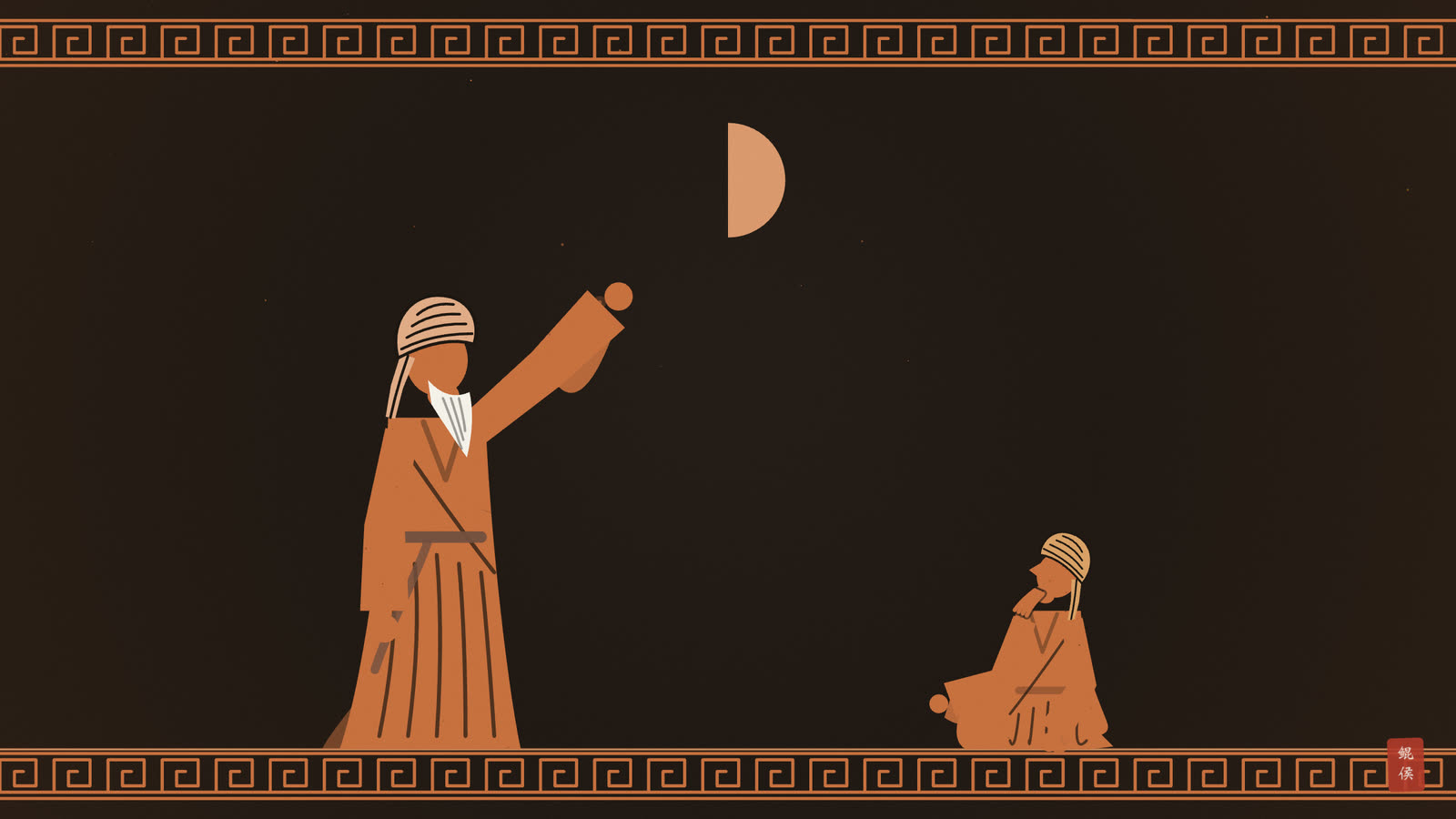
〔图〕相对于地平的增减:东方象限与其对面象限为增,另两个象限为减
均差之增,是说随着引数变大,均差也在变大,这发生在第一、第三带,因为这两带都是从均差为零处走向均差最大处;第二、第四带则从最大回落。计算之增则看最后一项均差是加还是减:在偏心圈上第三、第四带要加,在本轮上第一、第二带要加。四带在上一问已经画出,这里正好用上。
光与大小之增有两说:一说从顶点到近地点一路靠近地,光与大小都在增;另一说以平均距离为界,近地点两侧为增、远地点两侧为减。比鲁尼指出,按肉眼所见,本轮造成的远近变化很大,理应计入,但从业者习惯只按偏心圈的带来说。月光则另算,看与太阳的距离:从朔到望,或光过半时,就是增。
最后是按地平的增减(图二):从中天到东地平的东方象限,以及与它相对的那个象限(从西地平到午夜之圈),是增的象限,因为太阳在这两段里,白昼或黑夜都在增长;另两个象限为减。卷八讲宫位时,第十至十二宫与第四至六宫正落在这两个象限里,读到那里可以回头对照。
📖 术语
| 术语 | 英文原词 | 意思 |
|---|---|---|
| 行程之增 | increase in course | 日行多于平均 |
| 数之增 | increase in number | 引数在前六宫 |
| 计算之增 | increase in calculation | 末项改正要加 |
| 平均距离 | the mean distance | 远近之间的距离 |
| 引数 | argument | 查均差表所用之数 |
🧭 图解与讲解
“增与减”是天文表使用者天天要碰的说法,比鲁尼分为两大类、七八种(表一)。行程之增最直观:一日所行多于平均日行就是增。数之增来自查表的习惯:均差表的引数分两栏排,一栏从零到六个星座往下排,一栏从六到十二个星座往上排,引数落在哪一栏,就叫数之增或数之减。
| 名目 | 增 | 减 |
|---|---|---|
| 行程 | 一日所行多于平均行程 | 少于平均行程 |
| 数 | 查表引数落在第一栏(到六个星座) | 落在第二栏(补足十二个星座) |
| 均差 | 第一、第三带 | 第二、第四带 |
| 计算 | 末项均差相加:偏心圈第三、第四带,本轮第一、第二带 | 末项均差相减:其余诸带 |
| 光与大小(一说) | 自顶点到近地点 | 自近地点到顶点 |
| 光与大小(另一说) | 近地点两侧,到平均距离为止 | 远地点两侧,到平均距离为止 |
| 月光 | 月初到月中;或光多于其体之半 | 其余 |
| 相对于地平 | 东方象限及其对面象限 | 其余两个象限 |
均差之增,是说随着引数变大,均差也在变大,这发生在第一、第三带,因为这两带都是从均差为零处走向均差最大处;第二、第四带则从最大回落。计算之增则看最后一项均差是加还是减:在偏心圈上第三、第四带要加,在本轮上第一、第二带要加。四带在上一问已经画出,这里正好用上。
光与大小之增有两说:一说从顶点到近地点一路靠近地,光与大小都在增;另一说以平均距离为界,近地点两侧为增、远地点两侧为减。比鲁尼指出,按肉眼所见,本轮造成的远近变化很大,理应计入,但从业者习惯只按偏心圈的带来说。月光则另算,看与太阳的距离:从朔到望,或光过半时,就是增。
最后是按地平的增减(图二):从中天到东地平的东方象限,以及与它相对的那个象限(从西地平到午夜之圈),是增的象限,因为太阳在这两段里,白昼或黑夜都在增长;另两个象限为减。卷八讲宫位时,第十至十二宫与第四至六宫正落在这两个象限里,读到那里可以回头对照。
原文为公有领域古籍;翻译、印象画与图文解读由 AI 辅助生成,鲲侯审校。