卷一·第十至十五章 七曜周日、年主、阴阳度与月相
手算出生日属哪颗行星、年主与月主;每二度半一换的阴阳度;月亮每夜照几小时、何处隐没,第三、第七、第四十日之月。
X. On the Seven-Zone Week, that is, the Sabbath Day, Reckoned by Hand.
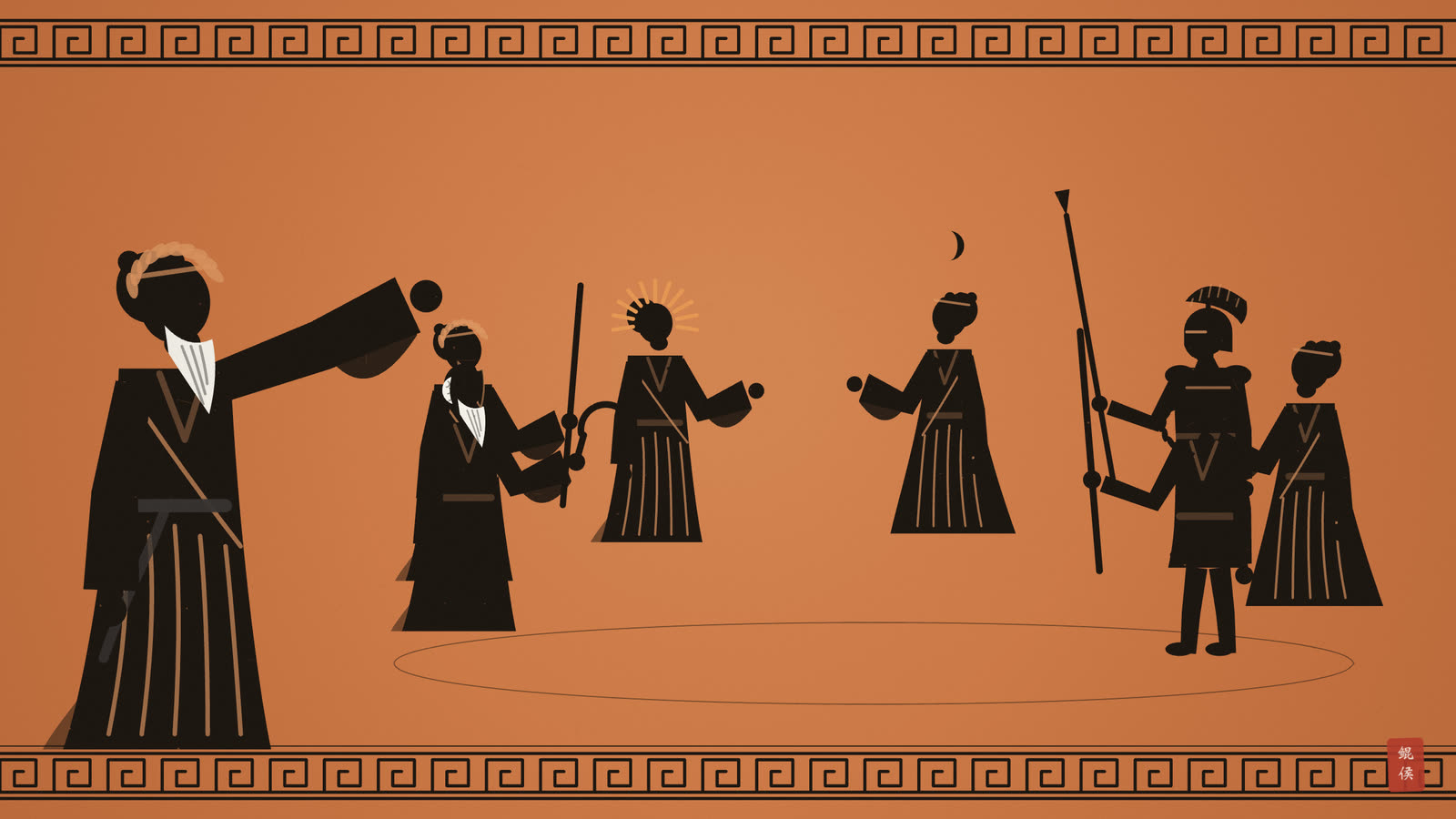
Concerning the week and the sabbath day, as follows. Take the full years from Augustus and the intercalary days, add also the days from Thoth up to the day of birth, and from these subtract 7 as many times as you can; count the remainder from the Sun, and whatever planet you end at, the day will be that planet's. The order of the planets with respect to the days is as follows: Sun, Moon, Mars, Mercury, Jupiter, Venus, Saturn. The arrangement of the zones is as follows: Saturn, Jupiter, Mars, Sun, Venus, Mercury, Moon; from this arrangement the hours are indicated, and from the hours the day of the next planet. For example: year 4 of Hadrian, Mechir 13 by the Alexandrian reckoning, 1st hour of the night. The full years from Augustus are 148, the intercalary days 36, and the days from Thoth to Mechir 13 are 163; the total is 347. I subtract 49 weeks; 4 remain. Counting from the Sun, this ends at the day of Mercury; and the 1st hour of the night is Mercury's, the second the Moon's, the third Saturn's, the fourth Jupiter's, the fifth Mars's, the sixth the Sun's, the seventh Venus's, the eighth Mercury's, the ninth the Moon's, the tenth Saturn's, the eleventh Jupiter's, the twelfth Mars's; of the day, the 1st hour is the Sun's, the 2nd Venus's, the third Mercury's, the fourth the Moon's, the fifth Saturn's, the sixth Jupiter's, the seventh Mars's, the eighth the Sun's, the ninth Venus's, the tenth Mercury's, the eleventh the Moon's, the twelfth Saturn's. Then next comes the following day, that is, Mechir 14; it will be Jupiter's, and so will its 1st hour.
翻译点开
X. On the Seven-Zone Week, that is, the Sabbath Day, Reckoned by Hand.
第十章 论七带周,即安息日,用手算求
Concerning the week and the sabbath day, as follows. Take the full years from Augustus and the intercalary days, add also the days from Thoth up to the day of birth, and from these subtract 7 as many times as you can; count the remainder from the Sun, and whatever planet you end at, the day will be that planet's. The order of the planets with respect to the days is as follows: Sun, Moon, Mars, Mercury, Jupiter, Venus, Saturn. The arrangement of the zones is as follows: Saturn, Jupiter, Mars, Sun, Venus, Mercury, Moon; from this arrangement the hours are indicated, and from the hours the day of the next planet. For example: year 4 of Hadrian, Mechir 13 by the Alexandrian reckoning, 1st hour of the night. The full years from Augustus are 148, the intercalary days 36, and the days from Thoth to Mechir 13 are 163; the total is 347. I subtract 49 weeks; 4 remain. Counting from the Sun, this ends at the day of Mercury; and the 1st hour of the night is Mercury's, the second the Moon's, the third Saturn's, the fourth Jupiter's, the fifth Mars's, the sixth the Sun's, the seventh Venus's, the eighth Mercury's, the ninth the Moon's, the tenth Saturn's, the eleventh Jupiter's, the twelfth Mars's; of the day, the 1st hour is the Sun's, the 2nd Venus's, the third Mercury's, the fourth the Moon's, the fifth Saturn's, the sixth Jupiter's, the seventh Mars's, the eighth the Sun's, the ninth Venus's, the tenth Mercury's, the eleventh the Moon's, the twelfth Saturn's. Then next comes the following day, that is, Mechir 14; it will be Jupiter's, and so will its 1st hour.
关于星期与安息日,如下。取从奥古斯都起的满年数和闰日,再加上从托特月到出生之日的天数,从中尽可能多次地减去七;把余数从太阳数起,数止于哪颗行星,这一日就属那颗行星。诸星配日的次序如下:太阳、月亮、火星、水星、木星、金星、土星。诸带的排列如下:土星、木星、火星、太阳、金星、水星、月亮;由这个排列显示各小时,又由各小时显示下一颗行星之日。例如:哈德良第四年,按亚历山大历梅希尔月十三日,夜里第一小时。从奥古斯都起的满年是一百四十八,闰日三十六,从托特月到梅希尔月十三日的天数是一百六十三;合计三百四十七。我减去四十九个星期;余四。从太阳数起,止于水星之日;夜里第一小时属水星,第二属月亮,第三属土星,第四属木星,第五属火星,第六属太阳,第七属金星,第八属水星,第九属月亮,第十属土星,第十一属木星,第十二属火星;白天的第一小时属太阳,第二属金星,第三属水星,第四属月亮,第五属土星,第六属木星,第七属火星,第八属太阳,第九属金星,第十属水星,第十一属月亮,第十二属土星。接着是下一日,即梅希尔月十四日;它属木星,它的第一小时也是。
大意与图解点开
🔎 大意:满年、闰日与年内天数相加,去掉整星期,余数从太阳按日序数去得当日之星;各小时则按七带由远及近轮转。
📖 术语
| 术语 | 英文原词 | 意思 |
|---|---|---|
| 七带周 | seven-zone week | 七曜轮值的一周 |
| 安息日 | sabbath day | 一周之中的一日 |
| 闰日 | intercalary days | 四年一闰所加的日 |
| 诸带 | the zones | 七曜各自的天层 |
| 亚历山大历 | Alexandrian reckoning | 有闰日的埃及历 |
🧭 图解与讲解
第十章讲「七带周」(seven-zone week),也就是七曜轮值的星期。「带」指七曜各自的天层,由远到近排成土星、木星、火星、太阳、金星、水星、月亮。一日二十四小时依这个排列逐时轮转,每一日的第一小时属哪颗星,这一日就归那颗星。这样排下来,日子的次序就成了太阳、月亮、火星、水星、木星、金星、土星,也就是今日星期日到星期六的次序。
| 步骤 | 哈德良四年梅希尔月十三日(第二行算例) | 数值 |
|---|---|---|
| 一 | 从奥古斯都起的满年 | 148 |
| 二 | 闰日(约每四年一日) | 36 |
| 三 | 托特月一日到梅希尔月十三日 | 163 |
| 四 | 合计 | 347 |
| 五 | 减去四十九个星期(343) | 余 4 |
| 六 | 按日序从太阳数四:日、月、火、水 | 水星之日 |
| 小时 | 夜里(水星之日) | 白天 |
|---|---|---|
| 第一 | 水星 | 太阳 |
| 第二 | 月亮 | 金星 |
| 第三 | 土星 | 水星 |
| 第四 | 木星 | 月亮 |
| 第五 | 火星 | 土星 |
| 第六 | 太阳 | 木星 |
| 第七 | 金星 | 火星 |
| 第八 | 水星 | 太阳 |
| 第九 | 月亮 | 金星 |
| 第十 | 土星 | 水星 |
| 第十一 | 木星 | 月亮 |
| 第十二 | 火星 | 土星 |
手算的办法(表一):从奥古斯都元年起数满年,再加闰日(亚历山大历四年一闰)和本年从托特月起到生日的天数,去掉整星期,余几就从太阳按日序数几。例中合计三百四十七,去掉四十九个星期余四,从太阳数到水星,所以哈德良四年梅希尔月十三日是水星之日。这里一日从夜里算起,所以夜里第一小时就是水星之日的第一小时(表二)。
表二照原文列出这一日的二十四个小时:夜里十二小时从水星起,依次月亮、土星、木星、火星、太阳、金星……白天第一小时轮到太阳,第十二小时是土星,再下一小时便是木星,所以次日梅希尔月十四日属木星。这正是诸带排列与日序相互推出的道理,作者说「由各小时显示下一颗行星之日」,指的就是这个。
XI. On the Ruler of the Year.
If you also wish to learn the ruler of the year in the same way, take for example, in the same instance, the full years of Augustus, 148, the intercalary days, 36, and 1 day of Thoth: the total is 185. From these I subtract 26 weeks; 3 remain. Count these from the Sun: the year ends at Mars. Once you have learned the lord of the year, you will also find the lord of the month in this way, using the arrangement of the zones in the upward direction. For example, Thoth will be Mars's; since the 29th of Thoth again ends at Mars, the 30th will be Mercury's, the first of Phaophi Jupiter's, the 30th Venus's; the 1st of Hathyr Saturn's, the 1st of Choiak the Moon's, that of Tybi Mercury's, that of Mechir Venus's. Since, then, the lord of the year is Mars, of the month Venus, of the day Mercury, and of the hour the Sun [sic], it will be necessary to examine how these are placed in the nativity. For when they are suitably placed and belong to the sect, they signify activity, and above all when the lord of the year happens to be passing through the current year, the lord of the month the month, and the lord of the day the day. But if they have fallen out of the favourable places or receive testimony from malefics, they signify adversities and disturbances.
To me, however, it has seemed more natural to take the full years from Augustus and the intercalary days, as set out above, and the days from Thoth up to the day of birth, to cast out the weeks, count off the remainder from the Sun, and judge that planet to be lord of the year at which the number ended; for in each nativity the natal day will hold the place of the first day of the year. It does not seem reasonable that those born in the same year should all have fallen under a single rulership. In general, then, the ancients determined the lord of the year and of cosmic movements from the first day of Thoth (for there they made the beginning of the year), but it would be more natural to do so from the rising of the Dog Star.
翻译点开
XI. On the Ruler of the Year.
第十一章 论年主
If you also wish to learn the ruler of the year in the same way, take for example, in the same instance, the full years of Augustus, 148, the intercalary days, 36, and 1 day of Thoth: the total is 185. From these I subtract 26 weeks; 3 remain. Count these from the Sun: the year ends at Mars. Once you have learned the lord of the year, you will also find the lord of the month in this way, using the arrangement of the zones in the upward direction. For example, Thoth will be Mars's; since the 29th of Thoth again ends at Mars, the 30th will be Mercury's, the first of Phaophi Jupiter's, the 30th Venus's; the 1st of Hathyr Saturn's, the 1st of Choiak the Moon's, that of Tybi Mercury's, that of Mechir Venus's. Since, then, the lord of the year is Mars, of the month Venus, of the day Mercury, and of the hour the Sun [sic], it will be necessary to examine how these are placed in the nativity. For when they are suitably placed and belong to the sect, they signify activity, and above all when the lord of the year happens to be passing through the current year, the lord of the month the month, and the lord of the day the day. But if they have fallen out of the favourable places or receive testimony from malefics, they signify adversities and disturbances.
如果你也想用同样的办法得知年主,例如在同一个例子里,取奥古斯都的满年一百四十八、闰日三十六,以及托特月的一日:合计一百八十五。我从中减去二十六个星期;余三。从太阳数起:这一年止于火星。一旦得知年主,你也可以这样找到月主,按诸带的排列向上数。例如,托特月属火星;既然托特月二十九日又止于火星,三十日就属水星,法奥菲月初一属木星,三十日属金星;哈蒂尔月初一属土星,霍亚克月初一属月亮,提比月的属水星,梅希尔月的属金星。既然年主是火星,月主是金星,日主是水星,时辰主星是太阳〔原书如此〕,就必须查看它们在本命中位置如何。因为它们位置适宜、又属于当令的一方时,就主有作为,尤其当年主正好行经当年、月主行经当月、日主行经当日之时。但如果它们失位,或受凶星见证,就主逆境与扰乱。
To me, however, it has seemed more natural to take the full years from Augustus and the intercalary days, as set out above, and the days from Thoth up to the day of birth, to cast out the weeks, count off the remainder from the Sun, and judge that planet to be lord of the year at which the number ended; for in each nativity the natal day will hold the place of the first day of the year. It does not seem reasonable that those born in the same year should all have fallen under a single rulership. In general, then, the ancients determined the lord of the year and of cosmic movements from the first day of Thoth (for there they made the beginning of the year), but it would be more natural to do so from the rising of the Dog Star.
不过在我看来更合乎自然的是:照上面所说,取从奥古斯都起的满年与闰日,以及从托特月到出生之日的天数,去掉整星期,把余数从太阳数起,数止于哪颗行星,就判那颗行星为年主;因为在每个本命里,生日就占了岁首之日的位置。同一年出生的人全都落在同一个主星之下,这似乎不合理。总之,古人从托特月初一定年主与世运之主(因为他们以那一天为岁首),但从天狼星的升起来定,会更合乎自然。
大意与图解点开
🔎 大意:托特月初一属哪颗星,那颗星就是年主;各月初一之星为月主。作者主张以生日代替岁首求年主,又说以天狼星升起为岁首更合自然。
📖 术语
| 术语 | 英文原词 | 意思 |
|---|---|---|
| 年主 | ruler of the year | 主管一年的行星 |
| 月主 | lord of the month | 主管一月的行星 |
| 当令的一方 | of the sect | 与本命昼夜同方 |
| 失位 | fallen out of the places | 落在不利之位 |
| 世运 | cosmic movements | 天下大事的运势 |
🧭 图解与讲解
第十一章用同一套计日法求年主(ruler of the year):只算到托特月初一,即埃及历的岁首。例中一百四十八加三十六加一得一百八十五,去掉二十六个星期余三,从太阳数三到火星,所以这一年的年主是火星。月主就看每月初一属哪颗星(表一):埃及历每月三十日,三十除七余二,所以每过一月,初一之星在日序上后移两位,从火星到木星、土星、月亮、水星、金星。
| 月份 | 初一属 | 推法 |
|---|---|---|
| 托特月 | 火星 | 年主即托特月初一之星 |
| 法奥菲月 | 木星 | 托特月二十九日又是火星,三十日水星 |
| 哈蒂尔月 | 土星 | 每月三十日,初一之星按日序后移两位 |
| 霍亚克月 | 月亮 | 同上 |
| 提比月 | 水星 | 同上 |
| 梅希尔月 | 金星 | 例中出生之月,月主金星 |
〔图〕哈德良四年梅希尔月十三日夜第一小时:四个主星各管一层时间
于是例中的出生时刻有四个主星(图二):年主火星、月主金星、日主水星、时辰主星。照上一单元,夜里第一小时属水星,原书却写太阳,英译标为原书如此。作者说,这几颗星若在本命里位置适宜、又属当令的一方,就主有作为,尤其当它们在当年、当月、当日正好行经相应的位置;若失位或受凶星见证,就主逆境与扰乱。
第五行是作者自己的主张:与其让同一年出生的人共用一个年主,不如把每个人的生日当作他自己的「岁首」,用到生日为止的天数求年主,这样人人各异。他还说,古人以托特月初一为岁首来定年主与世运,但以天狼星的升起为岁首更合自然;天狼星偕日升起时正值尼罗河泛滥,第四章讲四年周期时也以它为准。
📖 术语
| 术语 | 英文原词 | 意思 |
|---|---|---|
| 年主 | ruler of the year | 主管一年的行星 |
| 月主 | lord of the month | 主管一月的行星 |
| 当令的一方 | of the sect | 与本命昼夜同方 |
| 失位 | fallen out of the places | 落在不利之位 |
| 世运 | cosmic movements | 天下大事的运势 |
🧭 图解与讲解
第十一章用同一套计日法求年主(ruler of the year):只算到托特月初一,即埃及历的岁首。例中一百四十八加三十六加一得一百八十五,去掉二十六个星期余三,从太阳数三到火星,所以这一年的年主是火星。月主就看每月初一属哪颗星(表一):埃及历每月三十日,三十除七余二,所以每过一月,初一之星在日序上后移两位,从火星到木星、土星、月亮、水星、金星。
| 月份 | 初一属 | 推法 |
|---|---|---|
| 托特月 | 火星 | 年主即托特月初一之星 |
| 法奥菲月 | 木星 | 托特月二十九日又是火星,三十日水星 |
| 哈蒂尔月 | 土星 | 每月三十日,初一之星按日序后移两位 |
| 霍亚克月 | 月亮 | 同上 |
| 提比月 | 水星 | 同上 |
| 梅希尔月 | 金星 | 例中出生之月,月主金星 |
于是例中的出生时刻有四个主星(图二):年主火星、月主金星、日主水星、时辰主星。照上一单元,夜里第一小时属水星,原书却写太阳,英译标为原书如此。作者说,这几颗星若在本命里位置适宜、又属当令的一方,就主有作为,尤其当它们在当年、当月、当日正好行经相应的位置;若失位或受凶星见证,就主逆境与扰乱。
第五行是作者自己的主张:与其让同一年出生的人共用一个年主,不如把每个人的生日当作他自己的「岁首」,用到生日为止的天数求年主,这样人人各异。他还说,古人以托特月初一为岁首来定年主与世运,但以天狼星的升起为岁首更合自然;天狼星偕日升起时正值尼罗河泛滥,第四章讲四年周期时也以它为准。
XII. On Masculine and Feminine Degrees.
Concerning masculine and feminine degrees, as follows. Of the masculine signs the first 2½ degrees will be masculine and the next 2½ feminine; of the feminine signs the first 2½ will be feminine, the next masculine, and the next feminine. For conjunctional nativities the degree of the conjunction will show this, and for full-moon nativities the degree of the full moon; but some go by the degree in which the Ascendant or the Moon is.
XIII. On the Illuminations of the Moon.
The illuminations of the Moon are as follows. On her first day she shines for ½ ¼ 1/20 of an hour; on her second, 1 ½ 1/10; and always, whatever her age in days, multiply it by four, take a fifth, and declare that to be the number of hours. For example, the Moon is 15 days old; four times this makes 60, of which a fifth is 12; so she shines, as she begins to wane, for 12 hours [text uncertain]. On her first day, then, she shines for ½ ¼ 1/20 of an hour; on her second, 1 ½ 1/10 hours; on her third, 2 1/3 1/15 hours; on her fourth, 3 1/5 hours; on her fifth, 4 hours; on her sixth, 4 ½ ¼ 1/20 hours. On her seventh, 5½ 1/10 hours [corrected: Kroll prints 5 1/10]. On her eighth, 6 1/3 1/15 [corrected: Kroll prints 6 1/6 1/15]. On her ninth, 7 1/5 hours; on her tenth, 8 hours; on her eleventh, 8 ½ ¼ 1/20 hours. On her twelfth, 9½ 1/10 hours [corrected: Kroll prints 9 1/5 1/10]. On her thirteenth, 10 1/3 1/15 hours [corrected: Kroll prints 13 1/15]. On her fourteenth, 11 1/5 hours; on her fifteenth, 12 hours. Likewise from the 16th day onward the hours decrease in the same way as from the 1st to the 15th.
翻译点开
XII. On Masculine and Feminine Degrees.
第十二章 论阳性度与阴性度
Concerning masculine and feminine degrees, as follows. Of the masculine signs the first 2½ degrees will be masculine and the next 2½ feminine; of the feminine signs the first 2½ will be feminine, the next masculine, and the next feminine. For conjunctional nativities the degree of the conjunction will show this, and for full-moon nativities the degree of the full moon; but some go by the degree in which the Ascendant or the Moon is.
关于阳性度与阴性度,如下。阳性星座最初二度半是阳性,其后二度半是阴性;阴性星座最初二度半是阴性,其次是阳性,再其次是阴性。合朔之命由合朔的度数显示这一点,望月之命由望月的度数显示;但有些人看上升点或月亮所在的度数。
XIII. On the Illuminations of the Moon.
第十三章 论月亮的照明
The illuminations of the Moon are as follows. On her first day she shines for ½ ¼ 1/20 of an hour; on her second, 1 ½ 1/10; and always, whatever her age in days, multiply it by four, take a fifth, and declare that to be the number of hours. For example, the Moon is 15 days old; four times this makes 60, of which a fifth is 12; so she shines, as she begins to wane, for 12 hours [text uncertain]. On her first day, then, she shines for ½ ¼ 1/20 of an hour; on her second, 1 ½ 1/10 hours; on her third, 2 1/3 1/15 hours; on her fourth, 3 1/5 hours; on her fifth, 4 hours; on her sixth, 4 ½ ¼ 1/20 hours. On her seventh, 5½ 1/10 hours [corrected: Kroll prints 5 1/10]. On her eighth, 6 1/3 1/15 [corrected: Kroll prints 6 1/6 1/15]. On her ninth, 7 1/5 hours; on her tenth, 8 hours; on her eleventh, 8 ½ ¼ 1/20 hours. On her twelfth, 9½ 1/10 hours [corrected: Kroll prints 9 1/5 1/10]. On her thirteenth, 10 1/3 1/15 hours [corrected: Kroll prints 13 1/15]. On her fourteenth, 11 1/5 hours; on her fifteenth, 12 hours. Likewise from the 16th day onward the hours decrease in the same way as from the 1st to the 15th.
月亮的照明如下。她在第一日照耀一小时的二分之一又四分之一又二十分之一;第二日,一又二分之一又十分之一;总之,无论她是第几日,把日数乘以四,取五分之一,就宣称这是小时数。例如,月亮第十五日;四倍得六十,其五分之一是十二;所以她在开始亏缺时照耀十二小时〔原文疑有讹误〕。所以第一日她照耀一小时的二分之一又四分之一又二十分之一;第二日一又二分之一又十分之一小时;第三日二又三分之一又十五分之一小时;第四日三又五分之一小时;第五日四小时;第六日四又二分之一又四分之一又二十分之一小时。第七日五又二分之一又十分之一小时〔据算改正:Kroll 本作五又十分之一〕。第八日六又三分之一又十五分之一〔据算改正:Kroll 本作六又六分之一又十五分之一〕。第九日七又五分之一小时;第十日八小时;第十一日八又二分之一又四分之一又二十分之一小时。第十二日九又二分之一又十分之一小时〔据算改正:Kroll 本作九又五分之一又十分之一〕。第十三日十又三分之一又十五分之一小时〔据算改正:Kroll 本作十三又十五分之一〕。第十四日十一又五分之一小时;第十五日十二小时。同样,从第十六日起,小时数照从第一日到第十五日的样子递减。
大意与图解点开
🔎 大意:每座按二度半一段阴阳交替;月亮第几日就照几乘五分之四小时,望日照满十二小时,此后同样递减;原表有四处算错。
📖 术语
| 术语 | 英文原词 | 意思 |
|---|---|---|
| 阳性度 | masculine degrees | 星座里属阳的几度 |
| 阴性度 | feminine degrees | 星座里属阴的几度 |
| 照明 | illuminations | 月亮夜里照几小时 |
| 亏缺 | wane | 月亮由满转缺 |
| 合朔之命 | conjunctional nativity | 生在朔后望前者 |
🧭 图解与讲解
第十二章只有两句:阳性星座的度数从阳起,每二度半一换,阳、阴、阳、阴;阴性星座从阴起(图二)。一座分成十二段,正好与第四章的「十二分部」一样大。要看哪一度:合朔之命看合朔的度数,望月之命看望月的度数,也有人看上升点或月亮的度数。原文没有说这些度数用来断什么;卷九论本命是男是女时,看的是月亮的十二分部落在阳性还是阴性星座,思路相近。
| 月龄(日) | 本站校定小时数 | 按「乘四取五分之一」应为 | 核对 |
|---|---|---|---|
| 一 | ½ ¼ 1/20 | 4/5 | 合 |
| 二 | 1 ½ 1/10 | 1 3/5 | 合 |
| 三 | 2 1/3 1/15 | 2 2/5 | 合 |
| 四 | 3 1/5 | 3 1/5 | 合 |
| 五 | 4 | 4 | 合 |
| 六 | 4 ½ ¼ 1/20 | 4 4/5 | 合 |
| 七 | 5 ½ 1/10 | 5 3/5 | 合(原书讹作 5 1/10) |
| 八 | 6 1/3 1/15 | 6 2/5 | 合(原书讹作 6 1/6 1/15) |
| 九 | 7 1/5 | 7 1/5 | 合 |
| 十 | 8 | 8 | 合 |
| 十一 | 8 ½ ¼ 1/20 | 8 4/5 | 合 |
| 十二 | 9 ½ 1/10 | 9 3/5 | 合(原书讹作 9 1/5 1/10) |
| 十三 | 10 1/3 1/15 | 10 2/5 | 合(原书讹作 13 1/15) |
| 十四 | 11 1/5 | 11 1/5 | 合 |
| 十五 | 12 | 12 | 合 |
〔图〕阴阳度:每二度半一换,阳座以阳起,阴座以阴起
第十三章讲月亮的「照明」,也就是月亮在夜里能照几小时。月亮每天比太阳迟落约五分之四小时,所以月龄几日,就照几乘五分之四小时:第五日四小时,第十日八小时,第十五日望月照满十二小时,整夜都亮。望后月亮逐日晚升,照明的小时数照同样的数递减。「开始亏缺时照耀十二小时」一句英译标为疑有讹误。
表一把逐日列出的小时数与规则核对。原书第七、八、十二、十三日四个数不合:作五又十分之一、六又六分之一又十五分之一、九又五分之一又十分之一、十三又十五分之一。原书这四个数传抄有误,按算应为五又五分之三、六又五分之二、九又五分之三、十又五分之二,本站据算改正,写成原书惯用的单位分数。
📖 术语
| 术语 | 英文原词 | 意思 |
|---|---|---|
| 阳性度 | masculine degrees | 星座里属阳的几度 |
| 阴性度 | feminine degrees | 星座里属阴的几度 |
| 照明 | illuminations | 月亮夜里照几小时 |
| 亏缺 | wane | 月亮由满转缺 |
| 合朔之命 | conjunctional nativity | 生在朔后望前者 |
🧭 图解与讲解
第十二章只有两句:阳性星座的度数从阳起,每二度半一换,阳、阴、阳、阴;阴性星座从阴起(图二)。一座分成十二段,正好与第四章的「十二分部」一样大。要看哪一度:合朔之命看合朔的度数,望月之命看望月的度数,也有人看上升点或月亮的度数。原文没有说这些度数用来断什么;卷九论本命是男是女时,看的是月亮的十二分部落在阳性还是阴性星座,思路相近。
| 月龄(日) | 本站校定小时数 | 按「乘四取五分之一」应为 | 核对 |
|---|---|---|---|
| 一 | ½ ¼ 1/20 | 4/5 | 合 |
| 二 | 1 ½ 1/10 | 1 3/5 | 合 |
| 三 | 2 1/3 1/15 | 2 2/5 | 合 |
| 四 | 3 1/5 | 3 1/5 | 合 |
| 五 | 4 | 4 | 合 |
| 六 | 4 ½ ¼ 1/20 | 4 4/5 | 合 |
| 七 | 5 ½ 1/10 | 5 3/5 | 合(原书讹作 5 1/10) |
| 八 | 6 1/3 1/15 | 6 2/5 | 合(原书讹作 6 1/6 1/15) |
| 九 | 7 1/5 | 7 1/5 | 合 |
| 十 | 8 | 8 | 合 |
| 十一 | 8 ½ ¼ 1/20 | 8 4/5 | 合 |
| 十二 | 9 ½ 1/10 | 9 3/5 | 合(原书讹作 9 1/5 1/10) |
| 十三 | 10 1/3 1/15 | 10 2/5 | 合(原书讹作 13 1/15) |
| 十四 | 11 1/5 | 11 1/5 | 合 |
| 十五 | 12 | 12 | 合 |
第十三章讲月亮的「照明」,也就是月亮在夜里能照几小时。月亮每天比太阳迟落约五分之四小时,所以月龄几日,就照几乘五分之四小时:第五日四小时,第十日八小时,第十五日望月照满十二小时,整夜都亮。望后月亮逐日晚升,照明的小时数照同样的数递减。「开始亏缺时照耀十二小时」一句英译标为疑有讹误。
表一把逐日列出的小时数与规则核对。原书第七、八、十二、十三日四个数不合:作五又十分之一、六又六分之一又十五分之一、九又五分之一又十分之一、十三又十五分之一。原书这四个数传抄有误,按算应为五又五分之三、六又五分之二、九又五分之三、十又五分之二,本站据算改正,写成原书惯用的单位分数。
XIV. On the Concealment of the Moon.
The Moon becomes invisible as she moves toward conjunction, degree by degree in each sign, as follows. Wherever the Sun is found, take half the rising time of that sign, and she will fall short of the Sun by that much. For example, the Sun is in Aries in the second clime; the rising time of the sign is 20, half of which is 10; subtracting the 10 from the 30, the Moon is invisible in Pisces at about 20°. The Sun is in Taurus: half the rising time is 12; the Moon will be invisible in Aries at about 18°. The Sun is in Gemini: half the rising time of the sign is 14; the Moon, then, will be invisible at about Taurus 16°. The Sun is in Cancer: half the rising time is 16; the Moon will be invisible in Gemini at about 14°. The Sun is in Leo: half the rising time is 18; the Moon will be invisible in Cancer at about 12°. The Sun is in Virgo: half the rising time is 20; the Moon will be invisible in Leo at about 10°. Likewise for the remaining signs.
XV. On the Third-Day, Seventh-Day, and Fortieth-Day Moon.
Concerning the third day, the seventh day, and the fortieth day, as follows. Let the Moon be at Scorpio 7°: the third day will be at Sagittarius 7°. For this is how the days must be sought; and besides, the 7th degree of Sagittarius stands as the third day. The seventh day will be found, for the purpose of forecasting, on the side of the square, at about Aquarius 7°; and the fortieth day at about Taurus 7°. Some add 160 to the degrees of the natal Moon and count off from the Moon's sign. Others add the Moon's natal degree to the third, seventh, and fortieth days, calculate the Moon, and reckon from where she then is. In general, then, they mark out fortunate, unfortunate, and middling nativities from the third, seventh, and fortieth days: when these places are regarded by benefics in productive places and not by malefics, declare the nativities exceedingly fortunate and great; when two are regarded by benefics and the third by malefics, middling; when all three are regarded by malefics alone, the benefics being turned away, unfortunate; and if the planets are mixed, call them middling.
翻译点开
XIV. On the Concealment of the Moon.
第十四章 论月亮的隐没
The Moon becomes invisible as she moves toward conjunction, degree by degree in each sign, as follows. Wherever the Sun is found, take half the rising time of that sign, and she will fall short of the Sun by that much. For example, the Sun is in Aries in the second clime; the rising time of the sign is 20, half of which is 10; subtracting the 10 from the 30, the Moon is invisible in Pisces at about 20°. The Sun is in Taurus: half the rising time is 12; the Moon will be invisible in Aries at about 18°. The Sun is in Gemini: half the rising time of the sign is 14; the Moon, then, will be invisible at about Taurus 16°. The Sun is in Cancer: half the rising time is 16; the Moon will be invisible in Gemini at about 14°. The Sun is in Leo: half the rising time is 18; the Moon will be invisible in Cancer at about 12°. The Sun is in Virgo: half the rising time is 20; the Moon will be invisible in Leo at about 10°. Likewise for the remaining signs.
月亮趋向合朔时,在各个星座里逐度变得不可见,如下。太阳在哪里,就取那个星座上升时间的一半,月亮离太阳就差那么多。例如,太阳在第二气候带的白羊;这个星座的上升时间是二十,其一半是十;从三十减去十,月亮约在双鱼二十度隐没。太阳在金牛:上升时间的一半是十二;月亮将约在白羊十八度隐没。太阳在双子:这个星座上升时间的一半是十四;那么月亮将约在金牛十六度隐没。太阳在巨蟹:上升时间的一半是十六;月亮将约在双子十四度隐没。太阳在狮子:上升时间的一半是十八;月亮将约在巨蟹十二度隐没。太阳在处女:上升时间的一半是二十;月亮将约在狮子十度隐没。其余的星座也是如此。
XV. On the Third-Day, Seventh-Day, and Fortieth-Day Moon.
第十五章 论第三日、第七日与第四十日的月亮
Concerning the third day, the seventh day, and the fortieth day, as follows. Let the Moon be at Scorpio 7°: the third day will be at Sagittarius 7°. For this is how the days must be sought; and besides, the 7th degree of Sagittarius stands as the third day. The seventh day will be found, for the purpose of forecasting, on the side of the square, at about Aquarius 7°; and the fortieth day at about Taurus 7°. Some add 160 to the degrees of the natal Moon and count off from the Moon's sign. Others add the Moon's natal degree to the third, seventh, and fortieth days, calculate the Moon, and reckon from where she then is. In general, then, they mark out fortunate, unfortunate, and middling nativities from the third, seventh, and fortieth days: when these places are regarded by benefics in productive places and not by malefics, declare the nativities exceedingly fortunate and great; when two are regarded by benefics and the third by malefics, middling; when all three are regarded by malefics alone, the benefics being turned away, unfortunate; and if the planets are mixed, call them middling.
关于第三日、第七日与第四十日,如下。设月亮在天蝎七度:第三日将在射手七度。因为必须这样寻求这些日子;何况射手第七度就成了第三日。第七日为预言起见,将在四分的一边上找到,约在水瓶七度;第四十日约在金牛七度。有些人在本命月亮的度数上加一百六十,从月亮的星座数去。另一些人把月亮的本命度数加到第三、第七、第四十日上,推算月亮,从她那时所在之处算起。总之,他们由第三、第七与第四十日来标出幸运、不幸与中等的本命:这几处若受到落在得力之位的吉星照看,而不受凶星照看,就宣布本命极其幸运而伟大;两处受吉星照看、第三处受凶星照看,就是中等;三处都只受凶星照看、吉星都不相照,就是不幸;若诸星混杂,就说是中等。
大意与图解点开
🔎 大意:月亮在太阳之前差太阳所在星座上升时间的一半时隐没;本命月亮之后的第三、七、四十日三处受吉星或凶星照看,定本命的幸与不幸。
📖 术语
| 术语 | 英文原词 | 意思 |
|---|---|---|
| 隐没 | concealment | 月亮近朔看不见 |
| 第三日 | third day | 本命后第三日之月 |
| 四分的一边 | side of the square | 与本命月成四分 |
| 照看 | regarded | 以相位照到 |
| 不相照 | turned away | 与该处不成相位 |
🧭 图解与讲解
第十四章讲月亮在合朔前何时看不见(concealment)。月亮越靠近太阳,越隐在日光里,作者给的规则是:月亮在太阳之前,差太阳所在星座上升时间的一半,就隐没了(表一)。例如太阳在白羊,上升时间二十,一半是十,月亮约在双鱼二十度隐没;太阳在处女,上升时间四十,一半二十,月亮约在狮子十度隐没。升得慢的星座,太阳在其中时月亮要离得更远才隐没。
| 太阳所在 | 该座上升时间 | 一半 | 月亮约在此隐没 |
|---|---|---|---|
| 白羊 | 20 | 10 | 双鱼 20° |
| 金牛 | 24 | 12 | 白羊 18° |
| 双子 | 28 | 14 | 金牛 16° |
| 巨蟹 | 32 | 16 | 双子 14° |
| 狮子 | 36 | 18 | 巨蟹 12° |
| 处女 | 40 | 20 | 狮子 10° |
〔图〕原书例(示意):本命月亮天蝎七度,第三、第七、第四十日依次在射手、水瓶、金牛七度
第十五章讲本命月亮之后的第三日、第七日与第四十日。例中月亮在天蝎七度,第三日在射手七度,第七日在水瓶七度(与本命月成四分),第四十日在金牛七度(与本命月对冲,图二)。这里是按星座数,第三日差一座,第七日差三座,第四十日差六座,而不是按月亮每日实际走的度数;作者也记下了另两种算法:加一百六十度,或照日数实算月亮的位置。
这三处用来分本命的幸与不幸:三处都受得力之位的吉星照看、不受凶星照看,是极幸运的大命;两处得吉星、一处受凶星,是中等;三处只受凶星照看、吉星都不相照,是不幸;吉凶混杂也算中等。这是用本命之后几个特定日子的月亮来补看本命的格局,与前一章的年主、月主一样,都是在出生那一刻之外再取几个时点来比较。
📖 术语
| 术语 | 英文原词 | 意思 |
|---|---|---|
| 隐没 | concealment | 月亮近朔看不见 |
| 第三日 | third day | 本命后第三日之月 |
| 四分的一边 | side of the square | 与本命月成四分 |
| 照看 | regarded | 以相位照到 |
| 不相照 | turned away | 与该处不成相位 |
🧭 图解与讲解
第十四章讲月亮在合朔前何时看不见(concealment)。月亮越靠近太阳,越隐在日光里,作者给的规则是:月亮在太阳之前,差太阳所在星座上升时间的一半,就隐没了(表一)。例如太阳在白羊,上升时间二十,一半是十,月亮约在双鱼二十度隐没;太阳在处女,上升时间四十,一半二十,月亮约在狮子十度隐没。升得慢的星座,太阳在其中时月亮要离得更远才隐没。
| 太阳所在 | 该座上升时间 | 一半 | 月亮约在此隐没 |
|---|---|---|---|
| 白羊 | 20 | 10 | 双鱼 20° |
| 金牛 | 24 | 12 | 白羊 18° |
| 双子 | 28 | 14 | 金牛 16° |
| 巨蟹 | 32 | 16 | 双子 14° |
| 狮子 | 36 | 18 | 巨蟹 12° |
| 处女 | 40 | 20 | 狮子 10° |
第十五章讲本命月亮之后的第三日、第七日与第四十日。例中月亮在天蝎七度,第三日在射手七度,第七日在水瓶七度(与本命月成四分),第四十日在金牛七度(与本命月对冲,图二)。这里是按星座数,第三日差一座,第七日差三座,第四十日差六座,而不是按月亮每日实际走的度数;作者也记下了另两种算法:加一百六十度,或照日数实算月亮的位置。
这三处用来分本命的幸与不幸:三处都受得力之位的吉星照看、不受凶星照看,是极幸运的大命;两处得吉星、一处受凶星,是中等;三处只受凶星照看、吉星都不相照,是不幸;吉凶混杂也算中等。这是用本命之后几个特定日子的月亮来补看本命的格局,与前一章的年主、月主一样,都是在出生那一刻之外再取几个时点来比较。
原文为公有领域古籍;翻译、印象画与图文解读由 AI 辅助生成,鲲侯审校。